Using Day One to Track Coffee Processing

hero-dayone-icon@2xSometimes I get the feeling Day One is used by many as everything but a standard journaling app — and I certainly mean that in a complimentary way. I’ve previously written about how I use the app for logging workouts (the recent regularity and frequency of which we won’t talk about if you don’t mind). Since that time, Day One has been refined and updated, yet retained its core features and attractive UI which so many users have come to love.

As the title of this post suggests, this is not a review of Day One as such — more so another in that long list of use cases I’ve linked to above, in which the app excels at being used for a specific purpose.

Exactly two years ago I ran a little experiment on coffee processing using the wet or washed method, and documented the experience in a series of posts titled Crop to Cup.. I am currently in the very early stages of a follow-up experiment to see how a small crop of coffee tastes after I process the fruit using dry processing methods. Clearly an undertaking which requires monitoring and data collection along the way — enter Day One.

What is Day One?

Although I am sure most readers are well aware of this beautiful Mac and iOS App, however for those perhaps not yet acquainted, the developers is summed up by the developer as follows:

Day One is a journaling app for the iPhone, iPad and Mac. Record life as you live it. From once-in-a-lifetime events to everyday moments, Day One’s elegant interface makes journaling your life a simple pleasure.

I’d certainly agree with that sentiment, though I’d encourage you to see what the fuss is about for yourself if you haven’t already. Of course there is a significant amount of information on the Day One website, however for a review about as beautiful as the app itself, there is none better than this one over at The Newsprint.

The project

Nat process_publish

As I mentioned above, coming up in a post or two in the near future will be my attempts at a small experiment in dry processing of some coffee grown in the yard of my parents house in northern NSW. The coffee will be sun-dried with either the entire cherry intact (“Natural” process) or with the outer flesh removed first(“Pulped Natural” or “Honey”) process. More on this in future posts.

Although hardly a large-scale endeavour (or an overly professional one for that matter), I will need a record of how things progress over the course of approximately a month as the coffee transforms from its current state to something resembling being done1.

In considering my options here, when thinking about recording recurring data over a number of days, my thoughts invariably turn to spreadsheets. Immediately thereafter my thoughts then turn to the fact that I am buried in spreadsheets on a daily basis and considering combining an enjoyable hobby with this type of data analysis makes my stomach turn a little. If a spreadsheet was by far and away the best solution I would of course use it, however when other options are available I’d prefer to head in another direction.

Why Day One?

Ideally, I’d prefer something much more attractive and enjoyable to use for recording this data. Upon thinking about the sort of information relevant to my aims, the first items on the list are a daily photographic record and weather data, and therefore Day One was the obvious choice. The Day One About page provides a list of the data providing context to each entry:

Each Day One entry automatically tracks:

• Photo EXIF data

• Temperature and weather data

• Locations

• Time and date

• Activity data – Motion and step count

• Music playing

All well and good (with the bottom two from the above list not required here), however what about relevant data not automatically captured by Day One? Probably the key here is the relative humidity (the number one enemy of dry processing), over and above simple temperature data. I assume Day One simply pulls in the system weather information, which in itself, does not include humidity. Manually entering this as not a major issue, with the advantage of having what is recorded automatically by Day One providing a significant head start over a manually maintained spreadsheet.

Regardless of which system I use, there is the requirement for some sort of “Additional Comments” section, and it is here I will simply add the humidity reading (easily obtained with one tap from the best iOS local weather app there is: Pocket Weather Australia), along with information on how often I turn the drying beans (hint — it’ll be often), and anything additional worth commenting on for that particular day.

I don’t anticipate capturing a lot of additional information, as things will be fairly standardised day-to-day, however any significant changes or data outliers/modifiers will be noted specifically. As this additional data will in itself be fairly similar day-to-day, a customised template using Launch Center Pro might also be on the cards.
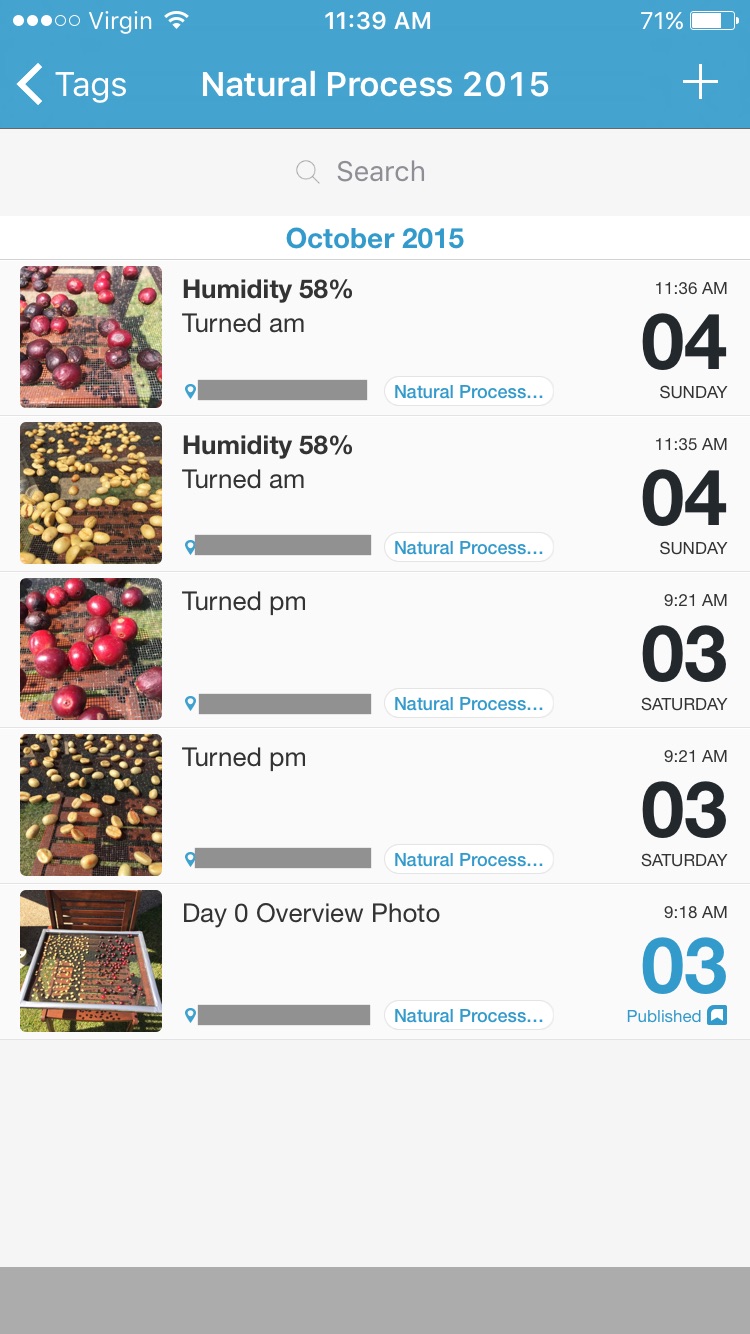
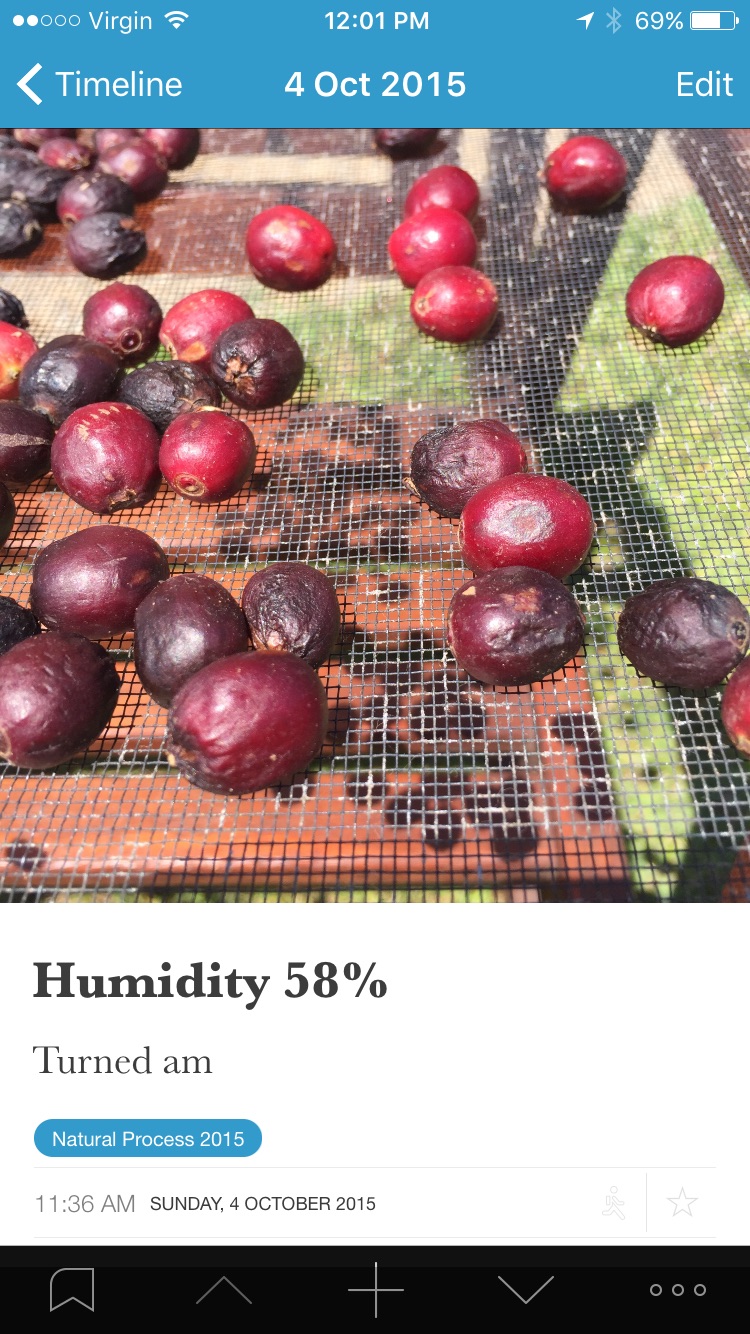
Nat process entriesNat process sing entry

Of course the non project-critical feature of sharing through Day One’s Publish feature will allow me to Tweet daily updates of the drying beans for your viewing pleasure. No — of course I won’t! Ever watched paint dry? Perhaps the occasional one… maybe. The benefits of organisation by tag, along with rock solid sync and export options (PDF, with entries for export selectable by tag on iOS), will also keep my data organised, safe, and allow a better overview of how things went when the processing is complete.

One feature which would have been nice is the ability to upload multiple photos per entry, thus keeping each day to a single entry2. No real complaints here though, as the Day One Newsletter tells me this is coming (along with refinements to the interface and multiple journals) in version 2.0, which will hopefully arrive before the end of the year.

Conclusion

Overall, Day One is just about perfect for what I require in terms of data collection and handling for a project of this nature and size. It’s a pity there is no “taste guarantee” built in to the app — for that I’ll just have to take my chances.

Irrespective of how things turn out, the entire process will be far more tasteful using Day One for recording purposes than the bitterness of nibbling on another spreadsheet every day.

Here’s to an enjoyable (and hopefully successful) journey, with a glorious cup of “natural process” coffee at the end. Wish me luck.

  1. More detail on this in a future post, for in my typical fashion I am learning as I go here. ↩︎
  2. I could of course merge two photos into one using another app, however this adds additional steps compared to simply opening Day One and snapping away. ↩︎

What’s Brewing: Ethiopia Tade GG Guji Shakiso

My intent when sourcing beans from Ethiopia is usually to find some luscious red berry flavours in the cup. With tasting notes of red berry, peach and apricot, this coffee from the Guji zone in Southern Ethiopia sounded pretty interesting, and definitely worth a try.

The Region

Information courtesy of Wikipedia

Guji is one of the zones in the Oromia Region of Ethiopia, named after a tribe of the Oromo people. It is bordered on the south by Borena, the west by the Southern Nations, Nationalities, and Peoples Region, and on the north by the Ganale Dorya River which separates it from Bale. To the east is the Somali Region.

The highest point in Guji is Mount Dara Tiniro, and the zone also contains its administrative centre, the town of Negele.

The Coffee

  • Ethiopia Tade GG Guji Shakiso
  • Region: Oromia
  • Farm: Tade GG
  • Elevation: 1830 – 1950m
  • Owner: Tesfaye Bekele
  • Varietal: Heirloom
  • Crop Year: 2015
  • Processing: washed
  • Tasting notes: Peach and floral aroma, clean, med/high white grape acidity, full juicy body, med sweetness, notes of peach, apricot, candied red berry and soft florals with a clean smooth finish.
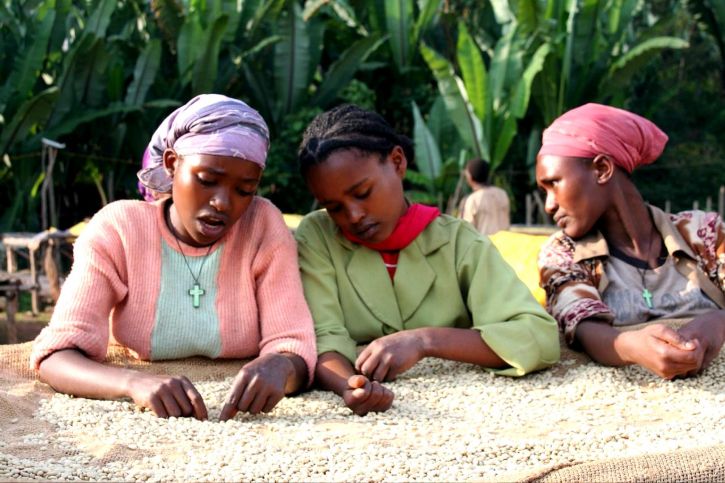
women-coffee-farmers-in-ethiopia-sort-coffee-beans-to-produce-higher-quality-specialty-725x483

Bean sorting for quality control in Ethiopia (Public Domain Images)

More on the Tade GG farm from Ministry Grounds:

Tade GG is a private, certified organic farm owned by Tesfaye Bekele. The farm is 221 hectares in area and lies between 1830 and 1950 meters above sea level. The landscape is characterised by sharp and rugged hills, ridges, plateaus, valleys and flats creating stunningly dramatic setting. The coffee is pulped, fermented for 35-48 hours, then washed and dried in parchment for 9-15 days on elevated beds.

The Brew

Having roasted the Tade GG for both filter and espresso, each form of brewing was probably on par with the other — that is, very good, although not quite as rich in the berry and fruit flavours I had been expecting.

As a filter brew in the Hario V60 there were prominent flavours of candied berry, with a medium body, and a crisp, clean – though fairly short finish.

Brewing as espresso brought out a little more of the peach and berry flavours, with a fuller, juicier body, and smoother finish. As a flat white or latte, a little  increased sweetness was evident, with some mild caramel flavours peeking through as well.

The Finish

Overall, the Ethiopia Tade GG was an enjoyable coffee, without reaching the heights in rich fruit flavours of neighbouring growing regions such as Yirgacheffe.

My pick would be as espresso, however I must admit to brewing a sizeable carafe through the V60 and sitting back in front of the football on the occasional weekend afternoon. It is September after all.


A Taste of Local Australian Grown Coffee

IMG_4756My last outing with the crew of Bean Brewding, those staunch advocates of the Brisbane coffee scene, was the Walking Coffee Tour of Fortitude Valley in August 2014, which I wrote a little about here. Now twelve months on, and having seen the “Beans” continue their great run of tours over that period, a recent event over the weekend provided a great opportunity to get involved again.

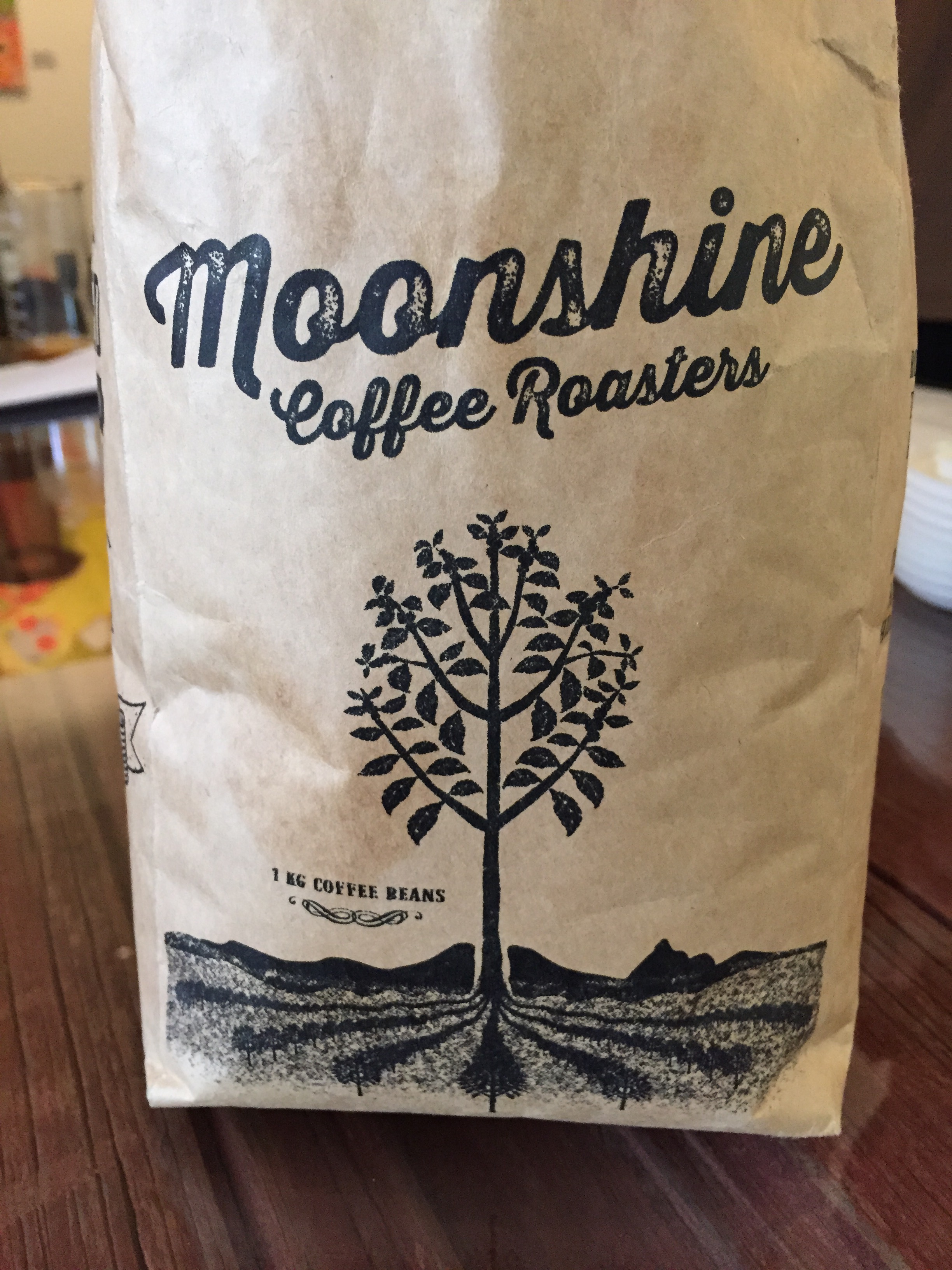
This time around, a morning of tasting some Australian grown and roasted coffee from Moonshine Coffee Roasters, held at PUK Espresso, at Kangaroo Point — in the shadow of Brisbane’s Story Bridge. Having not had occasion to visit PUK before, I was keen to head along, and also sample some coffee from a local Australian grower and roaster.

Moonshine Coffee Roasters are located (just down the road really) in the hills at Federal, in northern NSW, inland from Byron Bay:

Coffee has been grown and roasted in these hills since before we were born. It’s just been kept a little quiet, the Moonshine way.

I certainly couldn’t think of a better way to start a mild Saturday morning in August than with some Moonshine.

The Coffee

IMG_4750As I arrived at PUK things were kicking off right on time, with a brew of the 2014/15 harvest Natural Process from Moonshine just out of the Aeropress.

I had high hopes the coffee would be good, however was pleasantly surprised with the depth and complexity of flavour. Brewed through the Aeropress, the filter roast on offer was low on acidity, however extremely well-balanced, with medium body and a lovely smooth, creamy mouthfeel – like a velvety coating, which lingered long after the prominent caramel flavour subsided.

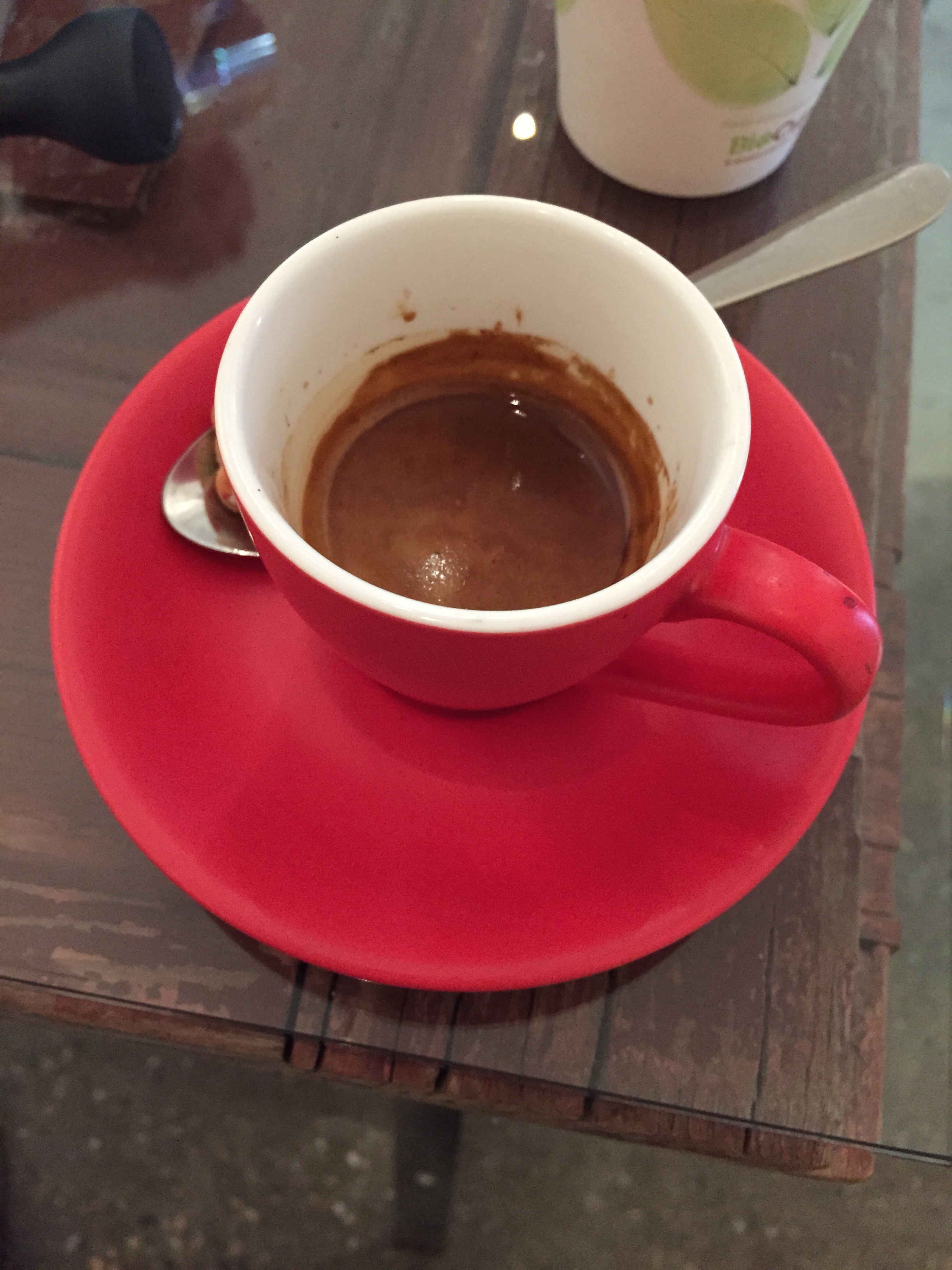
Next up, the kind folks at PUK took our orders for a complimentary espresso based coffee which would showcase the Moonshine Blend on offer at the cafe. Mine? A simple espresso of course.

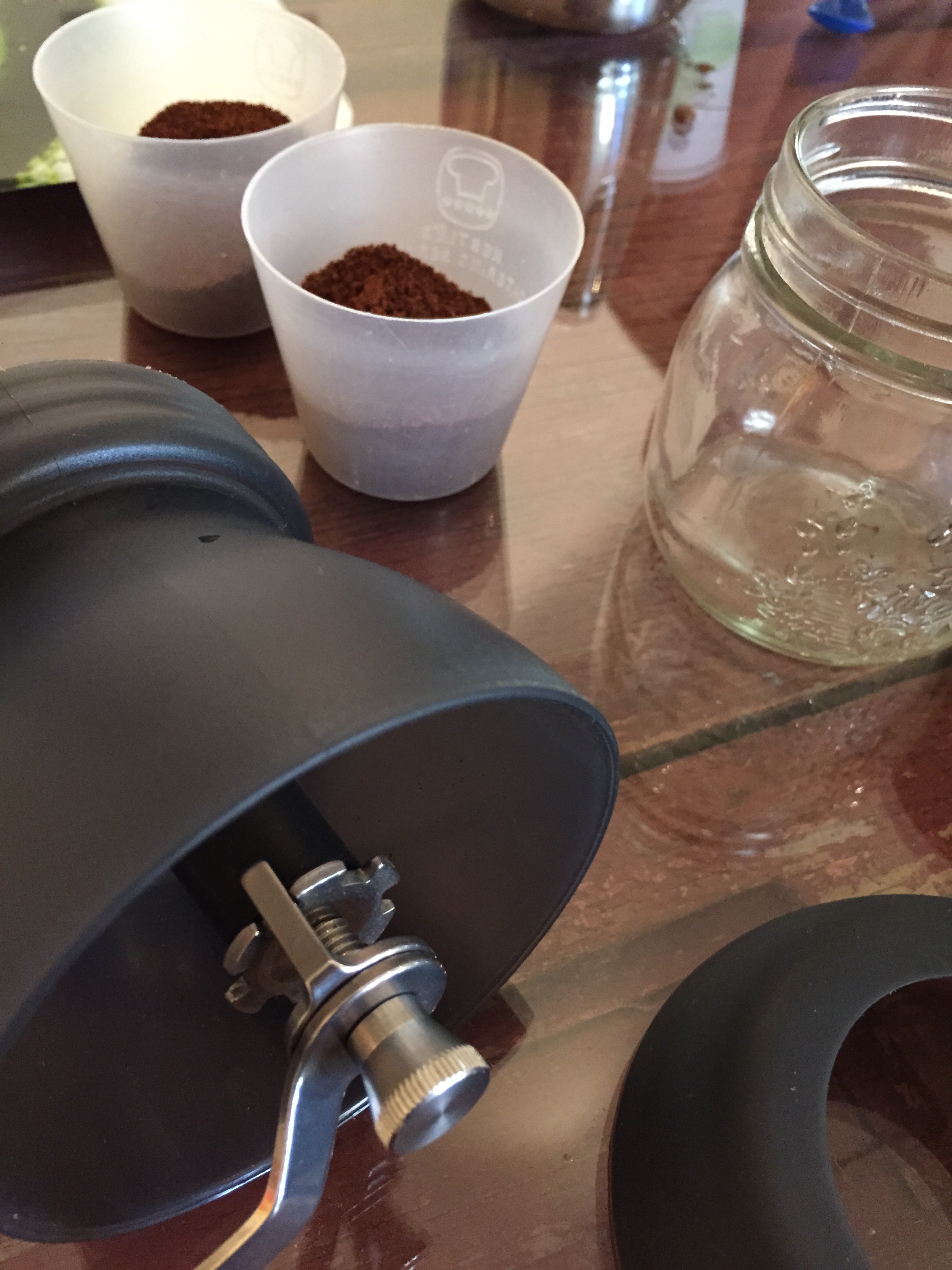
This also gave me a chance to snap a few pics and take in the dry aroma of some of the freshly ground Natural I had just sampled. Nutty and earthy are terms that come to mind, which sometimes can be a little unnerving in a naturally processed coffee, however as I’ve mentioned above, this one was a beauty.

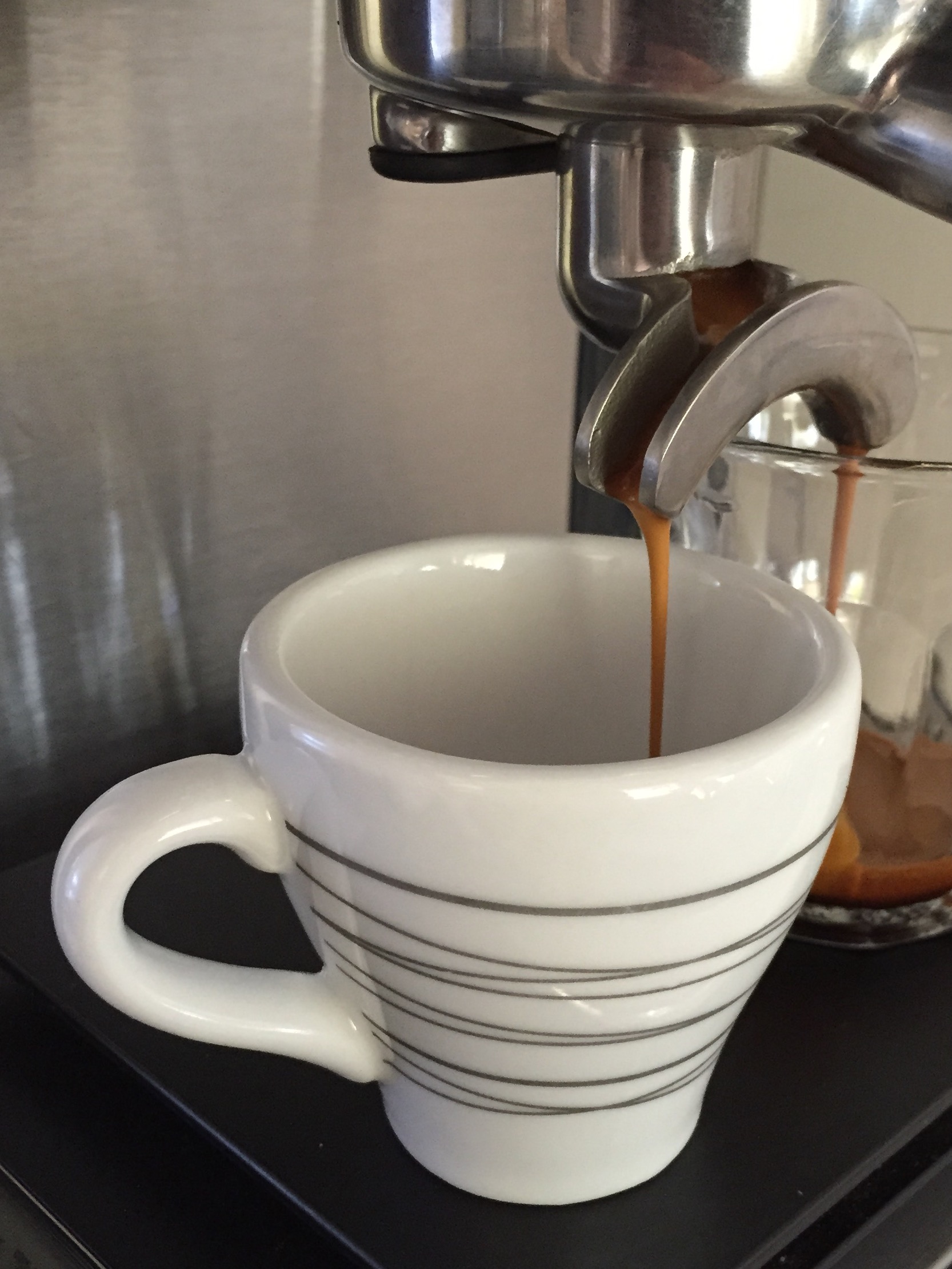
IMG_4766Onwards to the espresso, which was short, thick and dark. Here the taste belied the appearance. I found the espresso quite intriguing. In many ways it was a more concentrated form of the filter brew: mild acidity, medium on body with creamy coating in mouthfeel, with big caramel and chocolate notes. Again, the finish kept on and on. The blend served at PUK contains the locally grown variety from Federal, along with other seasonal offerings from around the globe.

I’ll certainly be back to PUK again very soon, I can guarantee that. It is a calming space, with plenty of shady outdoor seating, friendly staff, and of course great coffee.

So with the morning’s event over, off I went with enough complimentary Moonshine coffee to fuel my Hario V60 filter brews for a few days as well — a nice touch.

The Finish

Another successful Bean Brewding event under my belt, and from discussions on IMG_4767the day with the guys, the local coffee tours will keep rolling on, and there are some new and exciting possibilities also in the pipeline.

If you have an interest in coffee around Brisbane, or just coffee itself, check out Bean Brewding on the web or Facebook for upcoming events, all of which are extremely well supported by local speciality coffee establishments. It is simply a great way to get an inside look and learn from industry experts you may otherwise not have access to in a very non intimidating way.

Thanks to Bean Brewding, PUK Espresso and Moonshine Roasters for an extremely enjoyable morning.


Learning to Love Espresso Again

In all honesty, I probably never really fell out of love with espresso — perhaps became a little disillusioned would be more accurate. Just over two years ago I even wrote a short piece on my gravitation towards longer forms of brewing in the ever so wittily(?) titled A Short Long Story1. Not an “espresso — I’m done with you” entirely, however certainly an indication of my feelings — or changing tastes as it were — at the time.

Why the sad face?

So what was it that went so wrong?

FullSizeRender 16Nothing specific really — espresso was just… what it was at the time. Perhaps my taste developed and I began to appreciate the more subtle flavours achieved when brewing lighter roasted coffee by filter methods. Maybe it was something else entirely. Whatever the cause, somewhere along the way espresso became a little underwhelming to me — both in what I was brewing at home, and in much of what I could buy in cafes.

Am I now suggesting some sort of renaissance is occurring in the world of espresso coffee? Yes, and no. Perhaps just in my own little corner of that world. Whatever your views on the “third-wave” philosophy as it exists in coffee, there is no doubt things have changed markedly in the last few years in terms of how espresso is served — depending of course on the type of establishment you may be in at the time.

A few short years ago, espresso was generally a short, thick, and overly bitter drink. Again, that was simply what espresso was. More recently, we have entered another phase in Brisbane’s coffee evolution — certainly in terms of how espresso is served, and for me personally — it is an exciting time.

The purpose of this post is not to analyse or enter the debate on what may constitute a perfect or even proper espresso, but merely to outline a few thoughts on why I am really enjoying this method of brewing coffee again — probably more so than I ever have. A key point here is my reference to the brewing component. Of course I enjoy the fact I get to consume a great tasting coffee, however my world has been opened up substantially of late by a greater attention to the process, and I have thoroughly enjoyed the output I am achieving at home as a result.

What Changed?

For me — it was more so an awakening of what espresso could be, which triggered a new-found quest to get better at brewing it — plain and simple. For this I have the hardworking professionals at some of Brisbane’s best cafes, along with the philosophies of some outstanding local roasters to thank for that. In short: greater variety in the coffee being served (seasonal blends and single origin offerings); different roast profiles; and the knowledge of how to get the best out of these coffees by those working the machine.2

Ironically, further impetus for my renewed enthusiasm for espresso also came from my filter brewing. In setting myself up with equipment to accurately weigh the coffeeIMG_4624 and water when brewing with my Hario V60, all of a sudden I had a set of scales to put to use when brewing espresso as well.

In addition, I’d also begun to take a little more notice of the way espresso is approached by quality cafes and baristas, along with reading a little more deeply into the key brewing variables for great espresso. One of the definitive resources in further developing my understanding of brewing great espresso has been Matt Perger’s The Barista Hustle newsletter. I highly recommend subscribing if you have even a passing interest in improving your coffee knowledge and brewing skills.

I should also mention a recent post on the blog of James Hoffmann, which outlines The Coffee Professional Beginners Guide to resources for reading and learning. When I read this post recently, I was pleased to know I had been looking for information in the right places, having ticked of most of the first two categories already in my quest for more knowledge.

My philosophy has always been to “read up” and “read widely” — that is, if you’re an amateur home coffee brewer like myself, what better resources to learn from than those suitable for an entry-level professional. Sure, some may not be relevant and/or over your head (and certainly mine), however you most certainly will gain knowledge you will apply at home — and a lot of it.

Without a doubt however, the single biggest driver in wanting to know more, and learn more, is inspiration. For some time now, I have made my daily visit to Strauss in Brisbane’s CBD, and watched, learned from, and absorbed everything I can (hopefully without getting in the way) from current QLD Barista Champion Adam Metelmann. To say this has been the single biggest factor in changing my way of thinking about espresso would be to understate things quite substantially, and I have been extremely fortunate in this regard.

Closing thoughts

Although there is much to be written on the how of my improved espresso brewing — this post was simply to outline why I have renewed enthusiasm for this form of coffee.

In simple terms, learning more about the process, what I can control, and how to control it, along with the fantastic espresso to be had these days in Brisbane, has opened up a whole new world for me when it comes to one of my favourite ways (again) to drink coffee.

This is espresso folks — truly great espresso — aint it grand?


  1. In going back and reading this post, I would hardly consider the Aeropress the most refined brewing device. ↩︎
  2. Please take this particular point for what it is: My amateur observations of some the changes I have seen in the local coffee scene. It is not a suggestion of how roasters should roast, nor how baristas should “work the machines”. ↩︎

What’s Brewing: Nicaragua Jaime Molina – Honey Process

Flag_of_Nicaragua.svgBefore snapping this up a month or so ago, I had not bought and roasted any coffee from Nicaragua, and was keen to try this offering from Ministry Grounds, my ever reliable green bean supplier. In addition, it was also processed using the honey or pulped natural method — that is, where the skins are removed but the beans are dried with all or some of the fruit flesh or mucilage still present. A good proportion of the coffee I roast tends to be of the washed variety, and I am keen to broaden my experience as much as possible.

The Region

A little on Las Sabanas from Wikipedia:

The Central American country of Nicaragua borders Honduras to the north and Costa Rica to the south, both very prolific coffee producers in their own right, along with other close neighbours El Salvador and Guatemala. Las Sabanas is a municipality in the department of Madriz, which lies in the northern aspect of Nicaragua, close to the border with Honduras.

The municipality itself has a varied climate, which in the lower parts is a little drier, however more humid in the higher mountainous regions, with an annual rainfall between 1,200 and 1,400 mm. Nicaragua has a variety of vegetation, with predominantly pines, coffee, oak, guasimo, eucalyptus, and cedar.

The Coffee

Information Courtesy Ministry Grounds

Coffee: Nicaragua Jaime Molina
Region: Sabanas
Town: Mira Mar
Farm:  Monte Cristo
Altitude: 1300-1450 m
Varietal: Red Bourbon
Processing: Honey

Tasting notes: Chocolate, red berry, juicy, coating, balanced, medium body

In researching a little on this coffee, I came across a little on the producer, and his active role in the 5 de junio collective in Nicaragua:

Don Jaime and his family have shared their coffee processing methods with other members of the cooperative, fostering innovation in the name of quality.  During the 2010/11 harvest, 5 de junio implemented a successful pilot project for semi washed or “honey” coffee based on new technologies learned from Don Jaime.

The full post can be read on the CRS Coffeelands blog – incidentally a site which I highly recommend for great insights into the lives of coffee farmers and farm workers, including many harsh realities that come with such an existence in many of these countries.

The Brew

Terra Bella LatteI’m now through roasting the kilogram of green beans I originally ordered, and the coffee has been roasted for filter, espresso, and added to a couple of blends along the way. As usual, I’d have to say not all of the roasts were perfected — though by the last, things seemed to come together well. The last roast? Espresso, which is what I will describe here.

Brewed as precisely that — espresso, I’d describe it as one of the more balanced coffees I’ve had in recent times. The dry aroma on grinding teases of a little strawberry, however the cup didn’t back that up in any great measure — very subtle to say the least. More so the chocolate notes, with a medium body.

Where it really shined was with milk. My typical morning brew being a 5.5oz single shot latte (brew parameters from this morning were 19.3g dose; 46g yield – split between espresso and the latte; 27 second extraction time).1 As smooth as silk, with more chocolate, a little caramel, and a nice strawberry layer to boot. My pick for this coffee would definitely involve milk, however you prefer it — be that cappuccino, latte, flat white or something a little shorter.

The Finish

Perhaps not one of my standout favourites, however to kick off the day it will take some beating. I’d happily recommend, and buy this coffee again. The more I write about the coffees I roast and brew here, the more I’m convinced some sort of spreadsheet tracking system is called for, lining up roast and brew parameters, and in some way perhaps correlating the resulting outcomes.

Something for another day perhaps, however I’m certainly ready for another brew while I think about it — and for this Nicaraguan — just make it with milk is all I ask.


  1. Given I have been looking a little more closely into weighing and measuring dose and yield with my espresso lately, I figure it is worth documenting here, for those who might be interested. Of course my learnings around these parameters are slated for their own post, which I will get to in due course. ↩︎