Learning to Love Espresso Again

In all honesty, I probably never really fell out of love with espresso — perhaps became a little disillusioned would be more accurate. Just over two years ago I even wrote a short piece on my gravitation towards longer forms of brewing in the ever so wittily(?) titled A Short Long Story1. Not an “espresso — I’m done with you” entirely, however certainly an indication of my feelings — or changing tastes as it were — at the time.

Why the sad face?

So what was it that went so wrong?
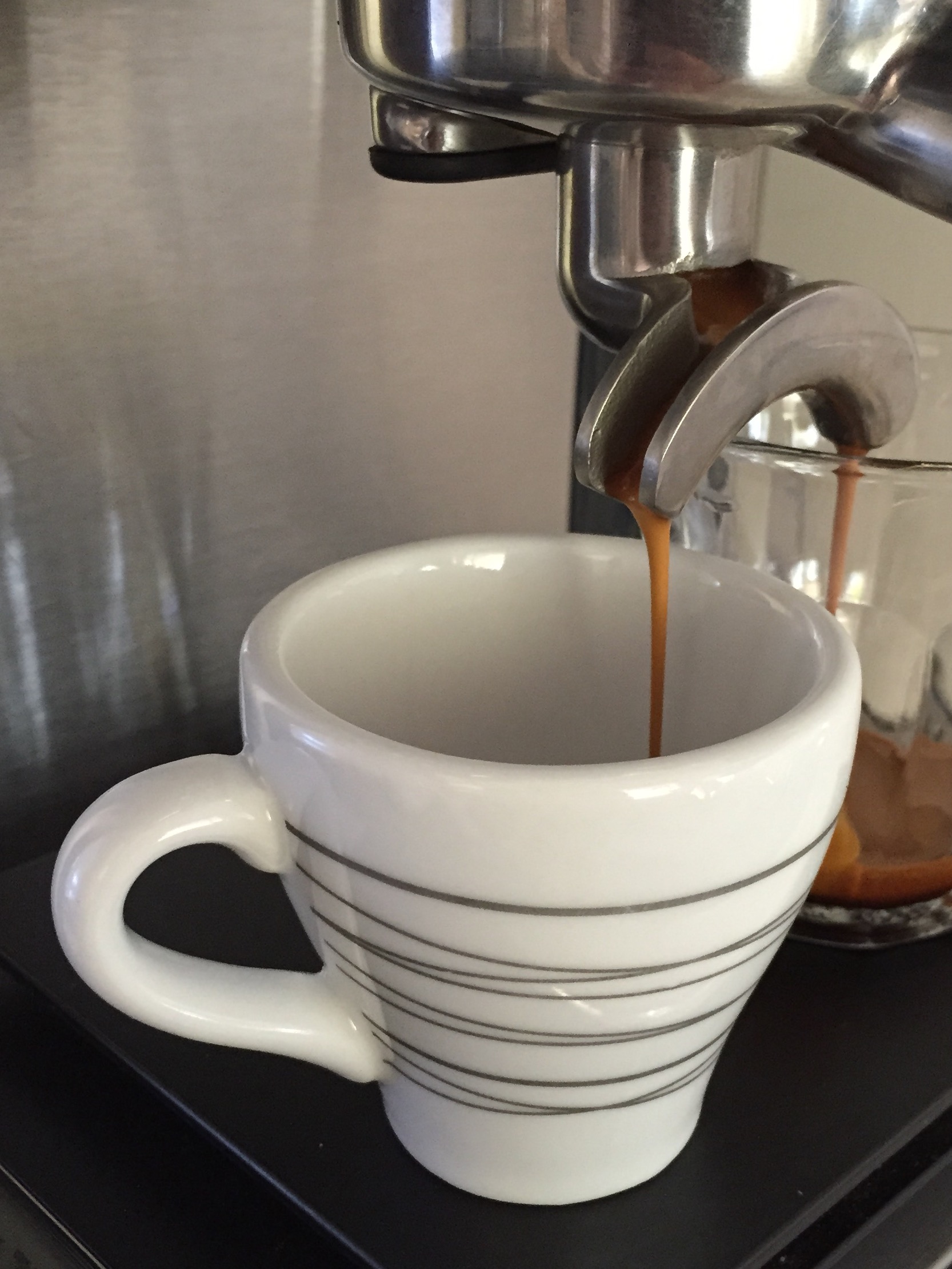
FullSizeRender 16Nothing specific really — espresso was just… what it was at the time. Perhaps my taste developed and I began to appreciate the more subtle flavours achieved when brewing lighter roasted coffee by filter methods. Maybe it was something else entirely. Whatever the cause, somewhere along the way espresso became a little underwhelming to me — both in what I was brewing at home, and in much of what I could buy in cafes.

Am I now suggesting some sort of renaissance is occurring in the world of espresso coffee? Yes, and no. Perhaps just in my own little corner of that world. Whatever your views on the “third-wave” philosophy as it exists in coffee, there is no doubt things have changed markedly in the last few years in terms of how espresso is served — depending of course on the type of establishment you may be in at the time.

A few short years ago, espresso was generally a short, thick, and overly bitter drink. Again, that was simply what espresso was. More recently, we have entered another phase in Brisbane’s coffee evolution — certainly in terms of how espresso is served, and for me personally — it is an exciting time.

The purpose of this post is not to analyse or enter the debate on what may constitute a perfect or even proper espresso, but merely to outline a few thoughts on why I am really enjoying this method of brewing coffee again — probably more so than I ever have. A key point here is my reference to the brewing component. Of course I enjoy the fact I get to consume a great tasting coffee, however my world has been opened up substantially of late by a greater attention to the process, and I have thoroughly enjoyed the output I am achieving at home as a result.

What Changed?

For me — it was more so an awakening of what espresso could be, which triggered a new-found quest to get better at brewing it — plain and simple. For this I have the hardworking professionals at some of Brisbane’s best cafes, along with the philosophies of some outstanding local roasters to thank for that. In short: greater variety in the coffee being served (seasonal blends and single origin offerings); different roast profiles; and the knowledge of how to get the best out of these coffees by those working the machine.2

Ironically, further impetus for my renewed enthusiasm for espresso also came from my filter brewing. In setting myself up with equipment to accurately weigh the coffeeIMG_4624 and water when brewing with my Hario V60, all of a sudden I had a set of scales to put to use when brewing espresso as well.

In addition, I’d also begun to take a little more notice of the way espresso is approached by quality cafes and baristas, along with reading a little more deeply into the key brewing variables for great espresso. One of the definitive resources in further developing my understanding of brewing great espresso has been Matt Perger’s The Barista Hustle newsletter. I highly recommend subscribing if you have even a passing interest in improving your coffee knowledge and brewing skills.

I should also mention a recent post on the blog of James Hoffmann, which outlines The Coffee Professional Beginners Guide to resources for reading and learning. When I read this post recently, I was pleased to know I had been looking for information in the right places, having ticked of most of the first two categories already in my quest for more knowledge.

My philosophy has always been to “read up” and “read widely” — that is, if you’re an amateur home coffee brewer like myself, what better resources to learn from than those suitable for an entry-level professional. Sure, some may not be relevant and/or over your head (and certainly mine), however you most certainly will gain knowledge you will apply at home — and a lot of it.

Without a doubt however, the single biggest driver in wanting to know more, and learn more, is inspiration. For some time now, I have made my daily visit to Strauss in Brisbane’s CBD, and watched, learned from, and absorbed everything I can (hopefully without getting in the way) from current QLD Barista Champion Adam Metelmann. To say this has been the single biggest factor in changing my way of thinking about espresso would be to understate things quite substantially, and I have been extremely fortunate in this regard.

Closing thoughts

Although there is much to be written on the how of my improved espresso brewing — this post was simply to outline why I have renewed enthusiasm for this form of coffee.

In simple terms, learning more about the process, what I can control, and how to control it, along with the fantastic espresso to be had these days in Brisbane, has opened up a whole new world for me when it comes to one of my favourite ways (again) to drink coffee.

This is espresso folks — truly great espresso — aint it grand?


  1. In going back and reading this post, I would hardly consider the Aeropress the most refined brewing device. ↩︎
  2. Please take this particular point for what it is: My amateur observations of some the changes I have seen in the local coffee scene. It is not a suggestion of how roasters should roast, nor how baristas should “work the machines”. ↩︎

Apica CD11 A5 Notebook

Hypothetically speaking, were I someone who walked through their local CBD bookstore’s stationery section more than say, a couple of times per week (who does that?), I would have noticed the Apica Notebooks display stand.

I might have also watched as the stocks slowly dwindled, perhaps picking up an A5 size in a mustard yellow — one of the last remaining colours. Of course, I then perhaps noticed the very next week, stocks were replenished with just about every colour available in the range — I mean I’d know that if I were someone who walked in looking at the notebooks all the time.

What I can confirm, is at the time of writing, there is a nice range of Apica Notebooks in different sizes at this particular store. That’s the word on the street anyway.

Look and Feel


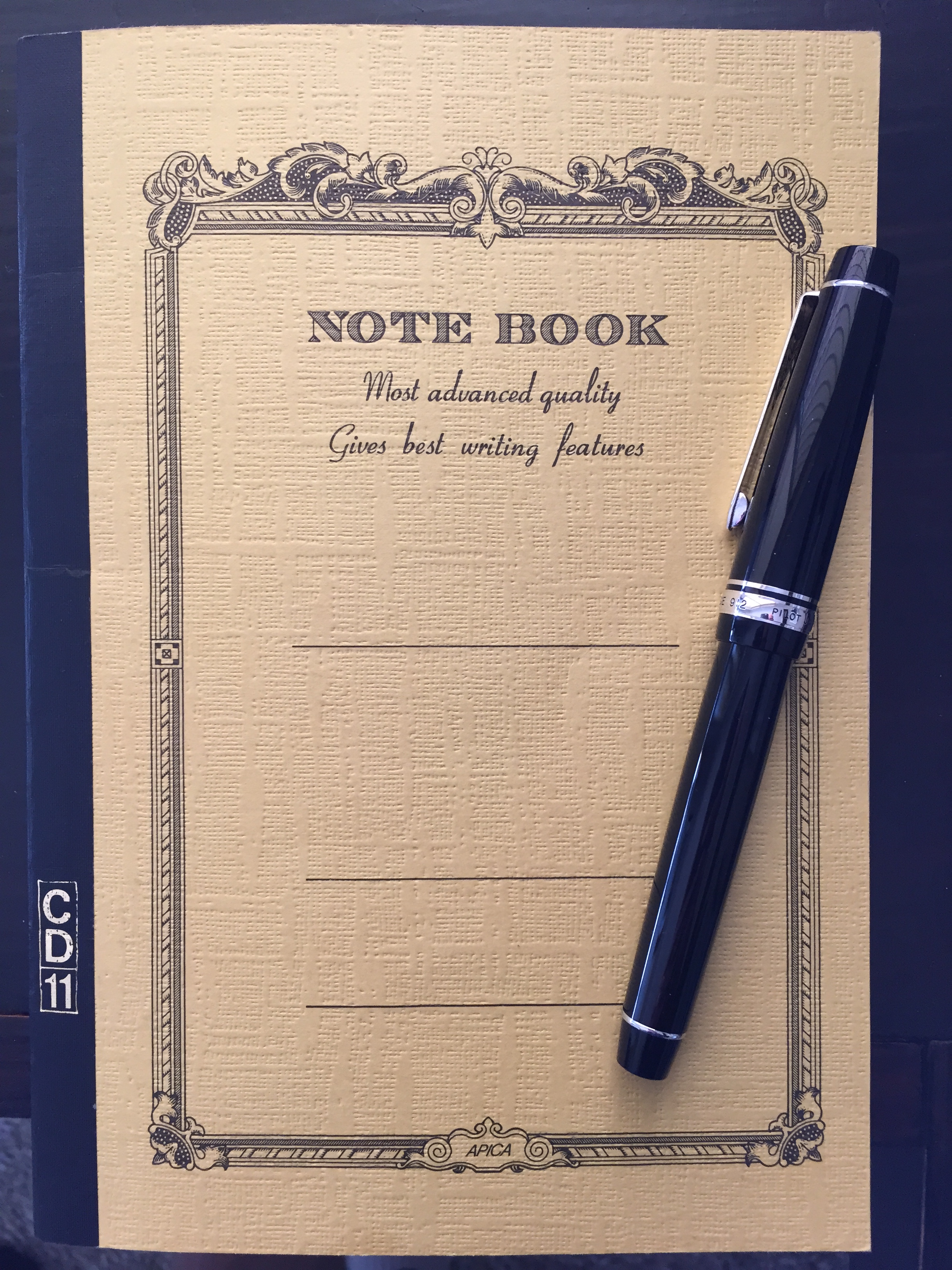
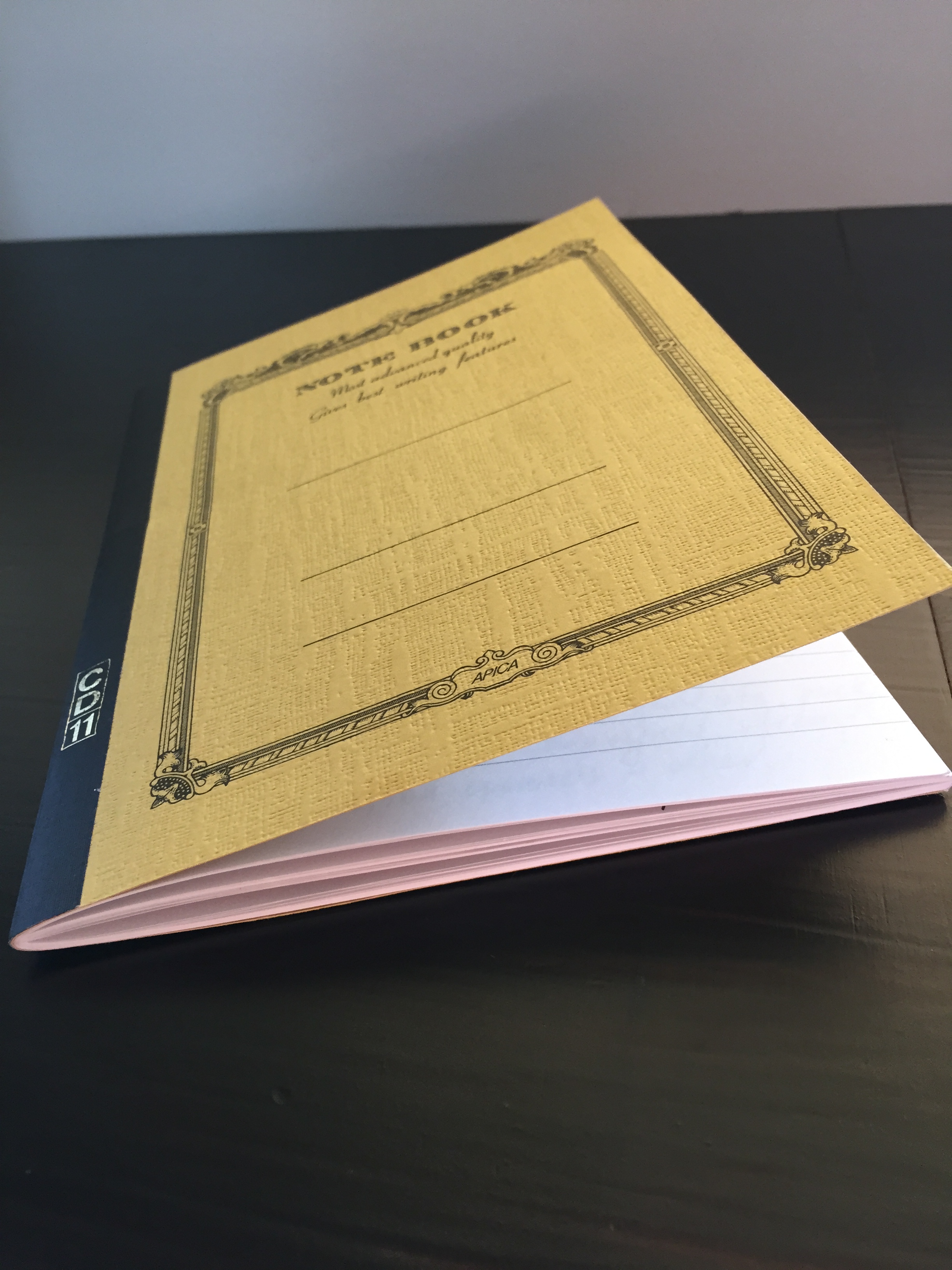
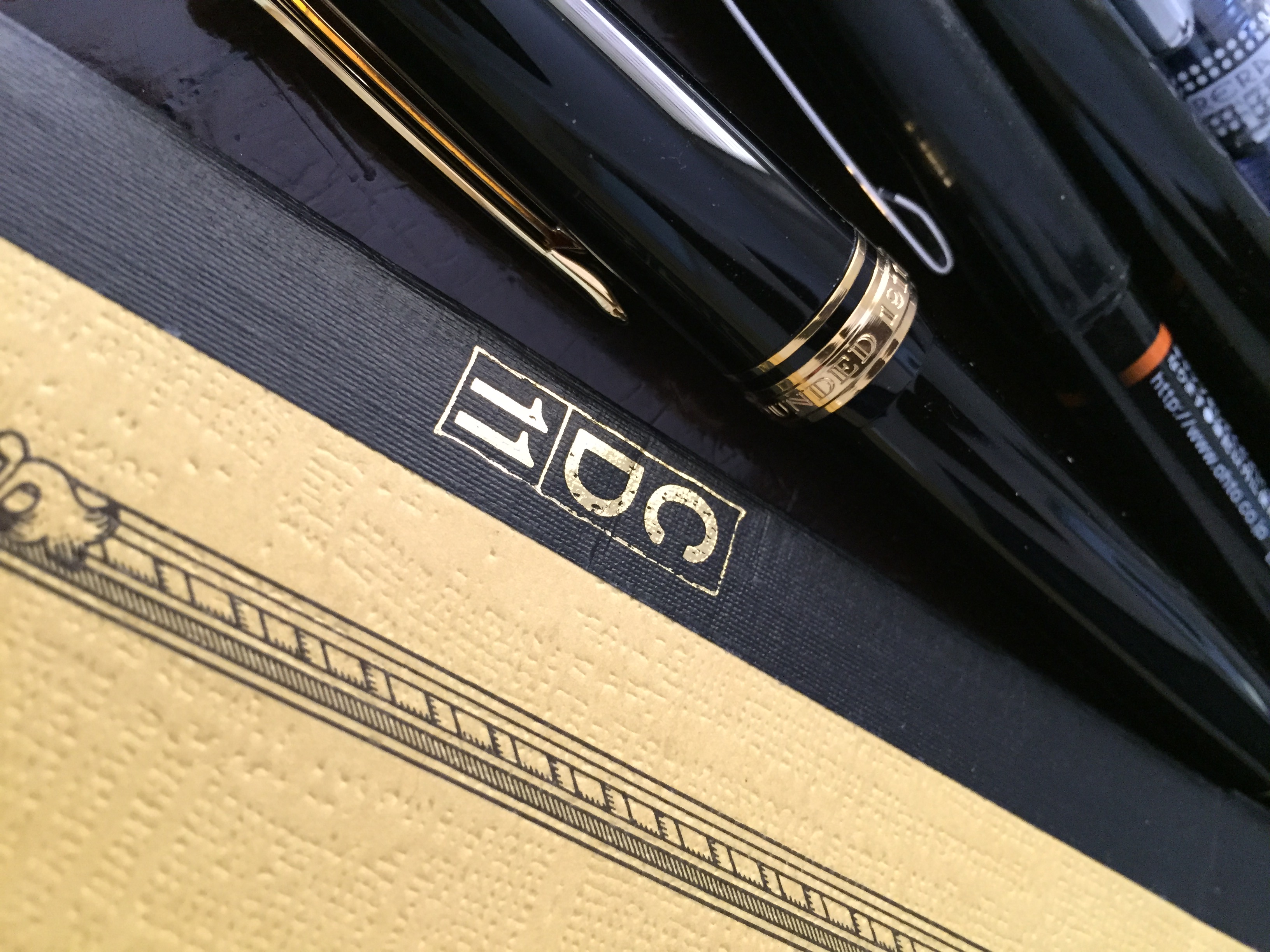
IMG_4584The Apica CD11 Notebook, is an A5 (148 x 210mm), soft cover notebook with a distinctive, traditional looking cover design. Made of flexible textured card stock with tape reinforcement along the spine, the overall look harks back to times gone by.

Although not my favourite, the mustard colour has certainly grown on me, and is only a stone’s throw from the colour of the Baron Fig Three Legged Juggler limited edition I finished a couple of months ago. I’m not sure what it is with me lately, however you might recall a recent review of the Delfonics Rollbahn notebook which I also purchased in — uhh… yellow.

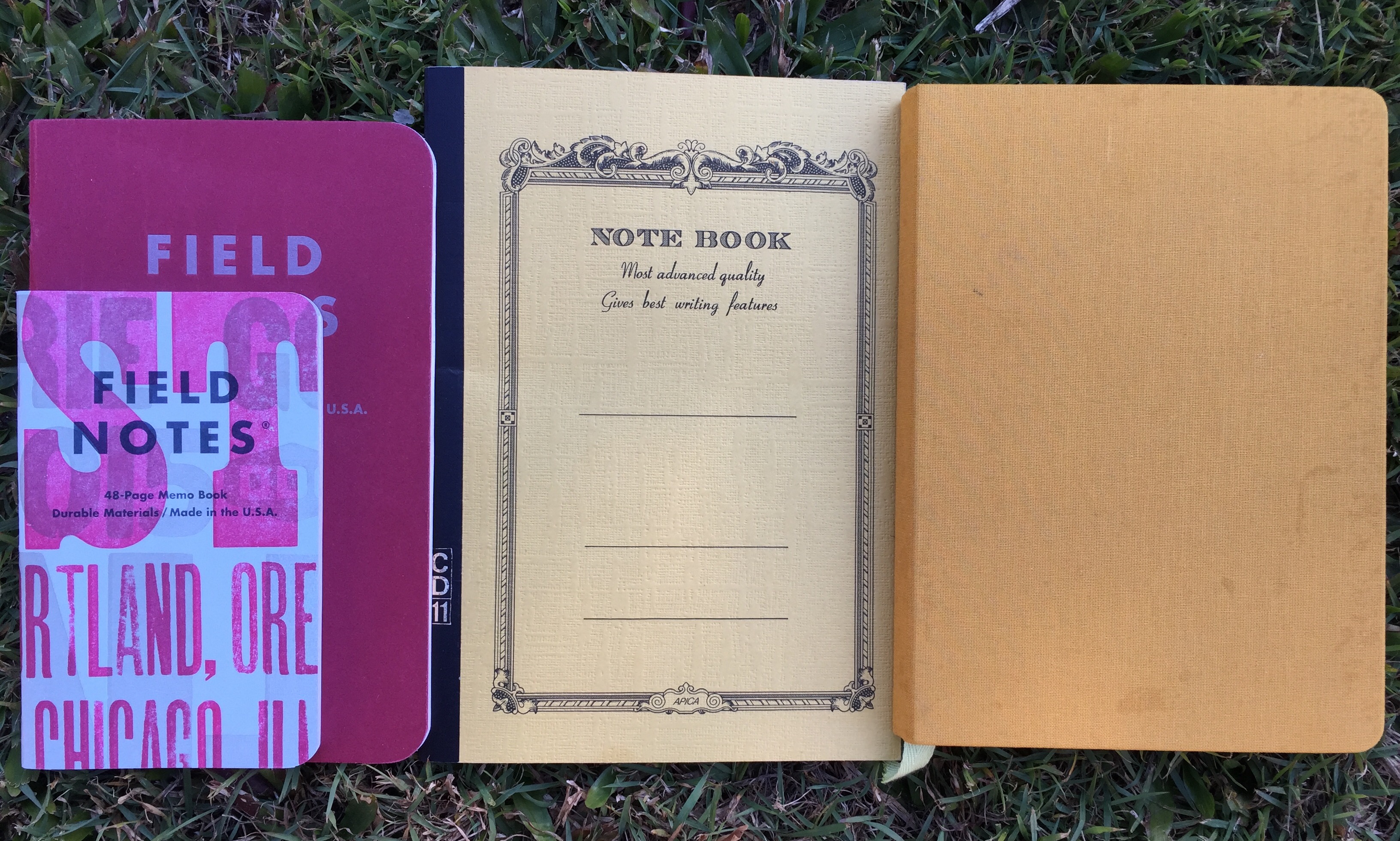
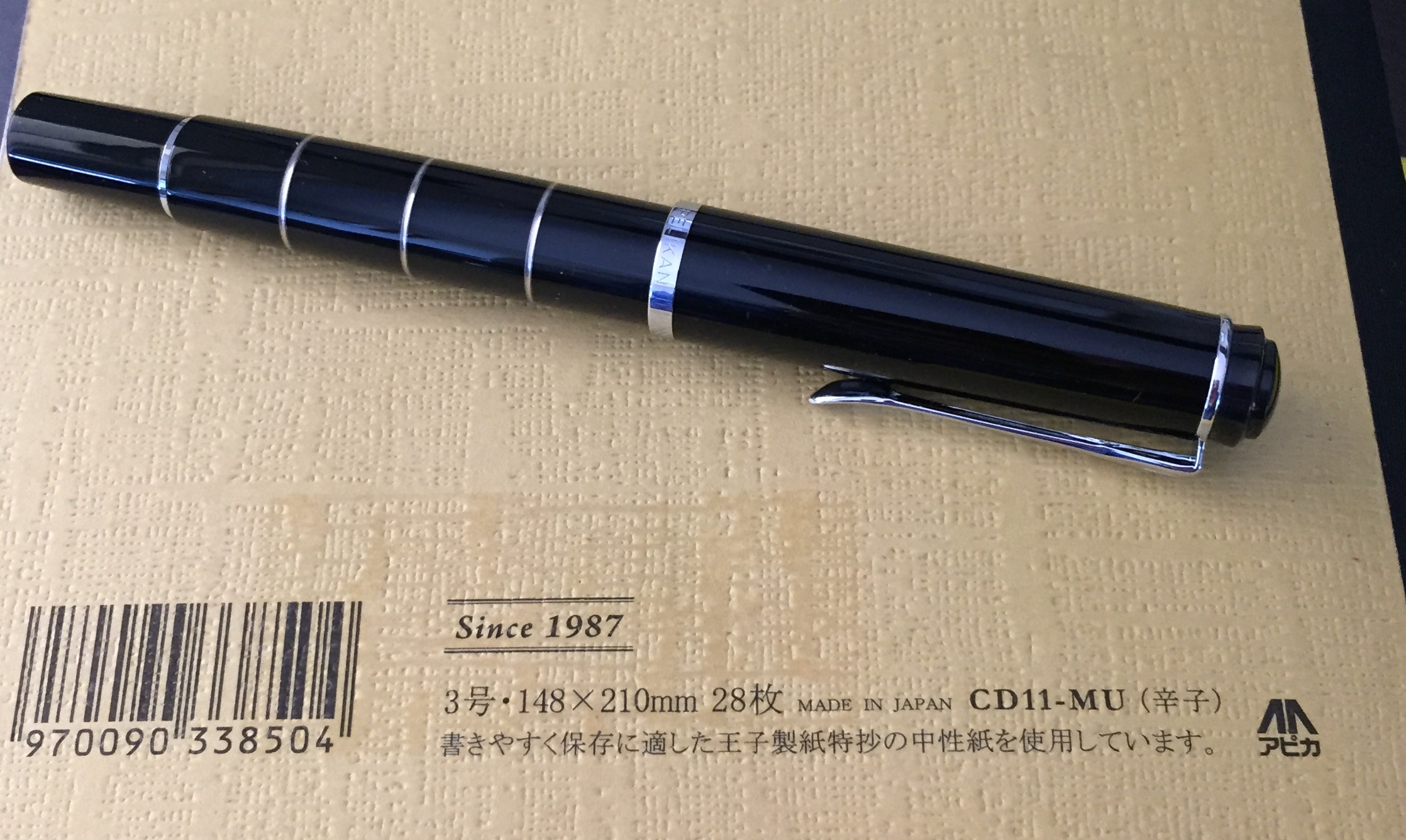
FullSizeRender 19Back to matters at hand. As listed in the specifications below, the CD11 is a 28 sheet or 56 page notebook, so although a little larger in overall dimensions, thickness-wise is similar to a Field Notes Arts & Sciences edition, which runs 32 sheets or 64 pages. The Apica CD line does includes a smaller pocket-size — the B7 sized CD8, and would be well worth considering if a very fountain pen friendly pocket-sized notebook was of interest to you — great value at $AUD2.75 for 72 pages.

The cover is adorned with a nice border pattern and a few words from the manufacturer. The Most advanced quality and Gives best writing features inscriptions I can live with, however I am not one to write any details such as my name, contact or the like on a front cover. At best I might put the start and end dates or a specific topic if relevant for the book, however the fact it remains blank with half the notebook used is probably telling on this point as far as my preference goes.

FullSizeRender 18

From (L): Field Notes Two Rivers & Arts and Sciences; The CD11; Baron Fig Confidant Three Legged Juggler Edition

Overall, I do rate the design highly, and although very thin and light, still affords the feeling of a quality product.

Specifications

Courtesy of the fine folks at JetPens, whose specifications tab on products never fails to provide just about every specification you’d care to know.

  • Model: Apica CD11
  • Manufacturer: Apica
  • Country of Origin: Japan
  • Weight: 2.6 ounces (74g)
  • Binding: Thread
  • Cover Material: Card stock
  • Cover Type: Softcover
  • Line Spacing: 7 mm
  • Number of Lines: 25
  • Number of Sheets: 28 (56 pages)
  • Paper Weight: 80 gsm
  • Perforated: No
  • Refillable: No
  • Sheet Style: Lined
  • Size – Depth: 0.3 cm
  • Size – Length: 21 cm
  • Size – Width: 14.8 cm

The notebook you see was purchased at the Brisbane CBD Dymocks bookstore for $AUD5.50. It can also be purchased online in six different colours from Australian retailer Bookbinders Online for $AUD3.95, or in the US from JetPens for $USD1.75. For a single purchase, I certainly could not have had one delivered all up for less than $5.50, and was happy to pay the store retail.

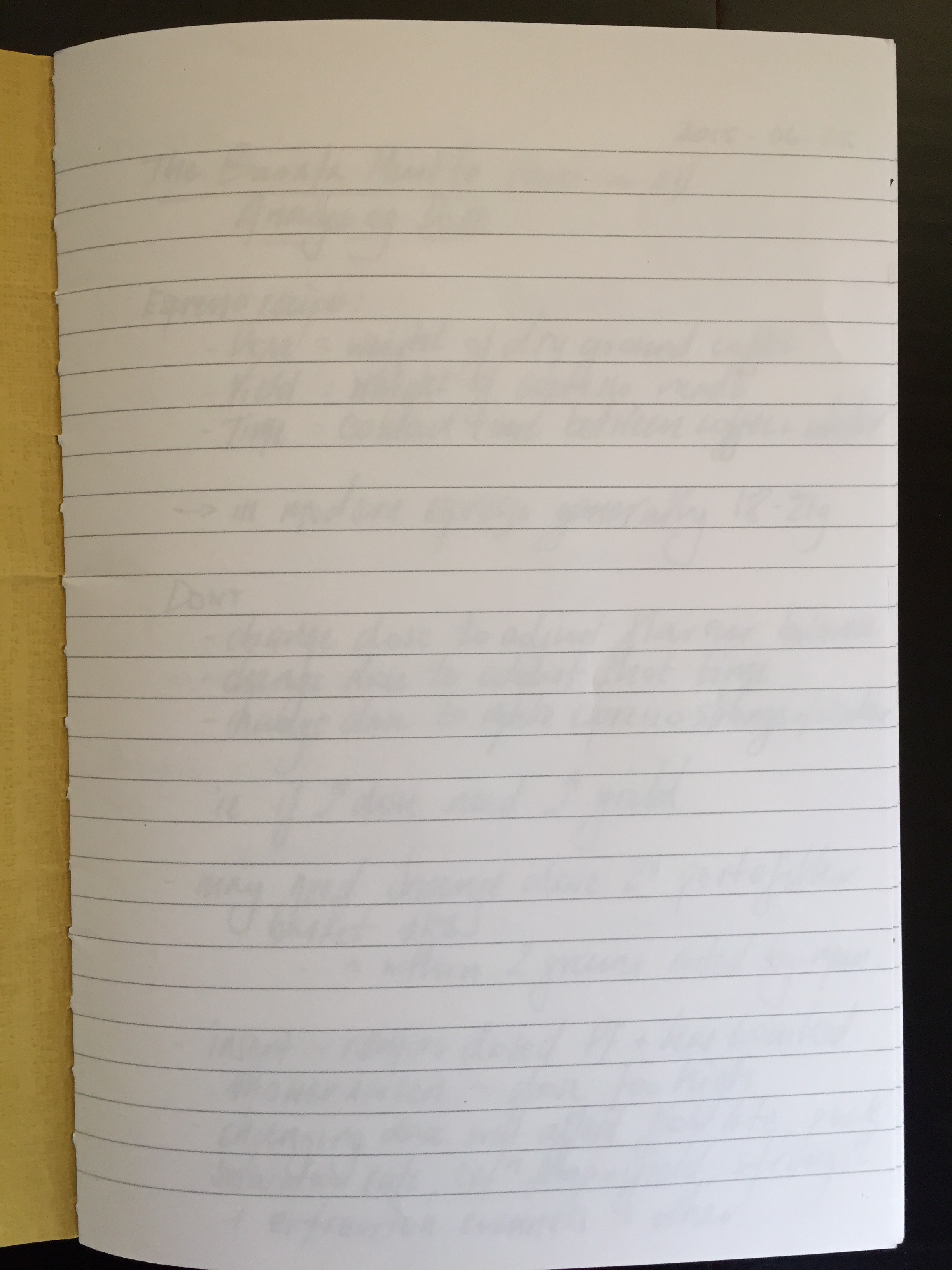
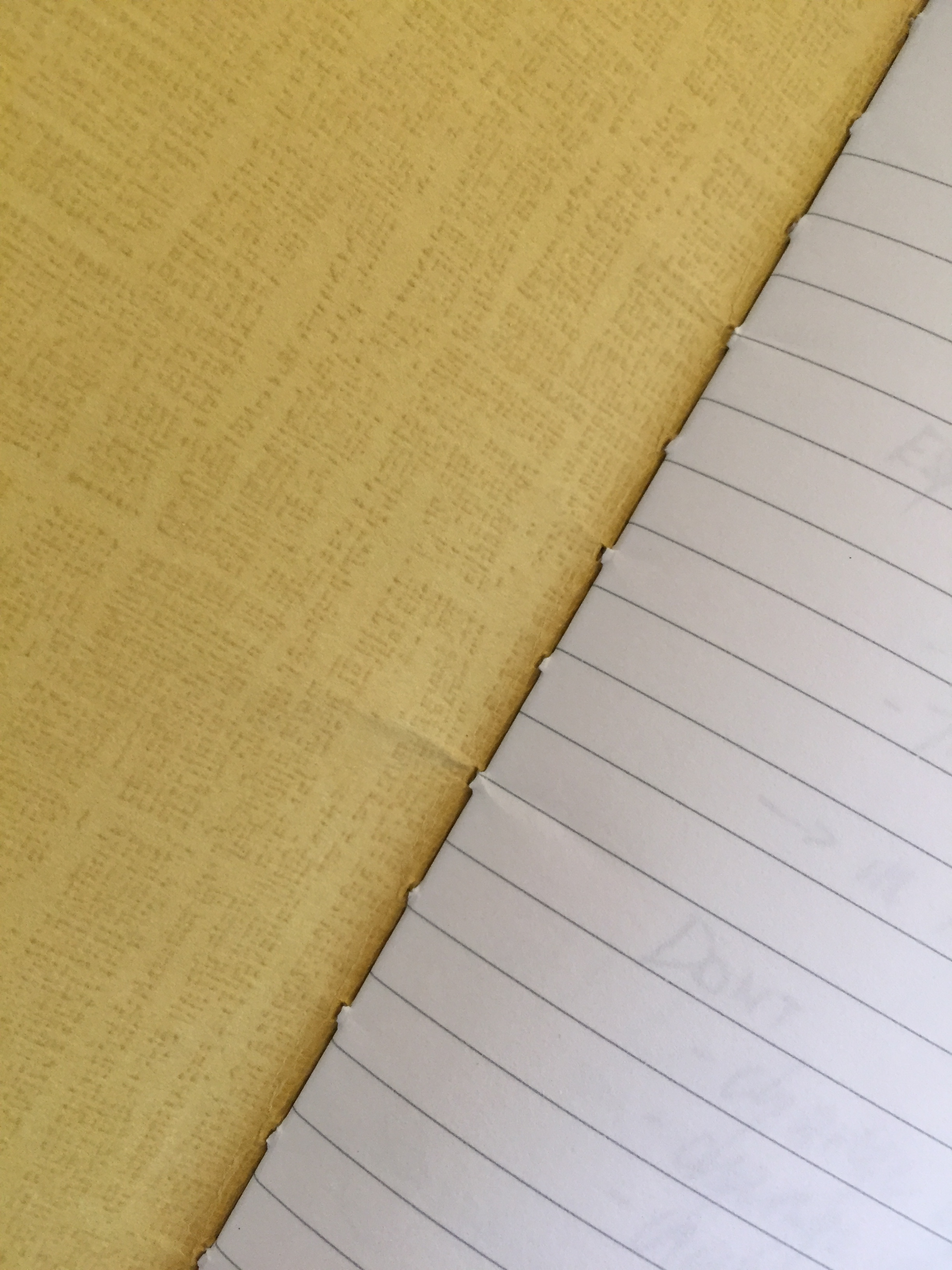
There are no bells and whistles here. The CD11 contains no sleeves, pockets, elastic enclosure, perforated pages or other paper ruling options. There is no numbering or pre-formatting on any of the pages. This is a traditional, 7mm lined notebook with a blank margin at the top of those 25 lines. If you have a preference for blank or dot grid pages, this may not be the notebook for you.

IMG_4598IMG_4599IMG_4580

This is a straightforward, high quality product, at a very competitive price — which handles fountain pens very, very well. If that sounds like something you would be interested in — and I believe many would be, then I don’t believe too many of the other features are all that necessary.

Writing Performance

The 80gsm paper of the CD11 reminds me very much of a Clairefontaine Essentials cloth bound A5 Notebook I own. Apart from the 90gsm paper, the major difference of course being the Clairefontaine’s 192 pages. For that reason I have never really had any great affinity for carrying it with me – it just feels too heavy and bulky.

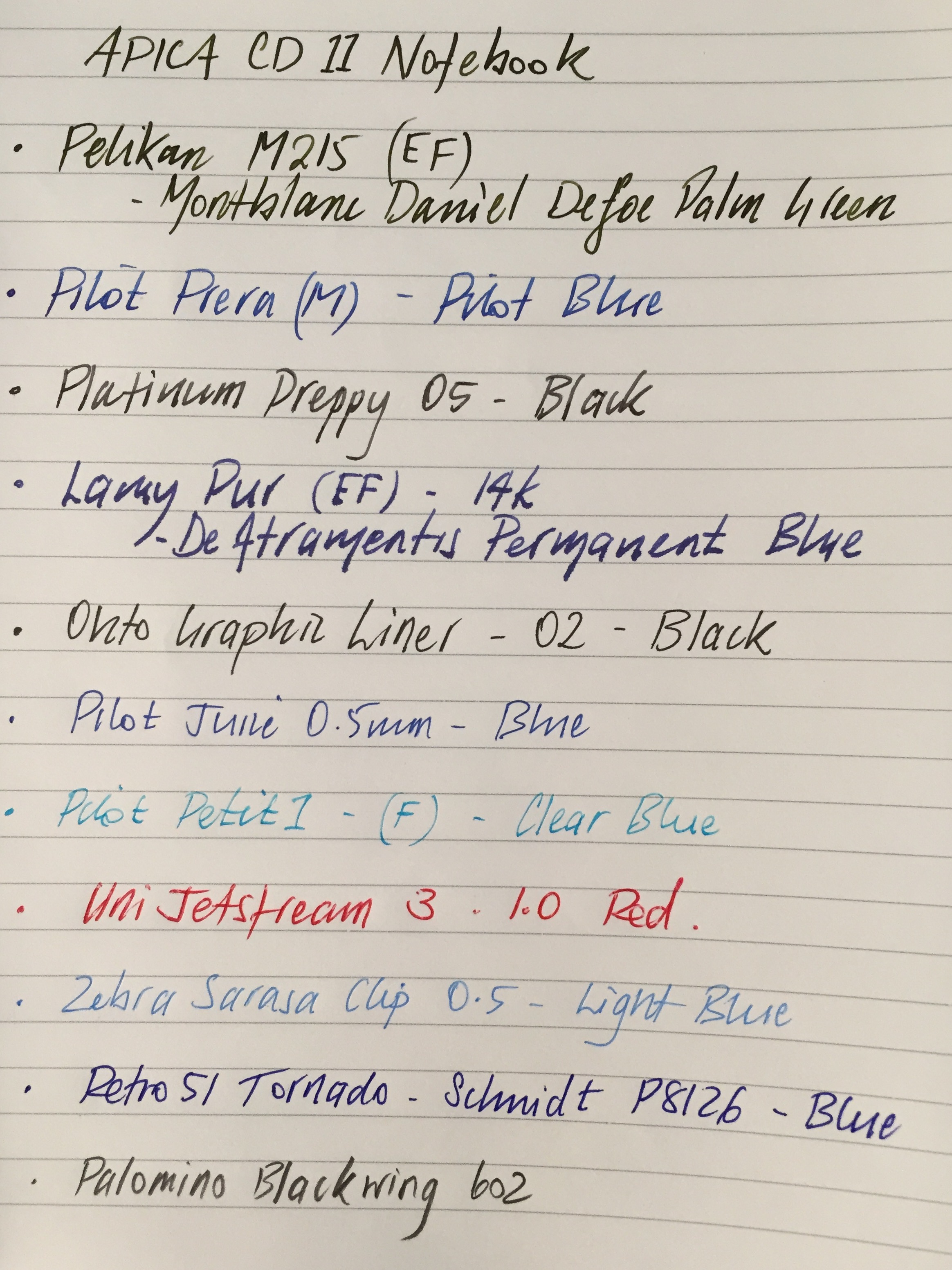
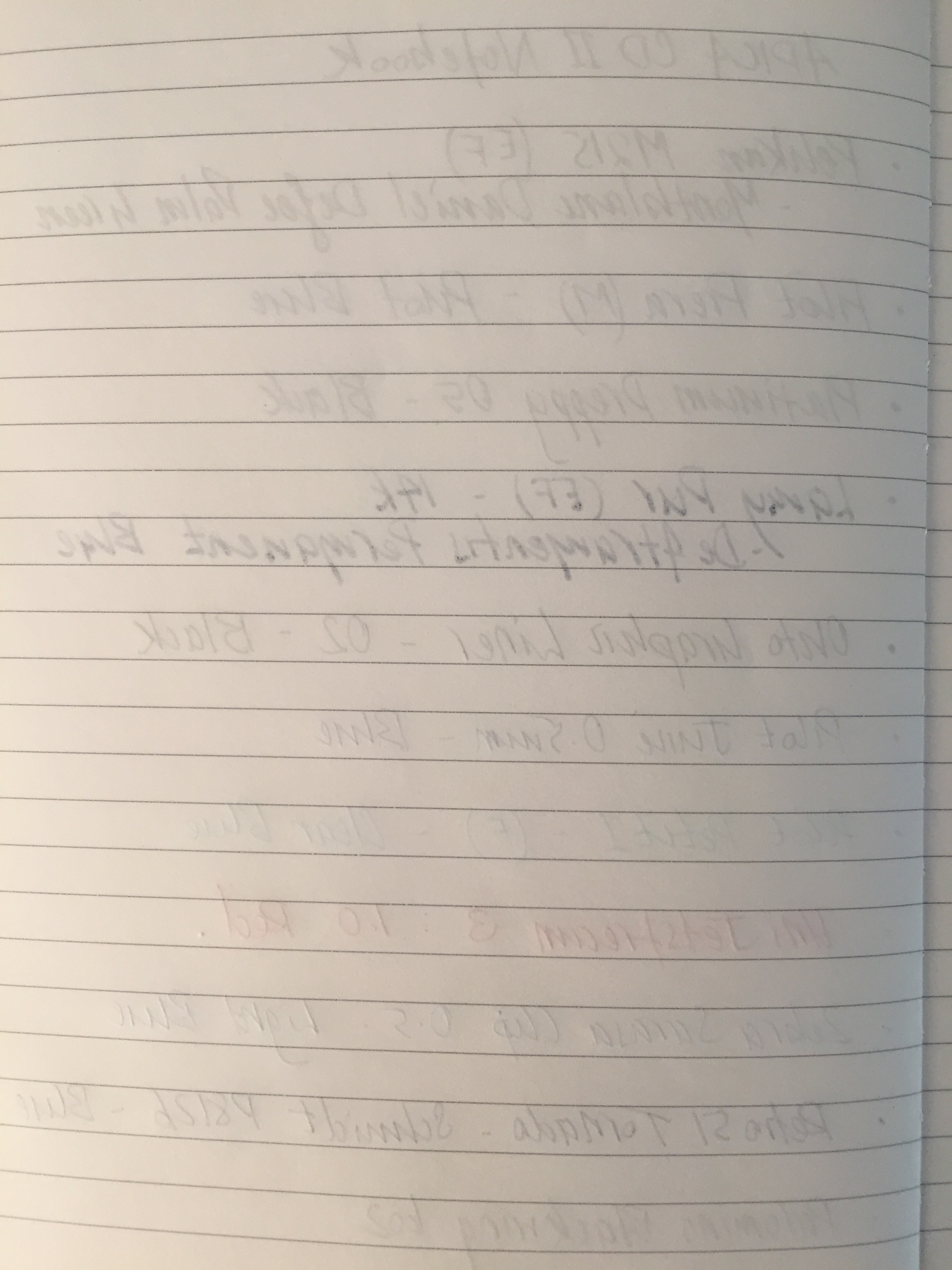
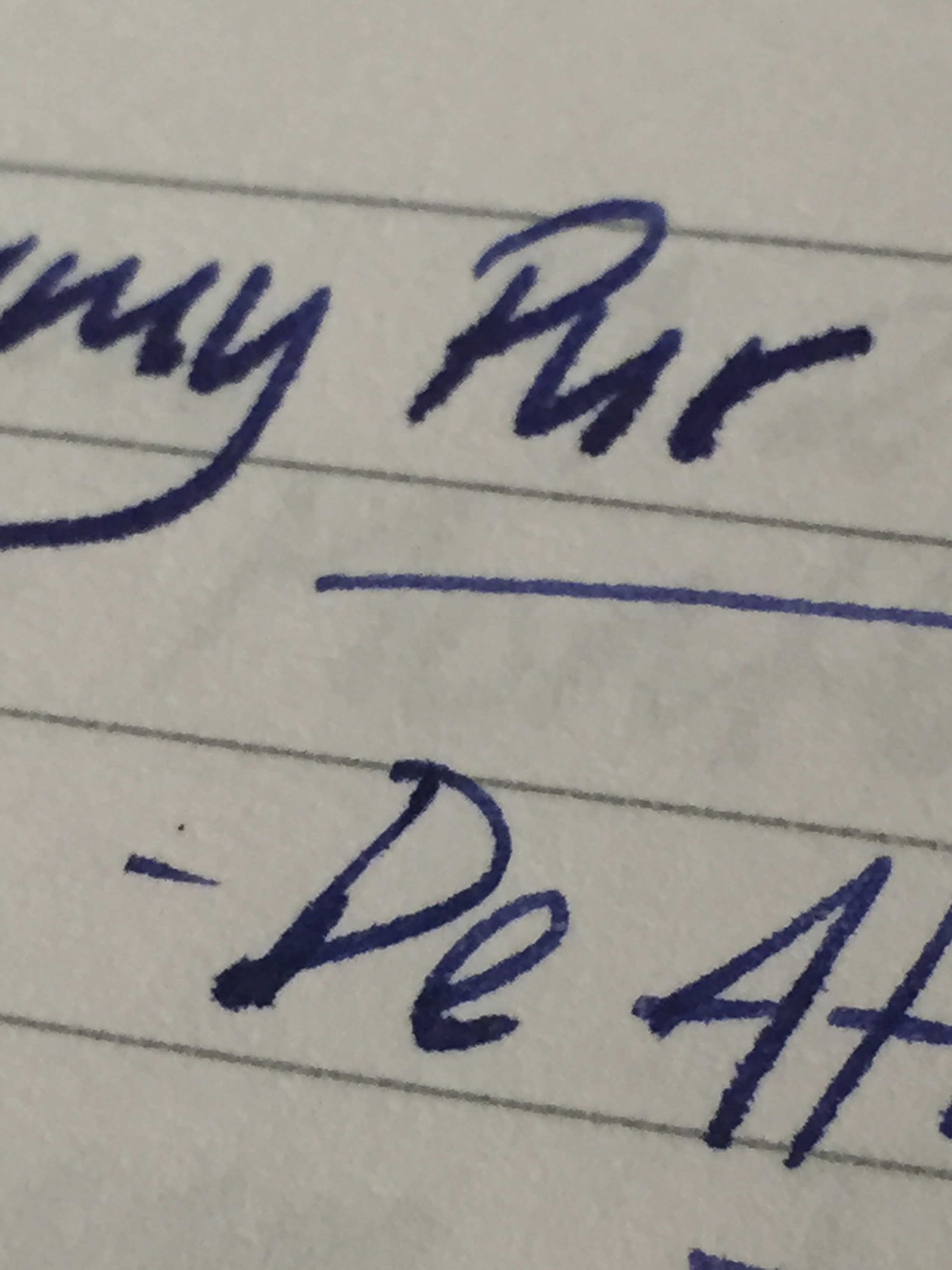
When used with fountain pens, the CD11’s acid-free off-white paper handles almost everything you can throw at it, with the exception of the tiniest bit of feathering on wetter nibs and inks. Here your own experience might vary a little, as my pens are typically on the medium to fine side. The pictures tell a better story, with no bleed through and only minor show through apparent on the reverse of the pages. Rollerballs and ballpoints were handled with ease, however I suspect avid pencil users might want paper with a little more tooth to it perhaps.

FullSizeRender 16IMG_4578IMG_4579

If you are thinking of picking one of these up, you can count on using most if not all of your pens, and you’ll certainly be using both sides of the page — something which I see as important when you only have 56 to play with. As far as ink drying time is concerned, as expected with paper like this it does take time, however I found it a little faster than your average Rhodia pad and the Clairefontaine notebook I mentioned above.

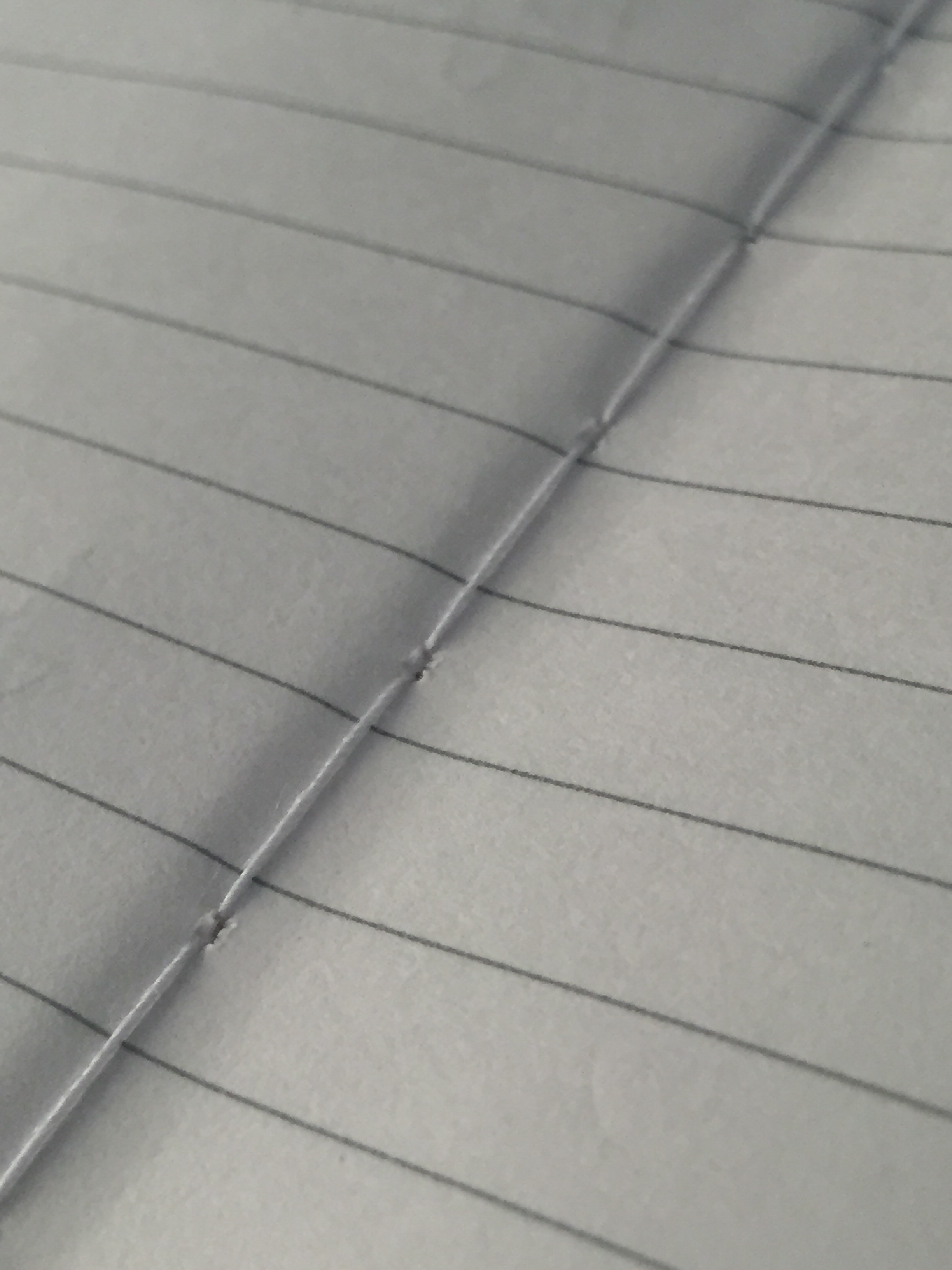
I have very much enjoyed writing in the CD11. The fountain pen experience is top notch, the 7mm grey lines are perhaps a little darker than I might like, however these soon disappear when surrounded by words. The combination of the thread binding and small number of pages, also ensure the CD11 will lay completely flat when opened. IMG_4597Here I mean completely flat, as the softness of the spine makes for a simple bend backwards upon opening, and you have something as flat as a sheet of looseleaf paper on the desk in front of you. Closing after this? As simple as running your fingers down the spine as though you were folding a sheet of paper and the notebook will almost completely close — certainly good enough for me.

Closing Thoughts

IMG_4582I have thoroughly enjoyed using and would highly recommend the Apica CD11 notebook. It has been in use as my writing and summary notebook for a little over a month now — that is, for slightly longer writing sessions calling for more than a pocket-sized notebook.

There are three main points I keep coming back to when I think about whether I’ll buy another of any particular notebook. Whether it is fountain pen friendly; opens flat; and is light and easy to carry. The CD11 more than fits the bill on all three fronts.

When I try to get some writing done in my lunch break, I carry one pen (fountain); my iPad mini (plus or minus Logitech keyboard cover attached); FullSizeRender 17and a notebook. The lighter the notebook the better, and I have not found one better in this regard, and to have it accept whatever fountain pen I’m using at the time perfectly when I get to my cafe destination — just brilliant.

Sure, I’ll buy and try other notebooks, and yes I do like dot-grid as well, however the CD11 is one of those I’m sure I’ll return to when I just want to use a high quality, well designed, value for money product, built for a specific purpose at which it excels.

Just remind me not to buy another yellow one will you?


What’s Brewing: Nicaragua Jaime Molina – Honey Process

Flag_of_Nicaragua.svgBefore snapping this up a month or so ago, I had not bought and roasted any coffee from Nicaragua, and was keen to try this offering from Ministry Grounds, my ever reliable green bean supplier. In addition, it was also processed using the honey or pulped natural method — that is, where the skins are removed but the beans are dried with all or some of the fruit flesh or mucilage still present. A good proportion of the coffee I roast tends to be of the washed variety, and I am keen to broaden my experience as much as possible.

The Region

A little on Las Sabanas from Wikipedia:

The Central American country of Nicaragua borders Honduras to the north and Costa Rica to the south, both very prolific coffee producers in their own right, along with other close neighbours El Salvador and Guatemala. Las Sabanas is a municipality in the department of Madriz, which lies in the northern aspect of Nicaragua, close to the border with Honduras.

The municipality itself has a varied climate, which in the lower parts is a little drier, however more humid in the higher mountainous regions, with an annual rainfall between 1,200 and 1,400 mm. Nicaragua has a variety of vegetation, with predominantly pines, coffee, oak, guasimo, eucalyptus, and cedar.

The Coffee

Information Courtesy Ministry Grounds

Coffee: Nicaragua Jaime Molina
Region: Sabanas
Town: Mira Mar
Farm:  Monte Cristo
Altitude: 1300-1450 m
Varietal: Red Bourbon
Processing: Honey

Tasting notes: Chocolate, red berry, juicy, coating, balanced, medium body

In researching a little on this coffee, I came across a little on the producer, and his active role in the 5 de junio collective in Nicaragua:

Don Jaime and his family have shared their coffee processing methods with other members of the cooperative, fostering innovation in the name of quality.  During the 2010/11 harvest, 5 de junio implemented a successful pilot project for semi washed or “honey” coffee based on new technologies learned from Don Jaime.

The full post can be read on the CRS Coffeelands blog – incidentally a site which I highly recommend for great insights into the lives of coffee farmers and farm workers, including many harsh realities that come with such an existence in many of these countries.

The Brew

Terra Bella LatteI’m now through roasting the kilogram of green beans I originally ordered, and the coffee has been roasted for filter, espresso, and added to a couple of blends along the way. As usual, I’d have to say not all of the roasts were perfected — though by the last, things seemed to come together well. The last roast? Espresso, which is what I will describe here.

Brewed as precisely that — espresso, I’d describe it as one of the more balanced coffees I’ve had in recent times. The dry aroma on grinding teases of a little strawberry, however the cup didn’t back that up in any great measure — very subtle to say the least. More so the chocolate notes, with a medium body.

Where it really shined was with milk. My typical morning brew being a 5.5oz single shot latte (brew parameters from this morning were 19.3g dose; 46g yield – split between espresso and the latte; 27 second extraction time).1 As smooth as silk, with more chocolate, a little caramel, and a nice strawberry layer to boot. My pick for this coffee would definitely involve milk, however you prefer it — be that cappuccino, latte, flat white or something a little shorter.

The Finish

Perhaps not one of my standout favourites, however to kick off the day it will take some beating. I’d happily recommend, and buy this coffee again. The more I write about the coffees I roast and brew here, the more I’m convinced some sort of spreadsheet tracking system is called for, lining up roast and brew parameters, and in some way perhaps correlating the resulting outcomes.

Something for another day perhaps, however I’m certainly ready for another brew while I think about it — and for this Nicaraguan — just make it with milk is all I ask.


  1. Given I have been looking a little more closely into weighing and measuring dose and yield with my espresso lately, I figure it is worth documenting here, for those who might be interested. Of course my learnings around these parameters are slated for their own post, which I will get to in due course. ↩︎

Wiser Web Wednesday

Wiser Web Wednesday – a semi-regular link to posts of interest from around the web, by those far wiser than myself:

Pens! Paper! Pencils!
It makes sense that many pens demonstrate a fair amount of aesthetic similarity, for when considering really unique looks and performance:

…some pens are made to be admired from afar, some are made to be admired in use and not so many pens manage both.

Ian poses the question regarding readers thoughts on this at the end of the post. Me? I’m slowly but surely gathering more experience and will one day reach my own conclusions. Ian’s you’ll find in usual eloquence here:
Form Versus Function

The Pen Addict
Funny to hear the words “somewhat difficult to find” when reading a US site, which is typically reserved for us Aussies ordering from all over the world. So, with a nice range of Calepino notebooks at local online store Notemaker, I really have no excuse:
Calepino Graph Paper Memo Book Review

That One Pen
Reassessment of where things are #1, with some wise words indeed:

In short, I’m coming to terms with the pen/pencil person I actually am versus the pen person I want to be

How easy is it to get caught up in everything that is out there. All of the things that others seem to find some elusive magic in, that no matter how hard we try, might just not do the same for us. I enjoyed this post – if we ask nothing else of our blogs its honesty isn’t it? Herewith Todd provides all that and more:
A Conclusion But Not An Ending

Modern Stationer
Reassessment of where things are #2:

I’m not going to worry about building an audience or brand. I’m not going to check traffic stats. I’m going to write when I have something say and take pictures when I see something fun or interesting. That’s the simple plan for now.

Read this and tell me the simple plans aren’t often the best plans we ever have. All the very best Doug:
The Path Forward

Pen Paper Ink Letter
Having watched the stocks of these limited edition Baron Fig Confidants dwindle before my very eyes on Twitter, I indeed ultimately missed out. Citing my current temporary embargo on new notebook purchases (yes, to get through a few I already own) as the prime reason, I am left to read the thoughts of others:
Baron Fig Limited Edition: Work / Play (Dot Grid / Blank)

Pencil Revolution
A second link? What – to rub it in that I missed out? No, simply to offer myself a chance to say I am indeed proud of sticking to the non-purchase agreement with myself, and also to include a pencil first perspective from one-third of the Erasable Podcast team:
Baron Fig Work/Play Edition.

512 Pixels
Perhaps a little late to the party of Apple Watch reviews, however well worth reading precisely due to that fact:

I know this review is more-than-fashionably late, but it’s taken me this long to gather my thoughts. Something like a smartwatch has to sink into your routine before its true value becomes known.

In reality, I’d say any product requires a good deal of time spent determining how sustainable its inclusion in your life will be. I believe that to be true whether we are talking about a smartwatch, smartphone, fountain pen or anything else along the spectrum.

Apple Watch probably isn’t going to change your life, but it will make it better in a bunch of small ways. I find it a valuable addition to my life, but not everyone will, and that’s fine.

I’ve not found the need to save my pennies for one just yet. In future? Perhaps:
Review: Three Months of Apple Watch

Sprudge
I’ve never been to a Blue Bottle establishment, nor have I been to LA. I do often wonder about maintaining standards and the original vision across chain franchises. Granted, this isn’t your Starbucks, however the more that open…:
Los Angeles: At The Brand New Blue Bottle Coffee On Beverly Blvd.

Daily Coffee News – Roast Magazine
Of course they have:

Researchers at Purdue University say they have found evidence to support fat as a sixth basic taste, in addition to sweet, sour, salty, bitter and umami.

And of course it is:

… the taste of fat, which the Purdue team refers to as oleogustus

All hail oleogustus! (So sorry). The article suggests acknowledging fat as a flavour has largely been held back to due to its use in descriptions such as mouthfeel and viscosity rather than flavour. Perhaps that is all about to change:
Chew on This: Fat Taste Is a Real Thing in Coffee and Other Edibles

CRS Coffeelands
As the author states, with no guarantee of return, it no doubt becomes very difficult to consistently maintain fair worker pay in coffee growing regions:

Prices can vary wildly from one harvest to the next and there is no guarantee they will exceed the cost of production.  In that context, even a conscientious grower inclined to fairness may have trouble complying with the dictates of law and conscience when it comes to paying his or her workers

The suggestion of deeper discussion through all levels of the coffee supply chain? Probably a good one:
Higher Wages, Great! But How To Afford?


The Reckoner Podcast Hits 100

It is no secret I listen to the odd podcast, and one of my favourites chalked up episode number 100 last night, and a hearty congratulations is in order. The Reckoner podcast provides a great weekly roundup of Australian technology news, and lasts the length of my commute, and at just under an hour – is the perfect length for a podcast.

Regulars Peter Wells, James Croft, and Anthony Agius are frequently joined by rotating guest hosts, and serve up a weekly dose of tech-based fact, opinion and humour. What I like most about Reckoner (both the podcast and website), is that topics and discussion are current and highly relevant to the tech goings on locally here in Australia. Admittedly, technology these days is a global entity, however regional differences continue to exist, and sometimes local relevance is lost if you usually follow a diet of overseas based shows.

Having been an avid listener since around episode twenty-something, I’m grateful my Monday morning commute is accompanied by a brief football roundup followed by an entertaining show, week after week. Here’s to another couple of hundred episodes, by which time I might have actually worked out how to implement one of Anthony Agius schemes for obtaining about half a decade’s worth of free Netflix – if government legislation or a T&C clause doesn’t stop him first.

So if you have at least a passing interest in Australian tech news, Reckoner is certainly worth an hour of your time once a week. Believe me – your Monday mornings will thank you.