Fountain Pen Nibs: Of Steel and Gold

We’ve all read them, and I’ve certainly written them. Words in praise of the gold fountain pen nib. Certainly not without foundation, however a great writing experience — in my opinion at least, is not the exclusive domain of 14k and beyond.

I should note at the outset what this post is not — in part because of my intention in writing it, and in part because I do not possess the knowledge, nor experience to go deeply into the technical aspects of the subject at hand.

This post is certainly not an in-depth look at nib construction and manufacturing, or the development these aspects as modern pens have evolved. I have also not addressed how things might differ if you prefer very broad, wet nibs as opposed to the medium to fine bunch which make up the majority of my collection. Also, none of the pens I own have had any custom nib work done nor been purchased with specialised nibs (i.e. italic, stub and the like).

No — this post essentially came from a curiosity of mine as to how many of each type of nib I did have, and whether, upon more considered thought, a pattern based on that nib material was evident in the pens preferred writing with.

A little background

If it can be suggested there is a “usual” trajectory in nib experience and acquisition, it would most likely begin with steel in the “low end” or “entry level” pens, and progress along to gold as the user experience, desire, and budget expand a little (or a lot).

Of course there are always outliers or exceptions to the rule. The first fountain pen I bought — a Montblanc Meisterstück Classique, with a 14k nib. It is still my most prized pen possession, for many reasons, most of which are outlined here. Thinking back, that purchase was an exercise in naïvety of the most extreme kind, but boy I’m glad it was made. Anyway, that is another story.

Plenty has been written on the topic of gold versus steel nibs, and for a sound basis of what we talking about in this post, I refer you to a piece by Brian Gray of the Edison Pen Company. Written in 2010, it lays out many of the questions (and answers) that arise when discussion is had around gold and stainless steel nibs.

In the post, Brian outlines the biggest difference between modern stainless steel and gold nibs: flex. If we define flex as a causing line width variation due to spreading of the tines in a nib, gold will generally provide a greater degree of this. Irrespective of flex, I personally find most of my gold nibs to be softer, or possessing more “give” as Brian describes in his post.

As far as the actual tip material on the nib, this is often identical in any event, whether gold or steel is used in the construction. Both have a “tipping” material, often referred to as iridium, which is common for either type of nib for either type of nib, and is what comes into direct contact with the page. Here I’d recommend a little further reading on this in another of Brian’s articles:

Please regard iridium as a synonym for tipping material.  The tip of a pen nib is rarely iridium, and almost never pure iridium.  It is usually plathenium, osmiridium, or a various mixture of metals.  So in the pen industry, understand that iridium is a term used to refer to tipping material, even though there is usually no iridium present.

Aside from the above, most specification pages you might care to look up of the pens you see here will also state the nibs are “rhodium plated” gold or steel — hence the silver appearance of many of the gold nibs, or part thereof. You can probably now see why anything other than a cursory mention of these aspects about nib construction is way beyond both the scope of this post and my knowledge and expertise in such matters.

In summary, if we were to grossly over-generalise things, gold nibs you could say, generally provide more flex, have a little more give (independent of flex), and are usually found on more expensive pens. Clearly they also play a role in the overall aesthetics of a pen — particularly if the gold nib is actually gold in colour as well, remembering not all of them are.

My collection

When the idea struck to take a quick inventory of my own collection, I did so and posted an image to Instagram. I’ve also included images of some of my pens below.

Even from that simple Instagram photo, it is fairly evident pens with gold nibs are almost as numerous in my collection as their steel counterparts. Of the eight in that image however, six were kindly passed on from another fountain pen enthusiast’s collection. I’ll be honest — there is simply no way I would have as many in my collection without this generosity — purely and simply from a financial point of view. The pens? I love each and every one of them — the Custom Heritage 92 (FM) an absolute standout favourite, along with the Meisterstück Classique, as I mentioned above.

gold_nibs_zoom

We struck gold – from (L): 1&4 Pelikan; 2 Lamy; 3&5 Pilot; 6 Montblanc

The steel nib pens? These were where I began to build my collection after owning that sole Meisterstück for around 16 years. Was I disappointed with the Kaweco Ice Sport, Pelikan M205, Pilot Metropolitan, Lamy Safari or even the Pilot Petit1? Not in the slightest. One of my absolute favourites — the Pilot Kakuno I bought for my son’s birthday a couple of years ago. The steel nib on that thing is absolutely amazing, and it cost me all of $AUD14.95. The reason it isn’t in the image below is my habit of forgetting to raid my son’s stationery drawer when I take pen photos!
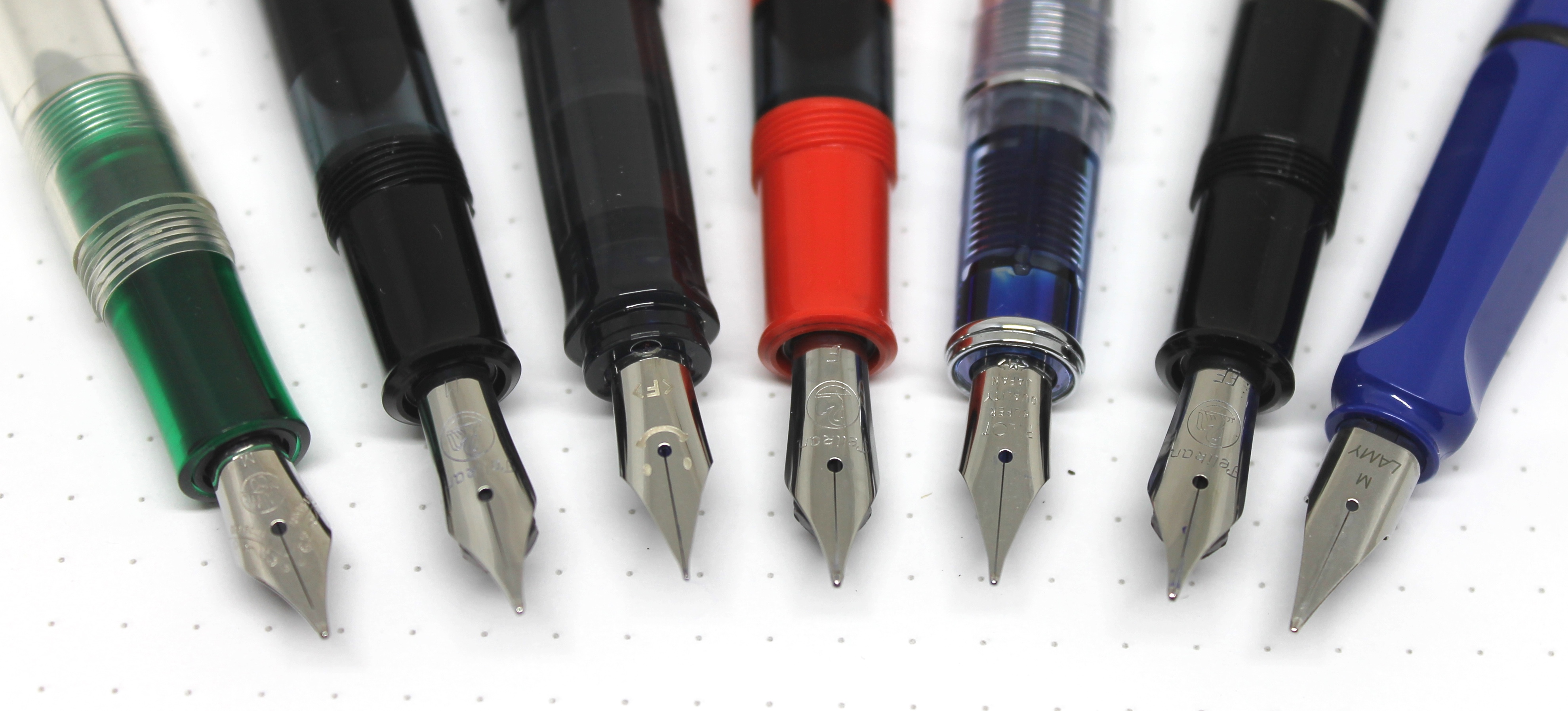
steel_zoom

Pen of steel – from (L) 1 Kaweco; 2,4&6 Pelikan; 3&5 Pilot; 7 Lamy.

In conclusion

If you have made it this far, and are still looking for a definitive answer on whether to shell out a few (perhaps quite a few) more dollars for a gold nib on that pen you are considering, I’m probably going to disappoint.

My honest opinion? I would not advise you to spend more money on gold simply for gold’s sake. Will the writing experience be better if you do? Not necessarily, however it will certainly be different. Would I say any of my steel nibs offer a better writing experience than the gold? Probably not. Asking the same question of the gold however — I’d say probably yes — some of my gold nibs do write more smoothly and effortlessly than the steel.

Bear in mind though, if you are talking day-to-day use, posing this question and seeking a somewhat useful answer, relies on so many other factors, a definitive conclusion might be pretty hard to come by. Am I trying to best show off a new ink for an Instagram post, or scrawling a few hundred words of notes in a meeting? Add to this the numerous other situations in which you may find your fountain pen wielding self and you’ll see what I’m talking about.

In wrapping up — did I answer my (selfish I know) original question about whether there is a preference or pattern in the nibs I prefer? Looking back I believe I have — and it is a fairly resounding no. As my collection continues to grow, both steel and gold nibs will be part of any additions. The difference? The almighty dollar will perhaps see the steel side of the ledger increase a little faster.1

So, I certainly have a definitive answer about steel versus gold when reflecting on my collection and preference. Whether or not any of the above has helped you in any way I’d certainly be less certain. That said, if a steel nib pen has a good reputation, and is at a price you are prepared to pay, I’d be fairly certain you won’t be disappointed.

  1. Of course any arguments around quality versus quantity and saving for a more expensive pen are certainly not irrelevant here. ↩︎

Wiser Web Wednesday

Wiser Web Wednesday – a semi-regular link to posts of interest from around the web, by those far wiser than myself:


Jim Seven
A considerable number of posts have popped up in my social media feeds highlighting one of the section headings from this report on a survey of commercial and home user espresso by James Hoffmann:

The Ristretto is Dead

Perhaps more telling though is another one:

A Death of Diversity

I dutifully responded to the survey from the home user perspective, subsequently learning from the results I am perhaps either part of a shift towards best practice or simply following a convenient majority rule:

I don’t believe we all have the same tastes, same ideals, and same goals for our espresso. I don’t believe, even for a second, all consumers want the same thing.

I guess I can at least take heart in the fact that when brewing at home, generally the only “consumer” is myself:
The State of Espresso in 2015

Perfect Daily Grind
I wholeheartedly agree:

…what’s not to like about fika?

A short history of coffee, snacks, and conspiracies in Sweden:
Fika: The Social Ritual of Coffee

Macdrifter
If you scan a lot, a little, or somewhere in between – Scanbot (iOS or Android) is definitely worth a look, and has been one of my most used apps for about a year now. Version 4 brings a workflows feature, allowing a single tap for customisable common actions, or selection of upload destinations from an ever-increasing number of on-line storage services. Extremely handy indeed.

A nice round-up of a fantastic app:
Scanbot 4 With Workflows

Productivityist

You can’t multitask. If you tell yourself you can, you are lying to yourself.

It’s amazing we still need reminding of the productivity drop off with multitasking. I guess it’s because there are so many who still grandstand about how good they are at it.

Focus. One of my favourite words that:
Essentialism: Focus on Less Tasks to Get More Work Done

The Pen Addict
Many have felt it, and those who haven’t — well unfortunately there’s still time. The trials and tribulations of growing a pen collection — and no doubt not confined to pens alone. Susan has taken a hit or two, for the collective pen buying team, and we would all do well to learn from her experiences:
Buyer’s Remorse, Impulse Buys, and Shady Sellers: The Vagaries of Buying Fountain Pens Online

Brett Terpstra
There is every likelihood this site might never have hit its stride without Markdown, and although my use does not really stretch towards the edges of its capabilities nor compatibilities, it nevertheless remains very much of interest to me. It is, after all, how every post is written, and I use it every day.

Given the choices in cloud syncing text editors these days, Markdown formatted text is the perfect marriage of readability, portability and future proofing. Some level of consistency in its application will go along way towards a life of writing pleasure:

This post isn’t about proposing any standard or new flavors, it’s just about common sense guidelines that allow you to work with any processor.

Use whatever Markdown flavor you like (or need), just keep these notes in mind to save yourself some pain. Now go write.

Who better to provide their two cents on the subject than Brett Terpstra:
Write better Markdown

Pens! Paper! Pencils!
Yes, a TWSBI Eco review also graced these links last week, however these WWW posts are as much my stream of consciousness as links I’d like to share with you, and I am indeed interested in reading opinions on the Eco from those I trust.

The question of durability can of course not be answered in these early reviews, but at this price point, by the time it is, you could have already had your money’s worth:
TWSBI Eco Fountain Pen Review

The Well-Appointed Desk
Though hopeless at it, sketchnoting has always fascinated me. Well Peter, I guess that is why workshops exist – funny that. Ana sums up the idea nicely:

The idea behind sketchnoting is that simple drawings, bold lettering, icons and symbols can help improve your note-taking and thereby improve your understanding and memory retention from a lecture, class, presentation or meeting.

And of course also sums up the workshop nicely:
Recap: Sketchnotes Workshop with Mike Rohde

Three Staples
Jinnie earning the full three out of three staples (again) for another fantastic post.

Item Numbers. This is some next-level Field Notes nerdery you’re about to witness. All in good fun, of course.

Field Notes. Nerdery. Fun.

Jinnie, you had me at “FN-##”:
Field Notes: Item Numbers

Sprudge
Even if you consider a post title with the words ”weird, delicious uncle” a little weird in itself, the content here certainly isn’t. Hailing from Finca Inmaculada in the municipality of Cali, Colombia, is the Eugenioides species of coffee.

Flavours? Well… various tasters from around the world have come up with:

…genmaicha tea, purple yam ice cream, rose milk, brown butter, marshmallow, jabuticaba, Sugar Smacks cereal, lychee, popcorn, basil, sweet tea, jackfruit, cream, and raisin bran.

Also with about half the caffeine content of the average Arabica bean, it is apparently very hard to grow, and quite low in yield. In praise of diversity — oh… and weirdness:
Meet The Species Eugenioides, Coffee’s Weird Delicious Uncle

Daily Coffee News by Roast Magazine
Researchers report on some very encouraging insights from working with small farm owners and their workers, not the least of which:

…simply the act of delivering these kits and having discussions with farmers at origin about their needs and desires yielded critical intelligence about how best to assist in production and processing in other ways going forward

Encouraging stuff:
Sustainable Harvest Presents Initial Findings of Fermentation Research Project at Origin


Aussie Fountain Pen Friends on Facebook

A couple of months ago, the Fountain Pen Economist Dr Jonathon Deans (Web, Twitter), mentioned in passing how it might be nice if a local discussion group existed for Australian Fountain Pen enthusiasts. More recently on Twitter, he asked the question whether there were any Facebook groups for such people, with my response indicating there were none I was aware of, perhaps with the exception of the one he was about to start — which I said with tongue only half in cheek.

IMG_4823Since then, start it has, with the Fountain Pens Australia group now up and running on Facebook, with Jonathon and fellow fountain pen enthusiast Yagan Kiely (Instagram, Twitter) kicking things off.

Bear in mind that I had not yet taken the plunge into the land of Facebook at the time, having only recently created my profile with the intention of joining the FPA group. A big call, however one I believe will be well worth it. As I write this on a lazy Saturday afternoon, membership numbers have been steadily rising over the course of the day — very pleasing indeed.

What do I hope to get out of being involved in such a group? Much discussion and information sharing around one of my passions — fountain pens. I have seen the power of the internet and social media in disseminating such information through Twitter, Instagram, various pen blogs, and of course avenues such as The Pen Addict podcast.

A Facebook group such as this, with a local focus, is a fantastic opportunity to learn a whole lot more through discussion with like-minded individuals (most of whom are likely to have vastly more experience than myself), yet be sure the content remains highly relevant to the local market. Discussion has already been active in relation to the upcoming Melbourne Pen Show in November.

Although I’ve been writing here for a couple of years now, with a fair portion of content devoted to pens, I do still consider myself a beginner, with much still to learn about fountain pens. I’m fairly sure I’ll be doing more “learning” than “teaching” in such a group, however am very much looking forward to contributing what I can.

So if you are reading this in Australia, are on Facebook (or think it worth joining like myself), and are at all interested in fountain pens, please click this link and set about joining the Fountain Pens Australia group. Be part of what is bound to be a friendly and productive group discussion on a subject myself and many others derive a great amount of joy from.


Wiser Web Wednesday

Wiser Web Wednesday – a semi-regular link to posts of interest from around the web, by those far wiser than myself:


Market Inspector
Although published earlier in the year, I became aware of this list after it was shared by Bean Brewding recently. I have a little browsing to do:
Our Selection of the Best Coffee Blogs – 2015

The Australian – Life
From what I have read, there has long been disagreement over whether Australian grown coffee is of high quality. For every opinion saying it is, there is of course another disputing that fact, and this article is no different. Coffee can certainly be a viable crop, though economically viable? Perhaps another matter:
Australian coffee and chocolate: can they ever be viable?

Vimeo – Pilot Coffee Roasters
Although not to the letter of how I brew mine, I’ve always been a sucker for a well produced coffee how-to video, and this series up on Vimeo from Pilot Coffee Roasters fits the bill nicely. Be sure to check out the Chemex and Aeropress Guides as well:
How to Best Brew a Pourover

Fourfiftytwo
Heidi at fourfiftytwo reviews that iconic instrument — the Lamy 2000, and does a great job. The most interesting thing I find in reading Lamy 2000 reviews is the descriptors used by those who write about it. In saying that, I think this sums it up pretty nicely:

The Lamy 2000 is understated, timeless, sleek, and a joy to write with.

Not sure when, however I’m sure to tackle putting a few words together about the one in my collection — eventually:
Lamy 2000

The Gentleman Stationer
With so many great blue inks out there, how could I resist taking a look at this post from Joe. To concur on the sentiment of best ever I’d have to see it in person, however I must admit, I certainly like what I see in these images:
Ink Review: Bung Box Sapphire (or, the best blue ink ever!)

Eclectidbits
With much discussion around the possible success (or not) of this entry-level piston filler from TWSBI, reviews are now beginning to appear. Upon first sighting the Eco when images began to surface, I remember thinking — I’m not sure if I like the look of that. So again, I’ll leave it to another reviewer to hit the nail squarely on the head:

The TWSBI Eco is not a looker; but there is something about its utilitarian stance that is very appealing

Indeed:
TWSBI Eco Review – smiling!

Too Many Inks
On a blog which could just as well be titled Too Many Birds, some great photos of what amounts to (if my calculations are correct) a little more than half of the Pelikan pens in David’s collection. Simply stunning looking pens masterfully grouped for these images:
Pelikan Pen Porn

Ed Jelley
Although I’m not likely to seek these out online to add to my own collection, I do appreciate the combination of two of my biggest passions. And the white staples? Love it:
Field Notes Starbucks Reserve “Coffee Origins” Review

Banana Moon
…aka Ian Hedley on Instagram. You will easily find Ian’s Instagram account through his blog Pens! Paper! Pencils!. Given the enjoyment I get from this very talented man’s sketches regularly gracing my Instagram feed — I thought you might too:
banana moon

My Productive Mac
Now almost through my reading of the new edition of David Allen’s Getting Things Done, and an avid Omnifocus user, I still read posts such as these. I do find it interesting how others use both the GTD system and Omnifocus:
My OmniFocus Contexts Explained


A Taste of Local Australian Grown Coffee

IMG_4756My last outing with the crew of Bean Brewding, those staunch advocates of the Brisbane coffee scene, was the Walking Coffee Tour of Fortitude Valley in August 2014, which I wrote a little about here. Now twelve months on, and having seen the “Beans” continue their great run of tours over that period, a recent event over the weekend provided a great opportunity to get involved again.

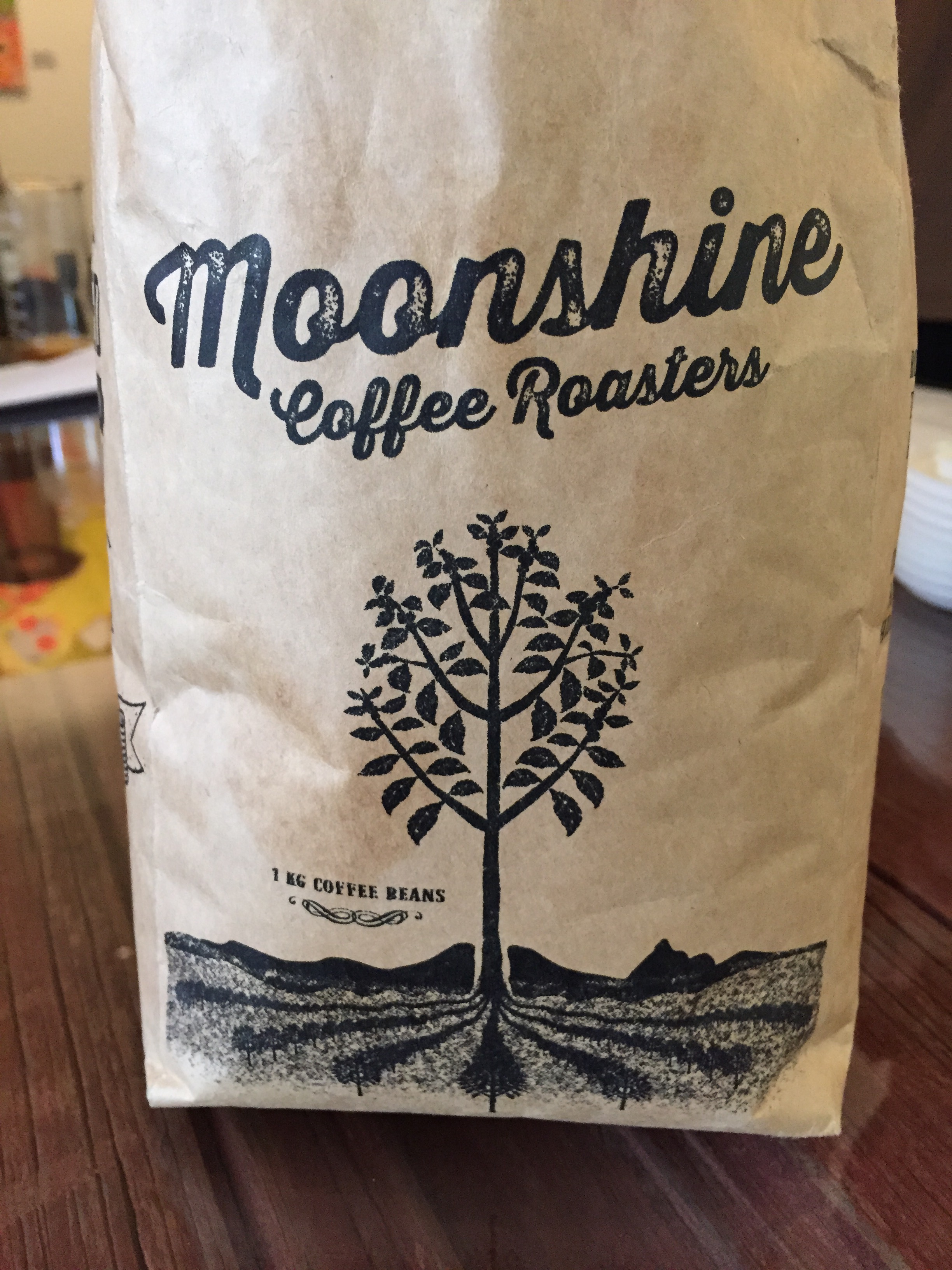
This time around, a morning of tasting some Australian grown and roasted coffee from Moonshine Coffee Roasters, held at PUK Espresso, at Kangaroo Point — in the shadow of Brisbane’s Story Bridge. Having not had occasion to visit PUK before, I was keen to head along, and also sample some coffee from a local Australian grower and roaster.

Moonshine Coffee Roasters are located (just down the road really) in the hills at Federal, in northern NSW, inland from Byron Bay:

Coffee has been grown and roasted in these hills since before we were born. It’s just been kept a little quiet, the Moonshine way.

I certainly couldn’t think of a better way to start a mild Saturday morning in August than with some Moonshine.

The Coffee

IMG_4750As I arrived at PUK things were kicking off right on time, with a brew of the 2014/15 harvest Natural Process from Moonshine just out of the Aeropress.

I had high hopes the coffee would be good, however was pleasantly surprised with the depth and complexity of flavour. Brewed through the Aeropress, the filter roast on offer was low on acidity, however extremely well-balanced, with medium body and a lovely smooth, creamy mouthfeel – like a velvety coating, which lingered long after the prominent caramel flavour subsided.

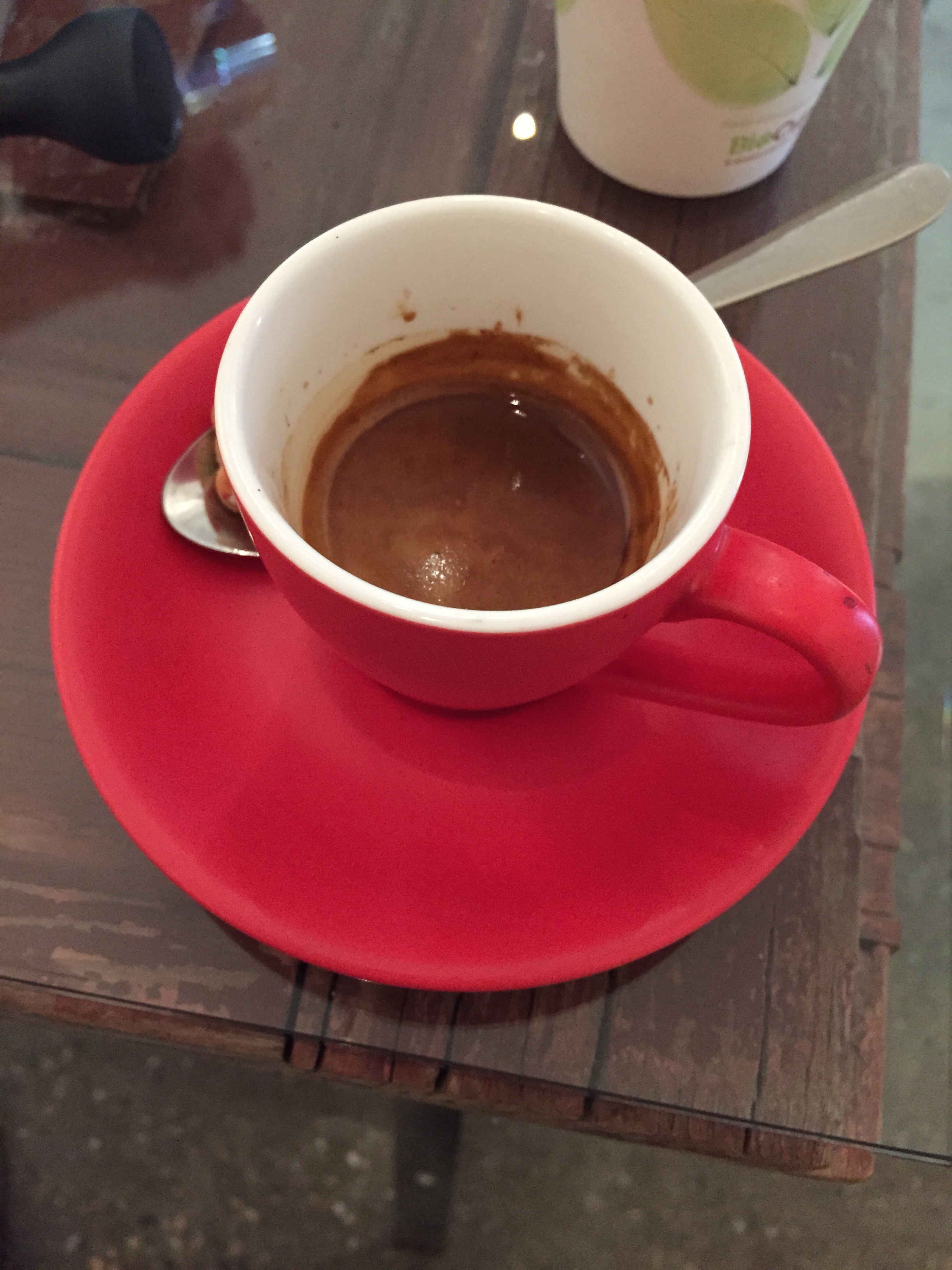
Next up, the kind folks at PUK took our orders for a complimentary espresso based coffee which would showcase the Moonshine Blend on offer at the cafe. Mine? A simple espresso of course.

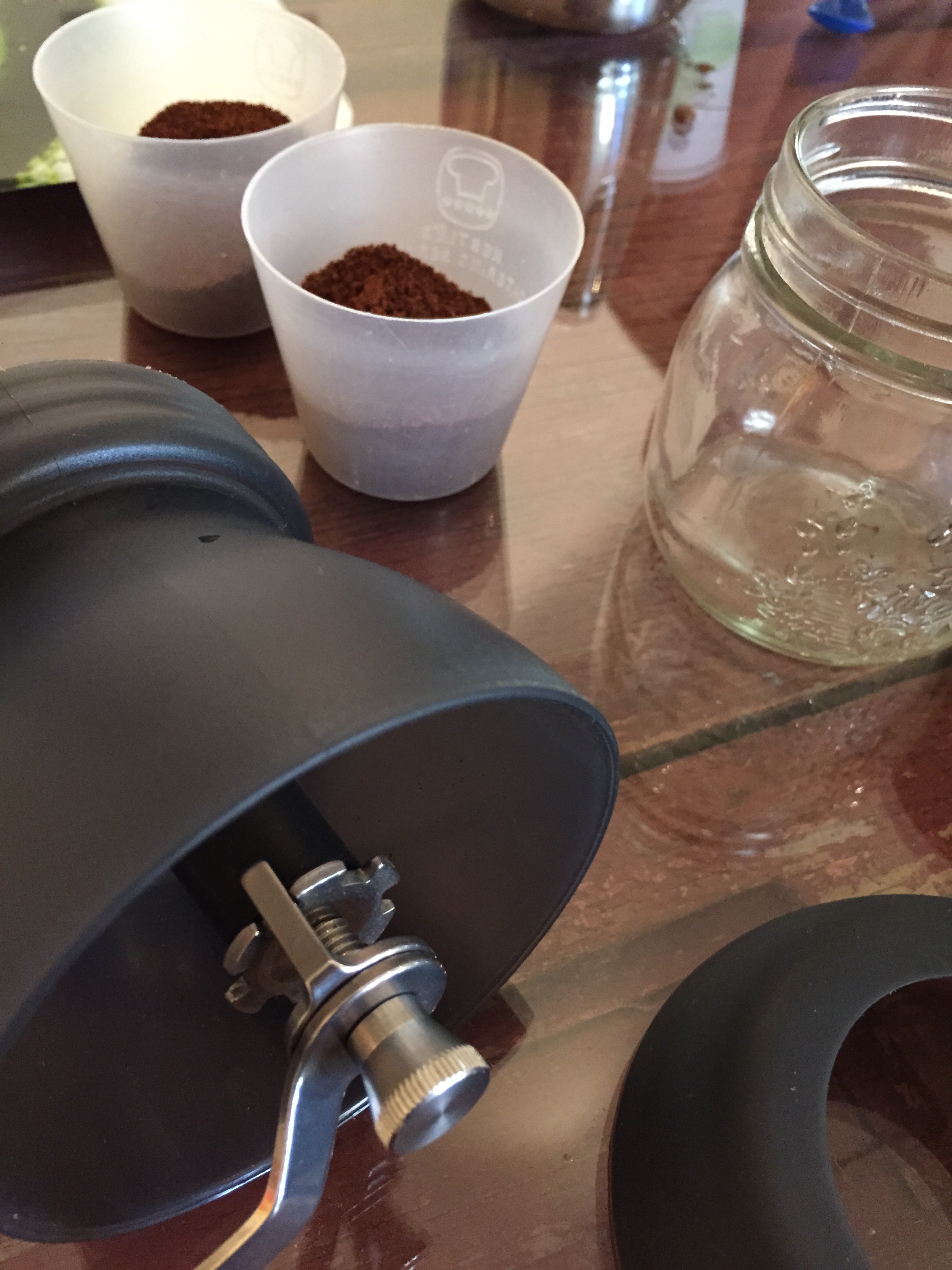
This also gave me a chance to snap a few pics and take in the dry aroma of some of the freshly ground Natural I had just sampled. Nutty and earthy are terms that come to mind, which sometimes can be a little unnerving in a naturally processed coffee, however as I’ve mentioned above, this one was a beauty.

IMG_4766Onwards to the espresso, which was short, thick and dark. Here the taste belied the appearance. I found the espresso quite intriguing. In many ways it was a more concentrated form of the filter brew: mild acidity, medium on body with creamy coating in mouthfeel, with big caramel and chocolate notes. Again, the finish kept on and on. The blend served at PUK contains the locally grown variety from Federal, along with other seasonal offerings from around the globe.

I’ll certainly be back to PUK again very soon, I can guarantee that. It is a calming space, with plenty of shady outdoor seating, friendly staff, and of course great coffee.

So with the morning’s event over, off I went with enough complimentary Moonshine coffee to fuel my Hario V60 filter brews for a few days as well — a nice touch.

The Finish

Another successful Bean Brewding event under my belt, and from discussions on IMG_4767the day with the guys, the local coffee tours will keep rolling on, and there are some new and exciting possibilities also in the pipeline.

If you have an interest in coffee around Brisbane, or just coffee itself, check out Bean Brewding on the web or Facebook for upcoming events, all of which are extremely well supported by local speciality coffee establishments. It is simply a great way to get an inside look and learn from industry experts you may otherwise not have access to in a very non intimidating way.

Thanks to Bean Brewding, PUK Espresso and Moonshine Roasters for an extremely enjoyable morning.