Wiser Web Wednesday

Wiser Web Wednesday – a semi-regular link to posts of interest from around the web, by those far wiser than myself:


Woodclinched
To be entirely honest, I’m a very infrequent pencil user, however this new release from Baron Fig deserves a mention here.

The Archer pencil seems both a fine counterbalance to the Squire pen, and complements the company’s paper products well.

Andy Welfle is certainly more than qualified to provide some thoughts on the release, and does so with aplomb here:
The slings and arrows of outrageous fortune: a review of the Baron Fig Archer pencil

As mentioned in the post, The Archer pencil, along with its founders, also makes an appearance on episode 62 of The Erasable Podcast.


Ed Jelley
Ed Jelley reviews what is an interesting looking pen, and I’m certainly not averse to a decent ballpoint.

This one looks to have a sleek, vintage style to it, and the expectation is it will show a little wear and “age” well.

I like it:
Ystudio Brassing Ballpoint Pen Review


The Gentleman Stationer
Another good-looking pen, this time of the fountain variety. I’m always a sucker for black, and a matte finish simply adds to the attraction.

Looks are one thing, however as always the proof is in the nib, and Joe’s review leads me to believe things are covered on that front:
Pen Review: Diplomat Aero


The Clicky Post
Mike Dudek with another fantastic addition to the Dudek Modern Goods stable of stylish pen organisers.

With seven pen slots and an A5 journal, The Stationer is definitely one to check out:
Announcing The Stationer from Dudek Modern Goods


Fountain Pen Day
Despite my obvious interest in fountain pens, I’ve never been great at promoting the first Friday in November on this blog.

Perhaps I should refer you to the experts. Which on this occasion, I will:
Celebrate


Joe Buhlig
Joe Buhlig with some praise for pen and paper in terms of planning and tackling your day.

There’s something motivating and more permanent involved in pen and paper. I can’t drag-and-drop a commitment to a different time of day when I used pen

Indeed, that’s one way of staying on track:
The Day On Paper


Jean-Marc Denis
If you have a specific need for some black Mac or iPhone wallpapers, there are some beauties here. I use them as my desk is in a rather unique location which has the uncanny ability of throwing my monitor’s light into a number of bedrooms all at once.

So in the pre-dawn hours when I usually write, these free wallpapers are a beautiful way to avoid searing light in my still-waking eyes, and potentially stirring the other members of the household simply by waking my Mac.

In high-resolution and rendered using Cinema 4D, they look pretty good too:
Black


MacStories
I guess just because you can, doesn’t mean you should — though you can say that about blogging, and look what I do here from time to time.

With his last story as a regular contributor to Macstories, fellow Aussie Graham Spencer with a detailed look at designing and launching your own sticker pack on the iOS App Store.

I’ve thoroughly enjoyed Graham’s writing on the site for a few years now, and this feature is no different:
Link MacStories Guide: Design and Launch Your Own iMessage Sticker Pack on the App Store


Coffee & Tech In San Francisco: A Barista’s POV
A peek into the world of a barista working inside the tech companies in San Francisco.

Financial security and schedule stability are big advantages, but you’re not always able to innovate or grow as a barista

From my own perspective, one of the things I enjoy about grabbing coffee during the work day is the chance to leave the office for a few minutes and see the outside world (not always an option for us all I know).

If I had free or subsidised coffee available inside the office? Part of me thinks I’d still venture out anyway:
Sprudge


Where is Scott Rao?
Food for thought in relation to the various brewing techniques you may be using.

Probably the most important benefit of prewetting is that it provides extra time for the brewing liquid to begin this diffusion process before the pouring phase removes (much) extract from the coffee bed

A particularly relevant article for immersion brewing devices such as the AeroPress. Knowledge is power — or at least improved extraction:
Prewetting: When to do it, when not to

Wiser Web Wednesday

Wiser Web Wednesday – a semi-regular link to posts of interest from around the web, by those far wiser than myself:


The Clicky Post
I’d agree that there is a lot going on from a pen-related standpoint on Kickstarter at the moment.

Now a part of it all the is the Zero Fountain Pen which I admit to quite liking the look of. Still some time to go before the campaign ends and I’d suggest the funding goal won’t be a problem.

I’ll be certainly giving it some thought, ably assisted by this review from Mike:
Trilogy Pens – Zero Fountain Pen Prototype Review


The Pelikan’s Perch
The Pelikan M805 Stresemann was a popular release a couple of years ago for those with the budget to accommodate it.

Joshua outlines what we can expect from the smaller M405 model, soon to be tempting pen buyers all over again:
News: M405 Stresemann Announced


Pendora’s Box
Some handy pen cleaning advice unfortunately borne after a mishap, the author having lost a gold nib from a Platinum 3776 down the drain during routine cleaning.

One taken the for team so that we may not:
12-Step Process to Clean Fountain Pens Without Losing Nibs and Other Parts


The Gentleman Stationer
These Calepino notebooks are a great looking – and it would appear performing – option for all but the wettest of fountain pens.

As a pocket notebook user who likes to use a mixture of fountain pens and pencils on a daily basis, I found it just heavy enough to handle most fine-to-medium nib fountain pens without much bleedthrough, and still tactile enough for pencils

My standard firmly sits at the “yeah, this is not perfect but gee its pretty good” point when it comes to the utility and capability of notebooks which are likely to see pencil, ballpoint and fountain pen use.

These offerings from Calepino seem to be a good bit better than that:
Notebook Review: Calepino Pocket Notebooks (Graph Paper)

While you are at The Gentleman Stationer, check out Joe’s post outlining his first impressions of the Kustom Haus wax seals. These look great:
Kustom Haus Wax Seal Stamps: First Impressions


The Pencilcase Blog
Many considered (somewhat harshly perhaps) the 50th Anniversary Lamy 2000 a disappointing release when news and pictures first surfaced, however credit where credit is due.

A pen as popular and timeless as the Lamy 2000 was never going to steer far from its roots – 50th anniversary hoopla or not.

It’s still the same trusty old pen, but in a new coat(ing)

If you love the Lamy 2000, you’ll probably be quite fond of this limited edition as well. Enough to buy one? That is a decision for you alone, however a nice review here to add to perhaps assist your pondering:
Lamy 2000 50th Anniversary Black Amber Fountain Pen Review


I Need Coffee
Just a few days ago I published a post outlining my home espresso set-up, which includes a pretty capable machine for producing espresso and heating/texturing milk.

It’s easy to think “why bother” going to the effort of preparing something akin to a latte when there is no machine at hand to do so.

In the end though, not everyone has a machine – and where there’s a will, there is indeed, a way:
Making Lattes Without an Espresso Machine


Perfect Daily Grind
Sitting within the drip brewer class of coffee equipment, the flat-bottomed Kalita Wave is quite a popular brewer of choice for many.

A little more about it here, and how to get the most from your brewing:
Kalita Wave: The Story & Brewing Guide

Also on PDG:

Although the scale is perhaps a little large for a DIY side project, if you’ve ever thought of building some raised drying beds for coffee processing, here’s how.

I’ve got quite a few square metres of yard available to me – sadly only one coffee tree growing though.

Perhaps if you build it…:
Coffee Processing: How to Build African Raised Beds


jimseven
James Hoffmann with some interesting data on coffee prices over the years, which when adjusted for inflation, perhaps show a different picture than what we might expect.

When reading posts like this, it is worth remembering that for all the award-winning farms, there are many more producers struggling just to survive:
Link Is coffee getting cheaper?


Joe Buhlig
Between Drafts app for iOS and Popclip on my Mac, its surprising to me how often I actually convert text to title case:
Converting Drafts Text to Title Case


MacStories
It’s certainly not news that iOS 10 brought with it Stickers to iMessage. I’ve downloaded a couple of packs and sent approximately three stickers in that time.

I assume there are plenty of sticker-using messagers out there somewhere though:
Exploring the iMessage App Store One Month Later: Our Favorite Stickers and iMessage Apps

My Home Espresso Set-Up

Recently I began writing a post about the merits of weighing espresso dose and yield, and then realised I haven’t really ever outlined just what my espresso brewing equipment consists of. I’ll warn you now this most certainly is not a post about fancy high-end equipment, however what I do have does a pretty good job at producing tasty espresso.

img_6598_edit

Of course you can spend as much as you like on this type of stuff, however I’m also a firm believer in maximising the potential of what you have, regardless of your particular level of investment. Further, I believe some great results can be achieved from what is available in the home appliance segment of the market.

So, as a preface to some more posts I am thinking of writing down the line (most of which admittedly exist only in my mind at the current time), what follows is the machinery and other bits and pieces I use to produce stunning, high quality espresso at home. Haha! If I knew what I was doing with this blogging game, that’s a better post title right there.

Before we move onto what is sitting on my kitchen bench, I think it is worth pointing out that while I may have high praise for the machine I use, your mileage may vary of course, and remember my perspective comes from a firmly narrow field of usage. I mean after all, you buy a machine and if it works well, you use it — for many years. I’ve really had no reason to look around or try others out.

In saying that, there are machines and home enthusiasts who can no doubt churn out better results, however I’m pretty happy with what ultimately ends up in my cup.

Let’s get underway then.

Machinery

Espresso Machine – Sunbeam Cafe Series EM7000

As I mentioned in the opening, with the exception of my filter grinder (more on this below), my equipment remains firmly in the realm of what I’d describe as consumer-level home appliances.

img_6563_edit

The espresso machine is a Sunbeam Cafe Series EM7000. This particular one was bought from our local Harvey Norman after seeing an advertised price posted on OzBargain of $399.00. As you can see from the link in the section heading above, the model’s RRP is $849.00, and is routinely listed between around $699.00 and $899.00 in stores (for example at the time of writing, The Good Guys also have an online listing of $679.00).

We purchased the EM7000 fairly hastily, not wanting to miss such a good price, despite being a little wary of the reason for such a large reduction. The decision was made a little easier by the fact we had been using the previous model (EM6910) for about 4 years, and prior to that, the original EM6900 for nearly 7 years (after winning it through a magazine subscription competition). We at least had a certain expectation of reliability and performance through experience.

Although my intention here is not a full product review, suffice to say, in the two and a half years we’ve had the current model, with care and regular cleaning, it performs just about perfectly. Reviews online are mostly positive, and generally when there are issues, they centre around the performance and/or reliability of the steam wand and knob. Admittedly, in recent months I’ve had the steam control knob off and readjusted things slightly, however beyond that I’ve not had any concerns whatsoever. Beyond replacing the O-ring in the group head, that is also about my limit as far as taking things apart and tweaking them.

Why this particular model? As I mentioned, most likely familiarity in the first instance, after owning the two previous models, and the expectation of a few issues being ironed out now that a third generation had been released.

I should mention at this point that from a use perspective, the machine produces two espresso shots, with two (because one is low-fat, and one is not) associated milk steamings each weekday morning, three of each on weekends with an additional two or three more occasionally when visitors call in over the weekend. So although not high volume by any stretch, the machine does see use pretty much 365 days a year.

Other key features include a twin-thermoblock, allowing texturing of milk and extraction of espresso at the same time; relatively rapid heating when switched on; programmable water/steam temperatures and pre-infusion modes; and cleaning cycles for both back-flushing and descaling. A separate hot water arm though not essential, is certainly nice to have, and I do use it to pre-heat the cups.

An aside on the PID controlled twin thermoblock. I’m sure there are purists who prefer a twin boiler to a thermoblock set up, however at the price point we are talking about, the temperature stability is great, and having one thermoblock for espresso and one for steam is a godsend. Although it is of course not essential to simultaneously heat/texture milk and extract the espresso, not having to wait for the machine to alter its temperature before doing so has been a must-have feature for me since that initial EM6900. I don’t think it is something I could now be without.

img_6606The 15 bar pump for producing espresso performs exceptionally well, with a pre-infusion mode to improve evenness of the extraction. Of course every few years the seal needs replacing around the group head, however I have never had any issues with the pump itself.

All in all I’m pretty content with the quality of output from the current machine, and I reiterate here my belief in maximising the little things to create better quality espresso, rather than necessarily spending thousands on a home machine. That being said, like anyone I do dream, and budget permitting I would of course do both — in a heartbeat. Honestly though, my main point is that a machine like this one or others in this category do a great job if you apply a little effort towards the details.

My main gripes? Not many really. The design of the drip tray seems a little short in relation to the group head above it, and sees water splash out onto the bench top when flushing the group head, though flushing into a cup avoids this fairly easily. There is a slight delay in the steam pump shutting off when the switch is closed, however this is easily accounted for after your first couple of uses. I don’t tend to use the milk temperature or espresso pressure gauges in day-to-day use, preferring to use other methods for assessing this information.

img_3752The steam function for heating/texturing milk may be a little slow compared with some other machines (I’m not 100% sure it is), taking on average around 50 seconds for milk to come to temperature for a single beverage, and about half that again for two drinks. Again, in a home setting I believe this is more than acceptable, and I’ve no real complaints about that.

All in all, I’ve been very happy with the Sunbeam line of Cafe Series espresso machines for well over a decade now, and my current model certainly does not disappoint. This is a machine made with commercial touches (Twin thermoblock, brass 58mm group head, sloping portafilter handle etc) rather than commercial components per se (no E61 group head, twin boiler or pressure profiling), however this is what makes it such value for money in this segment of the market.

It’s a great machine I enjoy using each and every day.

Grinder – Sunbeam Cafe Series EM0700

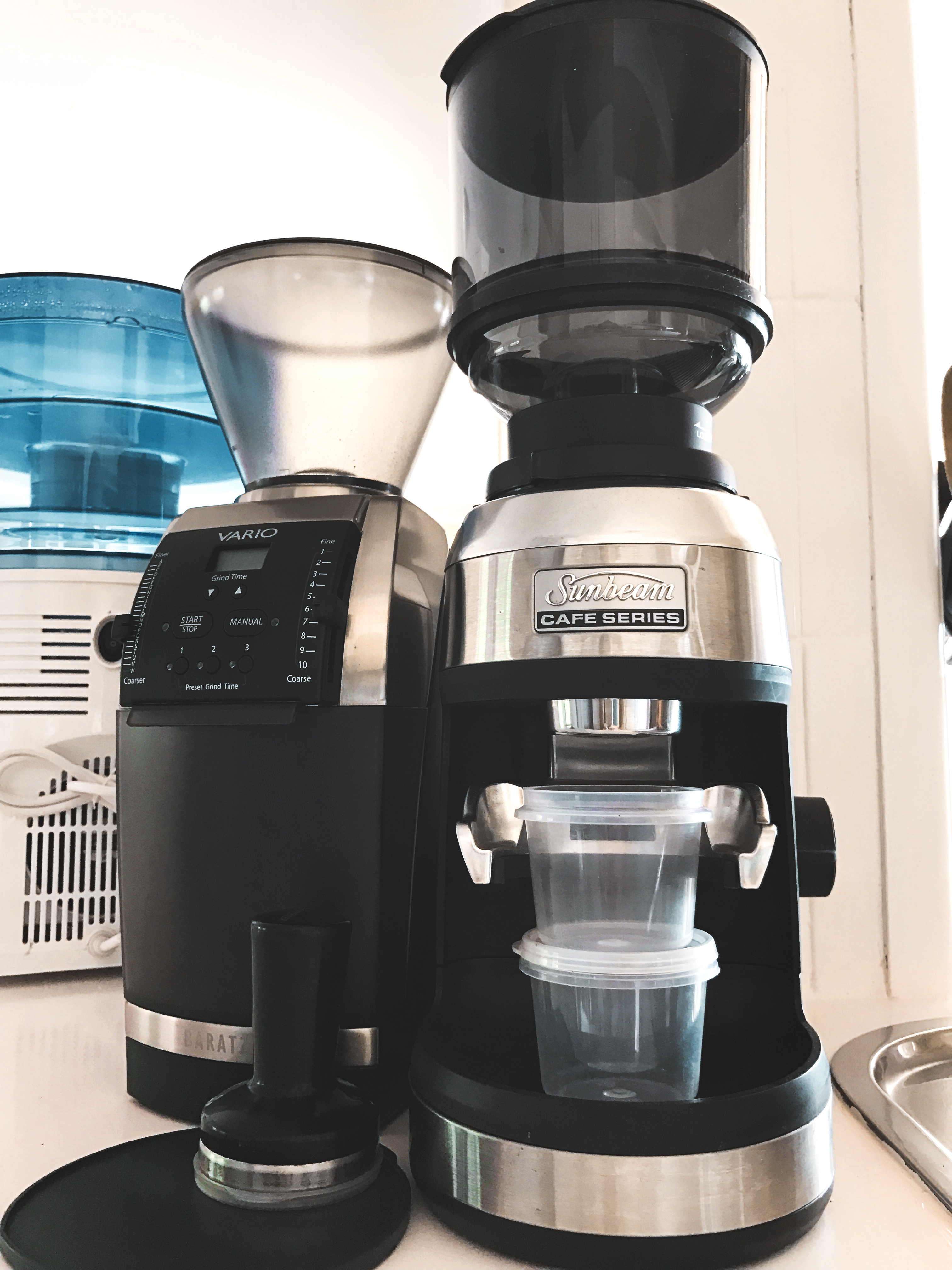
As you can probably tell from the above, I’m pretty happy with the espresso machine currently sitting on my kitchen bench, and have no real plans to look around for another. Not so the Sunbeam EM0700 grinder designed and marketed as the partner to the machine I’ve discussed above. I would say it does an admirable job, and a replacement will probably come for reasons other than dissatisfaction entirely.
img_6569_edit

Along similar lines to the espresso machines I’ve owned, this is the third in a line of Sunbeam grinders, which have served me well over the years also. The purchase of the current model was made in mid 2014 after an ill-fated, short stint with a Breville Smart Grinder, with which I was unable to adjust the grind fine enough for espresso. I believe the Smart Grinder Pro is the one you want (should Breville be your choice), however at the time I had picked up the particular Breville model at a very discounted sale price.

In any event, it was back to what had been the faithful tried and true Sunbeams again. I say what had been tried and true simply because the EM0700 was a major redesign on its predecessors and I wasn’t entirely sure how the new model stacked up. On the whole I needn’t have worried, as it is more than adequate in coping with the required grind size (read “fineness”) of standard single floor filter baskets along with the aftermarket VST basket I know use.

img_6572The grinder itself contains conical stainless steel burrs, has 30 steps of adjustment (more on this below), 450g bean hopper capacity, and the ability to grind directly into the group handle, with a built-in switch in the portafilter cradle to do so. It is belt driven in an attempt to reduce vibration and noise apparently, however what can I say — a coffee grinder is a coffee grinder — they are noisy beasts.

The main issues I’ve had over the past couple of years relate more to grind retention (grinds left in the chute or adjacent to the burrs), cleaning, and a little inconsistency at times. Add to that the grinds clumping a little has me thinking that if the EM0700 were to give up the ghost tomorrow, I’d probably be looking at an upgrade purchase rather than a direct replacement.

On a side note, in the images I’ve included in this post you’ll notice another grinder — the Baratza Vario, worth far more than the Sunbeam, and a much higher quality grinder in its own right. Why then would I be using the Sunbeam in preference? Simply the fact that every day I grind for espresso as I’ve mentioned above, and also for either AeroPress or my V60 drip filter. I’ve always been apprehensive about constantly adjusting back and forth between coarse and fine settings, preferring to keep one grinder for filter and another for espresso.

Firstly, a rather privileged situation I know, and my intention is to care for the grinders a little more in doing so. Whether this really makes any difference or not I’m not entirely sure, however that is how I roll, and on that basis I will continue. By the way, the Vario was an Instagram competition win through the good folk at Espresso Parts – yes I’ve been very competition-lucky in my coffee journey over the years.

So, the positives I’ve found with the Sunbeam – firstly the price. With RRP at AU$299.00, the grinder can often be found at various sales for around $50.00 less. Next, adjustment. The grinder comes with a stepped, 30 increment adjustment collar, which more importantly can be recalibrated at either end to go a little further than the standard 0 or 30.

Depending upon how you may use it, this ability could be a deal breaker. For my espresso grinders, I need to be able to achieve a fine enough grind to ensure my espresso machine is usable. That is, allows me enough flexibility to control the flow at a given dose. When using the standard single floor filter baskets which come with the EM7000 Espresso Machine, or VST baskets, the grind essentially needs to be similar to what you will find in a commercial setting. This is a lot finer than lower end machines which utilise dual floor baskets to accommodate the pre-ground supermarket coffee sold in vacuum sealed bricks.

I’ve recalibrated the grinder finer than the zero setting to the tune of 5-7 additional steps, which is a little over done, however I still like to be able to drop down a couple of steps if I need to, without hitting the zero marker. The user manual will advise if you recalibrate too finely, it will result in “a metallic grinding noise” as the burrs collide. We don’t want that of course, so if you head down this path, go in small increments. Once done, I was (and still am) more than happy with the level of control I have with the flow of espresso, using minor grind adjustments on a day-to-day basis (between settings 3 and 7 approximately).

I tend to think the EM0700 is better as an espresso grinder (once calibrated), as the particle distribution seems a little spread when grinding more coarsely for filter brewing. That is of course simply my opinion based on very unscientific tests (read a little haphazard use of a sieve to check a few times how consistent the particle size was).

img_1346Those few negatives I’ve mentioned above in relation to grind retention and cleaning aren’t massive, however to elaborate a little. For cleaning, the adjustment collar removes and takes with it the outer burr — handy for getting a vacuum hose around the top and sucking out retained grounds. Firstly, removing the adjustment collar is not an easy task, and takes a significant amount of force to rotate it to the unlocked position, and a little less to remove it off the top (I use the handle of a wooden spoon to push on the lug and rotate it, and the flat end of a wooden kitchen spachelor to lift it off).

Once it is finally off, only then will you see how much retention actually occurs in and around the burrs — and it is significant. I do understand this occurs in many grinders, however takes a little dislodging it the dogleg into the chute. Of course the grinder still functions quite well, however this is not an ideal situation, and I suspect is a major contributor to the clumping together of grinds as they pass through the chute.

In summary, the EM0700 grinder from Sunbeam will serve you well, with regular cleaning and perhaps a little calibration adjustment. I don’t grind directly into the portafilter for reasons related to my own dose-weighing workflow, which is a story for another day. For the price, I’d say the output is of a good quality.

Ultimately though, if I had to choose between replacing the espresso machine or the grinder, it is the grinder which would be shown the door.

Other bits and pieces

What else do I use besides the machine and grinder? A set of Hario scales to weigh my dry coffee dose which goes in the portafilter, and the resulting beverage weight or yield produced in the cup. I’m certainly not going to recommend everyone start weighing their espressos, however it is surprisingly quick and simple to do with the right set of scales, and provides a great deal of feedback if you are looking to become more consistent with espresso brewing.

I use the standard Sunbeam supplied tamper, however one day will up the ante on this a little as well. Does it work as expected? Of course. Another point of note is the commercially sized 58mm portafilter of the Sunbeam EM7000 machine, which accommodates commercial tampers and filter baskets. A handy thing to remember when comparing machines if you are considering some aftermarket accessories or tweaks down the track.

img_6596In addition (which relates to my weighing workflow), I grind into a decor small plastic container, which is easy enough to tare on the scales, and then transfer the grind into the portafilter, as the circumference of the container opening is a precise match for the inside of the 58mm filter basket. So, placing an upturned portafilter on the container, flipping the whole lot over and shaking a little provides a mess free transfer, unclumping of grinds, and decent initial distribution in the filter basket all in the same motion. I’ll go into a little more detail in a future post, however to explain the presence of those little plastic containers, there you have it.

As I’ve mentioned, I a VST filter basket, which is the 18g size. After trying a 20g basket, found that I am best dosing 20 – 20.8g (brew ratio approximately 1:1.8-2.0)in the 18g size. There are significant differences when using a VST basket compared with the standard Sunbeam one, and I’ve found the combination of grind, dose and flow achieved with this combination seems to better suit overdosing the 18g basket a little. Perhaps I am wrong on this, however the results seem pretty good to me.

Finally, I dry wipe the basket with a paper towel, tamp on an old rubber mat from the base of a previous (Sunbeam) grinder, and away we go. Once done, the used grinds are then disposed of in a Sunbeam knock box which sits in a corner on the kitchen bench.

To Finish

Boy, this has been a little long-winded compared with what I had in mind at the beginning, and when that happens I’ve probably made things more confusing, rather than simply providing better detail.

Frighteningly, there are a few points I’ve deleted and some I’ve left out, which I think will be best served in future posts I’ll hopefully get around to writing.

img_6561

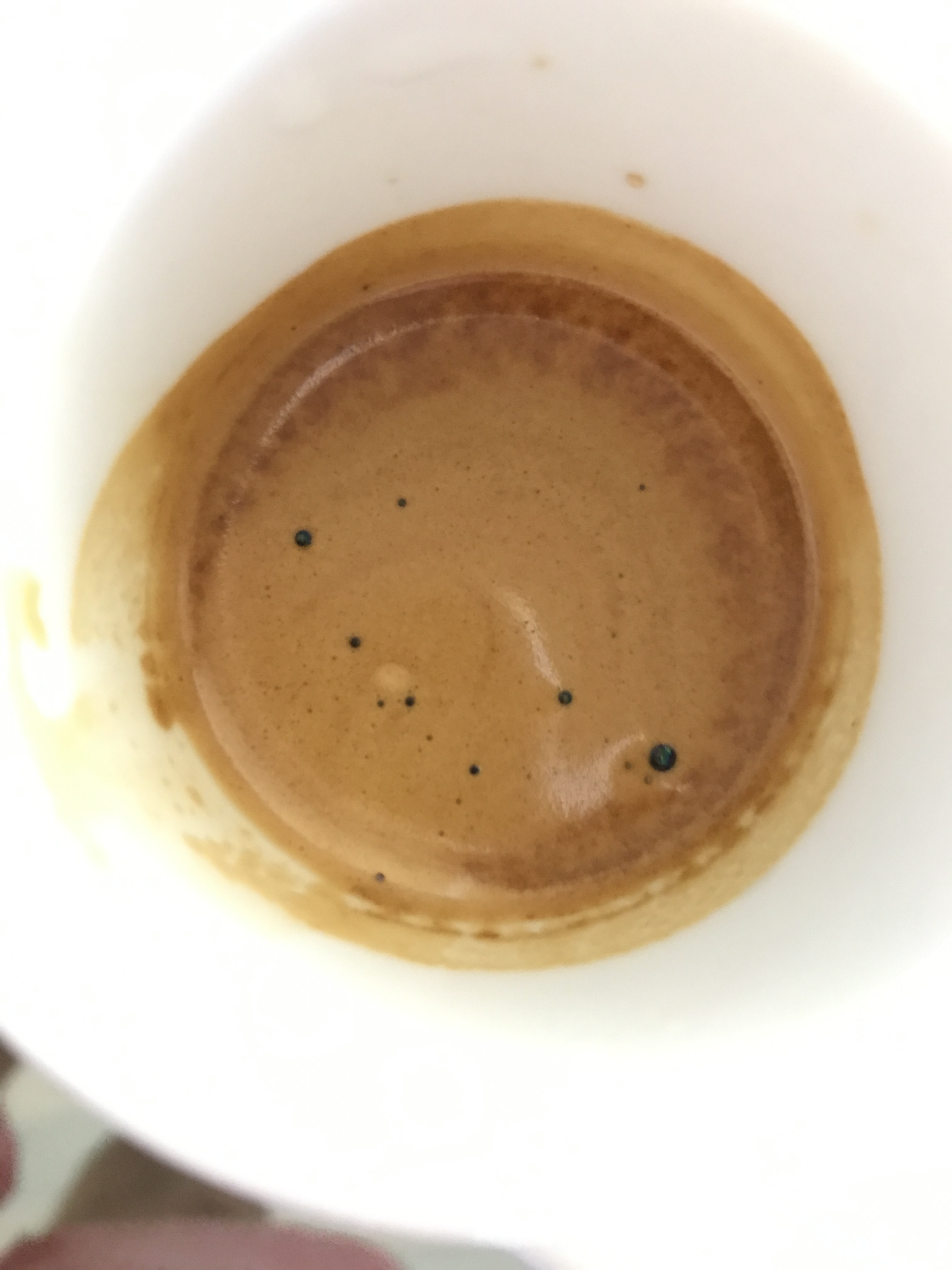
I think the best way to sum my feelings on the current set up is to report that this morning I got up, fired up the machine (which is ready in about a minute), made my wife a 6oz decaf flat white, and myself an espresso and 4.5oz flat white (21.6g dose; 44g beverage weight), and was more than happy I had the equipment to produce exactly what I wanted.

Further, I would be happy using everything I currently have for a number of years yet, and I think that speaks volumes for both the espresso machine and (mostly) the grinder.

Cheers. Like another?

Wiser Web Wednesday 

Wiser Web Wednesday – a semi-regular link to posts of interest from around the web, by those far wiser than myself:


Three Staples
The Drink Local edition was at the beginning of my Field Notes awareness, and therefore I’ve not seen them in the flesh. A Three Staples post is of course the next best thing.

Such a great theme and perfectly executed in colour as well.
Field Notes Colors: Drink Local

Also check out Jinnie’s latest post for some information on the direction the Three Staples blog is taking in future:
Updated Goal and Housekeeping #20161008


The Gentleman Stationer
I continue to enjoy seeing inks from Australian manufacturers receiving attention around the pen world. I currently have three bottles of Robert Oster Signature Inks in my collection (Bondi Blue, Peach and Ruby), however that probably won’t be where it ends.

Great post from Joe as always
Ink Brand Profile: Discovering Robert Oster Inks


The Pen Addict
Susan Pigott writing at The Pen Addict with some more Robert Oster ink appreciation — this time the decidedly blue-green Tranquility.

A name befitting a calming shade:
Link Robert Oster Signature Ink – Tranquility: A Review


The Gentleman Stationer
I enjoy reading reviews of pens less commonly seen, or well… reviewed. I had not heard of Otto Hutt prior to reading Joe’s post (my lack of knowledge more than outright rarity I’m sure), however this Design 06 model looks to be up there with anything in its price range.

As fountain pens experience a bit of a “renaissance,” and more and more people pay attention to pens online through blogs, forums, etc., it’s increasingly rare to find lesser-known high-quality brands.

The beauty of a great pen blog — assisting the enlightenment of other enthusiasts:
Pen Review: Otto Hutt Design 06


Quill & Pad
An interesting tale recounting the author’s visit to the P.W Akkerman store in The Hague:

His response was unheard of: instead of presenting me with what he thought I should have or might like, he went over to a display rack, picked up about half a dozen of pen magazines, gave them to me free of charge, and told me to come back when I had found my pen

Certainly a unique approach which appeared to pay off for both author and salesman, resulting in the purchase of a Visconti Van Gogh. That is just the beginning, as Martin Green provides the story for many a pen purchase along the journey — and boy are there some beauties here:
My Quest For My Ultimate Fountain Pen Part 2: The Italian Period


Nibcreep
Tim Schönfeld reviews the Tactile Turn Gist fountain pen, which has recently emerged after another successful Kickstarter project by Will Hodges.

Indeed a nice looking pen, however the Bock titanium nib was not a winner. A forthright review which is always good to see:

Tactile Turn Gist


Alt. Haven
Another review of the Tactile Turn Gist, this time two of the models — one with a stainless steel nib, the other titanium.

Junee has a more positive experience with the titanium nib, however it sounds as though it certainly requires treating with care:
Review: Tactile Turn Gist


Pen Economics
Now we have the links to some pen and ink reviews listed for the week, some thoughts on bias in fountain pen reviews. In the week’s most un-startling news, Amazon announced a change of rules after it found a bias in reviewer’s opinions existed when the review products were received free or at a discount (not specifically related to any of the above posts of course).

I think disclosure being the most important point here, and to me, a simple “I received this [insert product] free for the purpose of this review” is more than enough, and I’ll weigh my opinion from there. Yes, it then seems natural to state the opinion was not then influenced, however as we can see, is that ever really true?

Just to reiterate though, as long as I know, I can make my own judgement with that knowledge:
Ethics, Bias, and FP Reviews


MacStories
I don’t add many (read, one so far in nearly 300 posts) tables of information to posts on this site. I’ve often told myself it’s simply because the style of writing doesn’t require it.

That is mostly true, however in some cases, I’ve simply altered how I’ve written about certain topics to avoid creating a table in Markdown.

Not any more, as TableFlip for Mac has launched in the past week, and if the demo version I’ve been playing around with is any guide, things will now be a whole lot easier:
TableFlip Takes the Pain Out of MultiMarkdown Tables


2Do Blog
Still my task manager of choice across both Mac and iOS,  2Do goes free with a one-time in-app purchase after two weeks, for continued Sync, Backups and Alerts. If the user does not activate the purchase, the app will continue to function, albeit without those features.

I don’t know about you, and your opinion on this may differ, but I’d personally hate to see the 10+ apps I use frequently to turn into a $2.99+ monthly subscription. I appreciate that there’s a difference between a Service and an App, but nowadays everyone’s begun to portray their app as a service. Maybe it’s just me, but I’m not comfortable with that thought; even as a developer.

The change has been made by the developer in the hope of improving discoverability, user numbers and ultimately sustainability.

I think it is probably the best model to go with, finally allowing new users the “free-trial” so often missing when considering such a purchase. I hope it does well:
The Big Change


John Scullen
Having been on the receiving end of a few project updates which were, shall we say… less than engaging — any tool which aims to assist the process is worth looking at. Here John takes a look at a reasonably priced option to create simple Gantt charts and assist with presenting them to stakeholders in a project.

I always find John’s posts interesting and to the point, providing the information I need to assess whether it is something worth further investigation.

This one is no different:
Roadmap Planner review: project schedules don’t have to be ugly


inessential
Here we are again. The internet has had another little flurry around the merits, or lack thereof in relation to open floor plans or workspaces.

The Omni Group’s Brent Simmons talks of a “low-simmering level of anxiety” around others in a workplace, irrespective of who they are. A pretty good summary finishes off the piece.

When people who decide on workspaces for programmers don’t understand this, I wonder if they understand programmers.

To me though, it doesn’t go far enough, and we can simply replace “programmers” with “other people”. But Pete, this is the panacea, the way of the future in collaboration, creativity and spark. As I sit and have no choice but to hear everything going on around me, I also have a “low-simmer” happening, but it’s not anxiety, and for fear of offending, I’ll leave it there.

I do realise however, and fully acknowledge I need to remember, we are all different, and thus work differently. I would however, have appreciated it if those who plan offices had afforded me the same courtesy in their thinking:
Open Floor Plans


Finer Things in Tech
An update and reflections from David Chartier on his experiment in moving from Dropbox to iCloud for cloud based storage and syncing.

For my needs, it’s gone well so far, though I certainly hope Apple pays more attention to iCloud Drive to make it a more viable competitor in this space.

Seems about right:
From Dropbox To iCloud Drive: A Review And Some Thoughts


MacStories
I’ll start this one with an aside. I listen to my fair share of tech related podcasts, and clearly read a little on such topics as well. The following from Federico Viticci pretty much hits the nail on the head in describing the ruminating and handwringing that often goes on in and around the tech press/podcasting world (the following in relation to the storm that became barely a ripple with Apple removing the headphone jack from the latest iPhone).

What I believe many failed to observe is that most people aren’t tech reviewers with a deep affection for cables and I/O standards.

They’re not podcasters either

I honestly don’t mind listening to these opinions (strong ones at that, even if they could be classed as hyperbole) — however it is laughable to assume the entire user base has (or should have) the same view (it’s actually the opposite). Mostly of course people don’t really care one way or the other — as the post goes on to say.

With that out of the way, Federico’s thoughts on the iPhone 7 itself, and what it represents for future technologies:
iPhone 7: Computer from the Future


Transparent Trade Coffee
Although this post is a discussion around the terminology and definitions used in reporting payments actually received by growers of green coffee, it does offer some information on the various other parties in the chain and the percentage they receive.

Of course this phenomenon is not unique to coffee, as any exporter of goods will no doubt tell you, however the main point here is if specialty roasters are reporting on how much actually goes to the farmers, it seems reasonable the calculated figure and terminology around the information is accurate.
Effective Grower Share versus Return to Origin?


Assembly Coffee
Some interesting thoughts from a very well-respected figure in the global coffee industry – Maxwell Colonna-Dashwood.

The future is inevitably going to be technology improvements that increase the ability to make better cups of coffee.

There are a few more topics covered as well, including Colonna-Dashwood’s foray into making speciality grade Nespresso-compatible capsules.

An interesting read:
Maxwell Colonna Dashwood — Colonna Coffee


Sprudgewire
Just rinse under the instant boil water and dry with paper towel. Do not, I repeat do not touch the communal dish brush, sponge or tea towel. I never have, and after reading this piece, any temptation to do so will be met with the fiercest resistance:
Don’t Wash Your Coffee Mug In The Office Break Room

Wiser Web Wednesday

Wiser Web Wednesday – a semi-regular link to posts of interest from around the web, by those far wiser than myself:


The Washington Post
If you’re looking for an overview of the current state of, and a little of the history behind the cold brew craze sweeping the coffee world – this isn’t a bad summary.

A traditional iced coffee is made with hot-brewed coffee that has been cooled down. Cold-brew is steeped in room-temperature or chilled water, allowing the coffee to slowly infuse over time

My preference? Probably chilled hot brew, though there are some pretty good cold brews going around:
Whatever happened to plain iced coffee? Cold-brew


Coffeelovers Magazine
It may be fairly quick to make, and sure, quick to drink if you are that way inclined, but I’d suggest taking just a little longer.

There’s such wonderful magic to be found, that it’s worth taking just a bit extra care in the enjoyment of the drink, to shut out the rest of the world for a minute or two, and dig into something that is one of the finest crafts that we make every day in this world.

In a world of cold brew and AeroPress, here’s to the humble espresso:
How To Drink Espresso – Your New Favorite Cup of Coffee …


jimseven
James Hoffmann (2007 World Barista Champion) with an updated video demonstrating his preferred French Press brewing technique.

Apart from the other elements involved, a key aspect of this is using the metal screen as a filter rather than plunger, creating a silt-free brew.

Worth trying at least once to compare with your usual technique if you have a few extra minutes:
An updated french press video


Scotch Whisky
Although the active campaign for increased transparency in stating the component ages of scotch whisky has been put on hold by maker Compass Box, they do believe all is not lost.

Compass Box believes that it can reveal the ages (and other detailed information) of the components in its whiskies, based on its consultation with lawyers specialising in commercial law, as long as the company does so reactively, rather than proactively.

That is, if you ask – they’ll happily tell you.
Compass Box ends transparency drive… for now

You can also listen to John Glaser of Compass Box elaborate further when interviewed by Mark Gillespie on a recent episode of the Whiskycast podcast.
Whiskycast Episode 609


iMessage App Store
With the recent iOS 10 update adding many new features to Apple’s iMessage platform, there are of course numerous sticker packs available from the App Store.

Although I haven’t delved too deeply into what is available, I do like these coffee themed additions I can now “flavour” some of my messages with:
Third Wave Coffee Stickers for iMessage by Arno Richter


MacSparky
The soon to be released wireless Apple Air Pods are one of those things many of us would like to try, though at this point I’m unsure whether that is AU$229.00 worth of want-to-try.

I use the (now Lightning connected) standard Apple Ear Pods quite a bit, and similar to a point David Sparks raised in the post – the only time they have come adrift is when I’ve snagged the cord. This developing wireless technology is fairly compelling for me given I fairly regularly do just that – whether it be on my bag, wrapping it around my tie or even my belt buckle while walking with my phone in my hand. Even then, they don’t usually fall completely out, though boy its annoying feeling the drag every time I do it.

Assuming the fit is the same as the current wired model, I’d consider the risk of these falling from my ear to be virtually non-existent. Add to that the freedom from constantly snagging the wires makes them a very attractive proposition:
Initial Impressions of the Apple AirPods


Ulysses Blog
My first steps towards Ulysses becoming my text editor of choice began with the 30 day free trial NaNoWriMo promotion in November 2014.

Here we are now in November 2017, and I’m currently writing this – and every post in that very app. There have been a number of fairly significant updates over that time, not the least of which being the release of a fantastic iOS version, which would have made my NaNo journey in 2014 even more enjoyable.

Really, there’s never been a better time to both try Ulysses and writing a novel. Surely. Go! Flesh out that outline:
“Do You Have Plans for November?” – “I’ll Write a Novel.”


The Sweet Setup
There is a very kind gentleman I regularly correspond with whom I also consider my unofficial “Mac mentor”. As a result of this generous guidance, I am happily using Alfred as part of my workflow when at my desk at home. Certainly not to its full potential mind you, but I’ll get there.

This is quite a good summary if you are contemplating whether Alfred might be for you:
Our favorite OS X launcher


Macdrifter
A brief piece of news regarding RSS application Mr Reader – or rather, its demise. Mr Reader has been my app of choice for scrolling through the RSS feeds on my iPad for a good couple of years now, so indeed it is a shame to see it go.

That said, I do not spend a whole lot of time in it – often scrolling through for any Wiser Web Wednesday links. I’ve now simply gone back to the Feedly app, which supplies the back end to my feeds anyway. Feedly is indeed a free app, and if you were to suggest using free apps is one of the reasons the Mr Reader’s of the world disappear, you’d probably be right. Having said that, I’ve also paid for quite a few that no longer exist, however a discussion on app payment models this isn’t:
Goodbye Mr. Reader


The Well-Appointed Desk
Having been fortunate enough to receive this exact set of inks for Father’s Day recently, I concur with Ana – the presentation of the set is fabulous.

Add to that the fact they are fantastic inks (the Eastern Brown is fast becoming a favourite), and you have a great option for sampling the entire Bookbinders Snake Ink range.

Ana with a great review as always:
Ink Review: Bookbinders Snake Ink Sampler Set


From the Pen Cup
Mary remarks in this post she has the worlds worst record for consistently journaling. I don’t believe that’s entirely true, for I make a compelling case for the title. In any event, it appears from this post she has permanently left the good-intentions-only ranks.

Full of quotes that buoy me up, details from my day that I surely would’ve forgotten, little epiphanies, and dinner ideas, the 2016 Techo has already become a treasured resource

Further, what started as a bit of journaling clearly has assisted an evolution into some positive behavioural change as well. An inspiring read.

More power to you Mary:
In Praise Of Habits


Field Notes
I do enjoy my fair share of Field Notes releases, however don’t religiously buy every seasonal edition by any stretch.

I do like the look of Fall’s Lunacy edition though – and of course the release video is always worth watching, demonstrating another aspect to the inspiration behind the name:
Lunacy


Futurity
An elite level sporting life as a teenager resulted in my fair share of injuries, culminating in an anterior cruciate ligament rupture and subsequent knee reconstruction at age 18. Of course the road to osteoarthritis is paved with injury, so I’m well aware of what’s coming.

Although there is some way to go in advancements such as the one featured in this article, it will be interesting what best practice comes to look like in 30 years time.

Whether such a strategy will work years after an injury, when osteoarthritis is established and there is severe cartilage loss, still needs to be studied. But the findings suggest that the nanoparticles, if given soon after joint injuries occur, could help maintain cartilage viability and prevent the progression to osteoarthritis.

Personally I don’t subscribe to the view that medical advancements should necessarily afford us (in advanced countries at least) a longer life, however improving the quality of the final third is a worthy endeavour:
Nanoparticles injected into achy joints last for weeks