Bulletproof Coffee – the butter or the beans?

Firstly, let’s be clear, I do not drink, nor have I ever tried Bulletproof Coffee®. Am I ever likely to? Probably not, though who knows, one day I may be curious.

A recent article on Gizmodo debunking the claims made by the inventor of the beverage, The Bulletproof Executive Dave Asprey, highlights the main problem with these types of products. Namely, the dreaded brand lines which aim to monetise what is essentially a simple idea, which in itself may indeed have some merit. Yet another way to make money from the placebo effect1.

Whether blending butter from grass-fed cows and MCT oil into your daily brew has any positive effect on your body or level of functioning is another matter entirely (and I tend to fall on the side that it probably does). The issue I have here is the contention that somehow, the processing methods used in standard coffee production are inferior to those used to create the “Upgraded®” beans in the revenue-producing component of the Bulletproof version. As you will see from the video embedded in the Gizmodo article, Asprey so helpfully advises:

The Bulletproof process makes beans without the toxins that rob performance from you every single time you drink most coffee.

No, of course we don’t hear what the toxins are, how your performance is robbed, or what performance we are talking about. There are also numerous references to cognitive function, mental and physical performance, lab testing, and the curious statement that the Bulletproof beans will give you a different “mental feeling”.

Are we talking thoughts? Feelings? Performance again? I’m not sure – and this is most likely the aim. Don’t think about it too much viewers, just take my word for it, click “buy” and you will never look back.

Those who do begin their Bulletproof journey with Asprey’s beans will unfortunately never know they could achieve exactly the same outcome and pay half the price using well sourced specialty roasted coffee. Sure, they might feel better – but is it placebo, the butter or the “Upgraded®” beans? If you need me to answer that then stop reading now.

From the Bulletproof website:

I learned about the power of butter at 18,000 feet of elevation near Mt. Kailash in Tibet. I staggered into a guest house from the -10 degree weather and was literally rejuvenated by a creamy cup of yak butter tea.

So, is it the butter – or is it the beans? Clearly the Tibetans must have been using “Upgraded®” tea leaves or this wouldn’t work would it? Yet it did according to Asprey. Now I’m confused. So I don’t have to buy the special “Upgraded®” beans, because it was the butter in the tea. What’s that? I do? Oh okay then – they’re a bit expensive but if you say so.

For a little more analysis, check out the article on Gizmodo.

The biggest disappointment for me in all of this, and the many products like it, are the completely baseless and unsubstantiated claims which typically accompany a product, dragging down efforts by proponents of certain lifestyle philosophies (think Paleo, as Bulletproof coffee is often associated with this movement), which may genuinely be attempting to build a body of research in support of their claims.

Actually on second thought, the biggest disappointment is that people still put down good money for this. Remember – any positive effects only occur due to the “Upgraded®” beans – use anything else, and you’ll be drinking the same old “performance robbing” demon you always did.

So I guess for those who believe it is all about the beans, need to remember it’s also all about your credit card number.

  1. I am not ignorant to the fact that the placebo effect also enhances the effects of well scientifically researched mainstream medications, but remember these also have well documented, proven physical therapeutic effects. 

Third Wave Wichteln and Global Communities

FullSizeRender 9 copy

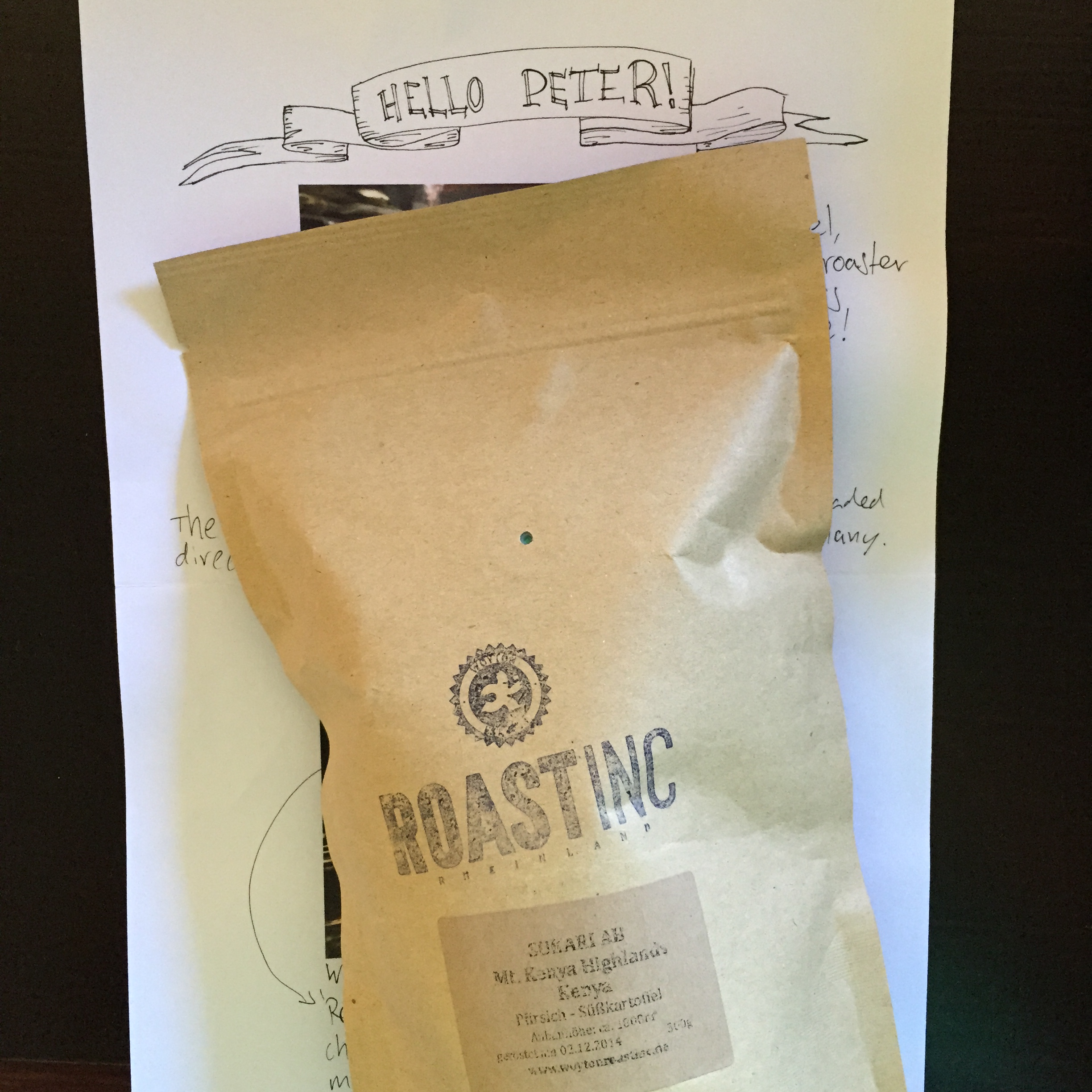
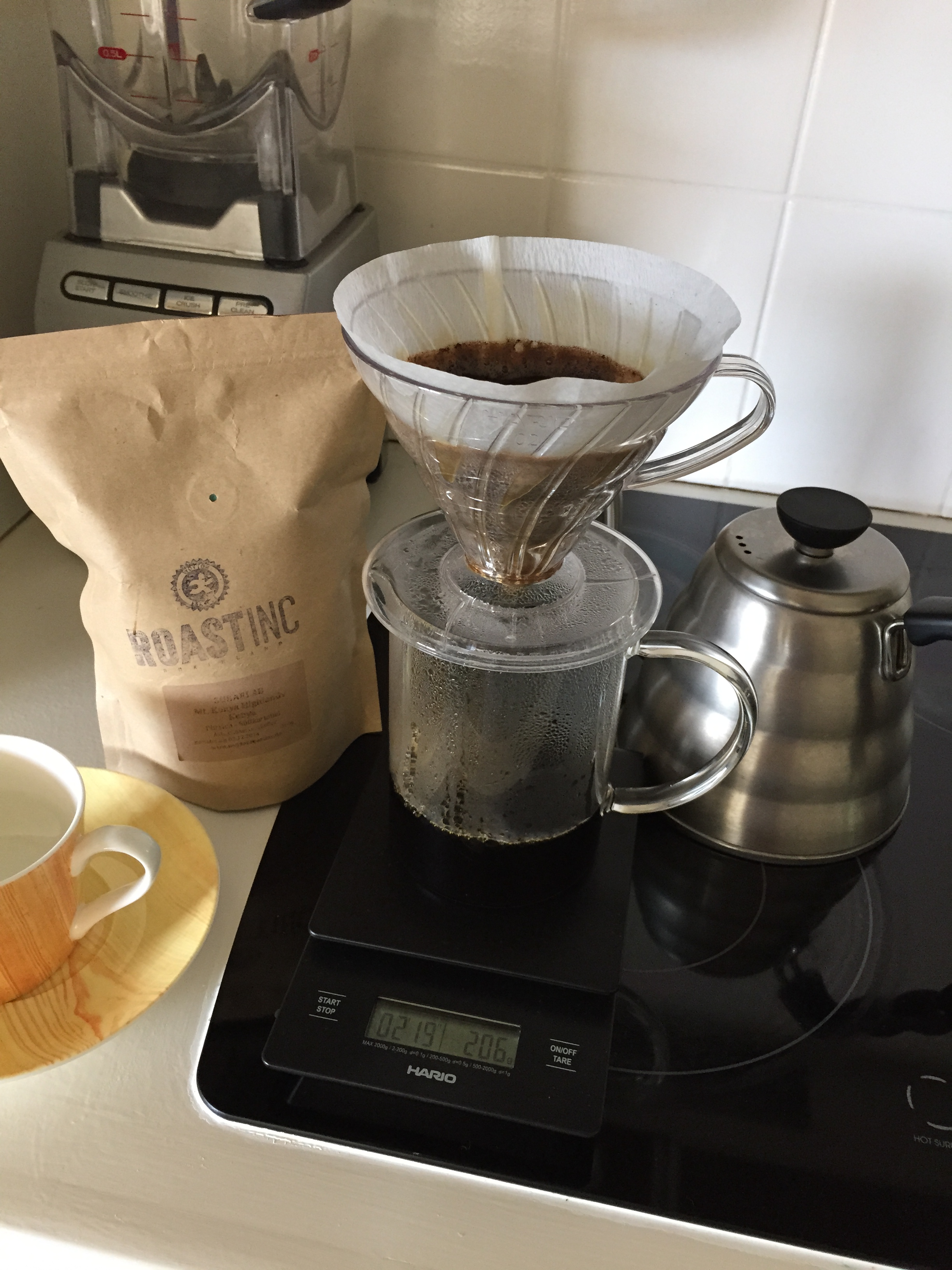
Although I previously linked to this global coffee exchange initiative in one of my recent Wiser Web Wednesday posts, as I near the end of the bag of superb Kenya Sukari AB coffee I received from Germany, I thought it worth adding a little more to the story, and how to me, it illustrates a degree of change in how we are now able to interact with those across the other side of the world.

Third Wave Wichteln

I first came across the concept only this year, through an Instagram post of a barista friend of mine who was planning on participating in Third Wave Wichteln.

To recap briefly, you sign up to the programme, send a bag of specialty filter coffee to your randomly assigned receiver, and in turn, you will also receive the same, from a randomly assigned giver (Wichteln being the German word for Secret Santa).

IMG_3307After signing up, and selecting International as the destination category I was willing to send to1, it was simply a waiting game until the email popped into my inbox in early December with the recipient’s name and address.

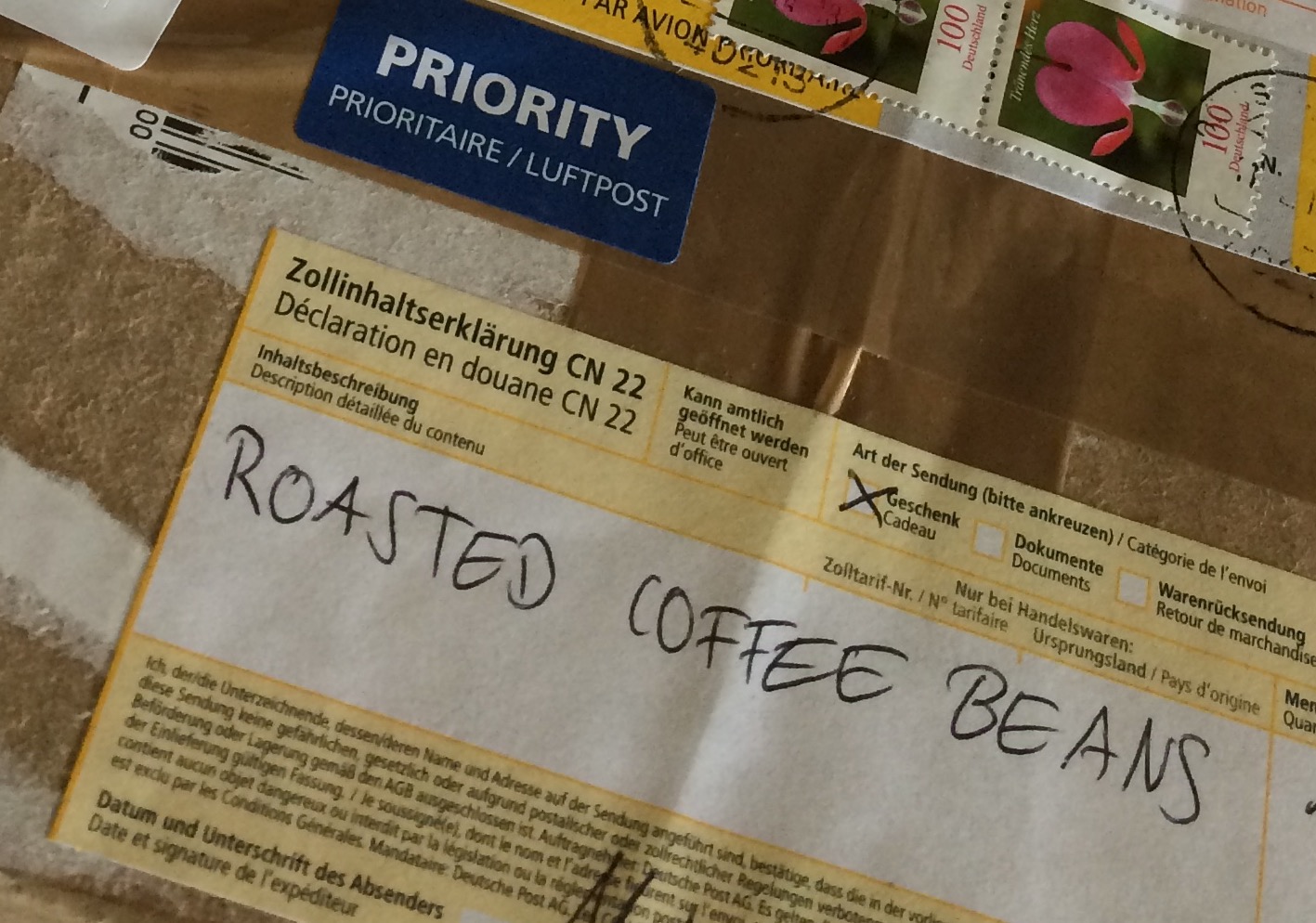
Germany it was. So after selecting a suitable filter coffee from a local speciality roaster with the most recent roast date I could find, it was off to the post office. Customs declaration filled out, postage paid (a very reasonable $AU18.00 for 3-10 day delivery; closer to 10 if not beyond I’d imagine) and Godspeed I bid the package as it commenced its journey.

Not long after, I received my own Christmas surprise, which originated from Germany, with a great letter from the sender inside, providing some background, tasting notes and photos, (including the roaster himself) — a pleasant surprise indeed.

Whether or not you agree with my thoughts below, this is just a fantastic way to try some different coffee, is easy to do, and adds to the spirit of Christmas – I loved it, and encourage you to check out the site for details come November next year. Don’t worry – I’ll remind you.

Breadth of Community

IMG_3388Probably the main thing which struck me about this initiative is the extent to which those with common interests can so easily now interact — irrespective of global location (yes, not new to 2014/15, but new to the last decade at least). The internet brings with it many things, both positive and negative, however it cannot be denied it brings opportunities of this nature not before seen. If not in idea, then certainly in scale, ease and degree of interaction between those participating.

Third Wave Wichteln and all it brings can be followed on Tumblr, or through the thirdwavewichteln hashtag on both Twitter and Instagram, with the Instagram tag now boasting 963 posts at the time of writing.

It can be argued if we are talking “community”, then a global internet based one, despite the physical giving and receiving of this particular initiative, may be wide though not necessarily deep. True, however is it not an example of the very nature of real-life human social networks — that is, a small number of very deep social connections, and as the radius of the network increases, the connections tend to run less deep.

From the site:

In times of the Internet and global connection we don’t have a bowl or hat where we put our names in — we do the Wichteln digitally. Therefore we created this page. And then we bring it back to the analog world: the exchange.

So, I’d like to think that each year, the tweets, Instagram posts and emails will go out again, more people will sign up, and the global coffee gift exchange will continue, with even more great coffee flying across the globe, and more worldwide touch points for but one of the many communities the internet has helped foster and expand.

Here is the link again for your calendar or task manager.

  1. Mind you, the thought also crossed my mind as to the possible cost of shipping a 250g bag of coffee internationally. Obviously not something that would break the bank, however I had not looked into this prior to making the commitment to send internationally.


What’s Brewing – Fifty K Christmas Blend

With another year having come and very almost gone, it was time to create the annual Christmas Festive Roast Blend for distribution to family and friends. Mind you, with things getting a little hectic towards the end of the year, the creation of this years blend was completed just a little close to the line.

Although not helped by a last-minute change to the composition of the specific coffees I’ve put together for this year, it was preferable to wait a little longer and produce something, which I feel, is a little more well-rounded and nicer in the cup. So without further ado, the details.

The Name

The finished product heading out the door.

The finished product heading out the door.

“What on earth is the Fifty-K reference in the name?” you would be well within your rights to ask. Although only the third time I have done this, the idea of putting together a festive Christmas blend with a specific name is based on two things.

First and foremost, given my own interest in roasting and brewing coffee, it is nice to give something to family and friends who take that little bit more care in how they brew theirs, whether through a home espresso machine, french press, Aeropress or other manual brewing methods.

Secondly, coming up with a name for the blend which reflects either the year I’ve had, other events of interest, or something which has perhaps captured my thoughts in the previous 12 months.

This year, as regular readers (and without a doubt my immediate, and very understanding family) will be well aware, November was a big month, swallowed up entirely by my participation in National Novel Writing Month, or NaNoWriMo. Managing to meet the 50,000 word deadline by the end of November certainly wasn’t easy, however I was pleased to get there, and finished with a small novel of just over 55,000 words by months end, along with the inspiration to name this years blend in honour of that very challenge.

So, without further ado, what makes up this years festive roast, and how does Fifty-K Blend taste in the cup?

The Coffee

As usual, the green beans were sourced from Ministry Grounds, with the plan to put together a blend worthy of the season, with berry, stone and dried fruits, along with nuts and honey the key components of this year’s tasting notes list.

IMG_3294

Green bean selection

IMG_3300

Roasted bean blend testing

Finalised on December 21 - just made it!

Finalised on December 21 – just made it!

Searching through the many single origin coffees on the Ministry Grounds site, after a false start with the Guatemala Las Illusiones (a fine coffee in its own right, however wasn’t quite right in the blend), the individual coffees below made the final cut, and make up Fifty-K Blend in equal one-third portions.

Ethiopia Sidamo Bulga

  • Region: Oromiya – Southern Bale Mountains
  • Area: Bulga
  • Variety: Various heirloom cultivars
  • Processing: Fully Washed

Rwanda Nyarusiza

  • Region: Nyamagabe district, Southern Province
  • City: Between Butare and Cyangugu
  • Altitude: 1,935 metres above sea level
  • Variety: Red Bourbon
  • Processing: Fully washed, sun-dried on African raised beds

El Salvador San Cayetano

  • Region: Ahuachapán, Apaneca Ilamatepec Mountain Range
  • Altitude: 1,500 metres above sea level
  • Variety: Bourbon
  • Processing: Honey processed and greenhouse dried

The Rwanda Nyarusiza returns, having been part of last year’s Keeper’s Blend, however the above combination is a departure from the red berry dominance of the 2013 blend.

Individual tasting notes and further background can be found on the Ministry Grounds website by clicking on the above links, however as far as the blend itself tastes, below is what I have found.

The Taste

A standout - the AeroPress

A standout – the AeroPress

When combined with milk in a flat white or latte, it is a lovely rich and creamy drink, with the dried fruits and honey at the forefront, and a mild, nutty aftertaste. Overall, the honey really carries through when consumed with milk. Perhaps it may have gained something from a little more “fruitiness”, however overall I think it works well to kick things off in a morning latte.

A little surprising to me was how well the blend suited the AeroPress, and had I not been running dangerously low on filters, would have consumed a lot more through this type of brew method. Whilst remaining rich and creamy with a lovely mouthfeel, the AeroPress really brings out the stone fruit and black tea flavours which hide a little in the milk based drinks. A pleasantly robust blend, which holds up really well in this form of brewing.

Upon brewing through the Hario V60 filter, the taste profile is similar in nature to that described above with the Aeropress, however I would not necessarily say it was any better, which is not what I usually find when comparing the two. As espresso (think green apple, a little honey again), well, you can’t please everyone, and let’s just say when consuming the Fifty-K black, a longer form of brewing is probably the best option, as it is probably a little too bright to be considered a really good espresso.

In Conclusion

With another year and another festive roast blend all but complete, perhaps it is time to reflect on the year gone by, and what might lay ahead for you in 2015. Or, as is the case with me, simply enjoying a few days off with family, the cricket and a some new toys to play with, courtesy of some thoughtful gift givers.

Thankfully, no one gave me a fountain pen for Christmas. As someone who does love a good fountain pen, why would I be thankful for this? Well, there are a few reasons, and tomorrow (29 December), you can read about what those are in a guest post I wrote for one of my favourite pen blogs, On Fountain Pens. The article is one in a series of 12, which began on Christmas Day, and I’d encourage you to head over and read them – it’s a great series of posts (and yes… if I do say so myself!).

I do hope you have had a Merry Christmas, thanks for stopping by, and best wishes for the coming year.

One discussion on speciality coffee

Having recently linked to an article by James Hoffmann (What message do I want to send?), and a subsequent response written in reply by Tim Williams (Mayfielder), I was keen to read the next chapter in the discussion, a follow-up post, again by Hoffmann.

Selling speciality coffee

Hoffman’s original topic? What it means to try to educate consumers, and “sell” for want of a better term, speciality coffee, the assumption being that such coffee is indeed, superior to what many consumers currently purchase and drink. For example:

The problem with selling what we have as “better” is that it requires the consumer accepting that what they are currently buying, drinking and enjoying is an inferior product.

The overall tone of the article was aimed squarely at the end consumer. The customer who buys, brews and drinks…, well, whatever they currently drink, which in many cases, would not be considered speciality coffee. As all final thoughts probably should do, Hoffmann’s closing sums things up pretty well:

What those of us in speciality coffee offer isn’t necessarily unilaterally better coffee, but amongst our offerings are lots of coffee someone will probably enjoy more than what they’re drinking now.

As I mentioned in my previous link, the response from Williams, I thought, probably interpreted Hoffmann’s words a little differently. Writing a response in disagreement, whilst conceding it is critical for speciality coffee purveyors to acknowledge consumers entry points to such coffee, also stated:

There is a difference between good coffee and bad. There is a point at which people who have chosen to position and market themselves and their products as elevated in quality, price, taste, experience must deliver on the promises they make to those consumers.

Williams continues, explaining how, in many cases, sub-standard coffee is being marketed in exactly the same way as vastly superior speciality coffee.

In further follow-up, another post by Hoffmann (Quality and customers), seeks (and probably achieves) to clarify his position, highlighting again there are probably two facets to his original.

Some thoughts

Myself? I tend to agree with both points of view, simply because in my experience (note here reader, a decidedly non industry viewpoint), I see examples of both, and further, I think there is also scope for improvement in both points of view in this discussion.

As far as quality within the industry is concerned, well, that is for the industry, and I have never put forward the notion that I, as a consumer (an enthusiastic home roasting and brewing consumer mind you), would (or should) have anything to offer experts within that very industry.

From a customer perspective however, things are different. As I have alluded to in previous posts, if we accept certain cafés are third wave or serving speciality coffee in any city, these continue to be far outnumbered by those which are not.

Every day, fellow colleagues walk into my office with takeaway cups ranging from 7-Eleven, McDonalds, Starbucks, varying juice bars, and any of the local cafés which by any definition, are not serving what I would call speciality coffee.

These people are intelligent enough, so why are they drinking what they are drinking? For some, I’m sure the price has an allure. For others, I believe they simply don’t care that much, and are quite happy with whatever is closest and the “I like that one better than this one” approach. Seeing an A-Frame touting the latest Guatemalan on offer with its cocoa, brown sugar and plum tasting notes does nothing for so, so many people.

Visiting a speciality coffee establishment with anyone who is yet to experience one, invariably leads to comments about how nice the coffee is, often to the point of “that’s the nicest coffee I’ve ever had” or similar. The next day, that same person is yet again walking in with their takeaway cup bearing the golden arches logo. Why? Because to them, it still does not matter enough to pay a little more for their coffee or walk a little further to get it.

Then there are those of us looking to further our knowledge, understanding, and palates in relation to the world of speciality coffee. As time goes on, this group becomes a little bigger.

I believe Hoffmann’s original post was referring to the entry point for members of this group, who, with a warm welcome and a little guidance rather than judgement, will realise themselves just how much better speciality coffee is, and be willing to walk an extra half-block with a little more money to enjoy the experience.

Genetics – coffee’s saviour?

Coffee. Black coffee.

Could there really be anything more natural? Lacking additives, chemicals or other compounds, save for those perhaps used in managing pests and/or disease when growing crops on the many farms around the world.

A seed grown; a crop harvested; the fruit processed; the ‘bean’ roasted; the coffee brewed. Ground coffee and hot water. The extent of any additions? Perhaps milk in espresso based drinks.

Much of the green coffee I buy is organic – some certified, some not. I am generally happy in the quality, traceability and again, for want of a better word, “purity” of the coffee I buy, roast and brew.

Science typically plays a significant role in large-scale agriculture, and the idyllic view (or misconception) of the small-scale coffee farmer producing the crop for my humble brew perhaps requires re-thinking.

Saving Coffee, an article published in the October 2014 edition of Scientific American (paywall), either carries a sensationalistic title, or perhaps is legitimate cause for concern:

Scientists are now hurrying to introduce helpful new genes into the crop through crossbreeding methods. They are mining gene banks and wild plants for as wide a variety of genes as they can find to fortify the crop against looming trouble.

What exactly is the hurry? Why are men in white coats scurrying about the lab to save coffee from impending doom?

Saving coffee?

Firstly, the above article, upon which this post is based, is but one viewpoint on some of the issues facing the future of coffee. It is, however, worth highlighting for anyone with more than a passing interest in the industry.

Further, it is not my intention here to debate the merits of organic and non-organic farming, nor, more specifically related to the topic at hand, the benefit or evil that may exist within genetic modification techniques in agriculture.

My interest in this type of article runs more towards gaining a better understanding of the coffee industry as a whole, beyond simply which beans I buy, roast and consume next. Also, reading about the next unique brewer, or the coolest new cafe or roastery in town does interest me, however these are merely the superficial facade of something that runs much deeper, and affects the livelihoods of many people far less fortunate than you or me.

The subject article by Hillary Rosner outlines four main threats to the coffee plant, and therefore the industry itself:

  • Disease (for example the recent coffee rust or roya epidemic in Central America)
  • Insects (the coffee cherry borer, whose range is now increasing due to climate change)
  • Deforestation (mainly affecting wild coffee trees and is reducing the possible genetic diversity which may be critical to fortify cultivated crops)
  • Climate change (both excessive rainfall in some regions and drought in others affecting global yield)

Coffee’s susceptibility

Although the impression of the coffee industry is often one of robust invincibility, those coffee producing countries through the “bean belt” which exists around the world between the tropics of Capricorn and Cancer, appear very much in the grip of an “eggs in one basket” susceptibility.

As Scientific American describes:

Coffee crops around the world are incredibly alike genetically. This homogeneity leaves cultivated coffee particularly susceptible to threats from diseases, pests, and shifts in temperature and rainfall.

It is this lack of genetic diversity which poses the greatest threat to the coffee industry. With almost all of the world’s cultivated coffee originating from a small number of plants in the birthplace of coffee – Ethiopia, there is an inherent lack of resilience in many of the crops grown around the world to disease and/or climate inconsistency or progressive change.

Learning more about diversity comes through genetic research, however identifying strains currently known, will of course do nothing to improve the diversity which will ultimate be coffee’s saviour. Unfortunately, where the real diversity exists – in the wild, up to 70% of plants are already endangered, mostly due to clearing of forests.

Time it would seem, is of the essence.

The way forward

Clearly, there is much to be done to ensure coffee’s long term future. Should the situation worsen, it may significantly influence not only the price of a cup for the average customer, but the very existence of some of our favourite single origin coffees.

Will the increased involvement of science in any way impact on what myself and many others consider to be so “natural”? Perhaps. Though when looked at objectively, it appears to be a necessity for at least the health of, if not the very survival, of such an important industry.

Whether or not researchers are able to harness the diversity they are seeking, and “develop a plant that has the flavor of C. arabica and the temperament and yield of C. canephora” (robusta) remains to be seen. Whether they will be able to overcome other barriers, such as the Ethiopian government’s refusal to grant access to a large collection of unique coffee plants, or the fact that coffee seeds cannot survive to be studied, rather, must either be grown or cryopreserved.

We should therefore be thankful for organisations leading the charge in this research, for example those at World Coffee Research, and the agricultural university CATIE in Costa Rica, with it’s 10,000 strong arabica plantation providing a “living gene bank” for use in research.

Final thoughts

Genetic modification of crops for human consumption can be a very emotional topic, and one I have traditionally observed from a passive standpoint. Although that is unlikely to change, perhaps when the crop involved is one I am quite passionate about, I should take a little more notice – and most likely will.

The final word should belong to Ric Rhineheart, executive director of the Speciality Coffee Association of America, as quoted in the article:

If we don’t start today, every day that we wait is more time. And we could be facing an existential threat.

Also on scientificamerican.com:
Coffee Crisis Spurs Hunt for Helpful Genes (Slide Show)