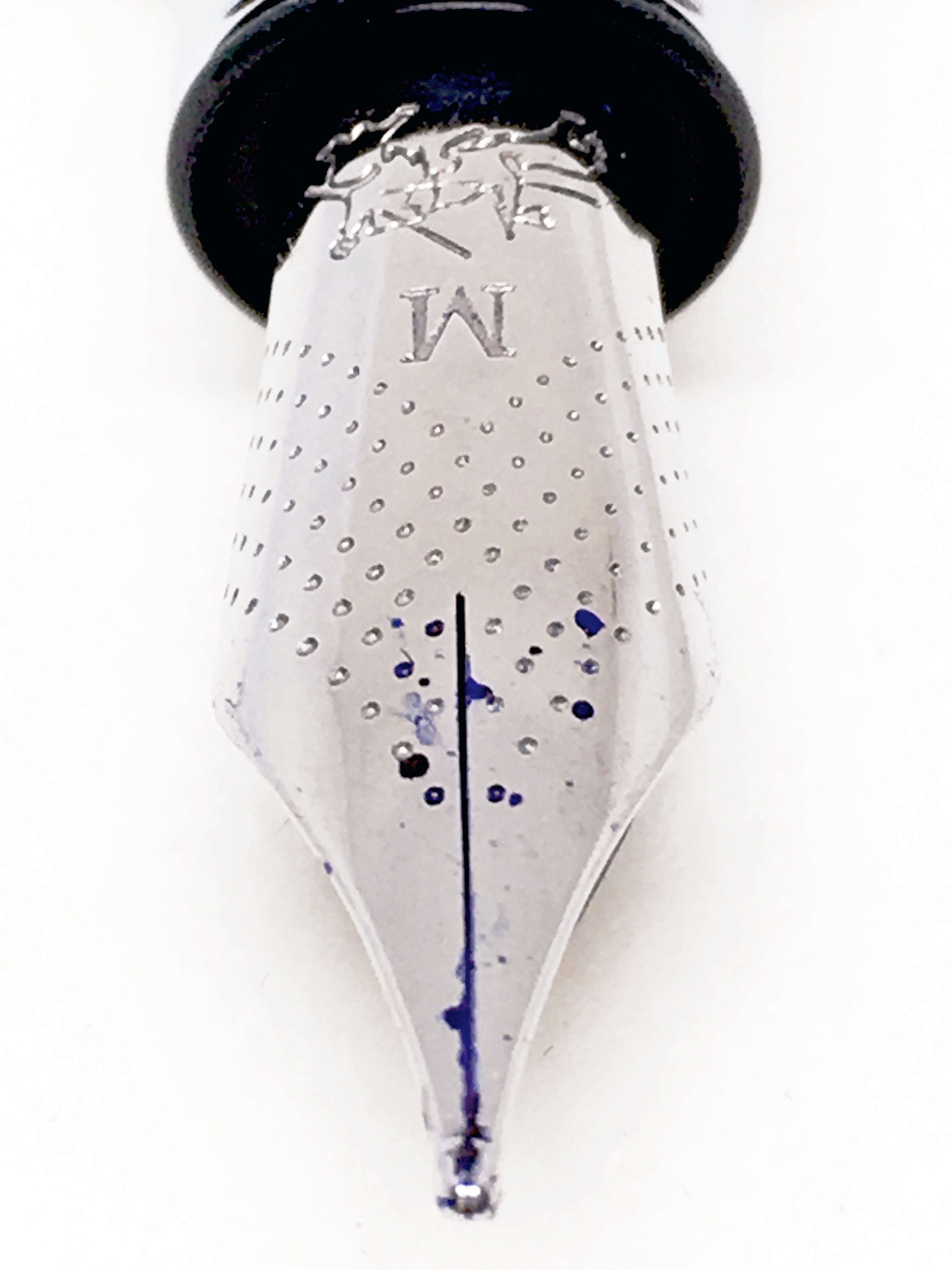
The DanDa Stationery Aisle – cheap, cheerful and useful

danda_post_add

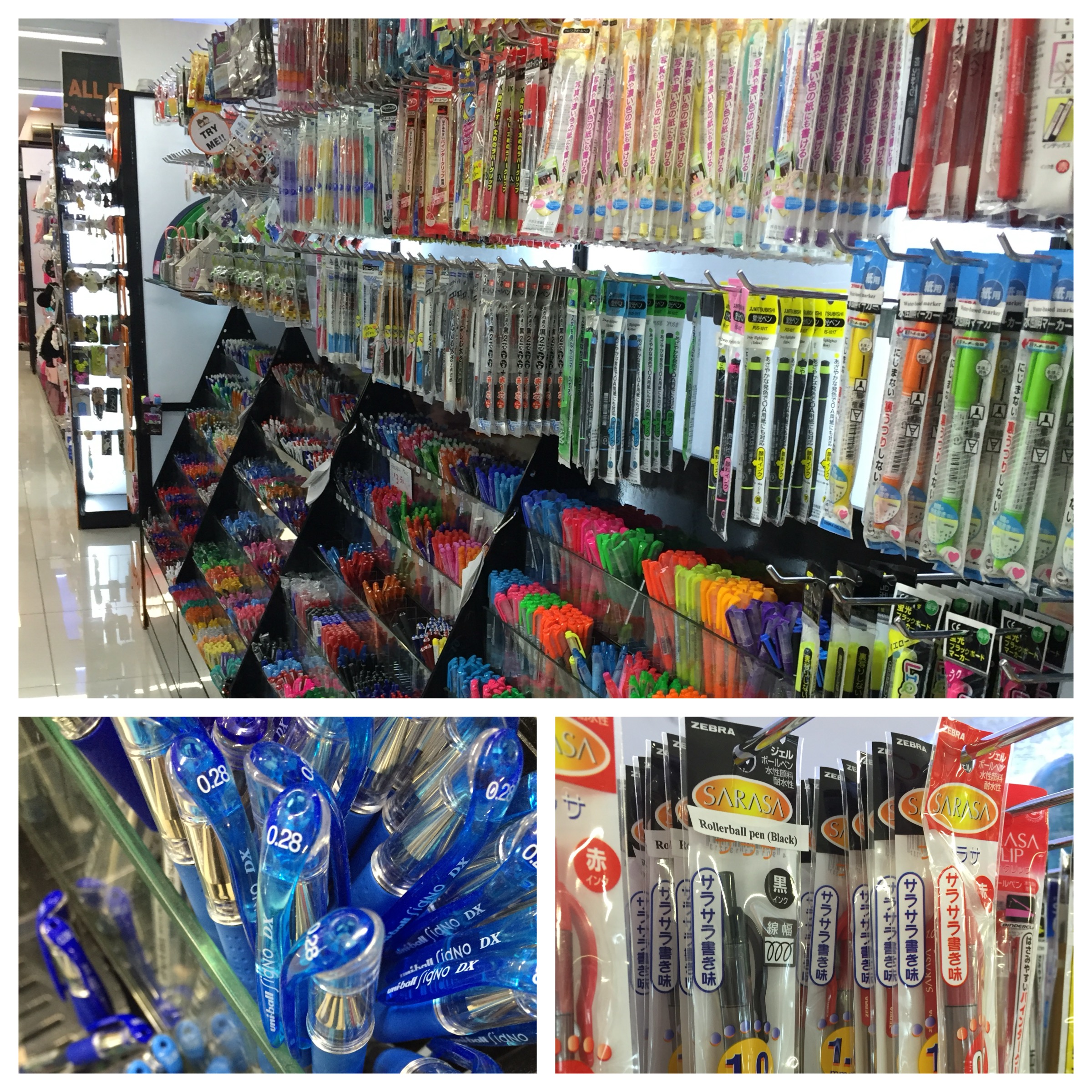
Although not likely to replace your favourite online stationery supplier, nor is it Officeworks, Japanese discount store DanDa has a few options which might be handy to those interested in pen and paper. Cheap, locally available, and carrying some items not found in other brick and mortar stores in town all make for a place worth visiting next time you find yourself in the Brisbane’s CBD.

Located in Adelaide Street (opposite City Hall), it’s an easy walk from most places you may be visiting should you find yourself in the CBD.

What might you find here which may be of interest? Quite a few gel pens for starters, including Uniball’s Signo DX, some Zebra’s Sarasa, Pilot’s G-2, and Pentel’s Energel among many others. The predominant tip size is medium and finer, although for those who prefer a wider line you will likely find something for your preference as well.

IMG_5928danda_post

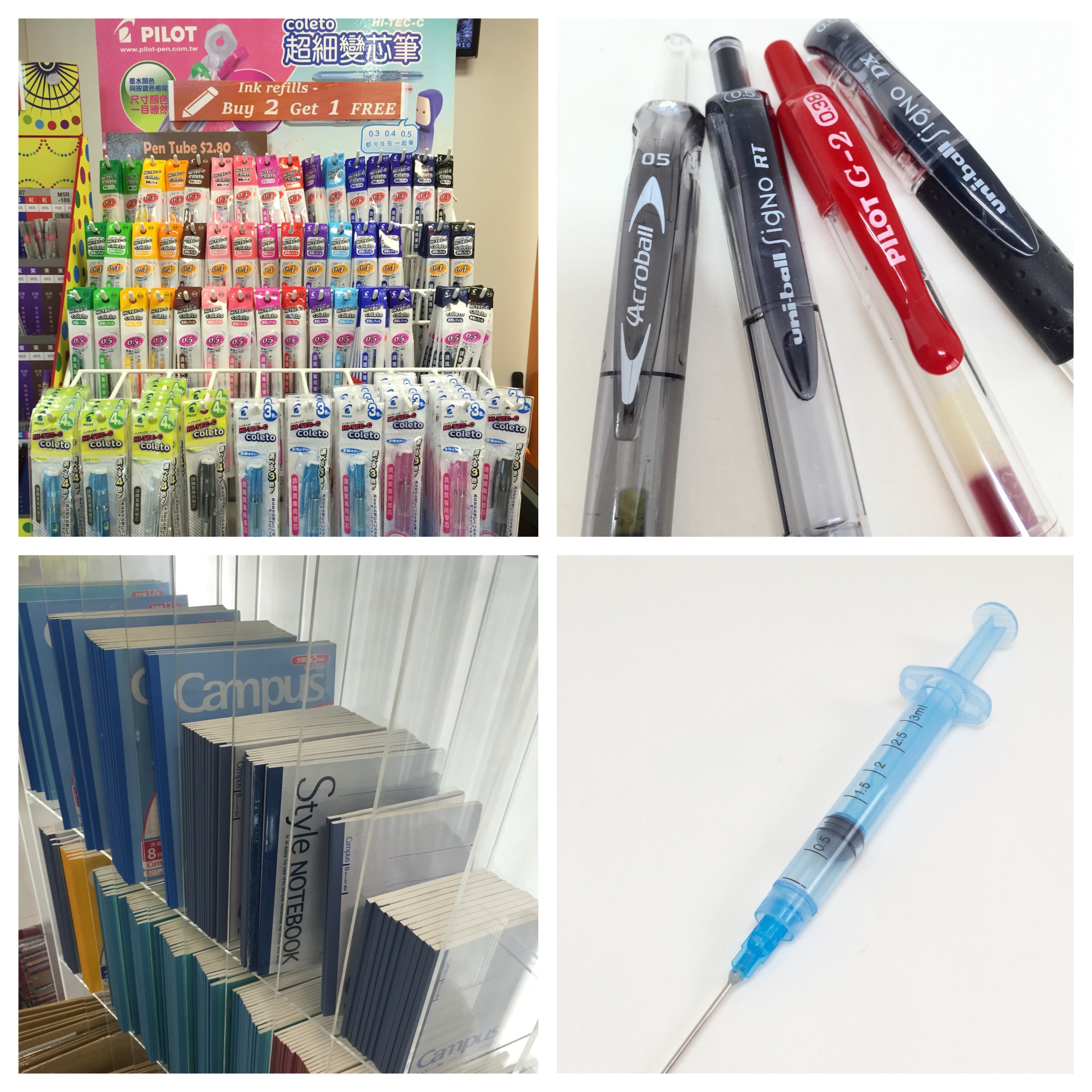
DanDa has been my go to supplier for Pilot Hi-Tec-C Coleto multi-pen refills for some time now, and if you buy three refills, you only pay for two. Speaking of payment — it is of course one of those stores where everything is a universal price (apart from the occasional item marked otherwise – though this is rare). Everything you pick up is A$2.80.

For the fountain pen user? Here, there is probably a little less (read zero) as far as pens are concerned, however I have picked up the fountain pen friendly Campus notebooks by Kokuyo (in multiple sizes); a 3 ml syringe for cartridge refills (you’ll find this in the cosmetics aisle); and a couple of magnifying glasses (albeit not the most powerful) for peering a little more closely at some nibs. Again all at a cost of A$2.80 a piece.

IMG_5929danda_post

As I said, DanDa probably won’t become your go-to stationery store, however there are a couple of aisles of pen and paper well worth checking out — and it certainly won’t do your credit card too much damage in the process.


A Small Tale of Pen Grail

For quite a long time I have been a little uncertain about the “grail” pen thing. No doubt the concept is a valid one — what I am referring to is just how it might relate to my particular thinking on the subject, and perhaps what my grail pen might actually be. Further, given I have often struggled with that very question — whether I even have one at all.

Occasionally I think about the where I might start in search of such a pen, and it is usually when reading others thoughts on the topic. For example, the post published earlier this year by Dr Jonathon Deans at Pen Economics on this very topic, in which a fairly clear conclusion is reached about the author’s grail pen — a pen which subsequently has been added to said author’s collection. Another more recent post by Thomas R Hall on Penucopia, describes the amazing and lengthy process of coming up with the design of, and having manufactured, a custom designed grail pen from scratch.

If you have not done so, I would highly recommend reading both posts, which are quite different in nature, yet together in many ways encapsulate the concept of a grail pen, in that the technical and emotional aspects may carry equal weight — yet we all are no doubt influenced differently by each.

The notion of grail

In times gone by, when the question arose (podcasts, discussions, or blog posts) as to what my grail pen might be, truth be known I could never really come up with an answer.

The first possibility of course is that my journey of discovery in the pen world, though I’ve logged a few miles — has not gone far enough to uncover a suitable candidate. The more I think about the concept though, the more I lean towards a second possible scenario: in the truest sense of what a grail pen means to me — I already own it.

Although most have a good idea of what we are referring to in speaking of a “grail” pen, the online Oxford Dictionary offers two meanings for grail. The first, a reference to the cup or platter used by Christ at the last supper, and a second, more relevant one to the topic at hand:

A thing which is eagerly pursued or sought after

Simple — but accurate. It’s the pen we so very much want, the one that draws us towards it — the one calling our name. The pen we will go to great lengths in seeking out and acquiring — dare we call it a quest?

In considering the grail pen, I wonder what particular criteria need to be fulfilled for inclusion in this much sought after group. Clearly this will (and should) be different for everyone, and any list of check boxes relating simply to pen specific criteria, will likely not be enough — however for some it might.

There is something else. Some other significance, meaning, or purpose. Again you will find evidence of this in both the posts I’ve mentioned above.

For me?

Writing a post like this one can sometimes pose new questions of yourself, or perhaps expose some new realisations. In doing so, my thinking has been clarified somewhat on the notion of a grail pen, and what it represents most clearly to me.

Are there are any pens out there I’ve always wanted or dreamed of owning? One out there calling my name that I simply have to seek out, plan for, and buy? A pen I am constantly coming back to, over and over?

At the current time the answer to those questions is no, however there is one pen which repeatedly springs to mind in considering them.

I still vividly remember the feeling of how badly I needed to have this particular pen. Of repeatedly entering the pen shop and fawning over it in the display case, then going home to come up with a strategy to save and eventually make a purchase. Whether the pen was worth the price1 was never in question.

In some strange twist to all this, the only pen that has ever engendered these sorts of feelings in me is already in my collection. I’ve written a little about it before: my Montblanc Meisterstück Classique. It was a gift from my now wife of 18 years on our wedding day. It was also my very first fountain pen.

To those who would suggest there is a difference between “sentimental value” and “grail pen”, I certainly don’t disagree with you, however prior to having that pen in my hand, let me tell you, it was a quest, and a pretty obsessive one. For a number of years I had wanted a great fountain pen, and it always had to be a Montblanc.

In the many years since, my preferences and experience with fountain pens have certainly evolved, and granted, there are better performing and more attractive pens both “out there” — and for that matter, in my own collection as well. However I know how much it meant to obtain that pen, how much it means to me today, and what it will continue to mean in the future.

Not that I’m saying there will never be another, although at the current time I would still struggle to answer you if asked what pen I might buy were price and availability unlimited. Personally, my search for a grail pen is certainly more Monty Python than spiritual at the current time. That said, the search only needs to go as far as my pen storage drawer to find at least one that I know of.

To those who are yearning for, planning a strategy to acquire, and actively searching for their grail pen, I wish you every success in finding it. I consider myself pretty lucky to conclude in all likelihood I already own mine.


  1. A$435.00 circa 1997 ↩︎

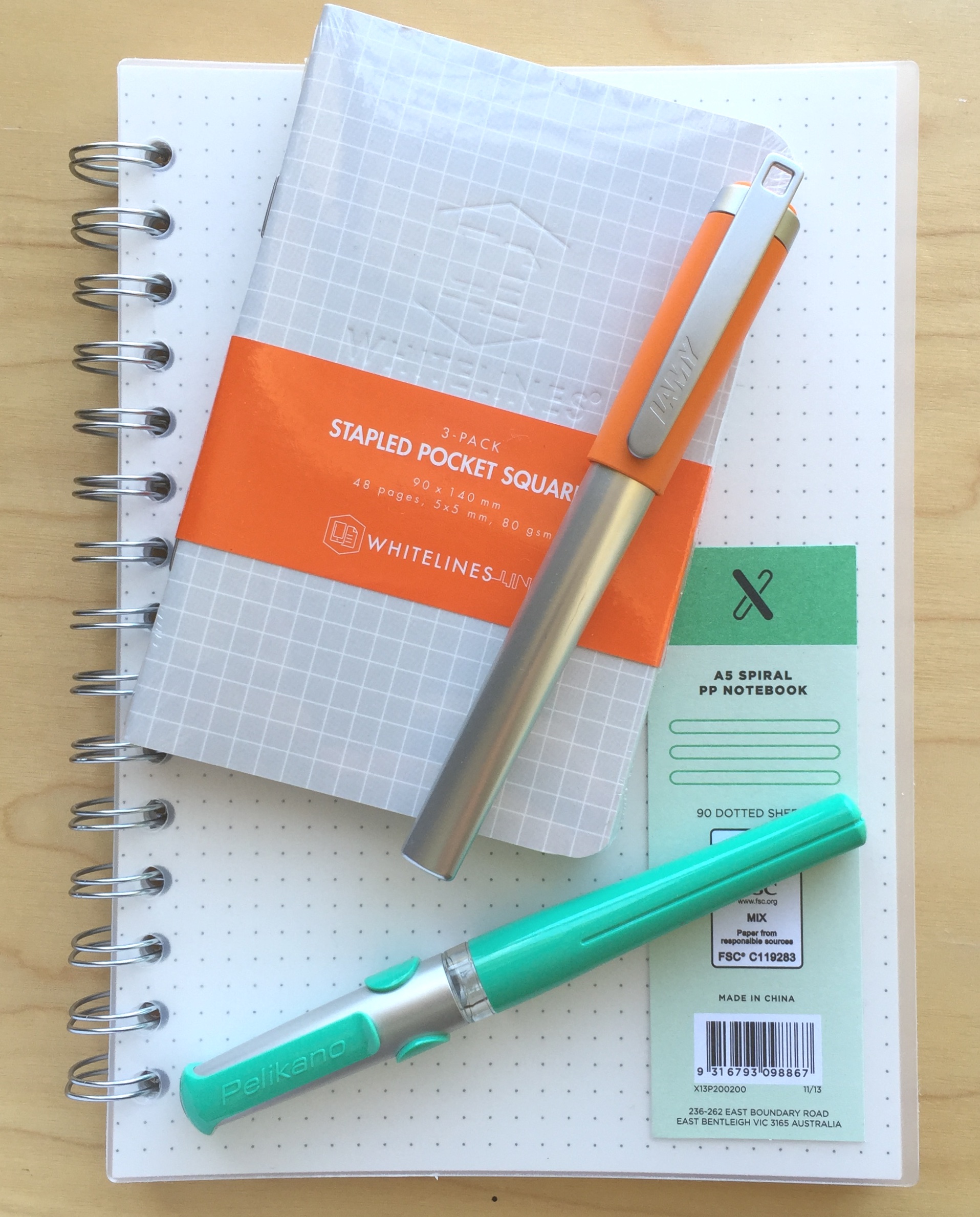
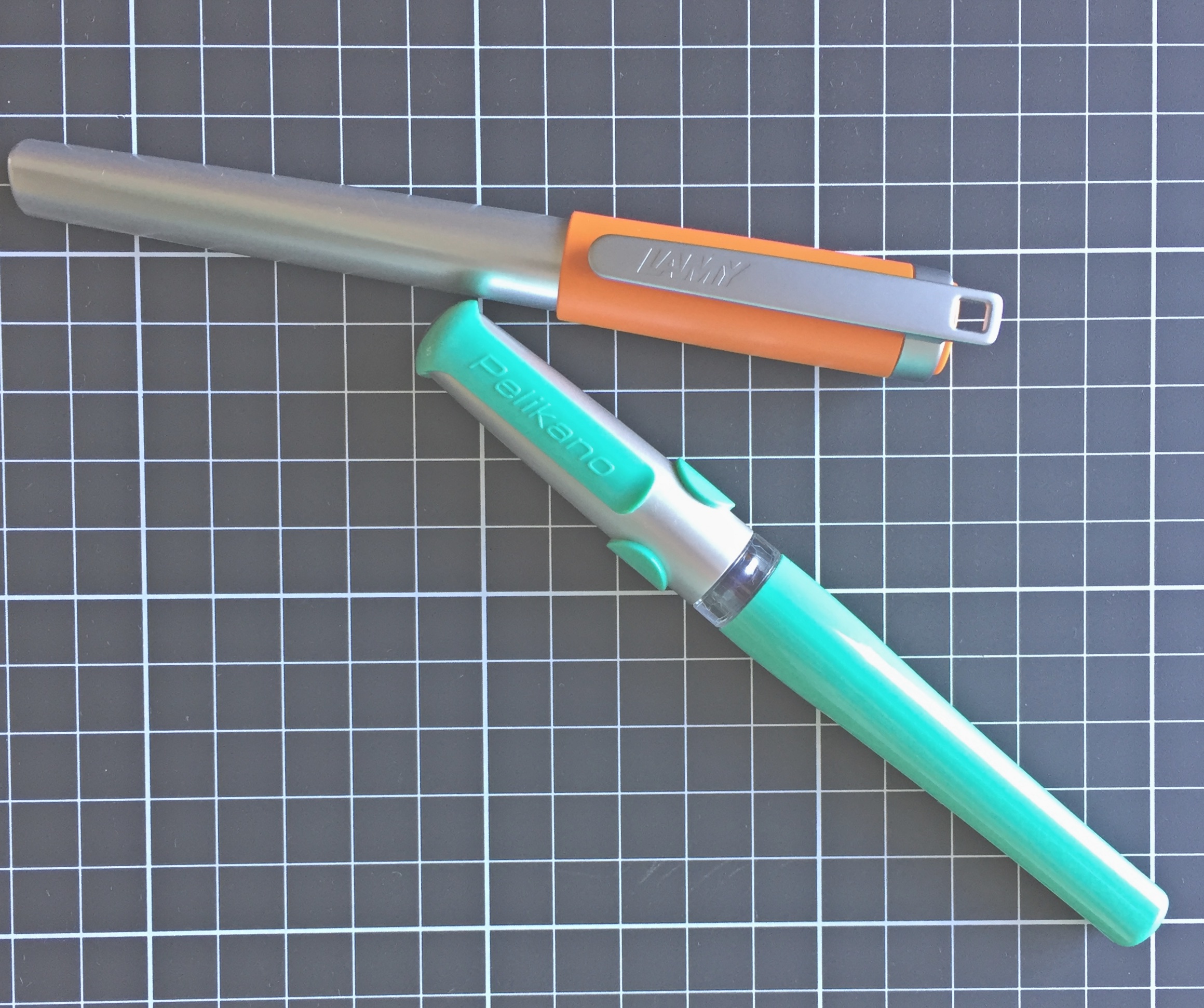
Possible Starters: Lamy Nexx and Pelikan Pelikano Fountain Pens

2016-04-09 pelikano_v_nexx_2

Call them what you will: low-end; entry-level; beginner; learners. Perhaps all true, however these two fountain pens are both pretty solid performers in their own right — for any purpose. They may look a little cheap and cheerful, and although not being for every collection certainly have their place, regardless of your level of fountain pen experience.

The Lamy Nexx and Pelikan Pelikano fountain pens can be found in the “Young Writer” and “Kids/World of School” sections on their respective manufacturer’s websites. Although you won’t see any in schools in this country (I am not sure of the current status regarding other schools around the world), the pens are clearly designed for an early or younger generation entry into the world of writing with fountain pens. That said, I’m certainly no whipper snapper, and I’ve enjoyed using these pens increasingly in recent times when gathering my thoughts for this post.

Those of us who use fountain pens on a regular basis are often the ones who introduce another generation into the habit. Would I use either of these pens with that aim? I’m not sure, and there are perhaps other options I may recommend for that purpose, however I can see these two being great options to offer as possibilities — particularly if a few different options were being considered based on the tastes of the prospective user.

Forced to choose either the Pelikano or the Nexx? A somewhat challenging question, and the answer surprised me a little, though as you’d expect, the ideal pen when comparing two or more generally produces a Frankenstein result — that is, a combination of the best aspects of each. Of course in the absence of that being possible, read on and my final choice will become clear, but really — either of these pens wouldn’t disappoint in their target market.

Look and feel

A point to note here: the current models of both pens have undergone a cosmetic makeover compared with what you see in the photos, which are the pens from my own collection. As far as I can tell, all other aspects of the specifications are essentially the same.

It’s probably in the “feel” more than the “look” that I was most surprised as I used both pens on a more regular basis. I have mentioned in the past I am not a huge fan of the traditional Lamy triangular grip section found on the Safari and AL-Star ranges.

2016-04-09 pelikano_v_nexx_7

Upon uncapping the Lamy Nexx, the first thing I see is another triangular section, this time covered in a rubberised, cushioned coating — somewhat reminiscent of the grip guides of similar material often slipped onto to pens and pencils for younger users. Despite this, I found the section on the Nexx to be far more comfortable to write with than the Safari in my collection. I don’t really have a valid reason for this given the sections are both quite similar in size and shape — the only difference being the rubber coating on the Nexx.

According to Lamy:

The LAMY nexx fountain pen has a soft non-slip grip which makes for extended fatigue-free writing. Its polished stainless steel nib makes writing super easy

All I can really put it down to is the fact that the rubberised overlay softens the edges a little, creating a slightly “rounder” and well… softer feel than the plastic of the Safari.

I would say however the junction of the section and nib looks a little untidy, with the increased diameter of the “stops” on the grip meeting the black plastic collar around the nib and feed. It is the same plastic collar which you also see on the Safari and AL-Star ranges, however on the former it is matched to the barrel colour, and the on the latter matches the darker section a little better. Certainly not a big issue here, and only noticeable as I sit here and review the overall look and form of the pen.

2016-04-09 pelikano_v_nexx_1

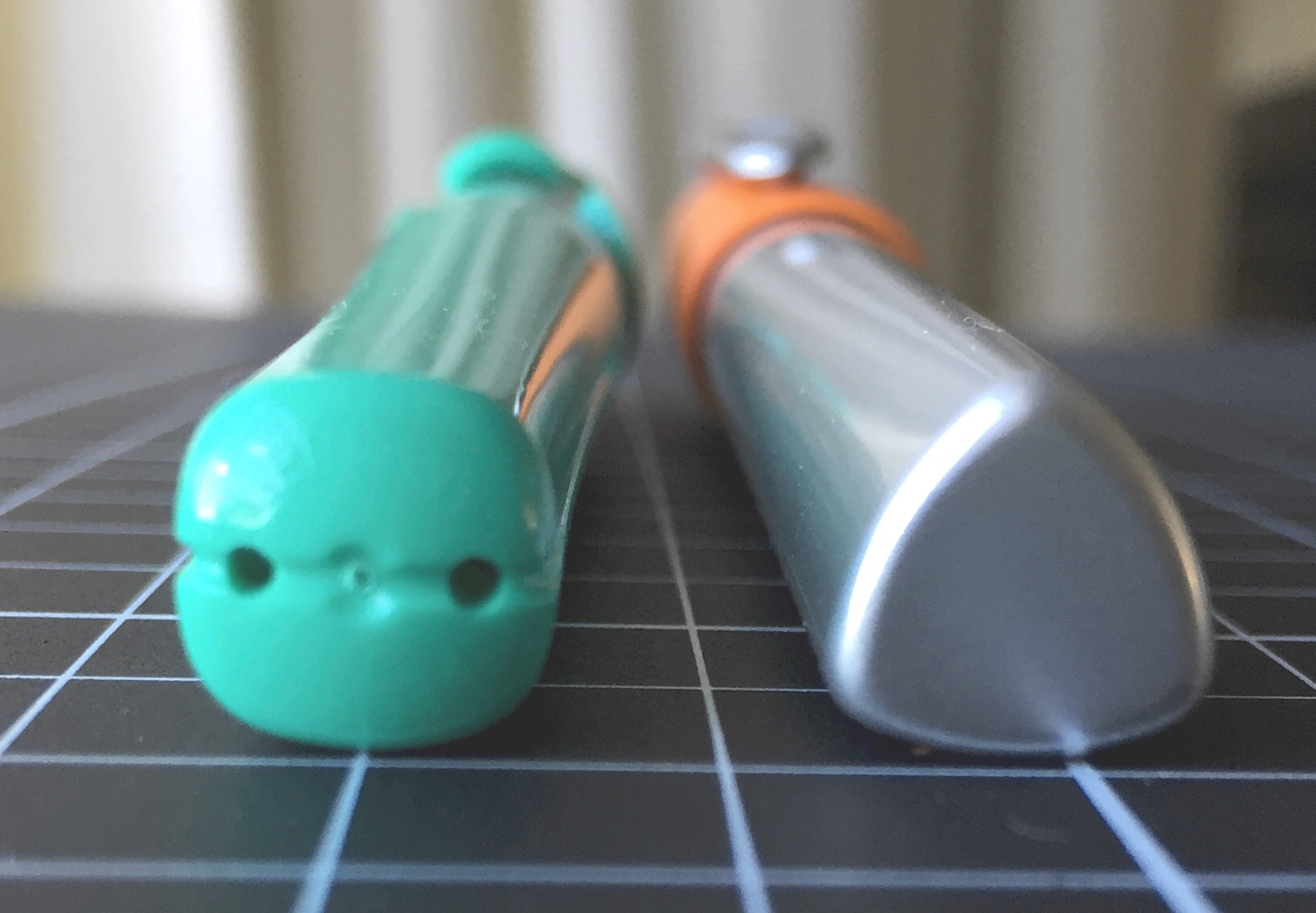
The top end of the Nexx barrel begins in a distinctly triangular form factor, rounding out as the barrel increases in diameter and moves towards the section, before returning to the triangular form and tapering slightly at the grip. Uncapped, it carries nice clean lines and I quite like the overall look and shape, however as I mentioned, it is perhaps spoiled a little where it meets the feed.

Capped, the Nexx demonstrates a smooth but steady increase in diameter from end to cap, reaching a maximum at the clip ring. This probably fits the overall funky aesthetic of the colourful cap which also contrasts nicely with the silver aluminium finish of the body. The top of the springy clip sits proud of the actual cap, and while it suits the overall form of the pen, the cap and clip “live a little large” for my taste.

The Nexx appears to be going for a fun, funky and cool aesthetic, rather than portraying itself as the “beginner’s” pen. To that end, I’d say Lamy have probably achieved their goal.

The virtually clipless Pelikano, aside from the cap, carries a certain similarity in shape to the Nexx, and again avoids too much of the “beginner” aesthetic, however I believe it does carry just a little more of that style. This time, the end of the barrel begins in square form, before a similar increase in diameter as it rounds out, before tapering into… wwhaaaaat?? A triangular grip section! I must admit it is more trianguar-ish, than triangular, though the similarity to the Nexx is not lost on me.

2016-04-09 pelikano_v_nexx_3

Again the section has a rubberised coating, however in this instance adds little thickness to the grip. Of the three flattened sides to the grip, the index finger third also has rubberised ridges which run perpendicular to the barrel, I assume to assist with grip and guidance of the nib when writing. A couple of things on this: firstly, they are probably not necessary, as the rubberised coating on the section is more than enough for gripping, and though I didn’t find it noticeable — it may annoy some. Secondly, this could also be used as a baseline grip point of reference in someone learning to write (“index finger here”).

This rubberised overlay sits on a clear section, and therefore prevents any decent view of ink colour or level inside the pen. In contrast to the Nexx, with the Pelikano the nib is held by black plastic “shoulders” at each of its sides. In pointing out above the look of the Nexx at the junction of the nib and section, I’m not really sure this one is an improvement. Personal taste plays a factor with any of the pen designs we prefer, and perhaps I’ve made a bigger deal out of it than it really is. I cannot say when I’ve picked up either pen I have even given it a second thought.

Overall, I marginally prefer the Pelikano’s grip section, though it is the centre of the barrel which raises a few questions for me. Both pens increase in diameter through the middle of the barrel, with the Pelikano doing so just a little more in comparison (1.4 mm more at its maximum, as you can see from the specifications below). This throws the comfort of my grip ever so slightly off, and I’ve found I cannot write for extended periods quite as comfortably as I can with the Nexx.

Aesthetically, the styling of the Pelikano is quite different to that of the Nexx, and to be honest I really have no preference here. The cap of the Pelikano reminds me of a helmet on the Lego Knights I used to have as a child — if you had them you know what I mean. While I enjoyed playing with those knights, I prefer the design as a helmet rather than a pen cap.

I’ve described it as “virtually clipless” above as the moulded plastic forms part of an exoskeleton or … yes, there it is: “helmet” over the cap. This forms a sort of pseudo-clip, however the functional section is very short, and I’d hesitate to use it regularly, being reasonably fearful it might snap as the plastic fatigues through repeated bending.

Although both pens are not what you’d call expensive — both feel sturdy enough to stand up to the usual level of wear and tear. The aluminium barrel of the Nexx may provide a little extra reassurance in this area, however with even a little care in the daily use and carry of, I doubt you’d have trouble with either.

As I’ve mentioned, the clip extending past the end of the cap on the Nexx may provide a snag point, however again I would not anticipate any major problems.

Specifications

Notwithstanding the cosmetic changes I mentioned earlier, following are the specifications in the current available line up from both manufacturers.

Manufacturer Pelikan Lamy
Model Pelikano Nexx
Body Plastic Aluminium
Cap Plastic Snap On Plastic Snap On
Clip Plastic Metal
Fill Cartridge/Converter Cartridge/Converter
Weight 23 g 31 g
Diameter max 14.5 mm 13.1 mm
Diameter grip 12.5 mm 12.2 mm
Length capped 13.6 cm 13.4 cm
Length uncapped 12.5 cm 12.7 cm
Nib type Steel Steel
Price A$ $26-$30 + int postage $54.95

Check the manufacturer’s websites for colours available.

As far as the price is concerned, Australian supplier LarryPost stocks the Lamy Nexx, at the price quoted above. I have not been able to find a local supplier online for the Pelikano, however this of course does not rule out any local brick and mortar stores perhaps stocking them. Fishpond lists the Pelikan at AUD $39.97, however it does state the pen ships from a UK supplier. The price I have quoted above is a conversion from both Jet Pens in the US and Cult Pens in the UK, however you would need to add international postage costs to these of course.

Also worth mentioning is the option of a left-handed nib on the Pelikano, as well as the slightly cheaper Pelikano Junior model.

As far as filling is concerned, I have been using the Nexx with a Lamy Z24 converter (with no issues), and the Pelikan with standard international cartridges, noting the recommended converter here is the C499 from Pelikan.

Writing Performance

I’ve had these pens for about 6 months or so now, intermittently using them in my rotation of pens, and have written more extensively with each over the past few weeks taking notes for this post.

As far as the nibs are concerned, I’ve been happy with both. The stainless steel medium nibs are smooth writers, with the Pelikano having a slightly softer feel in terms of a little give, however there also appears to be a marginally smaller sweet spot than what exists on the Nexx — at least with this particular pen anyway. Overall, both nibs have that firm, steel nib feel — one that I quite like and is not meant as a criticism in any way.

2016-04-09 pelikano_v_nexx_5

The Nexx comes as expected out of the box — the same Lamy nib you’d find in a Safari: firm, reliable and consistent. I say consistent because in mentioning the Pelican’s sweet-spot, the Lamy nib performs well at all points of minor grip and alignment adjustment — however when compared line for line, doesn’t quite match the smoothness and comfort of the Pelikano.

Both lay down a consistent, wet line, and with a little pressure applied, (despite the softer overall feel of the Pelikan) the Lamy nib will give a slightly broader one, though neither of these pens are what you’d be using for any sort of line variation lettering.

2016-04-09 pelikano_v_nexx_6

Overall, as far as the nibs go, points to the Pelikano, as it is a much smoother and more comfortable nib to be using for writing, and the sweet-spot is really not hard to find and then sit comfortably in like your favourite lounge chair.

Both pens I have used without posting the cap, however if you were to do so, the Pelikano retains its overall balance more so than the Nexx, which becomes very top-heavy and cumbersome.

Both pens handle a variety of paper types equally well, which is probably important given what they might be used for, and I’ve not found either wanting on the first stroke when uncapped, nor with extended periods uncapped, for example in writing intermittent notes while researching online and the like.

Only young writer?

Indeed, the young writer aspect of these pens is not to be dismissed, however I don’t believe either necessarily perform this role any better than the Pilot Kakuno, which is far cheaper to buy. The Kakuno also sports the triangular grip section, however the overall balance and feel make it — in my opinion at least — a better buy for this segment of the market.

2016-04-09 pelikano_v_nexx_4

Do either of these pens appeal to the non-young or non-early writers? That of course is a matter of personal opinion. As I’ve hinted at above, I think the Nexx is more likely to fulfil a more universal role across beginner and more experienced users alike, whereas the Pelikano based on looks alone I feel is perhaps relegated to the beginners end of the market.

Given its bright and funky sort of look, the Nexx to me is a pen you might use with a clipboard or reporter style notebook: marking off attendees at a summer camp, scoring a tennis match or perhaps even recording your backyard coffee roasting data — assuming suitable paper was in use of course. At then end of the day, if a pen (which both are), are solid performers, it really is down to personal taste, and that is really where we end up here.

Conclusion

In summing up, both of these pens are pleasant to use and perform as intended. If I had to choose one? Probably the Nexx, simply because I find the overall shape of the body a little more comfortable to use than the Pelikano, which becomes a little too broad in the middle for my grip.

The Frankenstein result if I could? The Pelikano nib in the Nexx body with a smaller version of the Nexx cap and clip. Because that isn’t going to happen any time soon, I’d go with the Nexx simply because of the Lamy nib options you have at your disposal, though with a pen like this, I’d assume you’d have be looking for something specific, otherwise a Safari might be a better choice — particularly at a slightly lower price point.

In any event, either the Lamy Nexx or Pelikan Pelikano won’t fail you as a notetaker, however for the “young writer” I am most likely sticking with the Pilot Kakuno as my go to recommendation.


Officeworks X A5 PP Spiral Notebook

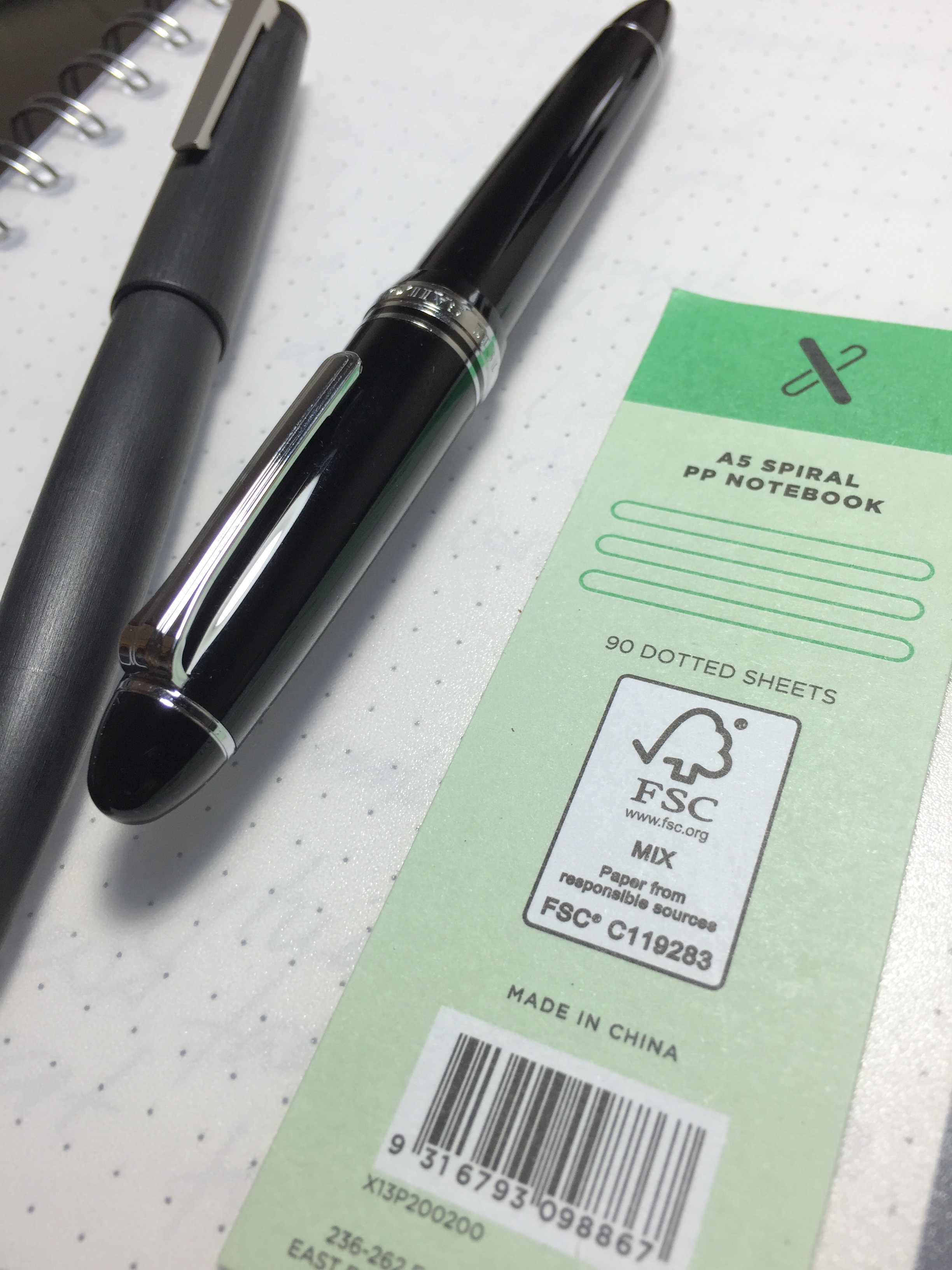
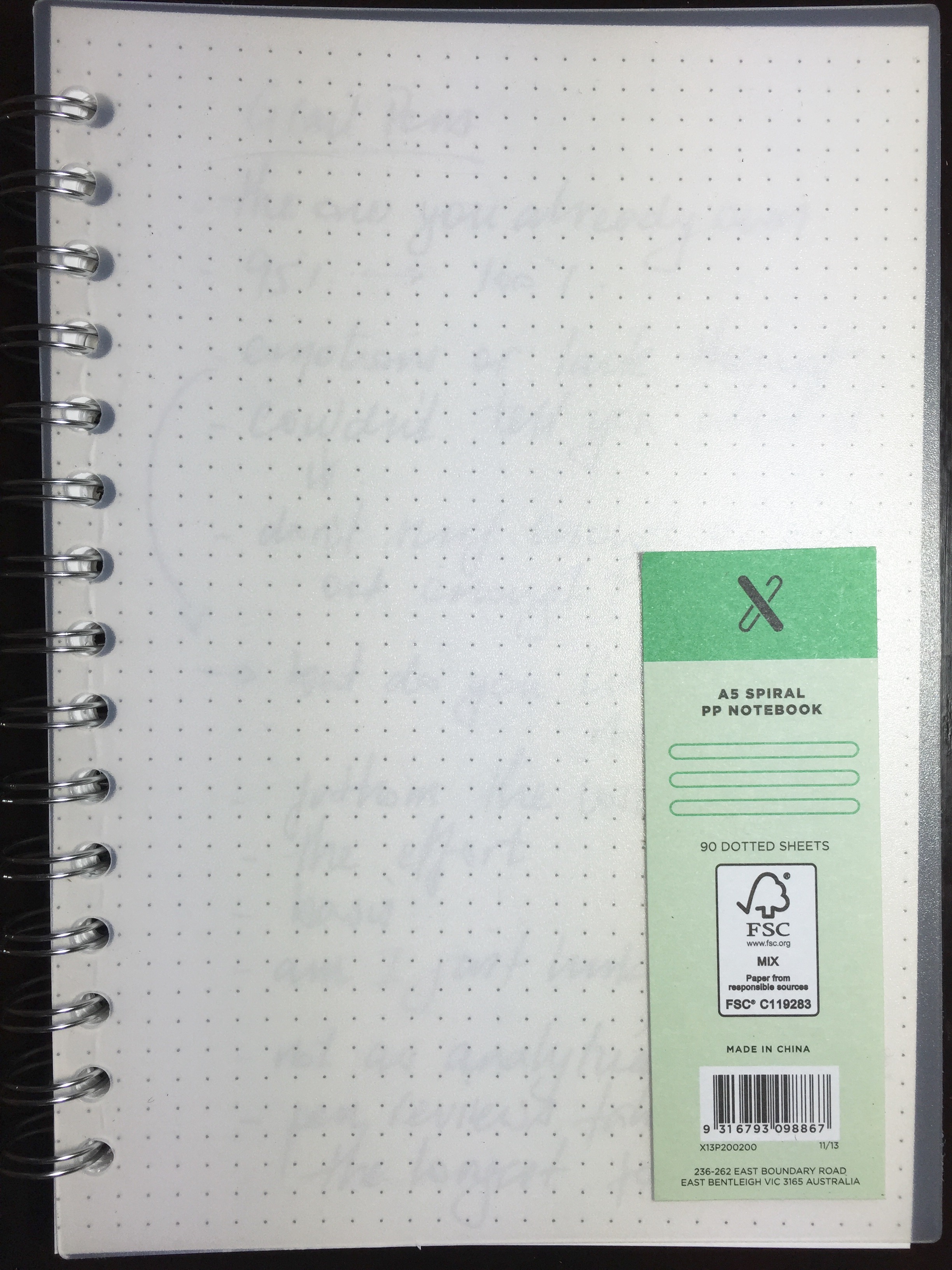
x_a5_pp_post_cover_with_pensI picked up this notebook at my local Officeworks for AU$2.99. That’s right — three bucks. My expectations as to how it might perform under a fountain pen were therefore not overly high, however feeling the paper while in the store suggested it just might be a little better than expected.

Home I went — not expecting much, however in the knowledge at worst it would end up a rollerball or gel pen notebook and at least see some use. What I ended up with was a whole lot more than that.

Design

x_a5_post_X_logoThe X A5 PP Notebook is part of the broader range of ‘X’ series stationery at Officeworks, consisting of notebooks, paper, writing instruments and various other accessories. I believe these are an Officeworks “own brand” type line up. All would be considered reasonably priced, with many downright cheap, as is the case with the subject of this post.

x_a5_pp_post_coverThe A5 is a double spiral or wire bound notebook with slightly frosted, transparent, hard polypropylene (hence “PP”) front and rear covers. Also available is a variant with a ziplock pocket at the front and an elastic enclosure, for the princely sum of AU$4.99.

Apart from the branding sticker in the bottom right hand corner of the front cover, the notebook carries no other features or markings, which suits the simplistic design. Given the cover is transparent, there is of course a great opportunity to decorate the first page as you please, and presto: instant personalised cover design. Commensurate with my overall design and creative abilities, mine remains blank.

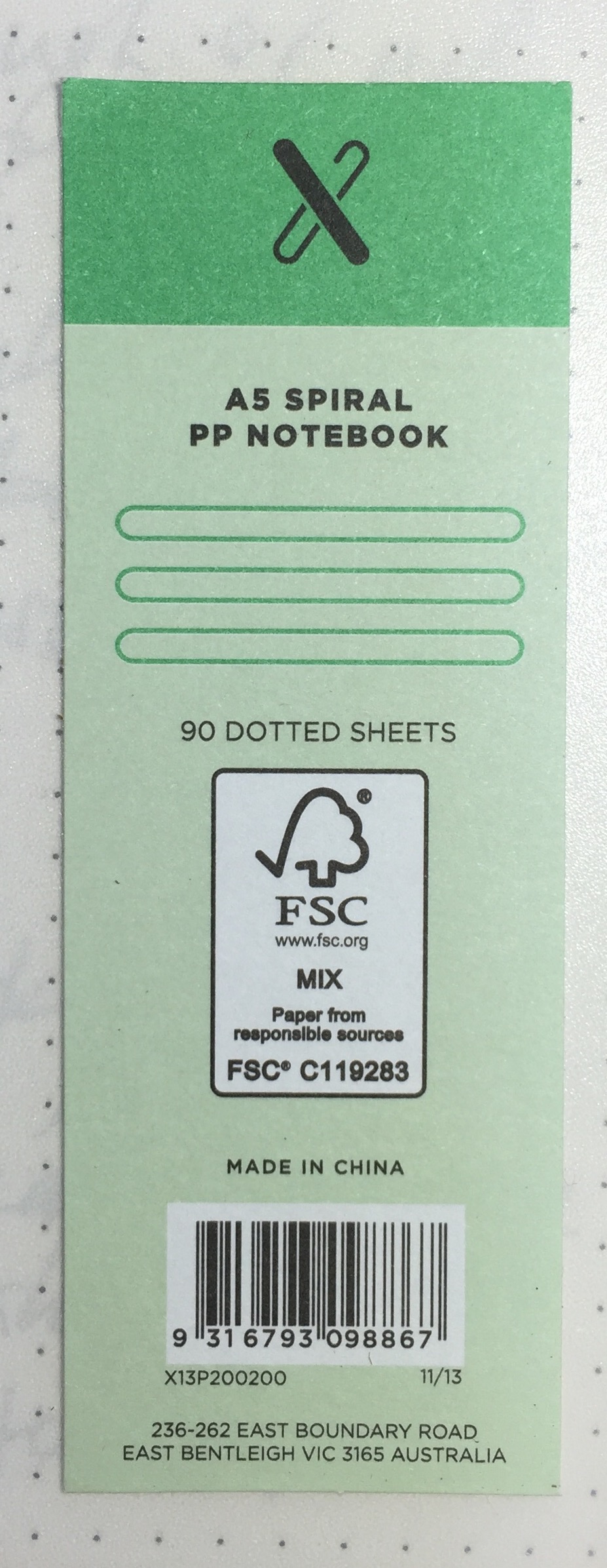
x_a5_pp_post_labelOne other point to note is your usual preferences regarding binding in notebooks will of course apply. I know many find the large wire binding to get in the way of a fluid writing experience — particularly when writing on the left side of the page, or vice versa for left-handers. If that is how you usually find things in these notebooks, you’ll find it here as well. On a positive note, I’d say there is a medium amount of “wiggle” in the page when writing — also something I typically find characteristic of wire bound notebooks, which if excessive, can certainly be a deal breaker for me. They have done a pretty good job here.

Overall, the X A5 has a robust feel to it, and for the price, is certainly not an unattractive notebook. Sure, it’s not likely to set your desk on fire in the style stakes, however the simplicity of the design ensures it won’t necessarily look out-of-place on that desk either — a characteristic often missing from items at the lower end of the market.

Specifications

The specifications listed on the Officeworks website:

  • Cover: frosted clear polypropylene
  • Binding: double wire
  • Pages: 180 (90 sheets)
  • Paper: 80 gsm white
  • Ruling: 5×5 mm dot grid
  • Size: A5
  • FSC certified (Forest Stewardship Council) paper
  • Country of manufacture: China

Paper and performance

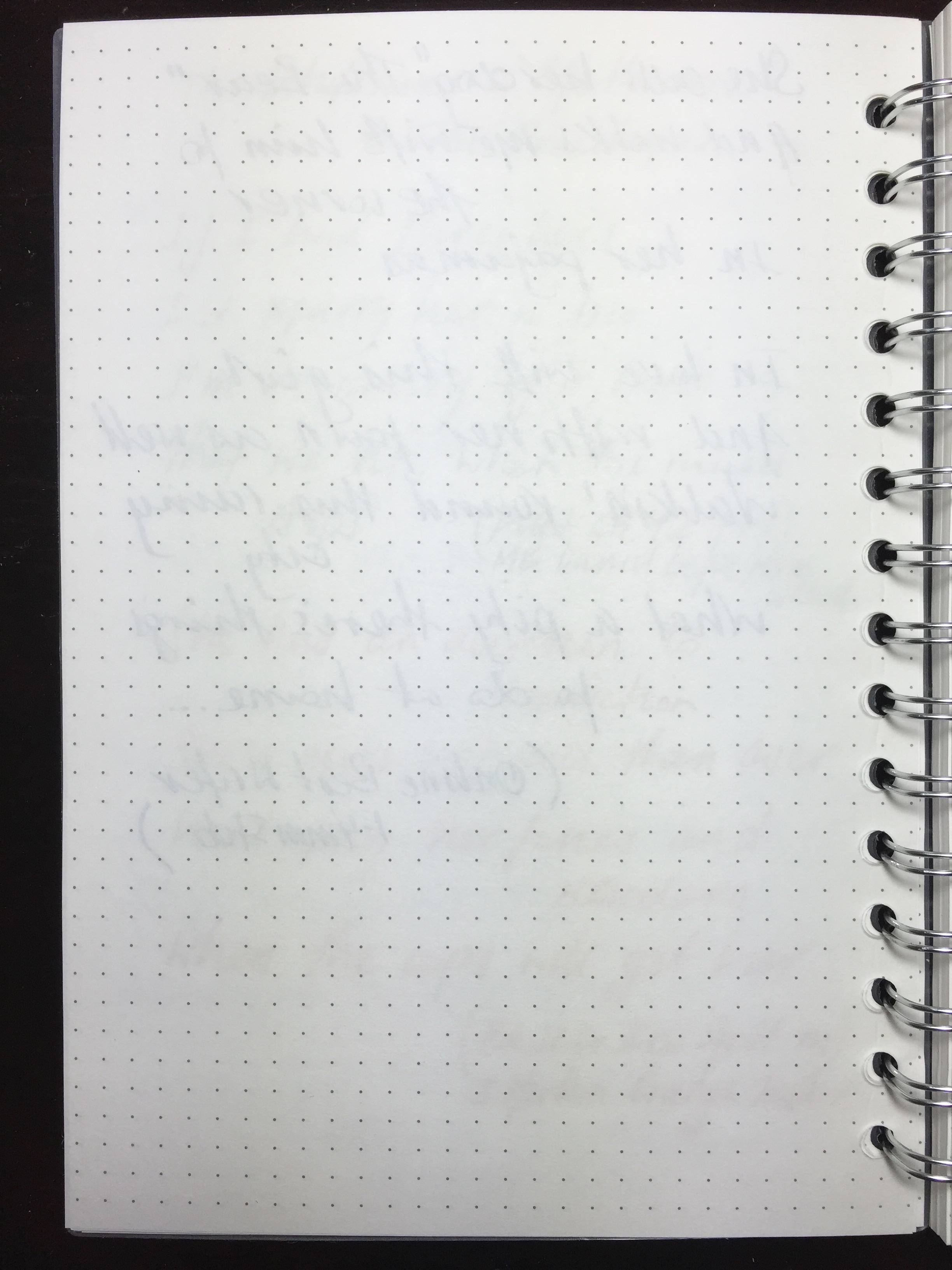
As noted in the specifications above, the 80gsm white paper comes with a dot grid ruling and 180 pages — more than enough to keep you going though a few ink chambers of writing. The pages themselves are not perforated, however tear out easily enough, and do not leave the entire edge of the sheet torn to shreds like some wire bound notebooks.

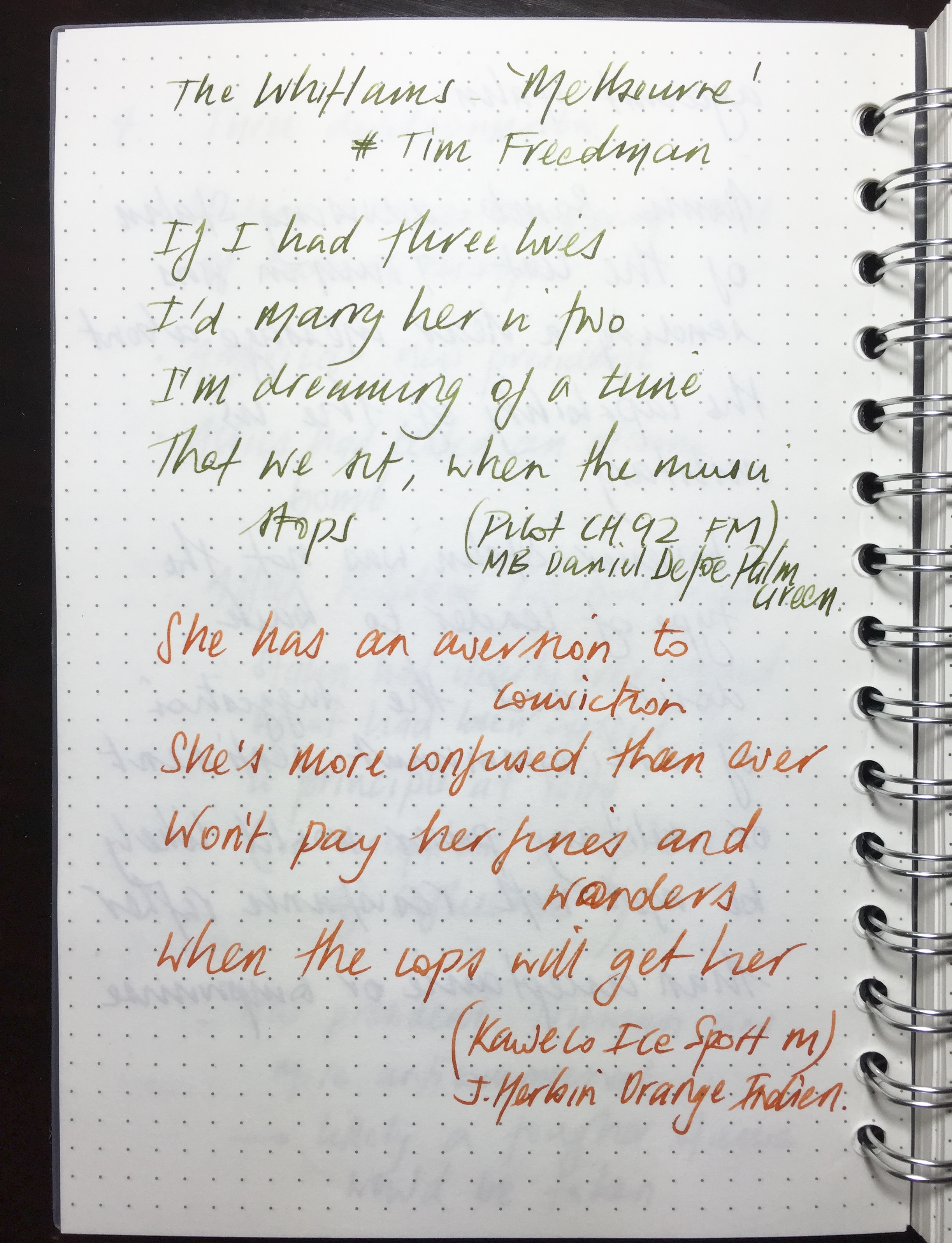
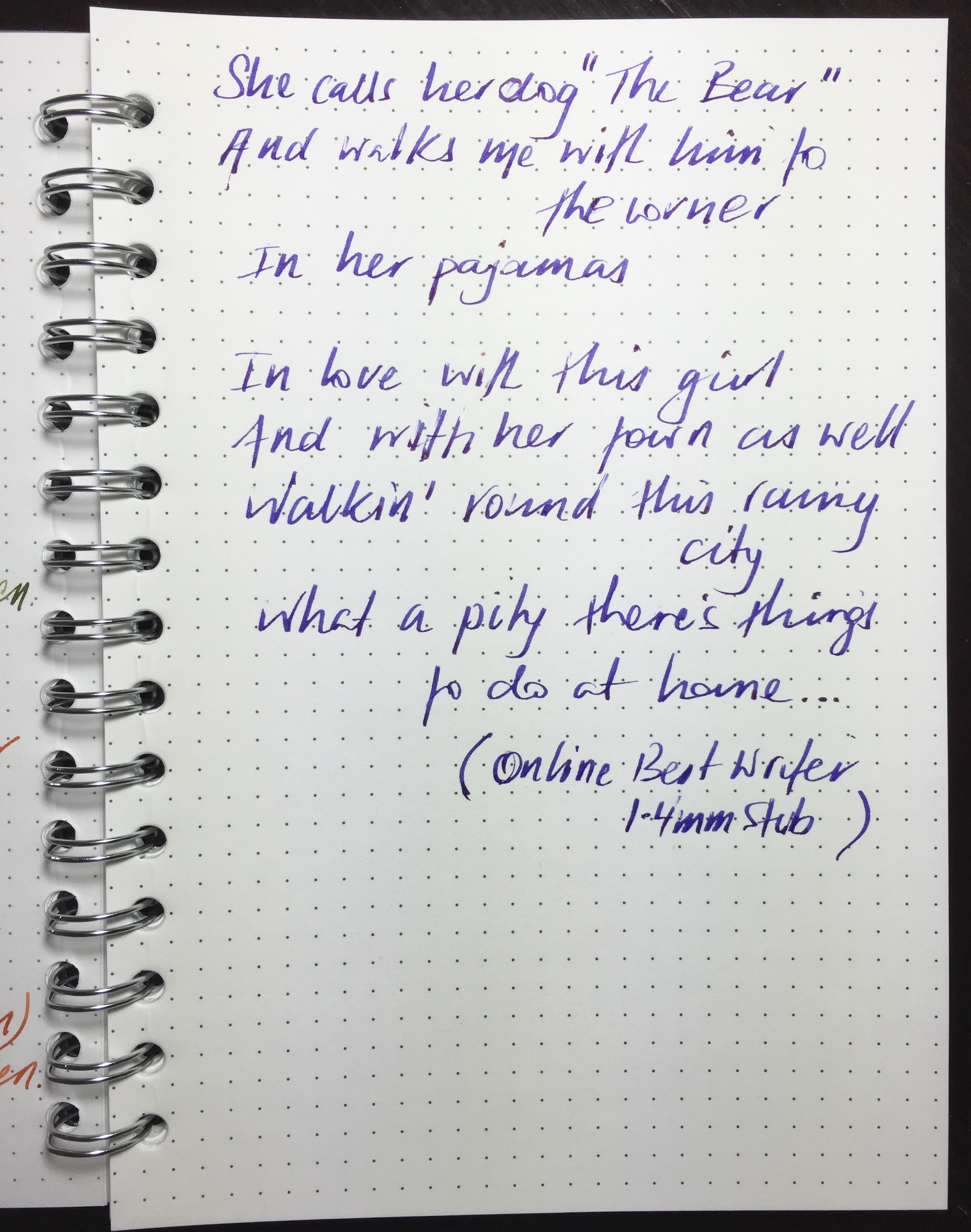
It’s when it comes to writing on these pages that the real value for money here is hammered home. With fountain pens, this paper really does punch well above its price tag. Certainly not as smooth across the surface as say Rhodia paper, however performance-wise it doesn’t suffer.

x_a5_pp_post_writing_1x_a5_pp_post_writing_2

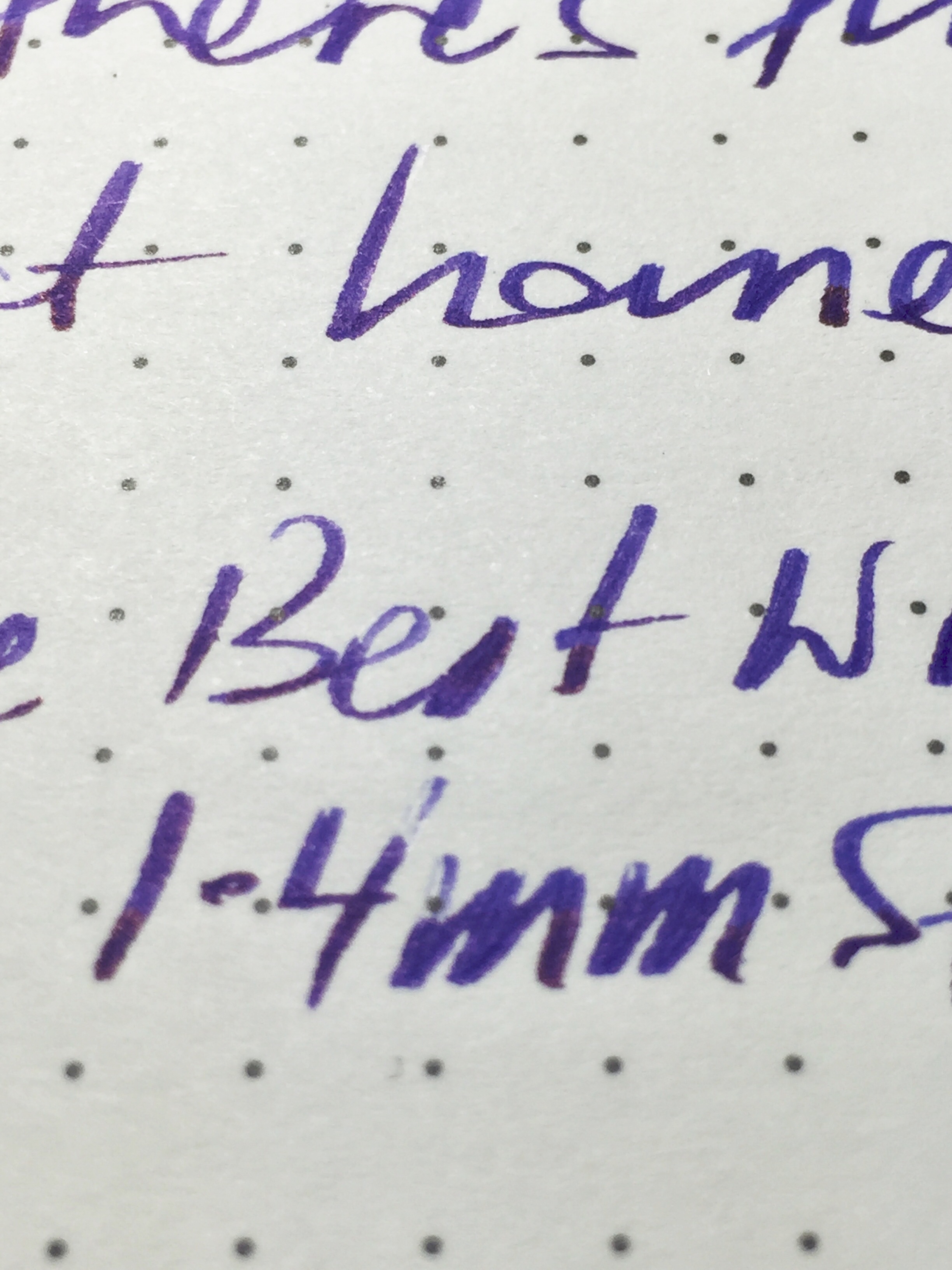
With finer nibs you’ll experience a little tooth on the page (something I prefer, as long as it’s just a little), however I would still describe the overall experience as a smooth one. Wider and wetter nibs only get smoother, with no feathering, show or bleed through the page. I’ve mentioned in the past I can deal with a little bleed or show through, but feathering drives me crazy.

x_a5_pp_post_reverse_pagex_a5_pp_post_stub_macro

Remember I paid three dollars for this notebook.

Of course as with any paper performing in this way, at times there will be issues with dry time if you are powering along, and testing shows typical inks will dry at around the 20-25 second mark, plus or minus 5 seconds or so for wetter or dryer inks. Of course it goes without saying its ability to handle rollerball, gel ink, or your standard ballpoint pens is assured.

This is without doubt some of the best value 80gsm notebook paper going around, and is readily available online or at your local Officeworks store. This post on The Fountain Pen Network would suggest I am not alone in this line of thinking.

Conclusion

Having picked up this X A5 notebook on a whim, when “back to school” shopping at Officeworks with my kids, the hope was it might be a reasonable quality, cheap notebook to have lying around. It turned out to be way more than that.

Of course it won’t replace your Rhodia No. 16, but wow, it’s a heck of a lot closer than you might think, and I’m certainly likely to be back for more. It would indeed be a great option to accompany the purchase of a new Pilot Prera fountain pen if that’s why you entered the store.

Well done Officeworks — extremely well done.


Pilot Decimo Capless Fountain Pen

In taking an active interest in the pen community, it is hard not to notice the enthusiasm surrounding capless fountain pens, the majority of which centres around the Pilot Vanishing Point. Admittedly I too have looked longingly at online retail sites, clicking around the various models and options available in the capless segment of the market.

image

Until a few months ago, I had not even tried a capless pen, nor come to the conclusion I would be happy spending the money to obtain one. What had caught my eye however was the Pilot Decimo, a slightly more slender and lighter version of a capless fountain pen compared to the Vanishing Point. Also made by Pilot, with an 18k gold nib, the same capless mechanism and very similar design — there was a lot to like about the prospect of owning one.

After deciding to go with a Decimo at some point in the future, lo and behold what should turn up in my letterbox but the very Decimo you see in the accompanying images, and the subject of this review. A very kind friend of the blog sent a pre-owned, though no longer used Decimo for me to try, correctly thinking I might enjoy it, and was also interested in my thoughts on the pen itself.

Look and Feel

First and foremost, as I’ve mentioned, my impressions come to you from someone who has not owned nor used a Vanishing Point, and I would therefore keep that in mind as I go about my merry way with this post. Upon reading a little more, I did come across a very helpful comparison piece between the Decimo and Vanishing Point by Michael over at PigPog.

image

As you can see in the accompanying images here, the Decimo I have been using is a black model with silver trim. Not an uncommon combination in my collection, and a preferred one over black and gold. Overall, the look is fairly understated given the colour, however the capless nature of these pens provides a little unique edginess. Something a little out of the ordinary if we are talking traditional fountain pen “looks” at least.

The overall design I would say is generally well-balanced, however one aspect I have never quite taken to is the elongated knock at the top of the pen, though understandably necessary given its required travel to present the nib for writing. The clip of course is down on the grip section — the usual position for a capless pen, and I will comment more on this below when discussing my writing experience. I would note the metal clip is quite long and slender, and can be a little tricky to get over certain fabrics. This, combined with the overall length of the pen at times results in a fairly high “resting place” when clipped.

A little asymmetry exists between the lengths of the top and bottom halves of the pen, however from a visual perspective the relative length of the clip balances the placement of the double joining rings, which sit to the higher side of the centre of the barrel. As for markings, and in keeping with the look of the pen, a small Pilot Japan at the centre rings, and Decimo on the clip are all you will find.

In discussing the look and feel of any pen, clearly the overall balance when the pen is in your hand is an important consideration. Without a cap, there is of course no choice to make regarding whether to post or not. However, that also removes any chance you have of playing around with the overall balance of the pen — not simply length, but weight distribution. The overwhelming majority of my pens I use without posting, however there are a couple which sit on the “lighter” side of the weight spectrum where I do post the cap. They are also a little shorter than some of the others with the Pilot Prera and Sailor Pro Gear Sapporo (or slim) coming to mind.

The Decimo weighs in at just over 21 grams with a full ink cartridge, and when in your hand for writing, feels even lighter. Despite this rather long-winded discussion on weight and balance, I probably should say that I did not find any of this a problem. The overall feel when writing is testament to the balance, design and construction of the pen. Simply put, if you want a heftier feel, this may not be the pen for you, with a Vanishing Point the obvious option should that in fact be the case.

In summary, despite my comments about the asymmetry, and if I had my choice there may be a couple of things I would change — do we really want every pen in our collection looking the same? Of course not. Even if I had (and of course I do not) twenty black and silver fountain pens, I’d like them to show design, size and symmetry differences (whether subtle or overt), which, upon looking at the ones I do have — they generally do.

Specifications

Courtesy of Jet Pens

  • Model: Pilot Decimo Capless Fountain Pen
  • Material: Metal
  • Mechanism: Retractable; push button knock
  • Clip: Metal; on grip section of pen
  • Weight: 0.8 ounces (21 grams)
  • Diameter: Grip 9.9 mm
  • Diameter: Max 12.0 mm
  • Length: Retracted: 13.9 cm / 5.5 inches
  • Filling Mechanism: Converter, Cartridge – Proprietary
  • Grip Material: Metal
  • Nib Colour: Silver
  • Nib Material: 18k Gold (Rhodium-Plated)
  • Tip Length: 7.3 mm

imageThe filing mechanism in the Decimo is from what I understand identical to the Vanishing Point, accomplished either by converter (CON 20 or CON 50 compatible) or Pilot ink cartridge. The pen comes with a metal cap to protect the cartridge from the knock mechanism.

Some of the more competitive pricing on the Decimo can be found at Engeika, with the current listing at the time of writing $US101.70. It is also on Rakuten at a similar price.

Writing

As you’ll note in the list of specifications above, the Decimo comes with an 18k gold nib, and boy is the medium on this particular pen smooth. This nib impressed from the moment the ink primed and ran onto the paper. It is silky smooth, yet firm enough to hold its consistency when powering through a rapid set of notes.


image

There have been no hard starts, skips or any other issues with the nib. It has always performed as expected and on demand, even if left for extended periods “nib out”.

The nib has a degree of softness or give, with a small amount of line variation with changes in pressure, however a pen such as this does not really require an amazing amount of line variation, nor is it why you would buy one.

imageOn to the clip position, which is placed down on the grip section of the pen. Annoying, invisible or somewhere in the middle? Whether you are considering a Decimo or the Vanishing Point, with a capless pen of this type, a decision needs to be made about the clip, and whether it will be a hindrance to how you hold the pen for writing. If possible, try to test one out prior to purchase, at least for a more informed choice.

You may be lucky, and not even notice the clip at all. If you are like me, it is noticeable, though not what I would call annoying. Certainly, your grip and nib rotation is very much determined for you, however with a great nib such as this one that is not really a problem. A good tip I came across in reading a little on these pens, is to hold one of your standard pens upside down with the cap on and see how you find the clip in relation to your grip. At least it will provide some reference point for how you might fare here.

image

In summary, looking at my overall writing experience, I would say the Decimo is very good. I wouldn’t go so far as exceptional, and the reasons for this are not something I could specifically put my finger on. The nib itself is fantastic, though it did take me a little while to get used to its smallish size.

Probably the best way to describe it is that I simply find it a little difficult to get into a good rhythm with this pen. I suspect it is not one thing on its own, but a combination of the size, weight and yes, possibly something to do with the clip. When I pick it up it just takes a little while for things to flow, and it doesn’t feel quite as natural compared to some of the other pens in my collection.

Upon reading the paragraph above on its own, it would be easy to conclude I am not very fond of this pen, which isn’t really the case. I have been happy to pick it up on many occasions when there are others sitting next to it, I feel it just makes me pay a little more attention, and reminds me I’m writing with the Decimo rather than just writing.

Overall Use

It is clear from the overall popularity of the Vanishing Point that capless pens are indeed in demand. As far as use cases are concerned? Personally I find the Decimo to be a great office note taker, particularly for jotting down a quick note, marking up printed documents, or a quick initial or signature, and the ease of the capless, push button mechanism can take a lot of the credit here. Of course, as handy as the mechanism is, the pen still needs to write well, and as I have mentioned above, Pilot certainly has that one covered with this beautiful 18k gold nib.

A couple of aspects I am still not quite comfortable with, or perhaps more correctly put — used to, involve two polar opposites, which are carrying the pen around and storage. The storage is a silly thing really, in that I continually find the Decimo in my pen cup nib down (retracted of course), as I am used to placing pens in there based on “knock up” rather than “clip up”. An issue? Not at all, I simply thought I’d mention the extreme challenge I face every single day when placing this pen in a cup(!).

Carrying the pen is another matter, and is something that makes me a little nervous. Although the reality of how the knock mechanism works essentially renders my concerns needless, I still cannot get them out of my head.

imageWhen I say carry — a good proportion of this occurs in the side pocket of my trousers or jeans, and I have this nagging, uneasy feeling I will somehow engage the knock (by not removing the pen before I sit down for example) and well… you know the rest. I say these concerns are probably unwarranted for the reason I have already stated earlier in this post — the length of the knock, and therefore the corresponding distance of travel to produce the nib is a large one, and something very unlikely to occur by accident. Perhaps I simply need to invest in a pen loop for whichever notebook I am also carrying at the time.

Signing Off

Given the similarities between the two it is perhaps a shortcoming of this piece in that I do not own, nor have I used the more popular Vanishing Point capless fountain pen from Pilot. That said, I am only able to use one pen at a time, and as a capless fountain pen in its own right, the Decimo is a great writing instrument. My favourite one? On that question I’d have to say no.

It is relatively unique in both design and function, with the push button knock working elegantly and effectively, and the 18k Pilot medium nib simply a joy to write with. Although to my eye and taste I wouldn’t describe it as my most attractive pen (a knock button half its current length would be nice, yet in a spectacular functional compromise, would fail to produce the nib), there is a certain elegance in the overall design, asymmetry and proportions of the Decimo that are somehow just right.

For shorter writing sessions or quick notes, it is just about spot on. When in the zone and powering through multiple pages of a longer draft, I’d more likely pick up one of my other pens.

On the question of Vanishing Point or Decimo? That is up to you, however would appear to come down to simply size and weight, notwithstanding some differences in colours and construction materials. To me, a capless pen is functionally about utility and usability, and on that count perhaps the lighter the better, however should also put your mind at ease when it is in your carry. I can certainly see the Decimo as part of my pen rotation moving forward, and suspect it will see its fair share of my desk bound office note taking load.