The DanDa Stationery Aisle – cheap, cheerful and useful

danda_post_add

Although not likely to replace your favourite online stationery supplier, nor is it Officeworks, Japanese discount store DanDa has a few options which might be handy to those interested in pen and paper. Cheap, locally available, and carrying some items not found in other brick and mortar stores in town all make for a place worth visiting next time you find yourself in the Brisbane’s CBD.

Located in Adelaide Street (opposite City Hall), it’s an easy walk from most places you may be visiting should you find yourself in the CBD.

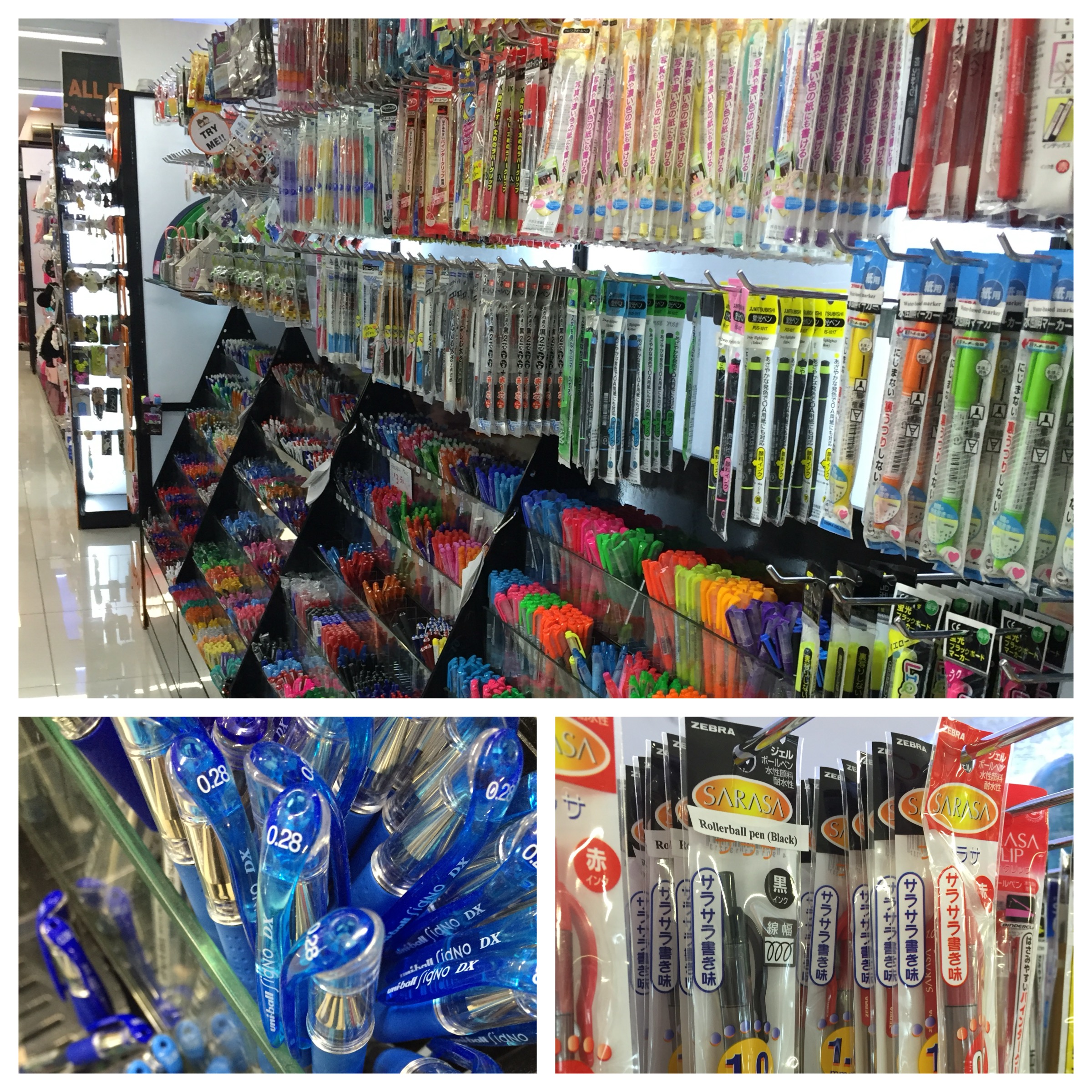
What might you find here which may be of interest? Quite a few gel pens for starters, including Uniball’s Signo DX, some Zebra’s Sarasa, Pilot’s G-2, and Pentel’s Energel among many others. The predominant tip size is medium and finer, although for those who prefer a wider line you will likely find something for your preference as well.

IMG_5928danda_post

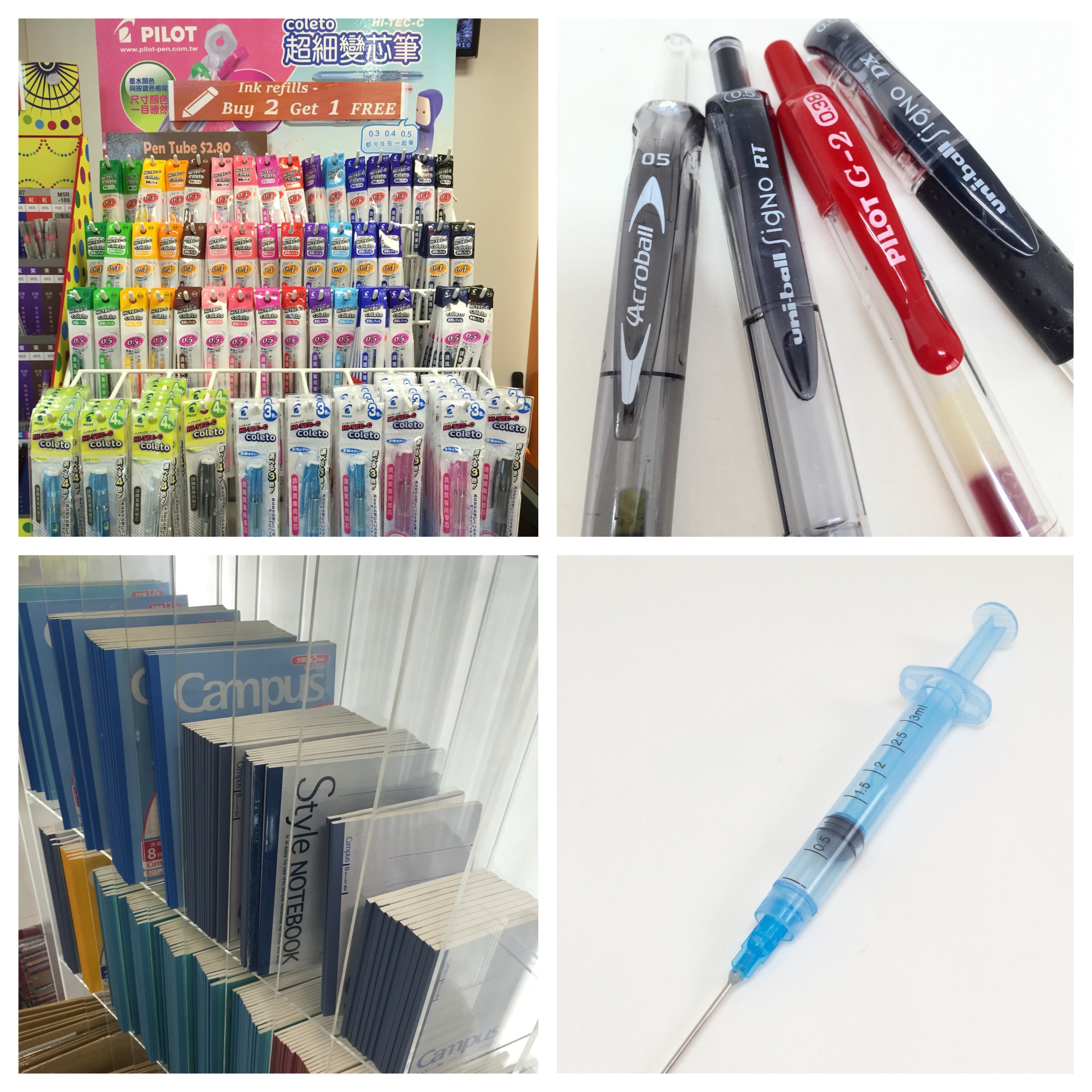
DanDa has been my go to supplier for Pilot Hi-Tec-C Coleto multi-pen refills for some time now, and if you buy three refills, you only pay for two. Speaking of payment — it is of course one of those stores where everything is a universal price (apart from the occasional item marked otherwise – though this is rare). Everything you pick up is A$2.80.

For the fountain pen user? Here, there is probably a little less (read zero) as far as pens are concerned, however I have picked up the fountain pen friendly Campus notebooks by Kokuyo (in multiple sizes); a 3 ml syringe for cartridge refills (you’ll find this in the cosmetics aisle); and a couple of magnifying glasses (albeit not the most powerful) for peering a little more closely at some nibs. Again all at a cost of A$2.80 a piece.

IMG_5929danda_post

As I said, DanDa probably won’t become your go-to stationery store, however there are a couple of aisles of pen and paper well worth checking out — and it certainly won’t do your credit card too much damage in the process.


Monokaki A5 Notebook

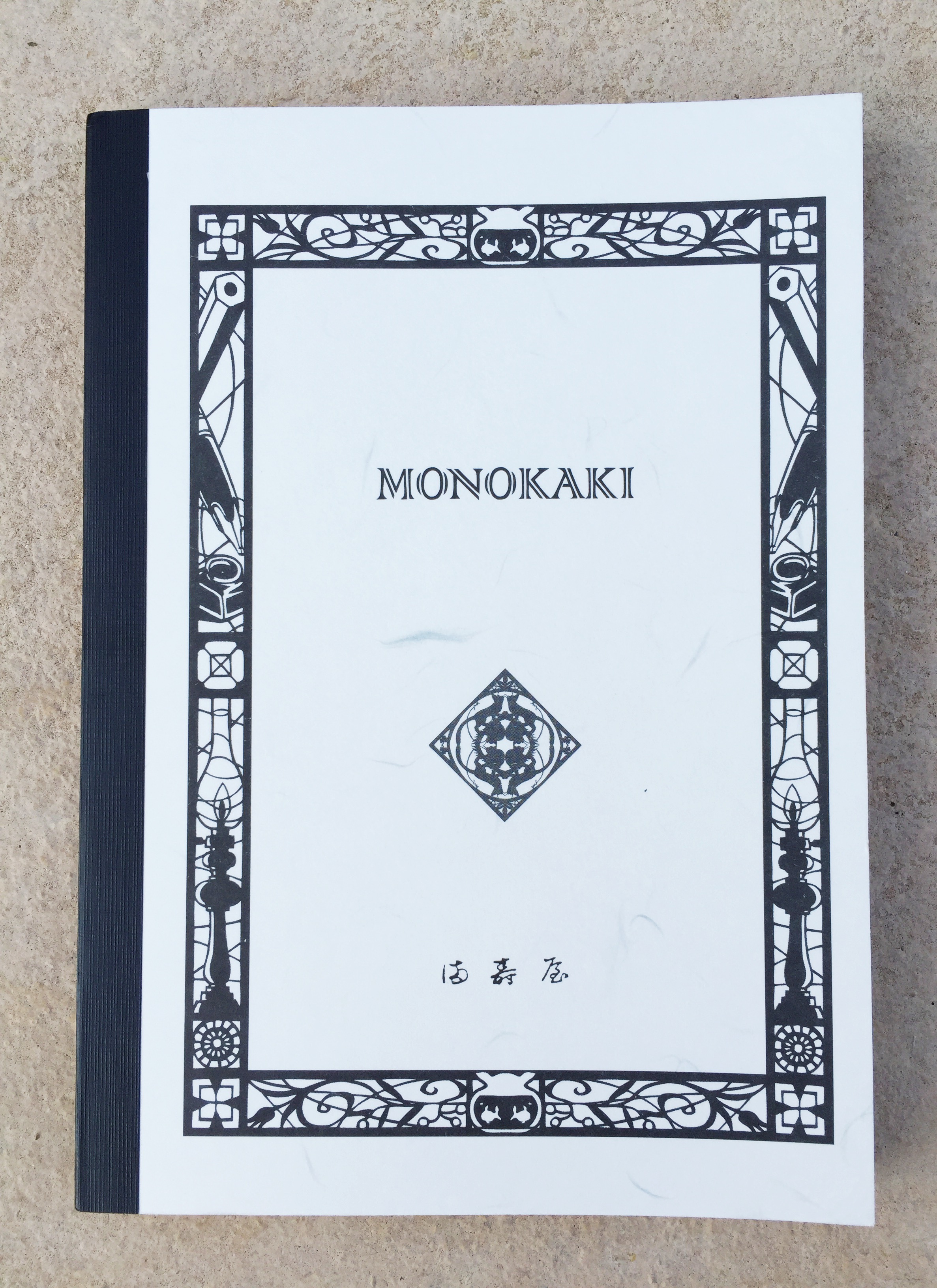
Having this Monokaki A5 notebook arrive in my letterbox a little while ago was indeed a pleasant surprise. Picked up in a Japanese stationery store by a friend during a recent trip overseas, I was the lucky recipient of a notebook I had not come across either in stationery stores or online.

image

Although I knew nothing about the Monokaki range of notebooks (Monokaki meaning “writer” in Japanese), the quality of both paper and overall manufacturing was immediately apparent. Also, given the decorative border around the front cover included pencil, fountain pen and inkwell motifs, I was further encouraged as to the likely merits of the paper stock, and its ability to handle my favourite writing instruments.

Yes, I was a little excited about this one.

Background

Seeing the unfamiliar Monokaki brand name immediately sent me on an internet search for a little more information, an endeavour which also had me thankful for Chrome’s translation button when viewing the manufacturer’s website. There isn’t as much information readily available compared with some of the more common brands, however what I did find was indeed of interest.

UK store Choosing Keeping (online or 128 Columbia Rd, London) provided some background, which included a little dig at another major brand’s claim about being a notebook for novelists:

The one exception being that while other’s marketing campaigns are entirely fabricated, the Monokaki notebook’s paper – Kotobukiya paper – was really created as a bespoke product for Japanese author Fumio Niwa by the company’s present day owner’s grandmother in 1939 and used by countless authors and poets including no less than two Literature Nobel prize winners and one nominee.

I’d encourage you to click-through and read a little more, as the page also includes information on the company, which continues to operate and manufacture the notebooks from the Sakura district in Tokyo. The 1940’s woodblock cover design apparently comes from Japanese manga artist Ryo Takagi, commissioned to create a design of “traditional Japanese atmosphere – to include familiar stationery and writing instruments”. I think you’d agree the design goal was achieved.

On a more practical note, and certainly of great interest to many of us in the pen community:

The manuscript paper was indeed designed with novelists in mind for its excellent performance when used with fountain pens – no bleeding, no feathering

So all in all, things were looking good, with both first impressions and an initial foray into learning a little more about the brand yielding positive results.

For reference, some links (I’d recommend Chrome for opening those in italics and translating the result):

Update, 13 December 2015: I have now updated the information above which incorrectly stated Choosing Keeping were an online store. The store has been in touch to advise they also have a brick and mortar shop specialising in classic stationery and notebooks at 128 Columbia Rd, London as well. Thanks Julia!

Look and Feel

If I consider what actually is my preferred or favourite “look” for a notebook, I don’t believe I really have one to be honest. There are times when an understated black might be what I am after, yet other times it might be something a little more individual or unique. The Monokaki range is itself a little unique in that it probably fits both these descriptions.

I do enjoy a little variety from time to time in what I am carrying, however not at the expense of the writing experience. Considering this, I do have what I’d call a spectrum of tolerance here. By that I mean certain notebooks I’m happy to use even if it means finer nibs and certain inks only, as long as things are not too restrictive. Mind you, that particular subset of nibs, inks and pens must perform without further compromise, otherwise the notebook will be gently set aside and see no further use.

Although I’ve probably begun to drift a little off track, my intended point is to merely highlight the fact there are no real compromises with the Monokaki’s paper — to any of my pens, nibs or inks, as you’ll read about a little further below.

imageimage

I do love the look of this notebook, with its relatively understated, yet very individual cover design. The contrast of the binding tape complements the unique monokaki_traditional_japanborder and designs contained within it. Even the font used on the cover branding, combined with the central symbol and what I believe to be traditional Japanese lettering (part of manufacturer Asakusa Masuya’s logo) add to the overall design aesthetic of the front cover. The back cover is also not forgotten, containing a central symbol, with both corners also demonstrating fairly intricate detailing.

image


While I am not entirely certain if some of these symbols carry significant meaning over and above their decorative effect, the overall feeling I have about the character of the design is one of old world Japanese tradition or history. I have no specific basis for that, however that is the feeling I keep coming back to when I look at it, and is something I find quite compelling.

In the hand, there is a feeling of quality evident in the construction. With time, I’d expect some wear and tear around the corners of the front and back cover if it were going in and out of a bag on a daily basis, however it would more than likely be filled in short order as well if that were the case. That said, I have no real concerns about the overall durability of the cover, if a little care is taken along the way.

imageThe paper is thread-bound and glued in small sections (apparently to assist flatter opening), and externally reinforced with tape along the spine, which not only provides additional support, but I believe enhances the overall external look. Additional stiffening is also provided by a second sheet of card stock inside the front and back cover, providing a kind of double cover for want of a better term. monokaki_dbl_coverThis again adds to the overall sturdy feel of the notebook, providing additional rigidity to the cover.

The pages themselves are lined, with a larger margin at the top of the page. The only additional markings are 10 mm graduations marked along the top and bottom line (which are themselves bold), allowing the accurate addition of a vertical margin if you so desire. monokaki_vert_margAt a guess I’d say this may be present to allow vertical rulings to be created for a grid of 24×18 boxes, similar to the Masuya manuscript paper from the same manufacturer.

I do not find the absence of other possible additions such as page numbering or date fields detracts in any way from either the look or the usefulness of the page. In fact, the simplicity of what is offered fits with its overall character.

Specifications

Courtesy Choosing Keeping:

  • Monokaki Notebook
  • A5 210 x 148 mm
  • Soft flexible washi paper card cover
  • Acid-free smooth light cream paper
  • Plain or ruled (lines 9 mm apart)
  • 160 pages
  • Fountain pen friendly cream paper
  • Thread-stitch bound in small sections for flat opening throughout
  • Sizes available
    • Large, B5 – 257 x 175 mm
    • Medium, A5 – 210 x 148 mm
    • Small, B6 – 182 x 128 mm
  • Price £12.00 ($AUD24.70)

Also available on Rakuten Global Market with a list price of $AUD12.56.

imageA word about the Masuya paper (English page link), which is used in the Monokaki range of notebooks (also referred to as Kotobukiya paper, with both terms used somewhat interchangeably from what I’ve read). Masuya manufacture 2 types of manuscript paper and have a range of 35 different products. Originally cream, the paper also comes in white, created to better reflect the light source — apparently coming about due to one of the previously mentioned “novelists” writing by a single spotlight.

From the site itself (unaltered):

Masuya in Asakusa is a traditional company successing Japanese hand-writing culture. We have various products made of high quality paper many famous writers have chosen. Japanese traditional design, unique touch…

Along with the rather unusual:

Feel Japaneseness through Masuya’s products.

It has been a little difficult to track down more detailed information about the Masuya paper used in the Monokaki line of notebooks, and you will note the absence of a gsm rating in the specifications above. The paper in this notebook is certainly far thinner than a 90 gsm Rhodia or Clairefontaine notebook, and also the 80 gsm softcover Leuchtturm1917 notebook I have been most recently using — by a considerable margin. Given Tomoe River paper weighs in at 52 gsm, then at a guess — and I repeat this is my own guess-timation only, this paper feels like it would be around 60 gsm. I may be way off the mark here, however it is very thin and very light compared to your standard “fountain pen friendly” notebooks — and is certainly closer in properties to Tomoe River than any other paper I have used to date.

Once written upon, the paper has a little of what I’d call that “crinkle”, reminiscent of Tomoe River paper, and does seem to have properties that lend me to think of it in similar ways. At times I feel I have turned one page when I have actually picked up two.

Needless to say, I like it — a lot.

Writing Performance

From my comments above, you probably can see what is coming here.

This paper is pretty amazing — particularly if you enjoy writing with fountain pens, meaning of course it handles pretty much anything else you care to throw at it as well. The exception of course being Sharpie markers and the like, where thin doesn’t always hold up to such an onslaught of saturated ink. For fountain pens though, this is some of the best paper I have written on since, well… since I’ve been concerned with such matters. As much as I loved my Rollbahn and Apica Notebooks of previous reviews, the paper in this one surpasses those.

monkaki_ink

For my paper requirements and preferences, this one is now certainly a favourite. Beyond the obvious shockers of horrendous feathering (my number one hate and deal-breaker), excessive bleed-though (a slightly lesser evil to me), and show through (perfectly acceptable to me for the most part), I’m sure we all have our favourites for various reasons.

monokaki_reverse_pageThe paper in this notebook has what I’d call a moderate amount of show through for darker and more saturated colours you might use. So in all likelihood, many of your fountain pens. Again if we compare it to Tomoe River, it has possibly a little more — but only just, assuming my eyes aren’t deceiving me.

Because the paper is so lightweight, although it has a little tooth to a gliding nib, there is no sinking in feeling from toothier, heavier-weighted paper. I’ve also noted in the past how on some heavier paper such as a Clairefontaine notebook, I feel as though the nib skates away from me a little, and what I gain in less resistance, also results in less control. There is none of that here — even with more rapid writing. To me it really is the best of both worlds. As far as feathering goes – what feathering? None of that here.

IMG_5250As far as the shade of paper is concerned, I’m a little picky here. Every time I try a notebook in the off-white/cream/yellowish spectrum, I begin by thinking: gee, this would be fantastic in white. However this is typically followed by filling up the notebook with all manner of ink colours and not thinking another thing of it. As you can see from the writing sample page, all of your colours will vividly show in all their glory.

One point I should make here, is that this is not a flat opening notebook, even through the middle third of the book. I have doubled it back and left it open in attempts to coax it a little flatter through the spine to no avail. While not a deal breaker for me, it is noticeable, and something which does get in the way of the writing experience somewhat. Something to consider in any event.

In summary, the writing experience is as close to a Tomoe River experience as you can get. Why is that relevant? Well, Tomoe River paper is popular and well regarded for a reason. Light weight paper, smooth without the slip, handles pretty much every ink and nib, a little show through yet no bleed or feathering. Sound familiar? Indeed it does, however applies equally well to the Masuya paper in this Monokaki notebook.

Probably the one thing about these types of paper that can sometimes be an issue is ink drying time. By comparison, the Monokaki on average dried a few seconds faster for a given ink — often at around the 15 seconds mark, versus 18-20 seconds for the Tomoe River. So again I found the overall performance quite similar.

Without a doubt this is great paper, and if you are at all able to get your hands on some, I highly recommend trying it out — whether in notebook or manuscript page format.

Conclusion

imageThe Monokaki A5 Notebook is indeed a joy to use, largely due to the writing experience of the Masuya paper itself — and isn’t that pretty much the key to our love of pens and paper? True, I have a little flexibility as far as my specific paper requirements for writing, and this Monokaki Notebook sits very close to the favourite end of that spectrum.

To make it pretty much perfect? There is probably nothing I’d change about the properties of the paper — for fountain pens it is pretty much spot on. I’d perhaps tweak the binding to allow truly flat opening; opt for a truer white in paper shade; and finally, have a local store or online seller stock the range so I can easily replenish my supplies when they dwindle!

This is certainly a great notebook, and with 160 pages to play with, will serve me well for a little while longer — and that can only be a good thing. I often get the impression there is a whole world of Japanese stationery that I am entirely oblivious to — which is also a good thing, for it simply means there will always be more to discover.


Delfonics Rollbahn Spiral Bound Notebook

IMG_3485

In my ongoing quest for a quality spiral bound notebook, I decided to pick up a Delfonics Rollbahn recently, during a free postage promotion on Notemaker, one of Australia’s best online stationery stores.

Since then, I have also seen new stock arrive at the Dymocks Brisbane CBD bookstore, and the Rollbahn metallic covers (silver, gold) look absolutely fantastic. How do they perform? The most apt description here is also fantastic, and I have put together a few thoughts on this below.

The Notebook

The particular model purchased was the large (14 x 18 cm or 5.5 x 7 inches), which is a little more square in form than say, an equivalently sized Moleskine, which measures 13 x 21 cm (5 x 8 inches). I must admit, I do like the square format of the pages, as my writing is often not on the small side when jotting down a few quick notes, a list, or even something a little longer.

Specifications (from Notemaker):

  • PAGES: 180 (90 sheets)
  • RULING: 5mm x 5mm Graph / Brown-Grey coloured ruling
  • PAPER WEIGHT: 70gsm
  • PAPER COLOUR: Off White/Ivory
  • DIMENSIONS: 14cm x 18cm
  • SOURCE: Made in Japan

Look and feel

Looking more closely at the design, the binding is double spiral for added strength, with the cover made of extremely stiff, robust semi-gloss card stock (also described in the product specifications as splash-proof, however I did not specifically test this).

IMG_3466IMG_3468


At the rear of the notebook are five, top-opening, clear plastic sleeves between two thick yellow dividers matching the front cover. As with the front, thick card stock forms the back cover — this time in kraft, complete with a small letter-pressed Delfonics branding. An elastic closure strap in navy blue (matching the contrasting logo on the front cover) completes the picture.

IMG_3470IMG_3465


The overall look of these notebooks is quite striking, and I am quite drawn to the styling, quality and attention to detail applied to both the design and manufacture — not surprising given two factors: it is stationery, and it is made in Japan.

As I mentioned earlier, the silver and gold metallic covers are even more impressive, and nothing can beat seeing them first hand in a store. In fact, I have no doubt my accompanying photos would have been of the silver model had I seen them in-store prior to my online order.

As far as I am aware, the Rollbahn series come in 5 x 5 mm graph paper only, however the rulings are so faint I did not find it dramatically different to a dot grid type of paper, nor should those who find graph ruling a little “busy” for their tastes. At the very least it is worth a look, even if graph ruling is not your thing.

All sizes in the Rollbahn series contain 180 pages (90 sheets), with every page perforated for easy removal, however a little care is required when initiating the tear. I would note here I am always loathe to criticise a notebook for this, as my technique can be a little, how shall we say — “cumbersome”, at times.

Writing

Of course the best design components of a notebook pale significantly if the paper is not up to expectations.

A note here about the paper first up. It is yellow. Pale yellow, however yellow nonetheless. The specifications on Notemaker describe the paper as “off white/ivory” with “brown/grey” coloured ruling for the 5 x 5 mm graph paper design. Is the paper colour a deal breaker? I’d say no, however if you are someone who uses a lot of subtle colours or shades of inks, it just might be.

Not a great photo, however top to bottom: Clairefontaine, Rhodia, Moleskine, Rollbahn

Not a great photo, however top to bottom: Clairefontaine, Rhodia, Moleskine, Rollbahn

Just to confirm — it’s definitely yellow. There is no way I can be convinced this is merely off white or ivory, and if the performance of this paper were not as good as what it is, I may not have enjoyed using it as much as I did. I simply prefer paper towards the whiter end of the spectrum — particularly for those types of inks.

IMG_3474IMG_3514

That said, upon putting down some samples on a page, (see accompanying image above) most of my comments above might appear unwarranted or a little harsh — comments which I almost removed (the sample page being written after drafting the post). More vibrant, colours such as Montblanc Irish Green and J.Herbin Orange Indien were fairly true to their white paper appearance (the orange perhaps losing a fraction of nuance), however I have also added a shot below of some Montblanc Daniel Defoe Palm Green, where most of the green tones can only be seen in a smudge. Conversely, I have found a nice, consistent shade of earthy green when the same ink is used on whiter paper.

IMG_3475

See for yourself in the accompanying images, and the only reason I highlight this aspect in particular, is that for me, were this paper white, I would be telling you it would be pretty much perfect. It is that good.

The usual characteristics such as bleed through, show through or feathering are handled perfectly by the 70gsm paper — that is, pretty well none of these are demonstrated in the writing I have put down so far. This is great paper for note taking — fountain pens included, with dry time certainly on the quicker end of the scale compared with other brands of paper.

I find it a little less “slippery” for want of a better word than say Rhodia paper, my go to for fountain pens typically. The little bit of extra feedback suits my writing style perfectly, as I sometimes find a really smooth nib more difficult to control on very smooth (e.g. Rhodia) paper.

One minor qualm I noted when writing was the small amount of “wiggle” or movement of the page if not held with your opposite hand, mainly due to the large squares cut in the paper for the double spiral binding. Most likely not a problem in the extra-large size, however in a notebook of this size, I often rest my hand on the left page or off the notebook completely. Not a major issue however the movement was noticeable and something I thought worth mentioning.

Use case

For me, this large size notebook — my first Rollbahn, is best suited to shorter note taking given the size of the pages, however would hold up well for longer form writing. In a larger size, I can see this working extremely well as an office meeting note taker or “day book” of sorts, which is where I find the spiral bound books to work best for me.

Many of the notes I take during the day relate to meetings, general thoughts/ideas on processes, procedures or projects, and rough working, mind mapping or outlining these very topics.

Why does the spiral binding suit here? Simply because I prefer a notebook at work which opens flat, closes flat, and can be turned back on itself to allow notes to be taken on a somewhat stable and rigid surface if I choose to rest the book on my lap. This I find to be a common scenario, either for comfort reasons in a long meeting, or to jot down a few confidential notes, where the notebook is angled towards, and closer to me.

IMG_3516It is also at my office job I am most likely to be using ink colours in the blue-black spectrum, or more gel ink pens or my trusty Retro 51. As good as the paper is, as I’ve state above, the yellow shade is probably not best for testing your new ink colours — at least those on the subtle shade side in any event.

My purchase receipt tells me I bought this notebook in late October, and in the intervening two months, I have: made a few plot related notes for NaNoWriMo; jotted down some coffee tasting notes; written a few pages worth of outline for a post on what I learned from NaNoWriMo (must actually finish and publish that one!); and taken a dozen or so pages of notes whilst watching David Sparks excellent OmniFocus Video Field Guide (in Daniel Defoe Palm Green – see accompanying image). A group of notes largely consisting of bullet points, lists and short text notes.

Conclusion

It is pretty clear I am very impressed with the Delfonics Rollbahn, and find it suits my style of writing and notebook requirements extremely well. The styling, design and build quality are second to none. I will definitely be giving the extra-large size a run as my office notebook in future.

What do I like most? Definitely the paper quality, (if not quite the colour), the overall build quality and design, and the attention to detail that is apparent in the double spiral binding, rear pockets, and perfectly rounded corners. Although nice, the closure strap is something I generally prefer not to have (particularly in a notebook which closes well on its own) — as I find they often get in the way. Certainly not a deal breaker by any stretch.

My dislikes? Here it is really only the shade of the paper, for otherwise it is essentially flawless. A minor qualm about the “wiggle” in the page when writing I mentioned earlier is not something which would stop me buying more in the future.

As far as value for money is concerned, here is where things get a little (not a lot — but certainly a little, depending on your budget) interesting. The 14 x 18 cm sized notebook retails for $AU14.95 (either brick and mortar store or online), and the extra-large 19 x 26 cm for $AU24.95. Not an insignificant amount, however when balancing this with what you get for your money, that is, exceptional quality, and 180 pages of it, I’d say the value for money certainly is definitely there. I should also mention the notebook also comes in a smaller (10 x 15 cm), 180 page top opening reporter style notebook for $AU9.95.

Although this is my first Delfonics Rollbahn notebook, I doubt it will be my last. My recommendation would be to try one for yourself, and if you write with fountain pens, my advice is the same — try one out.

Just remember, though perfectly fine for most colours, the shade of paper isn’t made to showcase the subtleties of your ink collection, but will serve you extremely well for taking meeting notes or writing the intro or outline to your next long form essay.

NaNoWriMo – My Analogue Tools

The tools.

The tools.

With so many words to be written this month as part of my first foray into NaNoWriMo, I feared this blog would be a little forgotten over the coming weeks – and no, I had not planned ahead well enough to have written and scheduled posts in advance.

In a rare moment of wisdom, I came to realise my best chance of putting something up on the blog would be to combine the two. That is, participate in NaNoWriMo, and occasionally blog about participating in NaNoWriMo.

I plan to write a few more NaNoWriMo flavoured posts throughout the month, which is of course assuming the weight of expectation that comes with a 50,000 word target doesn’t crush me first.

So, with a tip of the hat to yesterday’s Fountain Pen Day, today I thought I would share some of the analogue tools I have been using to help plan out, and hopefully get written, the 50,000 words that constitute the NaNoWriMo challenge.

Notebooks

Various notebooks, pads, scraps of paper and even the odd dreaded yellow Post-It Note have all played their part here.

Although I have the overall plot and story outlined, my fear of running out of specific ideas to keep filling scenes, has resulted in a litany of places with either paragraphs, a line, or even a single word jotted down to avoid forgetting that great idea. Though I must admit, the more common scenario seems to be noting down why events written two chapters ago no longer make sense given the turn the story has taken.

This whole novel-writing thing is certainly not easy!

The paper I’ve been using:

Clairefontaine Essentials Notebook and Pelikan Edelstein Tanzanite ink written with Pelican M205 EF Fountain Pen

Clairefontaine Essentials Notebook and Pelikan Edelstein Tanzanite ink written with Pelican M205 EF Fountain Pen

Clairefontaine Essentials Notebook with Pelikan Edelstein Tanzanite Ink

Delfonics Rollbahn Notebook; Montblanc Daniel Defoe Palm Geen ink (Pelikan M205 EF Fountain Pen)

Pens

(L to R) Pelikan M205; Palomino Blackwing 602; Retro 51 Stealth; Lamy Safari; Montblanc Meisterstuck Classique

(L to R) Pelikan M205; Palomino Blackwing 602; Retro 51 Stealth; Lamy Safari; Montblanc Meisterstuck Classique

Again, this is either dictated by what is closest at hand for immediate idea capture, or what will be most enjoyable to write with for more extensive outlining. The following pens (and pencil) have to date suited either of these scenarios:

Inks

I have found using inks of varying colours quite helpful when going back through my notes to either check off ideas or plot lines I have implemented into the story, or in highlighting areas that may require more thought or detail. The Montblanc Meisterstuck inked with Burgundy Red has been particularly useful given it’s contrast to the Safari’s blue ink, clearly showing notes made as additions to the originals.

Markup in Field Notes Arts Edition; Lamy Blue ink (Lamy Safari M Fountain Pen); Montblanc Burgundy Red (Montblanc Meisterstuck Classique M Fountain Pen)

Markup in Field Notes Arts Edition; Lamy Blue ink (Lamy Safari M Fountain Pen); Montblanc Burgundy Red (Montblanc Meisterstuck Classique M Fountain Pen)

Rhoda Ice No 16 Lined Notepad; Lamy Blue ink (Lamy Safari M Fountain Pen)

Rhoda Ice No 16 Lined Notepad; Lamy Blue ink (Lamy Safari M Fountain Pen)

Summary

The most used of the items outlined above is probably a combination of the Field Notes Arts Edition notebook, the Lamy Safari for note taking, and the Montblanc Meisterstuck for marking up the Safari’s notes.

The Field Notes became the notebook of choice early on as I my initial intention was to keep all of my ‘NaNo’ notes in the one book, and the majority have ended up in here. I found the larger ‘Arts’ edition the ideal size for more extensive notes, yet small and light enough to carry with me.

Delfonics Rollbahn Grid Notebook

Delfonics Rollbahn Grid Notebook

The Delfonics Rollbahn notebook contains great paper stock for fountain pen use, however the yellow colour is not the best shade to highlight any particularly vibrant inks you may be using. Certainly not a problem for the darker blues and blacks if that is your preference.

The Safari was not necessarily my first choice pen, however is only a fairly recent purchase, and the paper based planning of this project seemed a great chance to test it out. No real complaints here, except it has been a little ’skippy’ occasionally, however I put this down to not having given it a thorough clean before inking it up after purchase.

I am really enjoying the Daniel Defoe Palm Green ink, which is now residing in the Pelikan M205 (EF). Again only a recent purchase, however what a great colour! I am sure it will see quite a bit of use throughout the remainder of November and beyond.

My main (and only minor) grievance has been the extent to which the Safari Blue Ink has faded. Although most likely due to both the ink and Field Notes paper (the same amount of fade was not evident on the Rhodia stock), I would have preferred it to maintain the vibrance it had when first laid down.

NaNoWriMo itself?

With my word count currently just over the 10k mark, I am finding this an extremely interesting challenge. I was falling on the side of “maybe I’ll just do it next year”, right up until a few days before November 1, however would perhaps have continued to say the same thing every year had I not bitten the bullet and entered.

So very glad I did.

Gotta go. There’s an important word count that needs increasing!!


Wiser Web Wednesday

Wiser Web Wednesday – a weekly link to posts of interest from around the web:

The Brooks Review
In his own typical style, Ben Brooks takes the reviewing by numbers system apart, using an article from The Verge as an example. There are many reasons reviews can be questionable, this being yet another:
Why Reviewing by Numbers is a Bullshit Practice and Needs to Stop

Pentorium
I’ve yet to try out Tomoe River paper, and what better way to do just that than with a great looking notebook. As stated in the review, this is exclusive to online store JustWrite and currently available in A5 or A6 with blank pages only (dot grid would be lovely):
Tomoe River Handcrafted Notebooks from JustWrite

Pen Paper Ink Letter
Heath from PPIL outlines a fountain pen and paper starter set with quite a few goodies for $100. I always enjoy these types of posts not only to see if there are any products out there for me to try, but also whether I would recommend the same or similar items if asked:
The PPIL Fountain Pen and Paper Starter Set

The Pen Addict
This is one from the dim, dark past, posted by Brad back in June 2012, outlining a reader submitted Hi-Tec C refill hack into a Retro 51. Why am I poking around in the archives? Well, next up in my Field Notes rotation is the Expedition Edition and as many of you know, to deal with the Yupo synthetic paper, a decent ballpoint is required. Rather than open my wallet, I opened my drawer and found a couple of unused 0.7mm Uni Jetstreams, the refills of which are now snugly hacked into my Retro 51 and Kaweco Classic Sport pens, and performing very well indeed. Now all I need is an actual expedition, upon which to take my new carry:
Hacking a Pilot Hi-Tec-C Refill into a Retro 51

The Gentleman Stationer
No doubt I will try the Kon-Peki myself at some point in my journey through Blue-Black to Blue ink spectrum, however to date have not done so. My most recent purchase being the Pelikan Edelstein Tanzanite, which is on the darker end, though indeed a beautiful ink. Until then, I will happily read about others experiences, and keep asking, is that too light for me?:
Ink Review: Iroshizuku Kon-Peki

Inktronics
Of course there is no need to limit things to blue, black or somewhere in between, as I love a good red ink as much as the next penperson. From the image at the beginning of this post, it’s now clear to me that Darth’s light saber is indeed derived of Diamine Ink:
Inktronics Reviews Diamine Red Dragon Fountain Pen Ink

Modern Stationer
Why else do we read reviews, other than for thoughtful, objective views and perhaps some guidance on where to look for our next purchase. When things don’t always go to plan, with enough information (in contrast to The Brooks Review link above) we can all still decide for ourselves. Doug’s review of the Kaweco AL Sport ticks all of these boxes and more. The pen community delivers yet again:
Kaweco AL Sport Review

The Atlantic
Certainly not a short read this one. Here The Atlantic profiles Blue Bottle Coffee and its efforts in scaling production of a specialty iced coffee of sorts. Living in Australia I have obviously not tasted this product, however post this link as I find such endeavours quite interesting. Larger scale production of something like specialty coffee always carries the dangers of a proportional shift away from the original beverage as the magnitude of the scale increases. Perhaps things will be different this time:
The Future of Iced Coffee

Coffee Contrarian
A response to the above article, from Kevin Knox, who describes himself as a “semi-retired veteran of the coffee and tea trade”. The closing paragraph of which probably sums up his thoughts:

At the very least, I shouldn’t be the only one with an industry background pointing out that the Emperor has no clothes – or rather, that there’s (almost) no coffee in this “coffee.”

Probably worth reading both articles, and perhaps a few more before making up your own mind. In the end, it will no doubt be the consumer who decides. In the context of sales figures, whether it actually is “specialty coffee” or not (whilst important to some) will most likely end up irrelevant:
“The Future of Iced Coffee” leaves me cold