The Pen Addict 100

Every day without fail – podcast on my morning commute, TV shows or movies in the afternoon. Not today. No way …not today. Today my podcast feeds were regularly refreshed, and with the episode downloaded, the afternoon commute was podcasting gold all the way.

Why the change? Well, today was a special day – The Pen Addict podcast hit episode 100, and for a podcast about pens, that is something.

Easily my all time favourite podcast – the path to which was simple: What? People write all these blogs about pens? Wait…what? There is a podcast about pens as well? Game over. Thus, my entry point – May 2012, episode 12.

As some of the international replies trickle in from my InCoWriMo efforts in February, it is a great reminder that although those within this global (yet somehow close) community love pens, we love the people holding them more. Brad Dowdy and Myke Hurley are truly two of the best, and deserve our heartfelt congratulations on reaching this milestone, having lost none of their passion or enthusiasm over the past 2 years doing the show. As much as Myke’s intro’s have been truly memorable, today’s closing remarks are worth more than all of them put together, and surely echo the sentiments of all listeners.

Did we tune in for the cool giveaways (and they are cool) from the episode? No, and most fans of the show would probably quite happily have paid to listen. It was to be part of something special, something to be celebrated. Cheers boys, and I look forward to entering the giveaway for the Karas Kustoms Spartan shield, commemorating #penaddict300.

In the mean time, I recommend heading over to Teespring and ordering a #penaddict100 limited edition, orange (of course) T-shirt. They come in F, M, B or Stub – for those with a shorter torso (or maybe just your regular sizes).

A truly great show from two truly great blokes. Thanks Brad and Myke, well done.

Ogami Stone Paper Notebook Review

Although I routinely purchase and try out many different notebooks for my own use, this post marks the first time I have put pen to paper and committed my thoughts to a more formal review. What makes me qualified to provide an opinion? Nothing other than a keen interest in all things pen and paper, a willingness to document the writing experience and features of this particular product, and a good few years of being a little obsessive about which pens I use and the paper products they are used on.

Ogami Stone Paper Notebook – Professional Edition

Why the Ogami first up? The search for something a little different is probably the most accurate answer here. The Ogami Stone Paper Notebook fits the brief well, given the unusual composition of the paper itself (more on this below).

Ogami Professional Edition Stone Paper Notebook

Ogami Professional Edition Stone Paper Notebook

This particular notebook is a softcover version from the Ogami Professional Collection range manufactured in Italy. From the manufacturer:

Specifications
– Cover: 300g uncoated paper
– Paper: Repap stone paper, 120 micron (approx 90gsm I believe)
– Binding: Handmade Point Singer (sewn)
– Pockets: Single, inside back cover

First Page

First Page

Options
– Cover: Softcover, Hardcover, Spiral Bound
– Colours: Blue, Black, Grey, White
– Sizes: Mini (90x140mm, 48 pages), Small (130x210mm, 64 pages), Regular (195x240mm, 80 pages)
– Pages: Plain, Ruled, Squared

Inside Back Cover

Inside Back Cover

Repap paper

The maker of Repap outlining its components:

Repap is made up of 80% calcium carbonate (CaCO) and a small percentage, 20%, from non-toxic resins (high intensity polyethylene).

The manufacturer also lists a number of advantages in using Repap over traditional paper, primarily the environmental benefit (it is “tree free”, uses less overall energy in production and is recyclable). Other benefits are said to include water resistance, greater durability than traditional paper, and its softness, having none of the hard edges or corners of traditional paper – that is “paper-cut free”.

Although the environment should be a concern, or at least a consideration for all of us, I am not about to debate the environmental merits of the Repap production technology over more traditional means, such as sustainable forest planting for paper production. There do appear to be environmental advantages in the Repap process, however in providing a balanced view, there are those that question the claims of such a product.

Anyway, on with the review.

Review

Test notebook – Grey, small, softcover, plain pages

Look and Feel
Ogami have produced an attractive product, which does not look out of place on a shelf next to a Moleskine cahier of identical size. In fact they look quite similar, as you can see from the cover image. This is probably where the similarity ends.

It is probably worth mentioning here that the similarity certainly ends when it comes to price. The Regular Ogami professional model of this review was purchased at a local bookstore for AUD$14.99. A three pack of Moleskine Cahiers the same size from the next shelf along are AUD$18.95. It goes without saying there needs to be a fairly compelling reason to pay what is almost 3 times the price of a more readily available competitor. Does the Ogami achieve this? For me, not quite.

Although not specifically a Moleskine vs Ogami review, compared to the Moleskine, the cover is much stiffer, whilst the paper is much softer, both around the edges and across the face of each sheet. The feel of the paper is akin to an extremely smooth hard surface when running your finger across the surface (like polished wood or tile). However, with any sort of point pressure, you tend to “sink in” to the surface (think vinyl table protector). This may not suit every type of writer, particularly those who may be a little heavy-handed at times (it is I you see looking in the mirror as I write that sentence). The Repap paper is indeed very different to what you feel in a traditionally made paper.

Probably my only issue with the overall aesthetics (and a minor one) is that although the notebook will sit flat when opened, once the spine is “broken in”, the cover sits at approximately 30–45 degrees open when the book is closed and sitting flat on a desk. This is most likely due to the stiffness of the cover I expect, however is something that annoys me a little, requiring an object to be placed on top for the cover to sit fully closed, though I acknowledge this may change as the spine ages.

Sewn Binding

Sewn Binding

Does this notebook feel any more “premium” than similar sized and designed products due to the silky smooth pages and stiffer cover material? Perhaps a little, although the manufacturers emphasis appears to be on the features and environmental benefits, however given the price, I think any advantage would be welcome. I very much like the look of the grey stitching on the white paper through the centre fold, which although is merely maintaining a uniform colour from the outside, looks great nonetheless (contrasting stitching on the outside would look great too – say in black perhaps?). I am also a fan of the bright white paper, which is much nicer than the yellow of the Moleskine.

Stitching contrast inside

Stitching contrast at centre fold line

Writing Performance
So – what really counts. How does it feel to write on this stone paper – like a stick on a stone tablet? Far from it, and whether or not this notebook is for you will be a very individual decision (as they all are), and will largely depend on your particular writing style.

Inks
The most obvious point to make here is fountain pen drying time, which, depending on nib size and ink, will run to at least 45 seconds, as was the case with my Montblanc Meisterstuck (M; Montblanc Midnight Blue) and my son’s Pilot Kakuno (F). Not a disaster, however a significant consideration for how you may use the notebook, to the extent I would consider it essentially ballpoint only.

Sample ink drying time

Sample ink drying time

No discernible feathering or bleed was evident, as the ink laid down seems to dry “on” rather than being absorbed “in” to the paper. I suspect the relatively non-porous nature of the paper is where the durability and water resistance are derived, however as you can expect, has significant ramifications for ink drying time.


Inks Page

Inks Page

Gel and ball point inks fared well, however those on the wetter side (Pilot G–2 0.7mm) required approximately 20-30 seconds to avoid significant smudging, and up to 45 seconds to fully dry. Felt tip fine-liners of 0.4mm, and a 0.7mm Jetstream dried immediately and smudge free, unless I waged a very strong fingered smear campaign.

Smoothness

Another possible deal-breaker for many. If you are at all heavy-handed, regardless of pen type, you will sink a little into this paper, and feel as though you are pushing a wave of paper in front of you. Probably the best way I can think to describe it is when writing on the fresh, clean, right side of the notebook, it feels similar to writing on the left (reverse) side of other notebooks about 10 or so pages in. You can see how this effect would be magnified when you actually are writing on the reverse side of this paper half-way through the notebook. The effect of pressure can be seen fairly markedly in the image of the reverse side of the paper.

Although this will vary for each individual writing style, for me personally it is a limitation.

Reverse side of inks page

Reverse side of inks page

Durability

As noted above, the manufacturer of Repap paper claims an advantage over other forms of paper in terms of resistance to tearing, water and overall durability. Testing these claims demonstrated a reasonably strong tear resistance at the edge of the sheet, however once the outer edge gave way, the sheet “split” down or across the page fairly easily (see right edge of page at the horizontal line in the image below). It is certainly not the type of notebook you will be tearing sheets out of with any sort of regularity.

Running a finger dipped in water down the page significantly smudged all words written 7 days prior (see bottom half of page in image below), with the exception of a ball point, so (though perhaps obvious) unless you intend to write with a ball point, I do not believe the resistance to water, and suitability to high humidity conditions (as quoted by the manufacturer) should really be a relevant factor in your purchasing decision. After a week in my bag, some early signs of wear are showing at the ends of the spine, with a little of the grey colouring of the cover beginning to come away.

Combat page - water and tear testing.

Combat page – water and tear testing.

Use Case
In retrospect, it’s probably a little unusual for me to purchase a notebook of this size, as I tend to use a smaller pocket variety (Field Notes), or the Extra Large sized cahier type notebooks which I carry in my bag, and on my desk, a Rhodia No. 16 Dot Pad. However, at the time it was the most reasonably priced version of the Ogami range in the store to buy purely for testing.

Notwithstanding the above, I can see this notebook put to good use in meetings, as an idea journal/planning tool, or even a daily record keeping journal. The cover has a good stiffness and solid feel to it which should protect the contents well. However, the paper may limit some users intending to write for any length of time in longhand, as the softness of the paper (in an ironic twist despite its smoothness) may be hard going over a longer period of writing. As I have mentioned, this would be the case mainly for those a little heavy-handed or perhaps using finer nib or tip sizes.

Conclusion
Would I buy and continue to use an Ogami notebook? Probably unlikely. Don’t get me wrong, this is a product on par as far as quality is concerned with those similar in the marketplace (though a little more expensive), however for my particular writing style, is not the best fit.

In particular, as I can tend to be a little heavy-handed with pressure, the soft nature of the paper requires me to push a little harder on forward strokes. I acknowledge this to be a limitation of my writing style, however I write the way I write, and will obviously find products to suit. Secondly, the Repap paper is really not designed for fountain pens, nor wetter gel or liquid inks, and I personally would consider this a ballpoint (or pencil) only notebook.

So, who should buy one? I would say users of fine tipped gel or preferably ballpoint pens. Those with a light (and perhaps right) hand who intend to use the notebook for short periods of writing, such as mind maps, lists or short journal entries.

Or of course if you are in any way like me and are curious as to how this form of paper may suit you. Grab one and try it out.


Experts, Authority and Authenticity

What defines an expert? Qualifications, industry training and experience, passion, or merely a keen interest in learning, to increase both knowledge and understanding of a given topic? Probably all of the above and a lot more, however as my writing on this site continues, it is an area of constant consideration.

It is extremely important to me when writing here, I do not inadvertently, nor purposely, pass myself off as some sort of expert. The content posted on dept4 is pitched at those similar to myself, the passionate amateur enthusiast, looking to increase their knowledge and understanding on the few topics I am also interested in, and therefore write about.

Although not dealing with the above question specifically, recent posts on authenticity and the authority of experience by a couple of authors whose opinions I believe matter, are well worth reading, and sit well with my own thoughts on these particular topics.

Author and traveller extraordinaire Colin Wright on the Authority of Experience:

There are a whole lot of blogs and articles and even books written by folks who don’t know what they’re talking about. Or rather, they know some aspect of what they’re talking about, but lack the authority of experience.

James Hoffmann talking “hipsters” in Hipsters, Coffee and Authenticity:

It isn’t really a cultural label the way “goth” or “mod” were and are. I think the word has ended up being many things to many people, but I think when you use it there is, at its root, one key idea: you are saying “I don’t believe you.”

While you are there, subscribing to hear more from these two would be a worthwhile consideration.


App Updates for Byword and Command-C

Recent updates added some nice features to two of my favourite apps, Byword and Command-C.

Byword

I have written previously about the use of Byword in my writing workflow, unsurprisingly around the time of a previous major update from developer Metaclassy. Although the current update is a minor one, a great feature has been added in the form of support for external keyboard shortcuts, shown in following screenshot from the app update screen.

Update Screen

Although the additional keyboard row from the onscreen keyboard remains visible when an external keyboard is connected (as you can see below), users who prefer, and are familiar with the keyboard shortcuts from the Mac app will welcome the increased functionality on iOS.

Byword Screenshot

Although I have recently been using Editorial for much of my iPad writing needs, Byword remains a great alternative (and extensively used one on my phone and Mac) with an elegant interface, additional keyboard features, and Markdown support. Robust syncing for the iPad, iPhone and Mac versions is through iCloud or Dropbox.

The addition of external keyboard shortcuts is a welcome addition for the iOS versions, which I’m sure will be well utilised by those doing a lot of writing in Byword. If you are a keen external keyboard user, check out the dedicated page of iOS keyboard shortcuts (including Byword) and the apps that support them at Macstories.

Command-C

Another app that has increasingly been of more use in my workflow over the past couple of months is Command-C, a Mac and iOS clipboard sharing utility. As probably the simplest and quickest way to share URL’s, text and images between my iOS devices and Mac, it is extremely useful in putting together relevant information for blog posts.

Once installed and set up on your devices, when copying and sharing contents of the clipboard, the receiving device gets a push notification which can be actioned directly from the Notification Center.

Command C Options

The latest update includes performance improvements, as well as a clipboard history feature for the iOS app, and is a nice improvement on the original version which I have always found to work extremely well.

Clipboard Hx

Read more on the update in this article at Macstories or of course directly from the developer Danilo Torrisi.

If you haven’t tried them out already, both these apps are well worth a look in the respective App stores.

What’s Brewing – El Salvador Miravalle CoE

El Salvador CoEPurchased in the same Ministry Grounds run-out sale of Cup of Excellence offerings as the previously reviewed Guatemalan CoE, this coffee certainly did not disappoint. You may remember the Guatemalan took a little “wearing in” before I truly discovered its magic – well this El Salvador was a more straight down the line brew.

Let’s see how it tasted.

What
El Salvador Miravalle CoE Lot 12 2013
– City: Santa Ana
– Region: Santa Ana
– Variety: Bourbon, Pacas, Kenya
– Processing: Washed
– Lot Size: 36 boxes
– Altitude: 1,650 metres above sea level
– Farmer: Doctor Jaime Ernesto Riera Menendez
– International jury score: 86.33

Finca Miravalle is located on the Ilamatec Mountain Range on the fertile foothills of El Salvador’s Santa Ana volcano at an average altitude of 1,650 metres above sea level. Due to it’s high altitude Miravalle’s coffee berries ripen slowly, which allows the sweetness and complexity to develop in the cup.

Information courtesy Ministry Grounds

How
Latte, V60 Pour over, Aeropress

Assessment
Latte – although many would consider your CoE’s to be best appreciated “uncontaminated” by milk, this coffee was certainly very enjoyable in my morning latte[1]. The flavours were able to cut through the milk well enough to provide a good platform for the citrus notes, whilst having enough body to create a well-rounded drink.

V60 – Similar to the Guatemalan, a definite stand out method of brewing. Fantastic balance between the acidity and body, with increasing sweetness as the drink progressively cooled. When consumed as a filter, the purity of the citrus and lime flavours really shine through. Immensely enjoyable, and I often found myself brewing enough for two cups rather than my usual one with the V60 (though limiting myself to one at any given time is an effort in itself – regardless of the variety)

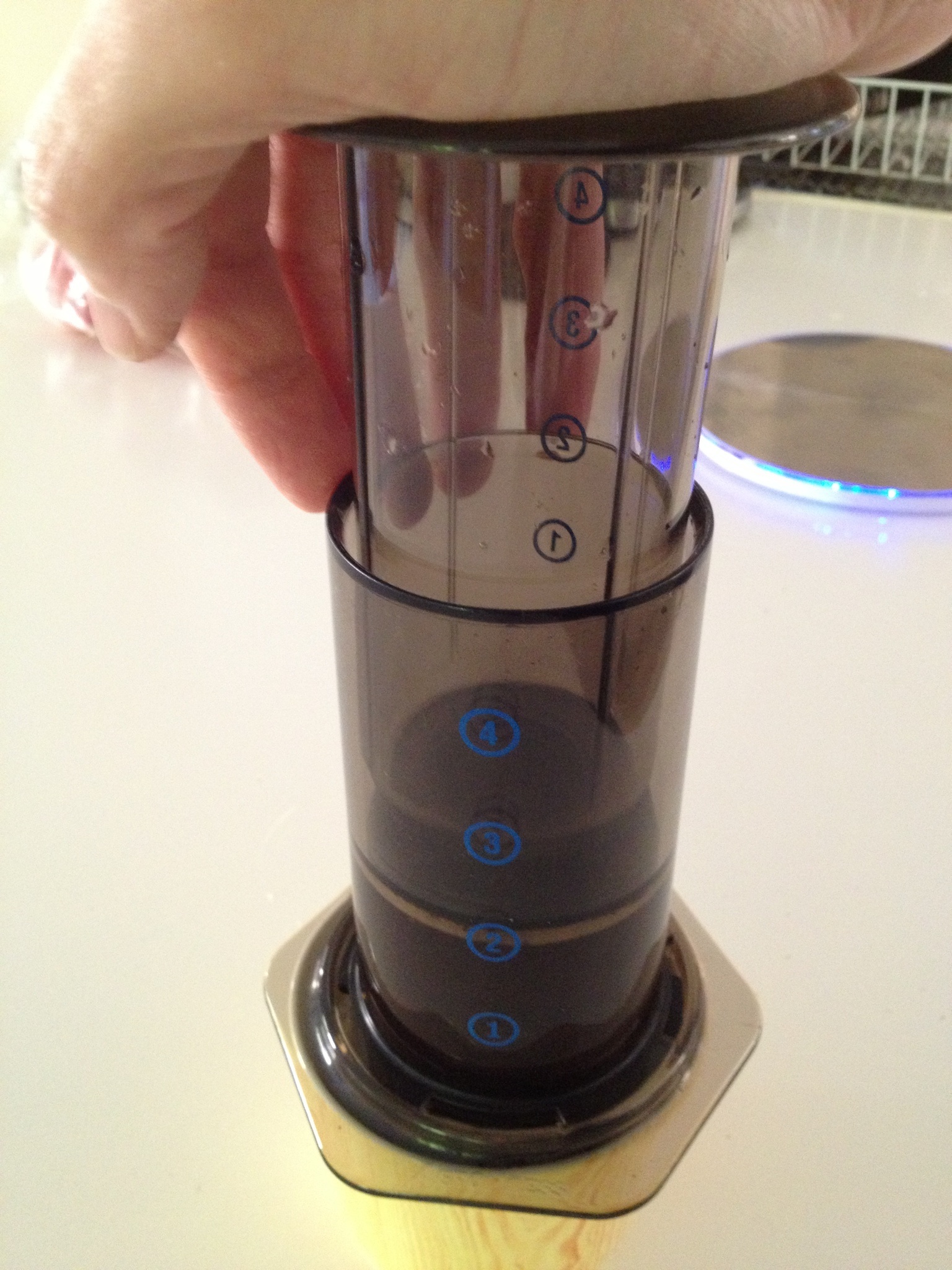
Aeropress – There was certainly a contrast between the V60 and Aeropress forms of brewing. At times there was quite a lolly-like taste quality similar to a toffee apple, with a thicker mouthfeel and longer finish. A great mid-afternoon boost in the office.

Conclusion; Know This
Although in my opinion not quite to the heights of the Guatemalan CoE of the last review, this coffee scored ever so slightly higher in the CoE judging (86.33 vs 85.83 for the Guatemalan). Whether or not this is indicative of my amateurish palate or not, it is pretty safe to say I enjoyed both immensely. This is best demonstrated by the fact that all bar about 100 grams of the 2 kg purchased I consumed myself, with very few beans going to family, which sounds terrible I know, but these were something special (now that I write that, so are my family – more will be shared next time!).

Although now out of stock, be sure to keep an eye out for these varieties next season, they are well worth the money.

Overall Rating: 4/5


  1. I also endeavour to try as many of the different forms of brewing I use on a daily basis with all of the coffees I roast.  ↩