Retro 1951 Tornado Stealth – My Workhorse Pen

As is the case with more than a few owners of the Retro 1951 pen in it’s various forms, mine was picked up after hearing the brand mentioned (often) in the relatively early episodes of the Pen Addict podcast. The enthusiasm with which hosts Brad Dowdy and Myke Hurley talked about these pens was enough to send me searching for them online soon after. The pen in question is now almost two years old.

FullSizeRender 4My choice at the time, a Tornado Stealth model, was ordered from Cyber Space Pens, for at that time I did not have a bookmark folder full of pen shops by the names of Goulet, Jet, Chalet and the like. Although in saying that, I see Cyber Space currently stock the Retro 51 Stealth at a very competitive $US24.00.

I do not recall the exact price I paid at the time, however it was essentially half the cost of purchasing locally through one of the brick and mortar stores in town. I find this both incredibly convenient and somewhat saddening at the same time, given I enjoy nothing better than stopping by and supporting one of the local pen stores, however it becomes increasingly difficult when the cost is often one and a half to two times what can be found online.

Look and Feel

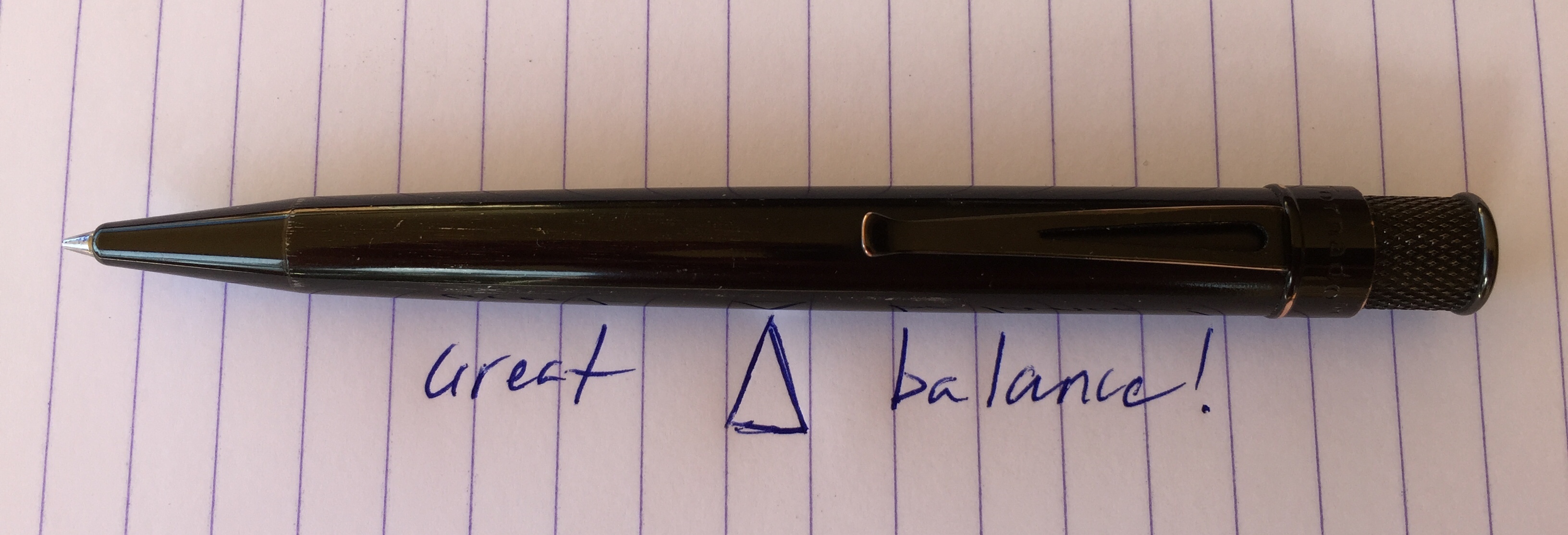
Overall I would say I am fairly conservative in my pen barrel colour choices, so of course I was drawn to the Tornado Stealth model, a sleek, all black, mysterious looking pen. The smooth glossy finish is a joy to both look at and hold.

Now, as the title of this post and some of the images suggest, it has been somewhat of a workhorse pen over the past 18 plus months or so, and developed some nice brass looking highlights on some of the edges, given most of this use occurred prior to the relative luxury it now enjoys in a Nock. Co Sassafras pen case.

FullSizeRender 6

The band with the “Tornado by Retro 1951” branding adjacent to the clip, the clip itself, some of the knurling on the knock twist mechanism, and parts of the barrel have all worn, not quite to the Kaweco AL Sport washed look, however heading that way. That said, I couldn’t be happier. My pens are for using, with a little care, but heavily. They are some of the tools I enjoy using the most, and if that shows, all the better.

FullSizeRender 5FullSizeRender 3

FullSizeRender 7Apart from the slowly evolving outer finish, probably what I like most about this pen is the overall size and weight distribution. For my writing style, it has perfect balance, with the length of 13cm a perfect size for my hand. While the weight is on the heavy side at 28g, the stature and weight distribution ensure this pen is a joy to hold and use, either for a few notes or longer writing sessions. Although my Lamy Safari Rollerball is a light 18.5g, I do prefer the Retro 51 out of the two.

Although the barrel is a smooth glossy finish, I have never had any grip problems, and my preference for a mild taper towards the tip is well catered for by the Retro 51 shape. At the other end of the pen, the knurling on the twist mechanism provides a nice texture, and the knock mechanism itself is one of the most solid you will encounter.

Performance

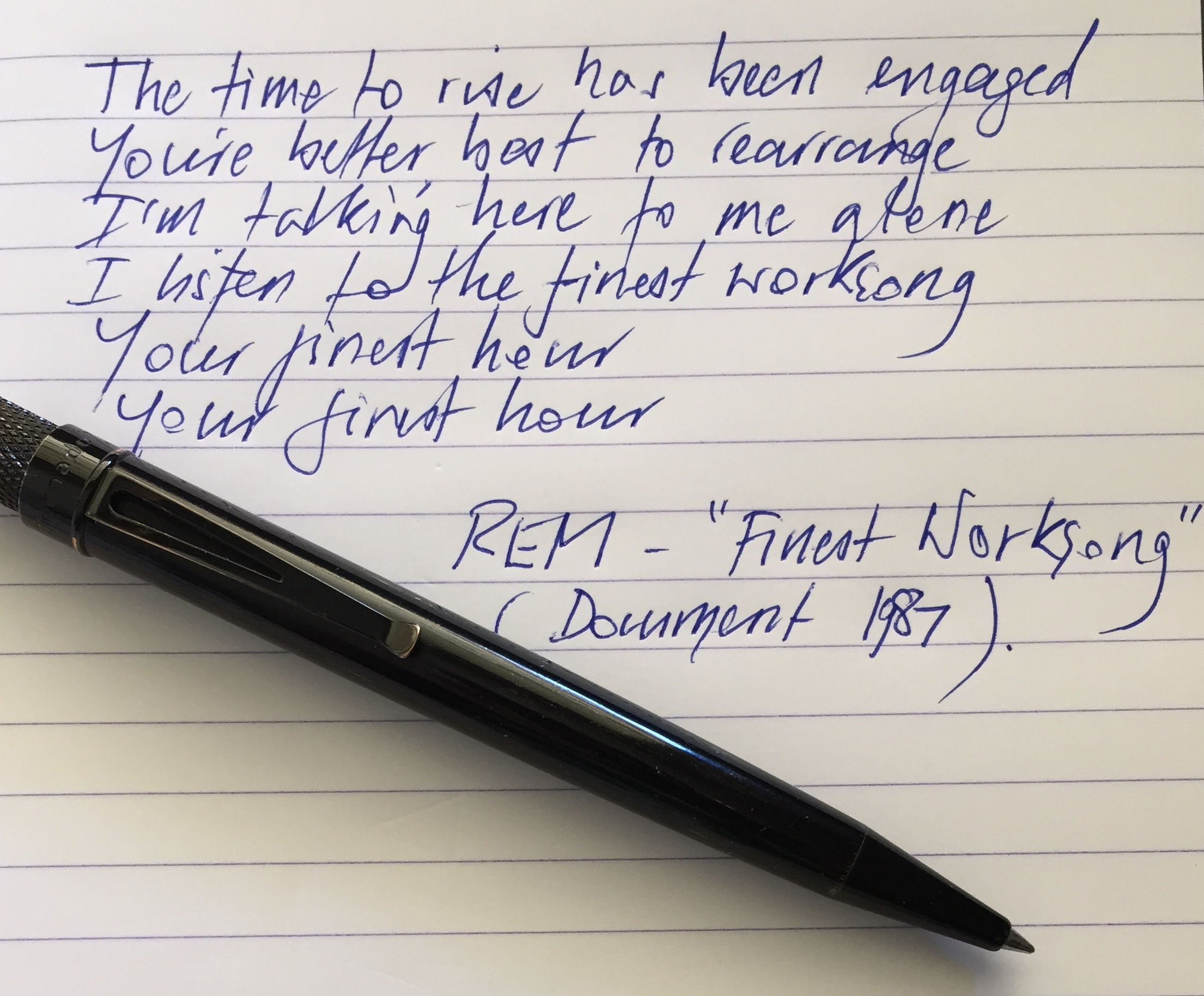
Once again, you probably need to go no further than the Pen Addict Podcast to hear mention of the Retro 51 and/or Schmidt P8126 refills as being one of, if not the best liquid ink or rollerball refill going around – and I’d have to agree. I am currently using the standard Retro 51 branded refill in the pen, and as you can see from the writing samples, the line could not be smoother, broader, or more vibrant.

FullSizeRender 8

The only time I have had the need to swap out the liquid ink refill was in recent weeks when I decided to try out the Field Notes Expedition edition, and needed an appropriate tip for the indestructible Yupo paper of that particular notebook. In this instance, a minor trim of a Uni Jetstream ballpoint allowed it to fit in nicely, which took me through to the and of the Expedition. Mind you, once the last page was written, out came the Jetstream and back in went the Retro 51 refill to an “ah…that’s better” moment.

The majority of use this pen sees involves day-to-day writing at my office job, which is often intermittent signatures, notes, marking up document revisions, or comments/feedback on team members work. I do not have cause (sadly) in a “paperless” office for extended periods of writing, and when I do, I tend to seek out a fountain pen from my desk drawer, though on occasion, will continue with the Retro 51 which does not disappoint.

Conclusion

Thinking back, when I first started searching for this pen based on a podcast recommendation (granted – not just any podcast), I had a nagging feeling in the back of my mind I would not necessarily like it. You know the scenario, something is spoken of so highly, upon finally obtaining the item in question, the expectation and excitement exceeds the experience and performance of the real thing. Definitely not the case here – the Retro 1951 Tornado Stealth is a great pen, has a great refill, and serves equally well as an everyday “workhorse” or as a writing instrument of great pleasure.

I really have no excuse not to add to my collection of these great pens – though I may have a hard time choosing colours. Perhaps a Retro 51 “Unexposed” release may absolve me of making that decision.

The little black cup

IMG_2970My niece is currently smack bang in the middle of her final exams for the NSW Higher School Certificate (HSC). Given her academic prowess to date, I expect she will do quite well.

It is now 25 years since I completed mine, and graduating in the class of 1989 from my high school. Whilst a little nostalgia is not lost on me, I am always amused by the kinds of triggers which remind of past events or stages in my life. In this case, surprisingly, it was not my niece and her exams, rather, noticing a black coffee cup residing in the back of the cupboard.

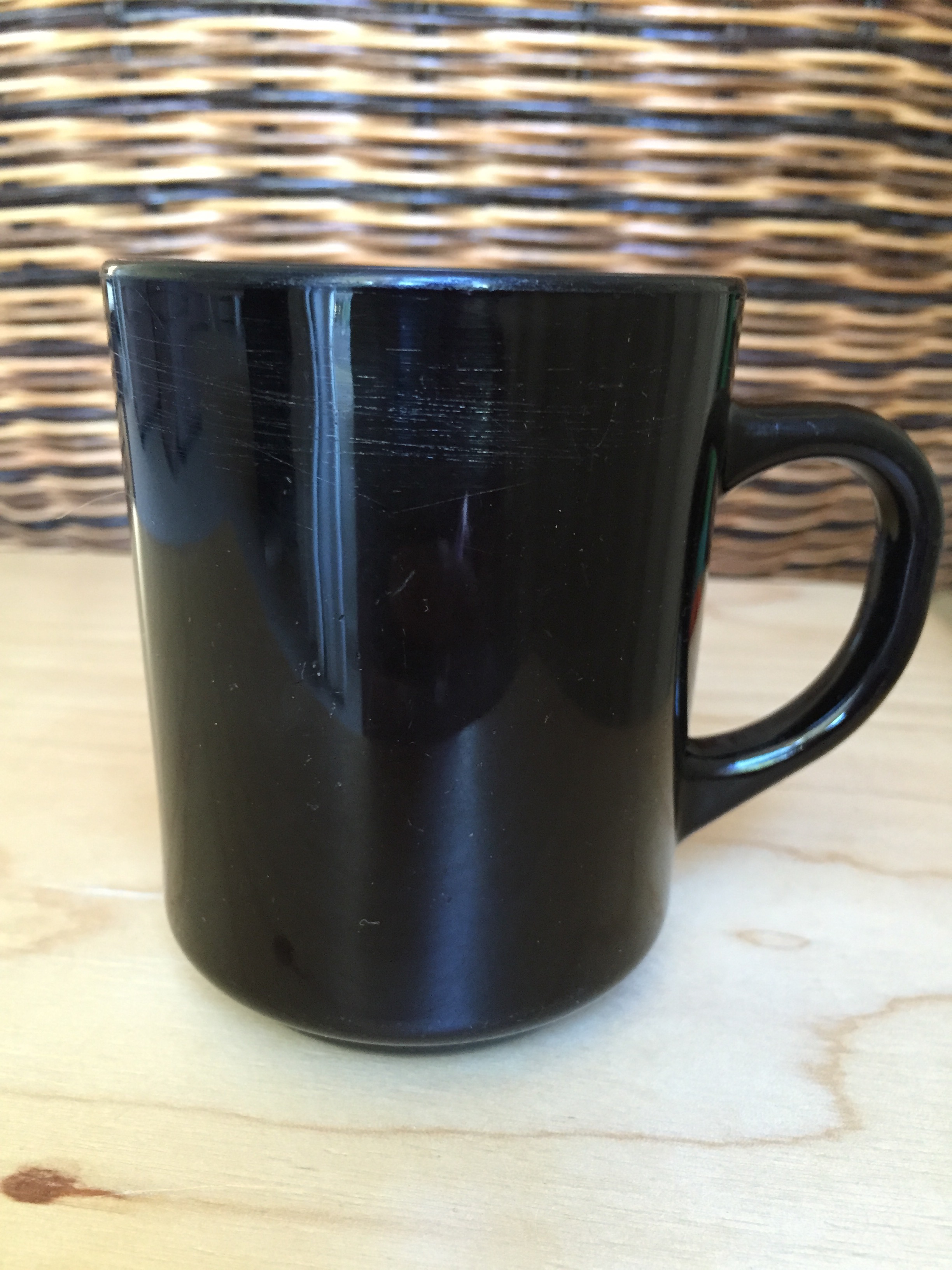
The cup you see, was given to me by my sister, with the aim of helping fuel the study sessions for my own HSC. The cup itself, meaning no disrespect to the item, nor the gift giver, is simply a plain, black, nondescript cup manufactured by Arcoroc . It is fairly small, light, and well…just black. At 8oz or 250ml in capacity, it is – 1 cup.

Although the cupboard is full of varying cups, glasses and mugs of all shapes, sizes, designs and colours – none mean as much as the black cup in question. Why so?

As you have no doubt worked out yourself, this cup is now 25 years old, and save for a few scratches is pretty much as good as the day I received it. It has been with me through my own HSC, eight years of University yielding two Degrees, and a further 17 years of employment. The cup a constant companion throughout, having only been relegated to the cupboard about 18 months ago with the purchase of my AeroPress for coffee brewing at work. Unfortunately the filter cap of the AeroPress is a little too big to fit on top of the cup, necessitating the need for a replacement.

The funny thing is, only now having realised the vintage of this cup, does it now make me a little nervous about possibly breaking it. Prior to this, it had been thrown in and out of work bags, office re-location boxes and office drawers. I do recall it also being dropped quite a few times, however it remains in one piece.

The significance of this cup now?

In many ways a reminder that where I am now is the sum of everything up to this point. Most of which I owe to those who set me on this path. Those who supported, guided, and gave me either everything I needed or the means to acquire it myself. It is not a priceless family heirloom, holding far more value to me than that.

We proceed through life not merely for ourselves, but for, and because of the “us”. The family we began with, and the families we ourselves create. The gift of this cup came at a time when I was about to leave a small town home and move to a city. A time where my day-to-day life would change substantially. To say this was an “adjustment” is probably somewhat of an understatement.

During times like those, the constants and familiarities are reassuring, and provide a little reminder of the “why”, along with that little push of support to help with the “how”, and you keep moving forward.

In these times, that little black cup is a reminder of those times, and because of those times I can now sit back and smile. “We” did it.

Upon moving out of this house, neither of my children may wish to inherit the little black cup, but what it contains will travel with them far and wide wherever they go.

To my niece, best of luck in the rest of your exams.

Wiser Web Wednesday

Wiser Web Wednesday – a regular link to posts of interest from around the web by those far wiser than myself:

Finer Things in Tech
Clips is a fantastic app which takes full advantage of the new iOS Extensions to assist with better clipboard management. It also contains a feature to build your own templates which make creating posts such as, well… Wiser Web Wednesday style links a far easier and more efficient proposition.
A summary and example from David Chartier:
How to copy a selection + page title + URL all at once with Clips on iOS

Five Senses Coffee

At Five Senses, we look to use all our coffee between six and nine months after processing and drying and if that needs to be further teased out, I would say that we’re not actually chasing ‘seasonality’ as such. It is perhaps more helpfully defined as seasonal mindfulness — and we’re ever mindful of both the seasons and the resulting quality in the cup.

An outline of the seasonal nature of speciality coffee, highlighting the thoughts and practices of Five Senses Coffee. The post also contains a link to a downloadable PDF of the Five Senses Coffee harvest cycle:
Seasonal Coffee and Five Senses

Coffee Contrarian
As is often the case, the comments can be just as entertaining as the original post on many a blog, and this is no exception. This article (based on a presentation from the SCAA symposium) discusses the utilisation of technology in measuring and defining certain aspects of coffee, however also takes a dig at certain segments of the industry:

Sadly I doubt this talk will be viewed by those who most need to see it: specialty coffee folks who think that having a “passion” for quality, or over-paying for small lots of green coffee from farms you’ve visited, has something to do with actual quality, when it does not.

As the fairly robust debate in the comments demonstrates, not all agree, however admittedly much discussion again centres around the oft debated “overly acidic” espresso:
The Science of Crema at Nestlé

Gourmet Pens
A great article on cleaning those fountain pens, which to me, highlights two things. Firstly, beginners should not be afraid of owning and maintaining fountain pens, and further, those of us that do, really have no excuse not to keep them clean:
The Basics: Cleaning a Fountain Pen With a Converter

The Pen Addict
Having used many a Parker ballpoint and rollerball throughout my school and university years, I do enjoy reading reviews from those with much broader experience than myself. Would I ever buy another? With so many other brands out there I intend to explore, perhaps not, however I will always have fond memories of my early pen days:
Parker IM Premium Fountain Pen Review

The Conversation
With my kids growing at an alarming rate, thoughts are beginning to turn to University options, and despite the title, this article on The Conversation does provide more realistic context to the findings of the Grattan Instutute. Unsurprisingly, differences in earnings relate more to the course studied than the University itself:

The study suggests that students should choose their field of interest and ability first, and their institution second.

Graduates from prestigious universities earn more over their lifetime

Genetics – coffee’s saviour?

Coffee. Black coffee.

Could there really be anything more natural? Lacking additives, chemicals or other compounds, save for those perhaps used in managing pests and/or disease when growing crops on the many farms around the world.

A seed grown; a crop harvested; the fruit processed; the ‘bean’ roasted; the coffee brewed. Ground coffee and hot water. The extent of any additions? Perhaps milk in espresso based drinks.

Much of the green coffee I buy is organic – some certified, some not. I am generally happy in the quality, traceability and again, for want of a better word, “purity” of the coffee I buy, roast and brew.

Science typically plays a significant role in large-scale agriculture, and the idyllic view (or misconception) of the small-scale coffee farmer producing the crop for my humble brew perhaps requires re-thinking.

Saving Coffee, an article published in the October 2014 edition of Scientific American (paywall), either carries a sensationalistic title, or perhaps is legitimate cause for concern:

Scientists are now hurrying to introduce helpful new genes into the crop through crossbreeding methods. They are mining gene banks and wild plants for as wide a variety of genes as they can find to fortify the crop against looming trouble.

What exactly is the hurry? Why are men in white coats scurrying about the lab to save coffee from impending doom?

Saving coffee?

Firstly, the above article, upon which this post is based, is but one viewpoint on some of the issues facing the future of coffee. It is, however, worth highlighting for anyone with more than a passing interest in the industry.

Further, it is not my intention here to debate the merits of organic and non-organic farming, nor, more specifically related to the topic at hand, the benefit or evil that may exist within genetic modification techniques in agriculture.

My interest in this type of article runs more towards gaining a better understanding of the coffee industry as a whole, beyond simply which beans I buy, roast and consume next. Also, reading about the next unique brewer, or the coolest new cafe or roastery in town does interest me, however these are merely the superficial facade of something that runs much deeper, and affects the livelihoods of many people far less fortunate than you or me.

The subject article by Hillary Rosner outlines four main threats to the coffee plant, and therefore the industry itself:

  • Disease (for example the recent coffee rust or roya epidemic in Central America)
  • Insects (the coffee cherry borer, whose range is now increasing due to climate change)
  • Deforestation (mainly affecting wild coffee trees and is reducing the possible genetic diversity which may be critical to fortify cultivated crops)
  • Climate change (both excessive rainfall in some regions and drought in others affecting global yield)

Coffee’s susceptibility

Although the impression of the coffee industry is often one of robust invincibility, those coffee producing countries through the “bean belt” which exists around the world between the tropics of Capricorn and Cancer, appear very much in the grip of an “eggs in one basket” susceptibility.

As Scientific American describes:

Coffee crops around the world are incredibly alike genetically. This homogeneity leaves cultivated coffee particularly susceptible to threats from diseases, pests, and shifts in temperature and rainfall.

It is this lack of genetic diversity which poses the greatest threat to the coffee industry. With almost all of the world’s cultivated coffee originating from a small number of plants in the birthplace of coffee – Ethiopia, there is an inherent lack of resilience in many of the crops grown around the world to disease and/or climate inconsistency or progressive change.

Learning more about diversity comes through genetic research, however identifying strains currently known, will of course do nothing to improve the diversity which will ultimate be coffee’s saviour. Unfortunately, where the real diversity exists – in the wild, up to 70% of plants are already endangered, mostly due to clearing of forests.

Time it would seem, is of the essence.

The way forward

Clearly, there is much to be done to ensure coffee’s long term future. Should the situation worsen, it may significantly influence not only the price of a cup for the average customer, but the very existence of some of our favourite single origin coffees.

Will the increased involvement of science in any way impact on what myself and many others consider to be so “natural”? Perhaps. Though when looked at objectively, it appears to be a necessity for at least the health of, if not the very survival, of such an important industry.

Whether or not researchers are able to harness the diversity they are seeking, and “develop a plant that has the flavor of C. arabica and the temperament and yield of C. canephora” (robusta) remains to be seen. Whether they will be able to overcome other barriers, such as the Ethiopian government’s refusal to grant access to a large collection of unique coffee plants, or the fact that coffee seeds cannot survive to be studied, rather, must either be grown or cryopreserved.

We should therefore be thankful for organisations leading the charge in this research, for example those at World Coffee Research, and the agricultural university CATIE in Costa Rica, with it’s 10,000 strong arabica plantation providing a “living gene bank” for use in research.

Final thoughts

Genetic modification of crops for human consumption can be a very emotional topic, and one I have traditionally observed from a passive standpoint. Although that is unlikely to change, perhaps when the crop involved is one I am quite passionate about, I should take a little more notice – and most likely will.

The final word should belong to Ric Rhineheart, executive director of the Speciality Coffee Association of America, as quoted in the article:

If we don’t start today, every day that we wait is more time. And we could be facing an existential threat.

Also on scientificamerican.com:
Coffee Crisis Spurs Hunt for Helpful Genes (Slide Show)

Wiser Web Wednesday

Wiser Web Wednesday – a regular link to posts of interest from around the web by those far wiser than myself:

Modern Stationer
Some interesting thoughts here on what Doug at Modern Stationer considers a pen to be – to him. All of which I would wholeheartedly agree with. In addition? To me it is a feeling – the weight of the pen in your hand; the ridges through the grip section; the feedback of the nib (or tip) on the paper. Something decidedly more tactile than a keyboard or touchscreen. What is a pen to you?:
What is a pen?

The Guardian
This article commences with the phrase “stationery may not be everyone’s cup of tea”. I put to you it is many more people’s “cup of tea” than the author might imagine. An article from The Guardian on some “interesting, boring people” – supposedly. Stationery boring? I think not – or perhaps that makes me boring. Though as the article points out:

These days, an audience and a platform can be found for even the most niche interests, as people demonstrate that nothing is truly boring – not if you look at it closely enough.

From stationery fiends to hand dryer enthusiasts… who are you calling boring?

The Pen Addict
A Zebra is not a Zebra, or so it would seem. According to The Pen Addict himself, the Zebra Sarasa Push Clip is the better of the Sarasa models. Fair warning prior to my next Jet Pens order:
Zebra Sarasa Push Clip Gel Ink Pen Red Orange Review

Hotel Club
Included in this interview series on coffee in Australia, the guys from Brisbane’s Bean Brewding blog give an account of their coffee tours, one of which I have recently experienced myself. The tours are a great way to visit some quality coffee establishments, as well as learning a little more about the various stages of processing and preparation fist hand from those who do it day in, day out:
An Interview with Australia’s Coffee Experts

From the Pen Cup
First things first – surely there is nothing more inviting to a scanning reader than a post tagged with Idiot! among the usual pen related tags. Thankfully (and unsurprisingly) though, I can confirm after clicking on said tag, this is the one and only post within it. Mary thus maintains the mantle of an intelligent pen blogger. We all have our moments Mary, after all. By the way, there are some fantastic Akkerman ink bottles in here too (just!):
The Ink Debacle: A Cautionary Tale