Coffee Pods, the environment, and fiddling

Black HarioFlipping away through my cover stories in Flipboard recently, I came across an article which appeared on Quartz, titled Empire of the Pods: The world’s growing love affair with the most wasteful form of coffee there is.

It comes as no surprise the article lays a pile of landfill squarely at the feet of the “coffee pod” industry, for it’s wasteful cast off miniature plastic cups (commonly known as K-cups, after the Keurig company which popularised this form of brewing in the US) expelled from such machines all for the sake of one cup of coffee. Although not a new sentiment, the article goes on to note the staggering rise in popularity of the single use pod machines around the world, concluding with the following from Murray Carpenter’s book Caffeinated:

… the K-cups discarded in 2011 would have encircled the globe more than six times, and in 2013, more than 10 times

Then, not long after, an article with a similar sentiment and an interesting twist from the Coffee Contrarian, Kevin Knox, including this:

More than one green coffee importer (don’t worry, you shall remain nameless) privately refers to Green Mountain Coffee (now renamed Keurig Green Mountain) as “Greenwash Mountain,” and that’s certainly a succinct and accurate description of the company’s long-standing marketing strategy, using its sizable Fair Trade and organic volume to deflect attention from its actual main business: selling commercial coffee, much of it artificially flavored, in ecologically disastrous K Cups, to convenience stores and the like.

Knox also makes reference to this article on the topic from Mother Jones.

Grounds for outrage? Perhaps, however climbing up and looking over the large pile of cast off pods, why the increase around the world?

Image courtesy Mother Jones

Image: Mother Jones

Consumer demand, convenience and willingness (or lack thereof) to hone their coffee making skills beyond pod in-brew-pod out. A judgement on those using such machines? Absolutely not. For every article lamenting the environmental negatives of pod machines, there are 20 extolling the virtues of the specialty coffee scene, the third wave explosion, the palate development and demands of the consumer. The discerning consumers mantra: “We know good coffee, we know where to get it, and we’ll let you know if you’re not up to scratch”. What else will we as consumers do? Seek out a “cafe level” coffee experience at home with everything from – “wait…what? That is a lot of clean up, I’ll just get a pod machine and be done with it”.
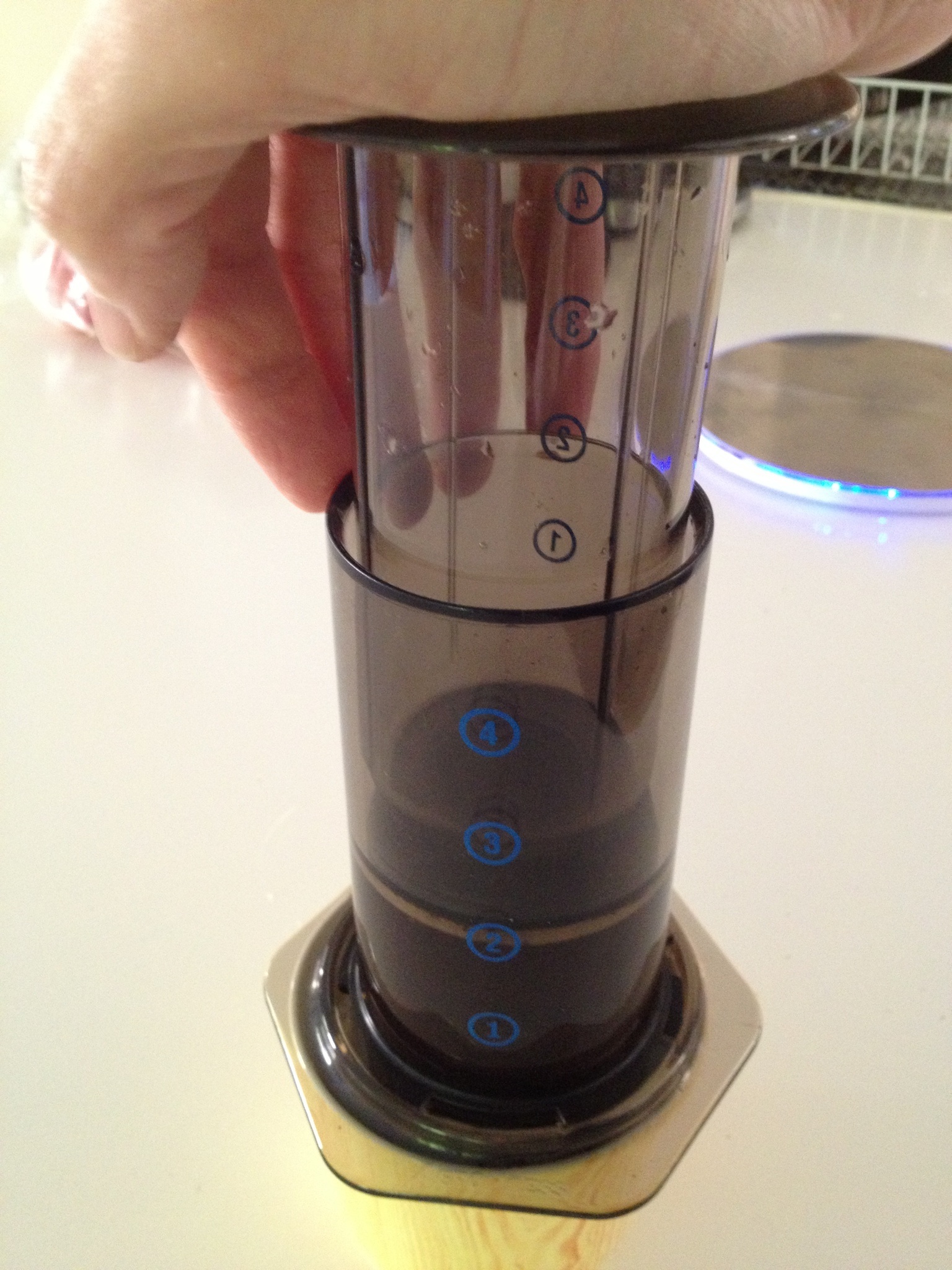
AeropressIncidentally, there are four people within arms reach of me at the office who use Nespresso pod machines, and a family member uses a slightly cheaper clone – without question the popularity of these machines has definitely risen, and will continue to do so given the (large) segment of the home coffee market they cater for.

Seen by family, friends and co-workers as a bit of a coffee nerd, I am often asked about my thoughts on whether pod machines are a worthwhile purchase, with the expectation I will frown on such machines. My answer is usually along the lines of: they are great due to their simplicity – if you want a machine that will make the coffee for you and involve minimal preparation and clean up. Not everyone wants to grind and then brew (whether through a machine or manually) their own coffee, and frankly most don’t. One of the simplest forms of brewing I use at the office is my Aeropress, which often attracts comments in the order of “gee that looks complicated”. In reality, a plastic tube, a piece of paper, coffee and water – to me so simple. To others, a whole lot of messing around.

Such practices are summed up by Marco Arment in a great post which provides some perspective on the obsession with pod machines:

We’re the ones who obsess over every little detail of brewing technique as if they matter much more than they really do, making good coffee ever more alienating and confusing to casual coffee drinkers who don’t have time to study and fuss over it as much as we do.

The post goes on to list many ways these obsessive brewing techniques may also impact the environment in certain ways, not to mention the added time taken to brew with such methods.

In addition, the comments in the article linked to above on the Coffee Contrarian are worth reading, which include a dig at independent roasters, possibly those who have the most to gain from an environmentally based rebellion against the Nestlé and Green Mountain behemoths:

Passionate small roasters would like to believe that being smaller scale makes for higher quality, but all it really guarantees is higher overhead, higher green coffee costs and other structural inefficiencies that the consumer ultimately pays for.

Interesting times ahead no doubt.

My thoughts personally? The environmental impact should always be a consideration in whatever we do, however I can’t help but think those who judge these pod machines from a supposed position of “superiority” regarding quality may be missing the point. Do I personally think the coffee I make is superior to that emanating from the spout of a machine after water has run through grounds in a plastic pod? Yes I do.

The reason I think this? Well, for one, the amount of time I spend selecting green beans, personally roasting, resting and correctly storing them. Brewing through many different methods (many of which are a little fiddly) at just the right time to maximise freshness and ensure the flavours are at their peak. When visiting coffee shops and cafés, I seek out those with good reputations amongst the coffee industry, perhaps embracing the so-called “third wave” brewing techniques and approaches. Does all of this make me biased? Absolutely, which is where perhaps knowing the effort I put into these factors makes me believe this must be better – right.

And whilst I do not believe the following to be true – What if it isn’t better? What if it is all in my head and I simply want it to be better, so my already biased beliefs make it taste better? After all, what do both the pod user and myself end up with? A cup of coffee – and I bet the pod user was enjoying theirs long before I had finished making mine.


What’s Brewing – El Salvador Miravalle CoE

El Salvador CoEPurchased in the same Ministry Grounds run-out sale of Cup of Excellence offerings as the previously reviewed Guatemalan CoE, this coffee certainly did not disappoint. You may remember the Guatemalan took a little “wearing in” before I truly discovered its magic – well this El Salvador was a more straight down the line brew.

Let’s see how it tasted.

What
El Salvador Miravalle CoE Lot 12 2013
– City: Santa Ana
– Region: Santa Ana
– Variety: Bourbon, Pacas, Kenya
– Processing: Washed
– Lot Size: 36 boxes
– Altitude: 1,650 metres above sea level
– Farmer: Doctor Jaime Ernesto Riera Menendez
– International jury score: 86.33

Finca Miravalle is located on the Ilamatec Mountain Range on the fertile foothills of El Salvador’s Santa Ana volcano at an average altitude of 1,650 metres above sea level. Due to it’s high altitude Miravalle’s coffee berries ripen slowly, which allows the sweetness and complexity to develop in the cup.

Information courtesy Ministry Grounds

How
Latte, V60 Pour over, Aeropress

Assessment
Latte – although many would consider your CoE’s to be best appreciated “uncontaminated” by milk, this coffee was certainly very enjoyable in my morning latte[1]. The flavours were able to cut through the milk well enough to provide a good platform for the citrus notes, whilst having enough body to create a well-rounded drink.

V60 – Similar to the Guatemalan, a definite stand out method of brewing. Fantastic balance between the acidity and body, with increasing sweetness as the drink progressively cooled. When consumed as a filter, the purity of the citrus and lime flavours really shine through. Immensely enjoyable, and I often found myself brewing enough for two cups rather than my usual one with the V60 (though limiting myself to one at any given time is an effort in itself – regardless of the variety)

Aeropress – There was certainly a contrast between the V60 and Aeropress forms of brewing. At times there was quite a lolly-like taste quality similar to a toffee apple, with a thicker mouthfeel and longer finish. A great mid-afternoon boost in the office.

Conclusion; Know This
Although in my opinion not quite to the heights of the Guatemalan CoE of the last review, this coffee scored ever so slightly higher in the CoE judging (86.33 vs 85.83 for the Guatemalan). Whether or not this is indicative of my amateurish palate or not, it is pretty safe to say I enjoyed both immensely. This is best demonstrated by the fact that all bar about 100 grams of the 2 kg purchased I consumed myself, with very few beans going to family, which sounds terrible I know, but these were something special (now that I write that, so are my family – more will be shared next time!).

Although now out of stock, be sure to keep an eye out for these varieties next season, they are well worth the money.

Overall Rating: 4/5


  1. I also endeavour to try as many of the different forms of brewing I use on a daily basis with all of the coffees I roast.  ↩

What’s Brewing – Guatemala Finca la Maravilla CoE

Although now out of stock at Ministry Grounds, I was pleased to get my hands on one of the last remaining bags of this particular coffee. Although I had sampled similar Cup of Excellence offerings at various brew bars around town, I had yet to roast my own CoE. In retrospect, though not a conscious decision, I suspect the slightly higher green price made me a little hesitant to throw it in my home roaster.

Perhaps this suspicion was warranted, as it was not until the second roast batch a couple of weeks after the first did I feel I did the coffee justice. The evolution of my roasting to a lighter roast with more gentle heat increment seemed to better suit the flavour profile of this bean in the cup. Variations in roast batches aside, in the end things turned out pretty well – let’s see how it tasted.

IMG_1821What
Guatemala La Maravilla CoE Lot 17 2013
– City / Region: La Libertad, Huehuetenango
– Altitude: 1,650–1,800 metres above sea level
– Variety: Bourbon, Caturra
– Processing: Fully Washed and dried on patio
– Farmer: Mauricio Rosales Vasquez
– Farm size: 24.68 hectares
– Cup of Excellence score: 85.83
– Lot size: 42 cartons

The harvest season at La Maravilla is from January to April. For quality control purposes they monitor traceability from handpicking right through until final delivery, and cup individual day lots. The coffee is processed by traditional wet mill and is sun-dried on patios,and then stored in a wood warehouse.

Information courtesy Ministry Grounds Coffee

How
Latte, V60 Pour over, Aeropress

Assessment
Latte – When combined with milk, the resulting drink was a creamy, buttery, medium bodied, malt apple concoction. Probably not the most refined description, however those were the words jotted down in my Field Notes tasting record at the time. Overall, quite an enjoyable milk based drink first thing in the morning. Due to slight daily variations in my espresso based brewing, some days I end up with all of these flavours standing proudly – other days not so, and therefore was little hit and miss for me (my technique variation the culprit here I’m sure).

V60 – Probably the pick of the bunch as far as the brew methods I experimented with. I note many recent What’s Brewing posts lack an espresso tasting component. As mentioned in another post which seems like an eternity ago, I consume these coffees as espresso somewhat less than I used to, preferring longer form brewing methods a little more these days. Back to the V60 and how this Guatemalan fares through the filter.

There was something about this CoE that became apparent with repeated brews through the V60. To my fairly varied yet still amateur palate, the complexities of the flavour profile took a little while to become apparent to me. To explain a little, from the very first cup this was a very, very enjoyable coffee, however not the instantaneous – oh boy! moment that often occurs with great tasting brews. My initial thoughts were that I was missing something – and couldn’t quite describe to myself what I was really tasting. Until one day sitting drinking yet another cup, it was suddenly – there it is.

A feature of my still developing coffee palate? Just a better day? A better roast? A better brew technique? I certainly have no idea which one is responsible – perhaps all of the above. Whatever the key factor was, it certainly had me thinking – I still have a lot to learn about this coffee roasting and brewing game.

For some reason the subtleties suddenly became more obvious, with a bright citrus acidity, cherry and apple flavours combining to form almost a wine like flavour, with a hint of bergamot as the brew cooled. Similar flavours, though infinitely more refined than the dump and bash of the Aeropress (see below). The flavours just seemed to compliment each other much better, and although more subtle, with a little thought were probably more apparent all along than I had realised (characteristics of a Cup of Excellence perhaps, though more likely related to my position a very small way along a considerable learning curve).

Aeropress – Given this is my mid-afternoon office brew, I prefer not to be fiddling about too much and prefer to get in and out of the communal kitchen as efficiently as possible.

As a result, I had shied away from the inverted brew method (fearing disasters and incurring the wrath of those perhaps annoyed by a coffee snob in their midst), until learning the following method in a Brew Class at the Cup Coffee Roastery in December last year. The entire process is mess free and pretty quick, at 1:15 total time:

  • 12–14g coffee (slightly finer grind than usual); 200g water
  • Aeropress inverted
  • Shot of chilled water, then hot to fill chamber (swirling as fill)^
  • Add rinsed filter paper and cap
  • gently squeeze out air
  • flip Aeropress onto cup
  • 30 second press time
  • enjoy the brew after minimal clean-up

^ As I am limited to the “always boiling” hot water urn rather than a kettle, the shot of chilled, filtered water cools the overall brew a little and avoids dumping boiling water directly onto the ground coffee.

The result is a refreshing bright cup, with a hint of apple, along with a citrus orange acidity, and also seems a little herby. Somewhere in there was also a hint of cherry jam (hey! – that’s what my notes said). A bright clean finish made for a very enjoyable brew.

Conclusion; Know This
Despite my initial roast batch not reaching the heights of the second go around with this coffee, as you may have gathered, this has perhaps been one of my favourite varieties so far. Its one thing to taste a coffee and note down a few flavours and tastes that show through, however entirely another to suddenly sense how they all fit together. Eloquent is not a word I would use in describing how well I have written about this particular coffee above, however have given it my best shot.

In summary, let’s just say it was like one of those albums that upon first listen you think is OK, then by the fourth or fifth run though it becomes one of your all time favourites. Whilst there are many more varieties yet to sample, and this may not end up as one of my all time favourites, it is certainly up there in the mix.

Overall Rating: 4.5/5

What’s Brewing – Keeper’s Blend

Keeper's BlendAlthough we are now well and truly into January and the new year, to complete things from 2013, its time to write the about how my Keeper’s (Christmas) Blend fared in the cup. As I mentioned in a previous post, this blend was given to family members, and for the first time, some friends and work colleagues also, which is another reason this review is being written now – to allow time for some feedback from those who sampled the offering.

As an aside, given he provided inspiration for the naming of the blend, it was nice to see Aussie wicketkeeper Brad Haddin’s form continue at such a high level throughout the Ashes series (particularly as the original roast was undertaken after only two tests). In retrospect, the only thing better than this blend was the Ashes result itself!

Thankfully, the feedback I did receive about the blend was overwhelmingly positive, however to allow for the politeness of those who sampled, it would be best to have a stab at objectively assessing the blend myself.

What – Keeper’s Blend (Christmas Blend)

50% Rwanda Nyarusiza Washed Buf Cafe

  • City: Between Butare and Cyangugu
  • Region: Nyamagabe district, Southern Province
  • Washing Station: Nyarusiza
  • Altitude: 1,935 metres above sea level
  • Variety: 100% Red Bourbon
  • Processing: Fully washed and sun-dried on African raised beds
  • Owner: Epiphanie Mukashyaka

50% Kenya Karimikui AB

  • Origin: Kenya
  • Altitude: 1700 – 1800mtrs
  • Crop Year: 2013
  • Varietal: SL 28 SL 34

(Information courtesy Ministry Grounds)

How
Latte; Hario V60 Pour over (Hot and Cold Brews); Aeropress; Espresso

Assessment
Latte / Milk course – Originally roasted with filter brewing (sans milk) in mind, I was quite pleased with how well suited the blend was to espresso based milk drinks. A nice buttery mouthfeel was accompanied by enough acidity to cut through the milk and allow the stone fruit and citrus flavours to emerge. Some chocolate undertones also came through when consumed in this form.

V60 – Notwithstanding the above comments, this is where the blend really shined. It seemed the combination of the more robust sweetness of the Nyarusiza and the brighter citrus acidity of the Karimikui was a winner, maintaining an even level of sweetness from immediately post brew right through the cooling process. When brewed over ice it really was something special.

Aeropress – Thankfully, this brewing method was utilised the least, for reasons entirely unrelated to taste. My Aeropress is at the office, meaning most of my enjoyment of the blend occurred during a relaxing holiday period. On returning to work and running the blend through the Aeropress, I was certainly not disappointed. Though not quite as bright as the V60, a similar sweetness profile was evident, with the chocolate undercurrent balancing things out nicely. If I could no longer have an afternoon nap, then this was the next best thing.

Espresso – With an acidity that was like a slap across the face, as an espresso the blend is likely to have benefitted from a little more body, however was immensely enjoyable none the less. The smooth buttery mouthfeel gave this one a bright, lasting (if not intense) finish.

Conclusion; Know This
In view of the fact this blend was distributed to friends and family, I was very pleased to find it worked very well across all forms of brewing. I’d have to say that of all the blends I have created (read, tinkered around with), this one has probably been the pick of the bunch so far.

Overall Rating: 4.5/5

What’s Brewing – El Salvador Finca Suiza

What better way to spend a couple of weeks off over the Christmas break than catching up on a few tasting reviews. Obviously one key review will be the Christmas Blend referred to in a previous post, however there are also a couple of El Salvador varieties yet unwritten as of the current time. My thoughts on one of these appear below, however the other, the Finca Siberia Pacamara went a little long in the roast and ended up significantly darker than planned, so will be reviewed after I have another shot at refining the roast.

The Whack

Spanish built Santa Ana Cathedral

Spanish built Santa Ana Cathedral (Photo credit: Wikipedia)

What
El Salvador Finca Suiza
– City: Santa Ana
– Region: Santa Ana Volcano
– Altitude: 1,650 metres
– Variety: Bourbon
– Processing: Washed / patio dried
– Owner: Juan Francisco Menéndez

How
Latte , V60 Pour over, Aeropress

Assessment
Latte – A creamy, rich, full-bodied flavour is evident when using the Suiza as an espresso base in a milk drink. This one is on the verge of being my pick of those I have roasted so far this year for my morning latte. I highly recommend making this as a 3/4 latte with a double ristretto base.

V60 Pour over – Here there are some great citrus and fruit flavours. Though not quite as bright as some, it is certainly a worthwhile variety to run through the filter. Though an improvement is noticeable as the brew cools, it seemed to peak after a couple of minutes rather than several as I have often found with other origins. I don’t really see this as a negative, for at times I really do enjoy a solid filter offering with good body and reasonable acidity that doesn’t continue to sweeten as it progressively cools.

Aeropress – Probably not quite reaching the level of the V60, though an enjoyable brew in the Aeropress nonetheless. The sweetness was a little lacking, however I certainly cannot complain about a brew of this quality in getting me through an afternoon of spreadsheets.

Conclusion; Know This
Overall I found this particular variety to work well across the three brewing types mentioned above, with the pick being the latte. Sometimes single origins or estate coffees I find to be a bit hit and miss in a milk based drink – certainly not this one. As I indicated above, the Suiza also performed really well in both forms of filter brew, with the V60 shading the Aeropress. This is one variety I will certainly be looking to snap up again in the future.

Overall Rating : 4/5