ChefSteps Coffee Class

I created a ChefSteps login a little while ago, on the assumption I would find some coffee related goodness along the way. This just released offering, the ChefSteps Coffee Class, with world-renowned experts James Hoffmann (former World Barista Champion and founder of Square Mile Coffee) and Ben Kaminsky (US Cup Tasters Champion) looks the business.

For a very reasonable $US14.00, you can avail yourself of:

  • Unlimited Access
  • 12 HD Videos
  • Step-by-step techniques for the best French Press, Chemex, Aeropress, and Cold Brew coffee ever
  • Amazing tricks for smoother coffee
  • 4 recipes for cooking with coffee

Alternatively, you might like to start with the free Espresso Course (12 HD videos).

Either way, get watching – and thereafter – brewing!

Cursive – cursed again?

On the same day last week, two very different points of view on cursive writing appeared in my Twitter timeline. The first, yet another news article suggesting the demise of hand written cursive in schools, and in contrast, a Kickstarter project purporting to have developed a new and more efficient means of teaching the very cursive supposedly on the way out.

You can probably guess on which side of the fence my allegiance was on, however after calming down and scrapping my original plans for a “that’s ridiculous” post here, I came to realise the views were not necessarily diametrically opposed.

The downstroke

The first, and of course, most striking piece to me, was an Australian ABC News story titled Finland scraps cursive writing lessons, sparking discussion over future of handwriting in classrooms. The discussion in question, was of the Australian curriculum, and the future of hand writing which may, or ultimately may not, be taught in Australian classrooms.

For someone who loves pens, and fountain pens in particular, I have mixed feelings about an article such as this. Australia’s board of education was noted to have said:

…learning to type was “more relevant to everyday life”, a skill that Australian experts agreed was a better use of school time.

Before you begin quoting the numerous studies showing the benefits of handwritten note taking in learning, many of the education experts quoted made the distinction between teaching children to write, and teaching children the style of cursive handwriting.

Senior lecturer in English and Literacy Education at the University of Queensland, Dr Eileen Honan agreed that while the Australian curriculum put emphasis on both handwriting and keyboard skills, cursive writing was irrelevant.

Being able to write in beautiful script has got nothing to do with the ability to read and write productively, creatively and intelligently

Thankfully, the conclusion made was for further discussion on the matter in relation to the Australian curriculum, as here in Australia, we were unlikely to “follow Finland’s lead” — well not yet anyway.

The upstroke

The next, and infinitely more positive piece in my timeline was first shared by two pen and stationery bloggers I follow (Doug at Modern Stationer, and Ray at Fountain Pen Quest) — the CursiveLogic Kickstarter project.

Of course after looking at the Kickstarter project page myself, I also instantly shared the link, and began planning my rant post, thinking ”I’ll show you — just try to get rid of cursive”.

As I sat and thought a little more, I realised something like the CursiveLogic programme goes a long way towards solving one of the main issues many of the experts raised as a problem in continuing to teach cursive writing — that of the time spent with students practising the correct formation of letters. Senior lecturer in Language Literacy at the University of Canberra, Dr Misty Adonious:

I just don’t think it’s worthwhile spending school time teaching kids … cursive writing.

In the CursiveLogic programme, we have the makings of a solution. A way of learning cursive writing more efficiently, and therefore much faster than standard methods of instruction, through two key features — letters grouped by shape:

By teaching all of the similar letters together, CursiveLogic captures the natural synergy of the alphabet itself, allowing each letter in the series to reinforce the proper formation of all the others.

and letter strings:

CursiveLogic’s letter strings teach students to connect letters from the first lesson, allowing students to internalize the flow of cursive handwriting even before they have learned all 26 letters.

Both the project page and the CursiveLogic website have further information and the scientific basis behind the programme. I’d also encourage you to watch the inspirational video of Josh, a 23-year-old student with learning disabilities who wanted to learn cursive to be able to sign his name.

My thoughts

If the argument against maintaining cursive in the school curriculum is as much a time based one as it is a relevance one — then let’s teach it faster.

To me, a system or programme such as the one proposed by CursiveLogic which aims to teach cursive in a more efficient way, seems like the perfect starting point for keeping alive such an important aspect of educational development in the classroom.

The assumption here is that the methods and outcomes of the CursiveLogic system are as reported on the project page and website, and I have no reason to believe otherwise. Of course I acknowledge I have not had any experience with the methods of CursiveLogic, nor seen it used first hand.

One other aspect I find interesting in all of this, is that although most agree cursive writing is outdated, children will still be taught to write. If this is the case, and the writing is not cursive — then what will it be? Surely it must be based on some form of script to maintain a standardised curriculum does it not? To date I have found the mention of any alternative to cursive completely absent from the discussion.

I see it like any skill — learn the foundations and deviate with your own style from there. My own handwriting has drifted far from its humble beginnings in primary school, however when attempting to produce some better quality handwriting (say for an invitation or card), the slope, letter formation and overall style certainly reverts closer to the cursive I learnt as a youngster.

I’m hoping that if the handwriting component of the curriculum does change, we do not simply see a generation of children who can perfectly reproduce by hand the stock standard upper case letters we see on a keyboard.

Finally

While this post is clearly too late for Finland – Australia, not so. Although the CursiveLogic project is based in the US, and may not necessarily directly influence any discussion locally, the project creators aims of raising public awareness about a more time efficient means of developing the skill of cursive writing is surely worth supporting.

Head over to the Kickstarter page and consider backing the CursiveLogic project. It is time to reinforce that stake in the ground and ensure the passage of certain skills through the generations continues.

A final point from the ABC News:

We actually don’t use fountain pens and ink anymore, so maybe we should think differently about where we put our attention now.

Says who?
Wiser Web Wednesday

Wiser Web Wednesday – a regular link to posts of interest from around the web by those far wiser than myself:

Three Staples
A great comparison post on three white Colors Editions of Field Notes notebooks (with a couple of white special editions thrown in the mix as well). I found this an interesting post as I do not own any of the editions featured here. Also worth a look for the images alone:
Field Notes Color Comparison: White

Design Observer
Although there are numerous posts around on why things such as books still matter, I’ve not seen some of those listed here. Not the least of which is the “social” function — that is, people can see what we are reading, rather than having to tweet about what we are reading. All in all though, some very compelling reasons for maintaining the physicality of the printed word, including leaflets, cartoons and the like:
Books Matter

Write Analog
Over at Write Analog, Mark has big plans for the site, and I for one am quite excited about them. Interviews, a newsletter, giveaways and more — head on over and sign up, or at least take a look at what’s coming.

Towards the end of the post Mark kindly takes the time to thank some fellow bloggers for their support during the early phases of getting the Write Analog site up and running. A nice touch, and again evidence of the great online pen and paper community. I am not sure what it makes me by linking to a post that I myself am linked in — why self-serving I guess! Or maybe that’s only if I click it – I didn’t — er…promise:
Some Site News & Special Thanks

Matt Gemmell
A nicely set up introduction to this post occurs before the big reveal, so no, I am not about to spill the beans on the exact item in question here. With so much being rolled into one universal gadget these days, every time we do, a little of the polished edges are taken away. This is a great reminder that not only do certain tools stand far better on their own, but also that it is okay to — and we should — still use them.1
Dedicated

On Fountain Pens
As always there are so many great posts to link to for pen reviews it’s difficult to pick just one, or a few at that. Maybelline takes a look at a couple of Namiki’s with contrasting nibs:
Two Namiki Falcon fountain pens

Rolling Stone
Not a new article though an enjoyable read from last October. In particular, King’s views on elitism in reviews:

It was this assumption that if fiction was selling a lot of copies, it was bad. If something is accessible to a lot of people, it’s got to be dumb because most people are dumb. And that’s elitist. I don’t buy it.

Hear, hear. I acknowledge we are all a product of what we consume and learn, with reading a big part of that. I am all for literary classics — but believe me, that high-brow tome in your hands doesn’t automatically make you any better than me.
Stephen King: The Rolling Stone Interview


  1. Footnoted to again hopefully avoid spoiling the piece – reading this post, I could not help but think of Louis Litt from Suits – a show I enjoy very much. Fake model numbers aside, there are times when we’ve all been Litt up.


Bulletproof Coffee – the butter or the beans?

Firstly, let’s be clear, I do not drink, nor have I ever tried Bulletproof Coffee®. Am I ever likely to? Probably not, though who knows, one day I may be curious.

A recent article on Gizmodo debunking the claims made by the inventor of the beverage, The Bulletproof Executive Dave Asprey, highlights the main problem with these types of products. Namely, the dreaded brand lines which aim to monetise what is essentially a simple idea, which in itself may indeed have some merit. Yet another way to make money from the placebo effect1.

Whether blending butter from grass-fed cows and MCT oil into your daily brew has any positive effect on your body or level of functioning is another matter entirely (and I tend to fall on the side that it probably does). The issue I have here is the contention that somehow, the processing methods used in standard coffee production are inferior to those used to create the “Upgraded®” beans in the revenue-producing component of the Bulletproof version. As you will see from the video embedded in the Gizmodo article, Asprey so helpfully advises:

The Bulletproof process makes beans without the toxins that rob performance from you every single time you drink most coffee.

No, of course we don’t hear what the toxins are, how your performance is robbed, or what performance we are talking about. There are also numerous references to cognitive function, mental and physical performance, lab testing, and the curious statement that the Bulletproof beans will give you a different “mental feeling”.

Are we talking thoughts? Feelings? Performance again? I’m not sure – and this is most likely the aim. Don’t think about it too much viewers, just take my word for it, click “buy” and you will never look back.

Those who do begin their Bulletproof journey with Asprey’s beans will unfortunately never know they could achieve exactly the same outcome and pay half the price using well sourced specialty roasted coffee. Sure, they might feel better – but is it placebo, the butter or the “Upgraded®” beans? If you need me to answer that then stop reading now.

From the Bulletproof website:

I learned about the power of butter at 18,000 feet of elevation near Mt. Kailash in Tibet. I staggered into a guest house from the -10 degree weather and was literally rejuvenated by a creamy cup of yak butter tea.

So, is it the butter – or is it the beans? Clearly the Tibetans must have been using “Upgraded®” tea leaves or this wouldn’t work would it? Yet it did according to Asprey. Now I’m confused. So I don’t have to buy the special “Upgraded®” beans, because it was the butter in the tea. What’s that? I do? Oh okay then – they’re a bit expensive but if you say so.

For a little more analysis, check out the article on Gizmodo.

The biggest disappointment for me in all of this, and the many products like it, are the completely baseless and unsubstantiated claims which typically accompany a product, dragging down efforts by proponents of certain lifestyle philosophies (think Paleo, as Bulletproof coffee is often associated with this movement), which may genuinely be attempting to build a body of research in support of their claims.

Actually on second thought, the biggest disappointment is that people still put down good money for this. Remember – any positive effects only occur due to the “Upgraded®” beans – use anything else, and you’ll be drinking the same old “performance robbing” demon you always did.

So I guess for those who believe it is all about the beans, need to remember it’s also all about your credit card number.

  1. I am not ignorant to the fact that the placebo effect also enhances the effects of well scientifically researched mainstream medications, but remember these also have well documented, proven physical therapeutic effects. 

NaNoWriMo – two months on

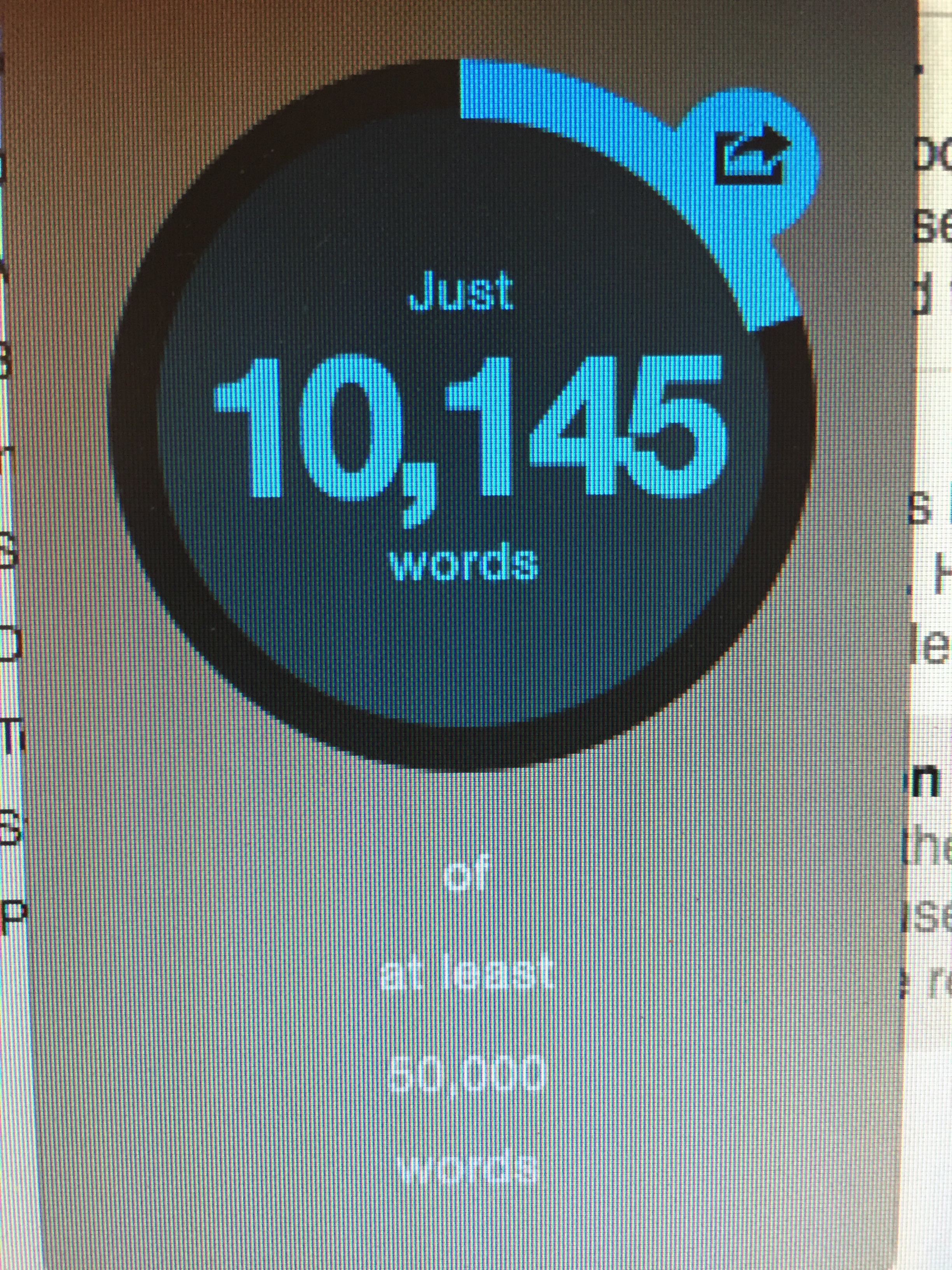
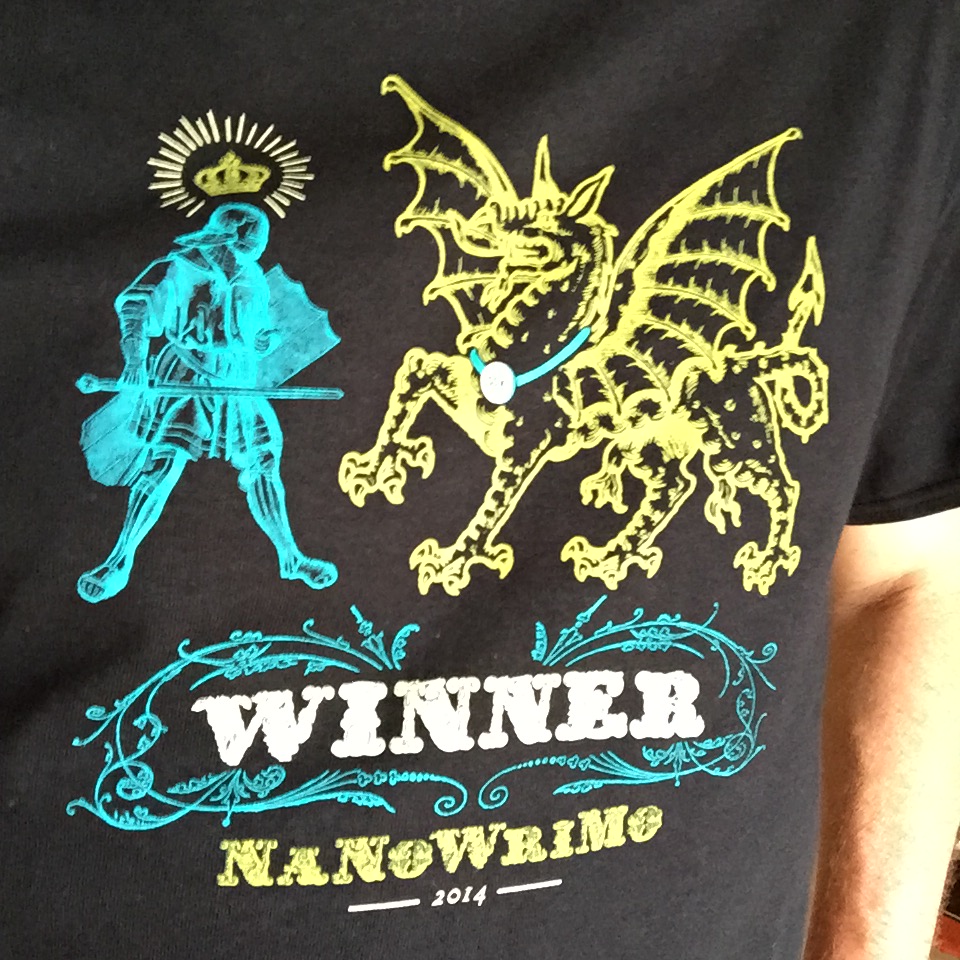
Regular readers may recall (and are perhaps a little tired of reading about), my participation in NaNoWriMo (National Novel Writing Month) last November, in which I managed to complete the goal of writing a 50,000 novel by month’s end. My continued posts on this topic are indicative of two things — one, it’s not entirely over; and two, as a prompt, my winner’s T shirt recently arrived.

The Winner's T-Shirt

The Winner’s T-Shirt

My original plan to write a follow-up post in December failed to eventuate. Simply put, I needed a break from the whole thing. So now, in the official NaNoWriMo “Now What?” months of revision, editing and publishing, it is time for me to revisit the story.

Upon taking a break, I am now looking forward to hopefully improving on the original draft. Achieving the goal of 50,00 words did not come without a few learnings and realisations along the way, some of which I thought worth sharing.

The Tools

I won’t go into any great detail here, as both the Digital and Analogue tools I used were covered in two previous posts. That said, a few other points I would add:

  • there is nothing like attempting a 50,000 word novel to become acquainted with an app you’ve not used before, and Ulysses III was a standout here;
  • a hat tip to author David Hewson (Twitter, Web), whose tips (particularly the story bible and keyword filters) from his ebook Writing a Novel With Ulysses III were invaluable in assisting my efforts;
  • although unrelated, using the Ulysses iPad app (currently in beta) for a month or so would suggest developer The Soulmen will also be on a winner for those wishing to write on iOS
  • conversely, when struggling with a scene or plot idea, more often than not, pen and paper sparked an idea to pull me through1

The Ideas – or lack thereof

IMG_3076

A milestone

Upon starting on November 1, I had ideas. In my mind (and transferred to a mind map) was a basic plot outline and the semblance of characters. Exactly where they would take me as the story progressed was another matter entirely. There were many times I ran into an idea block, however found the following to be of assistance:

  • a written summary or debrief at the end of a writing session often generated a flurry of ideas about the next few scenes or the overall progression of the story (a what just happened generating a what will or should happen of sorts);
  • when stuck for ideas, progression was often made through either a break from writing, or brainstorming with pen and paper — the frustrating part being I never pinned down which would necessarily work on a particular day;
  • my best ideas (as always) tended to strike at random times, so a quick entry in my Field Notes or the Drafts app on my phone was essential to avoid losing them, for even a minute or two later I often had a hard time remembering that “killer” idea.

Participating in a Creative Writing Challenge

I still do not have the answer to what made me think I had enough creative ability to undertake such a project. The argument here being anybody could — the difference? Quality of the output I imagine. In my case for the past 25 years, my writing has centred around the following:

  • University papers and reports (science/medical/allied health based);
  • treatment reports and correspondence (as above);
  • file notations and forensic analysis of medical reports;
  • management, financial, and general business reporting
IMG_3140

Getting there

As you can probably guess, my career progression has followed down the list, with my current role involving the last two points on a daily basis. Nothing in the list above strikes me as being overly creative in nature, however in some respects it is all writing, and involves planning, organisation, structure, and clarity of both thought and delivery.

The chance to write more creatively was likely one of the reasons I committed to the attempt. I am certainly not of the belief I have a “killer novel” somewhere inside me. I simply enjoy writing, and hopefully have a little talent, that with some practice, research and patience, I may be able to develop further.

Some additional points on this:

  • who knew that working for my entire adult life in “non creative” writing would leave me so deficient in knowledge around punctuation, sentence structure, and many other things real writers simply know (I was actually quite appalled at the number of things incorrect or required clarification before proceeding);
  • I am currently at a loss as to where to even begin to re-learn many of these aspects from my schooling;
  • it was around the 42,000 word mark I felt I really found my creative voice, making it difficult to wrap up the story, and resulting in the finished draft coming in at 55,000 words;
  • for someone who has not attempted such a challenge before, 50,000 words (or the magical 1,667 per day) is a great length — achievable though certainly not easy;
  • deadlines are good, otherwise I would never have finished;
  • deadlines are bad, as I definitely got less sleep, less physical activity, and spent less time with my (thankfully very understanding) family members during November

People Care

Although I posted a few word count updates to Twitter, and wrote the blog posts I mentioned above, in my physical world, only my family and a very small number of friends were aware of my participation as it was underway.

Screen Shot 2015-01-24 at 6.39.54 am

That would be – relief

The support received from my family was expected — to a degree, however went above and beyond, through extensive and unwavering words of encouragement; understanding at my constant desk-bound position; the expert editorial services provided by my ex-schoolteacher mother (a constant source of advice around some of those appalling gaps in my knowledge I mentioned earlier); and general excitement at the prospect of reading the finished product.

A little unexpected was the level of enthusiasm shown by the few friends also following along as the month progressed. Requests for word count updates; the “have you written today?” queries; genuine excitement at my synopsis and various plot “leaks”; and sincere requests for a copy to read once I was done.

It would be disrespectful to those involved to say the above was a complete surprise, however the enthusiasm shown by those supporting me (both family and friends) was touching to say the least.

What Next?

Now that I have that first draft in my hand, it is time to revise and edit, taking into account feedback from those who have read the draft (and in my teenage daughter’s case, kindly made extensive margin notes — and I mean a lot!).

I am also in the process of taking advantage of the deals on offer through the winners page on the NaNoWriMo site, including a printed copy of the novel through Blurb, which is a nice bonus. Also, catching a glimpse of the online writing community was also an eye-opener, and from what I saw, it is a pretty impressive one.

Conclusion

I certainly have a reinvigorated respect for those I consider real writers. As far as I am concerned, I wrote the draft of a novel here, however most certainly do not consider myself any sort of creative writer — however one may be defined. This is perhaps something I need to think a little more about, and work a little more on, however on current form, my mind keeps returning to the following from a book review in The Guardian recently shared by Matt Gemmell (one of the real writers) on Twitter:

He is probably a nice man. He obviously cares deeply about these great historical movements and has done a great deal of research — my God, he has researched and researched and researched. But on the evidence of The Book of Kings, he could not write ‘Bum’ on a wall.

Finally, NaNoWriMo provided me with a fantastic opportunity to learn a lot about my creative talents, workflows, and how my tools work (or don’t) for me, in a deadline driven, fairly intense challenge. Learning just as much about myself in the process, I highly recommend NaNoWriMo if you even have half an inkling to undertake such a project — and perhaps you do have that killer novel inside you.

After all, it is for a great cause, and remember, although many are — you don’t even need to be a real writer.

  1. Although the benefits of using pen and paper for brainstorming ideas are well documented, I cannot help but think this very common occurrence in my writing was also due to my inexperience in producing such a large body of work (for me) in a digital format