Coffee: A Natural Processing Experiment Part 1- Processing Methods

Regular readers will be aware I do a little coffee roasting at home, the majority of which occurs with green coffee beans bought online. A couple of years ago I published a five-part series on the techniques involved with washed processing of coffee, taking a very small batch through the processing stages from cherry off the tree and into the cup.

Back in November last year I republished these in a single post, in the knowledge I would be running through a similar experiment using natural processing methods. Around the same time I also put together a short piece about the app Day One, and how I planned to use it to monitor my progress.

One of my main aims in writing here is to push myself along in learning a little more about the specific details of my interests — in this case, coffee processing. To that end, it will help to look at some background information before I get started.

Coffee processing — what are the options?

Although the following is not a detailed explanation of each, it should serve as a general indication of the differences between the various processing options available after coffee is harvested from the tree. The three more popular methods at the current time are natural (dry), washed (wet) and honey processing. I will also briefly describe the semi-washed or wet-hulled method, and a semi-dry method: pulped natural processing.

The information that follows is a put together from the following sources, all of which I’d recommend for more detailed information and accompanying images:

Cafe ImportsCoffee Processes

D.R. WakefieldThe difference between semi-washed and fully washed methods

Perfect Daily GrindIndonesian Wet Hulled Coffee: Your One-Stop Guide

Origin Coffee RoastersBlack. Red. White. A Guide to Costa Rica’s Honey Process

Cafe BrittHoney Processed Coffee: What makes it so special?

Seattle CoffeeworksWhat on Earth is Honey Process?

James HoffmannThe World Atlas of Coffee (Book)

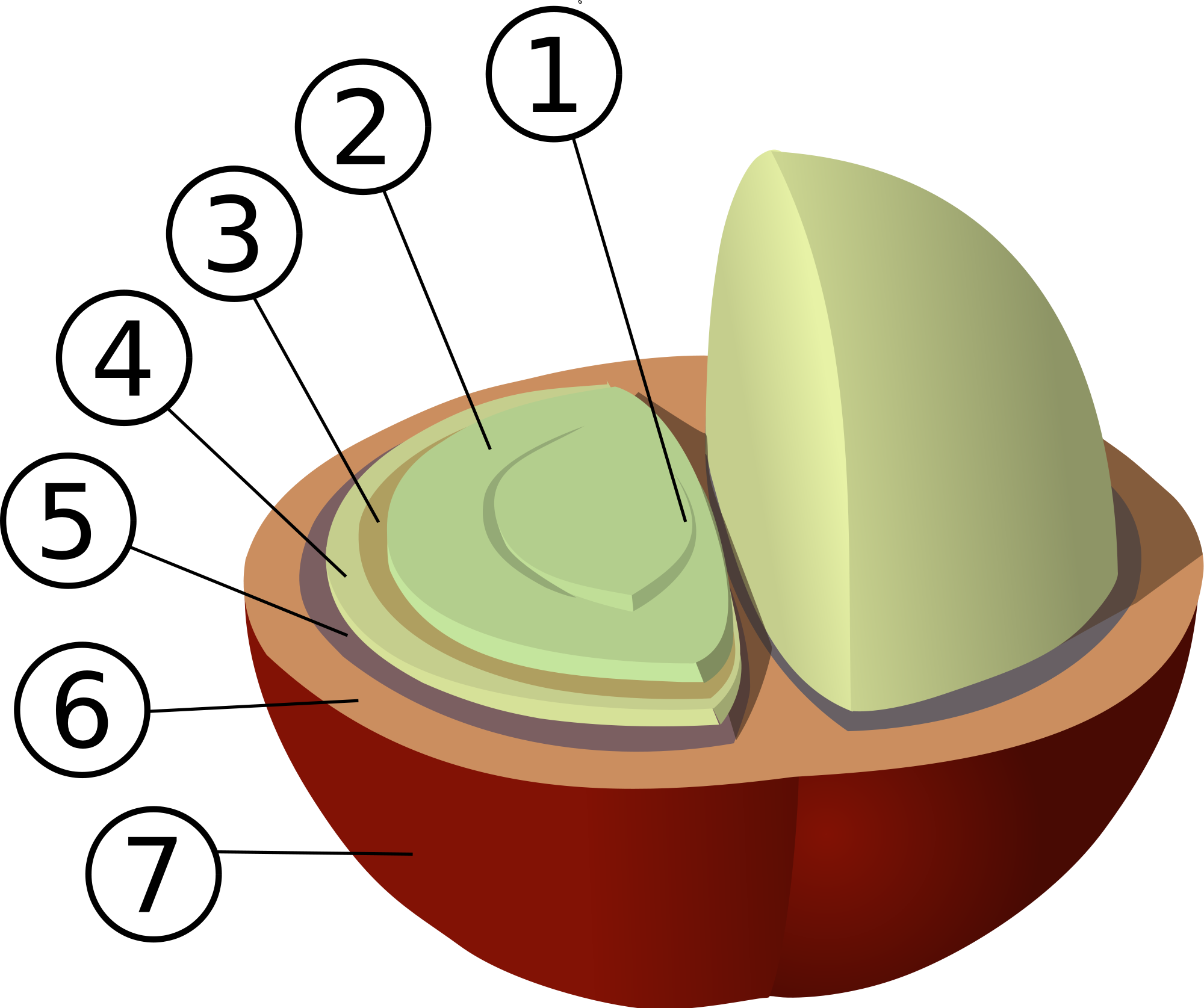
The article on the Seattle Coffeeworks blog is particularly useful to view the “anatomy” of a coffee bean, and provides a little more detail in describing each of the layers, which might be helpful in gaining a better understanding of some of the terms described below.

For reference, the following schematic diagram names each layer in the entire coffee cherry:
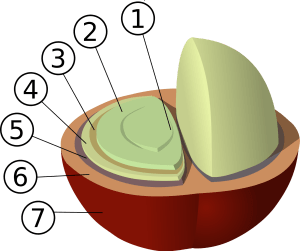
  1. 2000px-Coffee_Bean_Structure.svgCentre cut
  2. Bean or seed (endosperm)
  3. Silver skin (epidermis)
  4. Parchment (hull, endocarp)
  5. Pectin layer (mucilage)
  6. Pulp or flesh (mesocarp)
  7. Outer skin (pericarp, exocarp)


Wet processing methods

Fully washed

Described in its simplest form, wet processed or washed coffee involves extracting and fermenting the bean from the flesh of the pulp, followed by drying, or more specifically:

  1. The external fruit pulp (exocarp and part of the mesocarp) is removed by mechanical de-pulping machines;
  2. The remaining mesocarp or “mucilage” is insoluble in water and clings to the parchment layer strongly, needing removal by fermentation and washing, or friction in mucilage removal machines;
  3. The beans may then be taken through a second washing to remove any remaining debris;
  4. Drying is then undertaken on patios or raised drying beds.

(Note: this method is what I have described in my five-part series of posts linked to above; the above stages are all completed by hand rather than machine when done on a small-scale)

Wet-hulled or semi-washed

Typically a method used in countries such as Indonesia, where humidity is high, and rainfall abundant. Wet-hulling (giling-basah) is a traditional processing method used in these countries, and was developed due to the particular climate and conditions:

  1. After harvesting, the pulp is removed, leaving the mucilage and parchment covering the bean;
  2. Beans are fermented in concrete tanks or plastic rice bags overnight (this process assist with breaking down the pectin in the mucilage for easier removal);
  3. The beans are then washed to remove the mucilage (or sold to a larger processing mill to continue the processing);
  4. After mucilage removal, remaining is the wet parchment, hence this coffee may also be called “wet parchment coffee”;
  5. Sun drying occurs for 2-3 days, reducing the moisture content to 20-24% (wet processed coffees are dried to a moisture content of 11-12%, rendering the parchment brittle for easier removal);
  6. The parchment is then removed using machinery specifically designed for wet parchment coffee (greater friction is required);
  7. Further drying occurs in the sun by day, with the coffee stored in bags overnight to continue the fermentation until the moisture content is reduced to the desired level.

An interesting point to note here is a point about wet-hulled green coffee being recognisable by its “dark-green and patchy colour” which may also be described as blue. I’ve certainly noticed this in the green coffee I have purchased which was processed in Sumatra, and it is very bluish in colour — quite noticeable compared with green coffee from other regions around the world.

I’d highly recommend reading the original article on Perfect Daily Grind, as it goes into considerable detail around the origins of why the processing is used, possible defects, and advice for getting the most out of these types of coffees (including roasting).

Semi-dry processing methods

Although not typically a category you often see listed individually, semi-dry processing does use significantly less water than the washed or semi-washed methods described above.

Pulped natural

Pulped natural processing is apparently a common method used in, but not unique to Brazil — and you will certainly see this description on coffee originating from other countries. The actual stages are similar to the washed process described above, however the mucilage is removed with a pressure washing apparatus (taking care of steps 2 and 3 above), which removes the need for fermentation.

Without requiring large tanks and significant water for fermentation, the pulped natural method doesn’t quite fit in the wet processing category, however it is not fully dry either — therefore ending up in its own semi-dry category.

I must also point out that up until this point, I had not really looked closely at the subtle differences between pulped natural and honey methods of processing, however they are distinctly different, given the mucilage is removed in the former, however remains on in the latter (described further below).

Although consistency is apparently increased with pulped natural processing, as the risk of too much or too little fermentation is eliminated, thinking goes that this consistency possibly comes at the expense of flavour. Pulped natural coffees commonly tend to have lower levels of acidity in their flavour profile.

Dry processing methods

Natural

Natural processing is probably the most common of the dry methods, and involves leaving the coffee cherry intact, sun drying, then removing all outer layers from the bean:
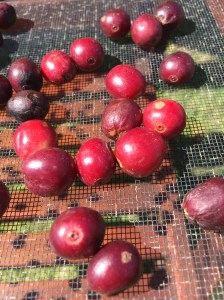
  1. early_cherry_natural_processThe coffee is harvested, and in some cases drying has already been allowed to commence on the tree;
  2. The pulp or flesh is left on, and the cherry is dried intact, with drying completed on raised beds or patios until the desired 11-12% moisture level is achieved;
  3. The entire hull (dried pulp and parchment layer) is then removed mechanically;
  4. The remaining seed or green coffee bean is then ready for export.
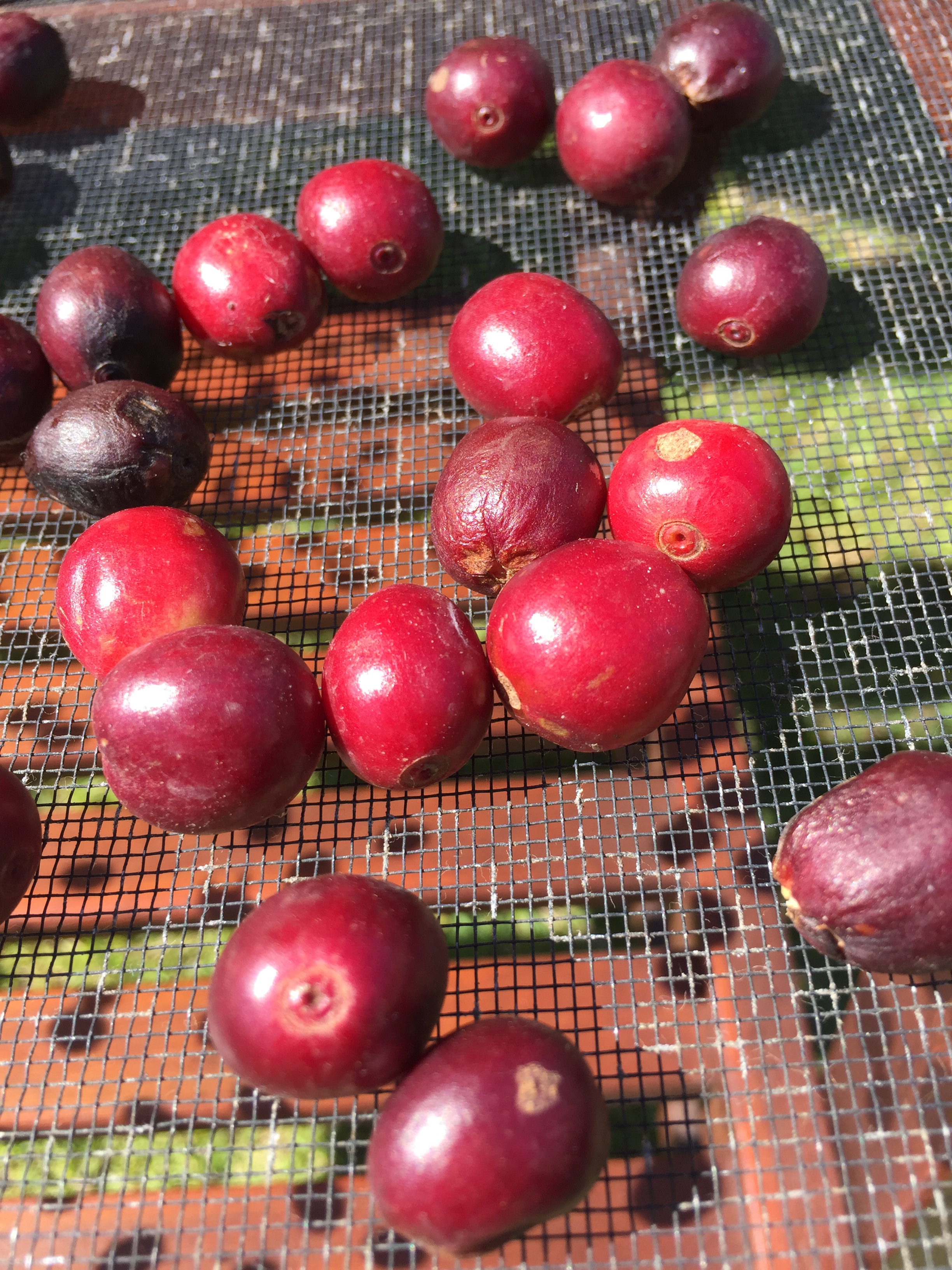
As you can see, this method is the simplest in the form of steps or intervention required, however I am certainly not suggesting it is necessarily easy to do well.

Honey

Honey processed coffees are a further subgroup of those classed as naturally processed, containing additional sub-groups based on specific criteria. This method originated and became popular in Costa Rica, progressively spreading to other countries in recent years.

The term honey is believed to have derived from the stickiness of the mucilage on the outside of the bean, which has a honey-like texture. Believe me – its sticky alright. Here is a short video demonstrating this to some degree, as producer Graciano Cruz of Los Lajones Estate talks about the honey processing method.

Farmers may separate their crop after harvesting, with the aim of developing different flavour profiles based on varying the amount of mucilage left on the bean and altering drying times. These discrete groups provide the various classes of honey processed coffees:

  1. White honey — all mucilage removed from the coffee seed; sun-dried uncovered
  2. Yellow (or golden) honey — approximately 50-75% mucilage removed; gains a yellow colour; dried in minimal shade over 7-10 days;
  3. Red honey — approximately 25-50% mucilage removed; longer drying time and perhaps combined with cloud/shade cover; dried over 14-21 days;
  4. Black honey — no mucilage removed; 100% of the sticky outer coating remains over the seed; covered to elongate drying time up to 30 days.
3_honey_coffee_colour

Adapted from Cafe Britt, showing (L to R) yellow, red, and black honey colouration after drying.

A point to note on the above list: most articles on honey processing will point to variations that occur from mill to mill or between individual producers. For example, I have seen descriptions indicating black honey processing involves drying the beans covered, with a relatively quick drying time — yet others suggest the drying time is longer. The percentages above are also approximations based on different articles I have read on the subject.

Why use dry or semi-dry processing methods?

For me personally, the answer is a simple: because I am interested and would like to see how things turn out. On a larger, professional scale, the reasons are obviously very different, and in a competitive marketplace, are a little more involved.

Perhaps to oversimplify things a little here, the answer seems to come down to two main aspects: flavour and environment (in which I include both climate, and the producer’s location and built environment — that is, access to technology and logistics around production etc).

When we talk of flavour (obviously quite important in the coffee game), Timothy Hill, of Counter Culture coffee summarises the flavour thinking in relation to natural processing:

With the natural processing, you’re letting the fruit and the nutrients from the skin and the sugars go into the seed through the drying process

In general, there seems to be the philosophy whereby natural coffees are a truer reflection of the flavour of the coffee cherry itself. This is not to say washed coffee holds none of these inherent characteristics, however from a consumer’s perspective, it is not often the two can be directly compared. In saying that, more producers seem to be showcasing different processing methods of similar or same harvest lots side by side.

As far as the other factors I have mentioned in relation to climate, technology, environment and overall capacity of the producer, Hill also goes on to note:

…the setup cost is extremely low—you don’t have to have a pulper, concrete, the machinery, electricity to run it — if you’re running a pretty large-sized farm. The labor and how to do it right is really tough. So it definitely is easy to take on; it’s really hard to do well.

And from Sweet Maria’s on climate suitability:

Natural coffees are perhaps the original method to process coffee. If the first coffee grown as commercial crop, for trading, was in Yemen, the climate is well-suited to dry processing. The western parts of Ethiopia such as Harar are traditional dry-processing areas. Older coffee-growing areas of Brazil as well as newer ones (Cerrado) have distinct seasons ideally suited to dry process method. If a farm can dry coffee from ripe cherry to hard, dried pod in 20 days, it is probably well-suited to DP (dry processing) methods.

Compared to washed processing, the natural method is clearly better suited to areas where water might be a scarcer resource, given its considerable utilisation in the various stages of the wet processing method. It then flows on, that drier (read less humid) climates would also be well suited to natural processing, which they appear to be.

Clearly in my humble backyard experiment, set up and ongoing costs are not a consideration at any scale, however with the coffee tree in my backyard now over a metre tall, there will be a time in future when processing considerations come into play. Although my time and effort required to process any coffee I produce will be a consideration, I suspect the local climate will perhaps dictate which method might be best overall.

The Experiment

Although I have called this series of posts a natural processing experiment – I use that term fairly casually. The plan is to outline in basic terms the methods I’ve used; data collected; recount how things turned out; and perhaps consider what I may do in future. What you won’t see are the usual scientific journal headings under which these components reside, nor a formal write-up with p-values, correlations, effect sizes or the like.

In simple terms, what you’ll read about is how I had a crack at it, followed by a tale of what happened.

Considering my natural processing options from those listed above, some thought was given to whether the methods used would be readily reproducible; easy enough to accomplish in terms of equipment, technique and time; and amenable to some type of tracking. Finally, it would be nice to utilise more than one type of processing and perhaps compare the two outcomes.

Of course there were some limitations in what I planned to do — climate for one. Many articles mention humidity as an “enemy” of natural processing, with Indonesian producers having adapted their methods to account for this, as I’ve described in the wet-hulled processing above. Although I have no real control over this, the drying period occurring in late spring provided some hope of finishing this phase before the full brunt of Brisbane summer humidity arrived.

Also, I have no real means of measuring the moisture content of the beans, with devices capable of this more expensive than what I’d be prepared to outlay at the current point in time. It is also beyond the scope of what I wanted to do, however would have provided decent points of reference for both data monitoring and as an indicator of when the process might be done. To that end, based on what I had read to date: “that seems long enough” would have to do.

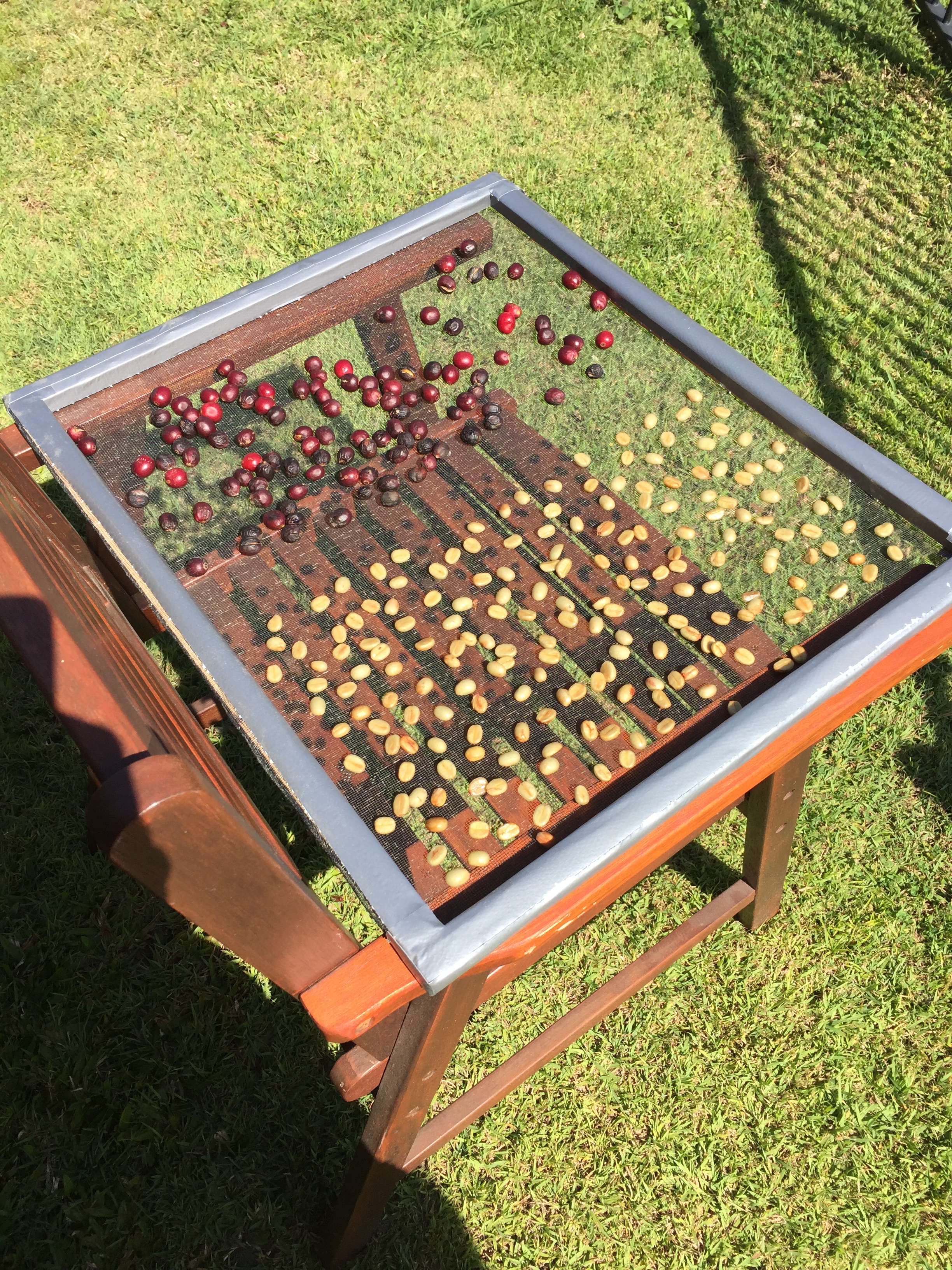
In the end, I decided to try natural processing (entire cherry intact and sun-dried), along with a sample of the honey processing method, most closely aligned with what I have described as “black honey” above (pulp removed, with the entire mucilage remaining on the outside of the bean). In retrospect, the black honey method may not have been the wisest choice in a humid drying environment, however trying to remove some of the mucilage first and to what degree, did not easily satisfy my “ease of use” criteria — whereas removing the pulp and simply leaving them did.
IMG_4931

So things were now underway. A small lot of coffee cherries halved into even smaller batches, one natural and the other honey processed. Hopefully I have done a reasonable job above in explaining the basic differences between methods to provide you with some understanding of each — no doubt many of you will already be fairly familiar, however I though it would be a good starting off point.

Future post(s) will report back on progress and ultimately the outcome of my own little experimentation into natural processing methods — hopefully you’ll check back in and see how things went.


Wiser Web Wednesday

Wiser Web Wednesday – a semi-regular link to posts of interest from around the web, by those far wiser than myself:


My Pen Needs Ink
The answer is not necessarily “all the pens”, and deep down we know the few that satisfy the title of this post for ourselves.

…when I step back from admittedly my newest pen always making that list I end up with 3 pens that I truly love writing with.

What are your three?:
Pens I LOVE To Use


Gourmet Pens
A review of the TWSBI Vac Mini provides another vote for the 580 AL if you are considering a purchase from the Taiwanese manufacturer.

Personally, I still like the 580 best and wouldn’t bother with any of the others. I just hope the one I currently have (the 580 AL-Purple) doesn’t ever crack. I’m rather underwhelmed with this one

That said, I’m guessing the Eco would make a nice first step:
Review: TWSBI Vac Mini Fountain Pen – Broad


That One Pen
Part 2 in Todd’s series on getting to the bottom of the pens and pencils worth holding onto and those that aren’t:

I’m sure if we all tried hard enough we could make IKWIL a trending hashtag. Looking forward to the final cut:
I Know What I Like – Part 2


An Inkophile’s Blog
I must admit to not being deep into this fountain pen game for long enough to have had too many “last few drops of ink” (beyond some sample vials).

For those who have, not a bad suggestion for what to do with them. I like it:
Those Last Few Drops Of Ink


Pen Economics
Balanced, respectful, analysis and discussion. More of this very combination, which commenced with Ian Hedley’s initial query into Pilot’s pricing of pens in the UK:
The Pilot Pricing Puzzle
The Pilot Pricing Puzzle — Followup


Crónicas Estilográficas
To me, this pen looks like a Lamy 2000 mock-up might have been – before the designers said: “okay, now let’s taper both ends”.

The first look of this particular model is surprising—it looks like an ebonite blank ready to go to the lathe. It is almost perfectly cylindrical, and only under close inspection the line between cap and body can be seen

I know nothing about this brand of pens from India, however have enjoyed changing that with these posts:
Gama (II). A Stick


Pens! Paper! Pencils!
Speaking of pen brands I know nothing about – Ian back at the review desk with a very interesting pen from solo manufacturer Fosfor (coincidentally also from India).

The Bangalore is a great writer, comfortable in the hand, has a unique look and is handmade.

Well worth a look:
Fosfor Bangalore Fountain Pen Review


The Pen Haul
I must admit to being fortunate with nibs on the pens I’ve purchased, encountering no particular problems so far. Perhaps that might change one day, and posts like these are handy reference points.

The main purpose of my post is to share with everyone that yes my pen had a defect, but there is a fairly simple way to fix it.

A recommended read, and linked to in the post is the knowledge base found at Richard Binder’s site, however I enjoy reading the experiences of other pen users who tackle something they may have not tried before:
DIY – Smoothing a Bummed Nib.


Kickstarter
It’s difficult to imagine when this now yearly Kickstarter campaign won’t be funded, which is entirely a good thing:

The Atlanta Pen Show is scheduled for April 15th – 17th, 2016, and The Pen Addict posse is ready to take over once again! Like last year, we are asking for your help to get this done.

Though already having passed the funding goal, it’s not too late to get in on the fun, and also some limited edition Pen Addict Notebooks:
RelayCon Atlanta: The Pen Addict Live 2016


Daily Coffee News – Roast Magazine
Although discussion in this post looks at possible advantages in aspects of design and practicalities of storage, a rather glaring omission is any acknowledgment of the possible environmental implications of adding another layer of packaging to the standard coffee bag.

I agree some of the designs look fantastic and the scope is wide, however the bag has now become a bag in a box. If you buy online from a manufacturer embracing this trend, you’ll then receive bags in boxes in a box.

Not a deal breaker perhaps, however something which probably should at least be part of the discussion:
Outside the Box: Thoughts On Coffee’s Latest Design Trend


Perfect Daily Grind
I’m sure we’ve all entered a café and been confronted by “single origin” coffee offerings.

Single origin is a small phrase with a big definition

Perfect Daily Grind explains what single origin coffee actually is, the effect it has on the industry, and how we know whether it is a high quality product, which it is often portrayed as:
Everything You Need to Know About Single Origin Coffees


Broadsheet Melbourne
It is often said the coffee menu in many fine restaurants seems an afterthought. Perhaps it’s because the Michelin Guide sets a fairly low bar in relation to the quality of beverage served:

“The Michelin Guide has two lines on its coffee criteria”, says Tim Varney. “It needs to have a crema and be served in a correct cup”.

As well as launching a new coffee roasting collective, two experienced Aussies are ensuring a much more palatable finish to an evening at the Noma restaurant’s ten-week residency in Sydney:
The Story Behind Noma’s Brew


Tim Nahumck
Many of us are probably familiar with the idea of getting down on paper or pixel anything nagging at our brains before we go to sleep.

What we then do with those thoughts is often another matter. What begins here as a brief brain dump ends up actionable where necessary through the iOS apps Drafts, Workflow and 2Do, as well as being a more in-depth post than it initially begins:
How to Apply the Note


SMH Digital Life
Does world domination await for cheap smartphone manufacturers? Probably not, though for brands like Xiaomi, I’d suggest there is enough potential market share for them to try.

For Australian audiences, Xiaomi remains the most enigmatic of Chinese brands. Xiaomi grabs all the headlines, the tech press love it, but there is still no official way of buying its products in this country.

Speaking of Xiaomi, I concur with the following, having seen my wife using the new generation Mi Band for the past few weeks:

At $26, the Mi Band fitness tracker outperforms most from Fitbit and Jawbone.

I’ll stick with my iPhone, but that Mi Band…:
Chinese mobile phones: everything you need to know


Day One
Day One continues to be one of my favourite and more heavily used apps, and I for one am really looking forward to version 2. Yes, an awkward naming convention but really what else could they do?

To support Day One 2’s new features, we ultimately rebuilt the app from the ground up, all the while staying true to Day One’s original simplicity. Rebuilding an app as seasoned as Day One is no small task. What I’d hoped would be a year-long effort has taken twice that… but we feel it’s been worth the wait.

Plenty of effort seems to have gone into this upcoming release, and I’m sure it will be a beauty:
Introducing Day One 2


Extratextuals
iPad Pro and iOS love part one (via Federico Viticci):

…it’s an understatement to say I have always preferred iOS to any other platform. With its software and hardware providing solutions to those niggling issues of mine, the iPad Pro is in many ways my dream computer

Living With the iPad Pro


The Brooks Review

iOS love part two:

Some of this is simply intangible and not worth trying to explain, as words will never do it justice. Another subset is personal preference, and not worth explaining as it is personal. But there is a chunk of the allure that is easy to point your finger at and say: that’s better, that’s easier, and that makes more sense.

Why iOS is Compelling


Nerds on Draft
Gabe Weatherhead and Jeff Hunsberger delve into the relative merits of some common task managers. As I’m powering along with 2Do myself, I particularly enjoyed this one.

The conversation is about the advantages of using plain text task management, some commentary on the direction and focus of OmniFocus and how they have embraced 2Do to varying degrees.

A little IPA and a lot of 2Do:
Episode 060 — Agave IPA and 2Do


Smith Journal
The fog “catching” in this four-minute video is a simple yet ingenious way to obtain water for the organically grown crops upon which this subsist on in the mountains of Peru.

Fog catchers are basically vast nets strung between two poles. The fine mesh allows water droplets from the fog to accumulate and eventually run off into a canal. The nets work well in Peru because of the dense and omnipresent fog, known locally as camanchaca, or ‘donkey’s belly’, that rolls in from the coast.

Even more fascinating? The son completing his design assignment on the family computer as his feet rest on a dirt floor — his civil engineering studies at university achievable only after a two-hour commute from the family home. Another one to file in the take-a-good-hard-look-at-yourself category, in readiness for the next time something bugs you about work or study:
Catching Clouds


Wiser Web Wednesday

Wiser Web Wednesday – a semi-regular link to posts of interest from around the web, by those far wiser than myself:


The Pen Addict
I’m unsure of the exact percentage of fountain pen users for whom Rhodia paper is a staple, and it’s often the dot pad at that. Regular Pen Addict contributor Jeff Abbott outlines the details that make these a favourite of many.

I can certainly vouch for these easy to use, fountain pen friendly, tear off-and-scan sheets of great, reliable paper.

A great review, however I suspect many of you knew a little about these already:
The Rhodia DotPad Notepad Review


The Pen Habit
I don’t have any pens from the Edison Pen company in my collection, something I hope to change one day. This one is certainly a beauty.

It is, of course, silly to buy a pen solely for the filling system inside, but acquiring one of the Edison Pen Company’s pump fillers has been on my list for a while.

Or perhaps it isn’t so silly — either way, no judgement from me:
Pen Review: Edison Pen Company Menlo


Nibcreep
When a post starts as “a cautionary tale” and contains:

“How hard can it be?” you think to yourself. “The tines are steel, I should be able to bend them back if I’m careful” you think to yourself.

…you just know it’s not likely to end well, and I guess it didn’t. A hard one to read, though no doubt much harder to write:
How to ruin a vintage pen in less than 2 hours


The Finer Point
Jenny reviews an interesting looking pen, the Ateliea Brass Pen, the lovely patina upon which will further develop with increased use.

Although I do like the look and design, it is probably not for me, and I would be a little concerned about the cap — definitely be one of those stand it on its end so it doesn’t roll away scenarios:
Ateleia Brass Pen


That One Pen
A great post from Todd as he continues down the road to a short list of loved and well-used pens. One thing I do see from the list of pens and pencils in this post is a reasonably common theme: a lot of people like them, they are recommended fairly frequently, and it wouldn’t be unreasonable to develop a collection around them.

I understand that some of these writing tools may be the single greatest pen or pencil you’ve ever tried. I’m just saying that they don’t work for me and, in some case, I’m actually disappointed that they don’t. All I know is that they don’t work for me and I’m moving on.

The concluding paragraph I’ve quoted above is a timely reminder that reasonably widespread popularity (which I’m not suggesting is unwarranted with this list) simply does not equate with individual fit and contentment.

Here’s to our differences:
I know what I like


Pens! Paper! Pencils!
If you haven’t to date, please read the initial post by Ian, and the reply from Pilot UK for context (links to both in this post).

Although there still appear to be some lingering questions:

This wasn’t a boilerplate response, it was an email from a real person who took the time to respond to my questions in a thoughtful and considered way.

The following of course is spot on — if no-one cared for the pens Pilot produced, no-one would be bothered asking in the first place:

I wrote the original post out of frustration but also out of affection. Pilot make great pens and I wish they were able to sell them here for a reasonable price

Looking forward to any further information (and more reviews and drawings). Nicely done Ian:
My Thoughts on Pilot UK’s Reply About Availability and Pricing


The Clicky Post
Looking at my own collection here beside me, the word “conservative” would not be out-of-place in an overall description — certainly as far colour is concerned.

Judging by the great images in Mike’s post, the finish on the Starburst Galaxy brings a little brightness and sparkle, yet isn’t overly “blingy”, and wouldn’t look out place on my desk here at all.

Well, how about that:
Sailor Sapporo (Pro Gear Slim) Starburst Galaxy – Music Nib


The Specialty Coffee Chronicle
For the first time in 21 years, the coffee tasters flavour wheel has been updated, with some lofty goals indeed:

The foundation of this work, the World Coffee Research Sensory Lexicon, is the product of dozens of professional sensory panelists, scientists, coffee buyers, and roasting companies collaborating via World Coffee Research (WCR) and the Specialty Coffee Association of America (SCAA). This is the largest and most collaborative piece of research on coffee flavor ever completed, inspiring a new set of vocabulary for industry professionals. This groundbreaking new tool will shift the way our industry thinks about and utilizes coffee flavor.

Although there is considerable overlap with the previous version, perhaps some new descriptors to our “tasting notes” are imminent:
Reinventing the (Flavor) Wheel: Industry Collaborates to Identify Coffee Flavor Attributes


World Coffee Research
Following on from above, further background on the World Coffee Research Sensory Lexicon can be found here, including a 50 page PDF document, which:

identifies 110 flavor, aroma, and texture attributes present in coffee, and provides references for measuring their intensity.

What do you mean there’s no way you’re downloading and reading that?:
World Coffee Research Sensory Lexicon


The Brooks Review
If there was one sentence that probably sums up my experience with OnmiFocus, this would be it:

I found an app that doesn’t make me feel like I am filling in forms when I want to create a simple task.

For me personally, this is a classic case of “it’s not you — it’s me”. As most who have used it will tell you, Omnifocus is a great app, and I (happily) spent a considerable amount of money to get set up across my Mac and iOS devices.

After two years of intermittently thinking “there must be a better way to do this that I haven’t found yet”, it was time be open to other options.

There is probably a more lengthy post about this, however needless to say, 2Do suits my way of thinking, working, and tracking tasks. Here Ben Brooks outlines the reasons behind his move:
Moving to 2Do


Tim Nahumck
Further to last week’s Macdrifter link regarding Drafts app for iOS, a nice reminder about the app’s capability to handle “Action Sets” of similar actions — a sort of sub menu if you will .

When you have finally created the Action Sets you want, and if you run them frequently, consider making an Action Key for your Enhanced Keyboard row. If you assign an Action Set to a Key, you will be able to bring up the Action Set menu quickly for manipulation.

The more you know the more you can do:
Using Action Sets in Drafts


John Scullen
Here John outlines the use of the Solarized colour palette with some OmniGraffle stencils.

Far more attractive diagrams await:
Create stunning diagrams with these free OmniGraffle stencils


The Daily App
The final in a three-part (links to one and two in the post) series by Graham Spencer, looking at the happenings behind the scenes in the first two months of his “The Daily App” site, which, incidentally, features all sorts of apps (Mac, iOS, Apple Watch and TV) in a brief one-a-day format.

There may be many apps featured you either have or are aware of, although eventually one might come along that will be a real find. It couldn’t be simpler to follow along on Twitter or Facebook (RSS and email subscription options as well).

Back to the reason for the link. In this particular post, Graham shares his workflow for collecting apps, planning and posting the featured apps to the site.

Interesting if you are into that sort of thing (raises hand):
Two Months of The Daily App: Behind The Scenes


MindNode News
An announcement from the developer of MindNode, which now offers task support:

Mind Maps are a great way to kick off a new project and Tasks are often a major part of this workflow. MindNode now offers native Tasks support. You can turn any child node into a task and check off completed tasks directly on the canvas.

It appears the app will also support export of your tasks to Apple’s Reminders app, and keep the completion state in sync. Given MindNode is my mind mapping app of choice, this is certainly a handy addition:
Tasks in MindNode


Wiser Web Wednesday

Wiser Web Wednesday – a semi-regular link to posts of interest from around the web, by those far wiser than myself:


The Finer Point
Not the first time I’ve heard it, though I do like the idea of a photo a day as part of a journaling approach. If I ever managed to do so, digitally via Day One would be the way I’d probably go.

A nice idea here though for placing a physical copy in the Hobonichi Techo, along with a couple of other noble aims for 2016 as well:
New Things for 2016


The Fountain Pen Quest
Indeed it is:

It’s a lot easier to avoid impulse purchases when I have so many good pens to chose from and can only use one fountain pen at a time

Although not the focus of the article, again some serious numbers pop up in posts such as these as far as collections go —indicative in part of how long other enthusiasts have been in this game:
Fountain Pen Contentment


Pens! Paper! Pencils!
I’ve enjoyed seeing Ian’s drawings on the PPP blog and also Instagram for some time now. I would also be happily guided in my choice of pencils, were to find I had some sort of ability in this area, and was inclined to pursue it. Sadly, the former is not the case, and heavily influences the likelihood of the latter.

One other thing, the image under the Selection heading is a simple one, though one of the best I’ve seen in a while — fabulous:
Guide to Pencils for Drawing


The Gentleman Stationer
Funny how we get caught up in our own day-to-day inks. Well, that and the fact I tend to go for long periods without buying any new ones to try.

The result? I’ve not used any of these, however have heard good things both here and elsewhere. Yes, they’ll go on the list, though I cannot guarantee when I might get to them:
My Five Best Fountain Pen Inks for Everyday Writing


Pen Economics
I recall a robust debate with my senior high school economics teacher about this principle, the main thrust of my argument (in attempting to refute the notion) being that each subsequent Golden Gaytime ice cream was in fact better than the previous one. Although my argument was probably a bit thin and I may have embellished the number of Golden Gaytimes I could eat, I thought I made some pretty compelling points (loved those ice creams).

Onto matters more relevant:

The underlying problem seems to be a classic case of what economists call diminishing marginal utility. That’s a technical name for something we all experience, and it’s so common that it’s baked right into our most fundamental tools. It refers to how we find ourselves less and less satisfied with each additional purchase of something.

In reality, there are probably many perspectives on this, and personally I am fairly liberal with my definition of collector or user, and would suggest most of us are both:

But, at least for those of us who are pen users rather than pen collectors, we reach a point where each new purchase isn’t any more exciting than the last one. They’re still great pens, still pleasant to use, but that level of excitement and pleasure has diminished somewhat. And once you’re past that point, it becomes something of a downhill road.

Something like this may work for you, or it may not, however if you are quite content with your collection and how you manage it, don’t overthink it:
Capping Your Collection


Fourfiftytwo
Another example of some Hobonichi Techo goodness:

Putting the drawings and text in before I journal is really helpful in getting over blank page syndrome. I don’t find myself stare at the page, afraid to ruin the pristine blank space, overwhelmed by expectations for what could be written

Some more fantastic images in this post too:
How I use my Hobonichi Techo


The Pelikan’s Perch
A great review of a fantastic looking and equally well performing pen from Pelikan.

With the Grand Place and the Vibrant Blue on the horizon, I think Pelikan is really showing that they can turn out some truly stunning pens. I only hope that the company will pace itself and not saturate us with too many of these high-end beauties in such a short span of time.

If Pelikan cannot pace themselves then I guess its up to each of us:
Review: M800 Burnt Orange (2015)


MacStories
Some new, or perhaps simply new to you (or me) apps for 2016.

I might poke around Airtable, and Liquid Text looks an interesting way to view sections of long documents (also recently mentioned on an episode of Mac Power Users as worth considering).

Box? I’ve been increasingly using this for storing documents in PDF format over the past 6 months or so, though I suspect it is due to the free 50GB in my account (one of those early sign up bonuses some time ago) rather than any collaboration features. That said, it seems equal to Dropbox in terms of sync and app integration, and I like the interface a little better.

Whatever you might be looking for, a few more apps for your consideration:
New Apps for 2016


Macdrifter
A fairly common comment by those who use the iOS app Drafts:

What about words? Where do you go if you have something to write? I’m sure a lot of people worry about where they want the words to go before they decide how to even start writing. This is a waste of attention. The most important part of writing is the act of writing, not the act of processing. This is why I start almost everything in Drafts for iOS.

This app deserves inclusion primarily because the linked post is a good one, but also because each Wednesday’s links on this blog are put together via the Drafts web capture template — set up to give me the source, title, URL and any highlighted text with simple tap of the share sheet button on my phone or iPad.

Captured information is appended to one of three current notes: Pen, Coffee, or General. Once the gathering is complete, the note in its entirety is either pasted into Ulysses (iPad) or sent with one tap to nvAlt on my Mac, depending on where I’ll be for the final clean up.

Simply an app that never gets old — or most likely fully utilised for that matter:
Getting Drafts Right For 2016


Scotchwhisky.com
A wishlist from the editors at scotchwhisky.com for the new year, of which this is one:

Let 2016 be the year where blends fight back. They are fascinating, and flexible; they are the product of amazing creativity, they have history, yet they are never talked about with any of the same reverence or detail that is applied to malts.

I second that motion:
New Year’s Wishlist


Daily Coffee News by Roast Magazine
Reading these articles always reminds me of how lucky I am to live where I live.

In short, these climatic, economic and political factors have snowballed into a perfect storm of influence dissuading young Salvadorans from the pursuit of a life in coffee farming

For many on this planet, it is just a constant struggle, and it is not hard to see why it appears there would be little hope in sight:
El Salvador’s Coffee Industry at a Crossroads


Cafe Culture
An amazing story. What started with this:

In March 2011 a seedling was planted 1,900 metres above sea level on a mountain on the west range of Los Farallones de Cali, Colombia.

It was the first of 18,000 seedlings to be planted on what would come to be known as Finca Las Nubes, “the farm in the clouds”.

Culminated in something pretty special late last year for the tireless workers of that particular coffee farm in Colombia:

Sasa called “time”, and with that simple word began to deliver the same performance to the workers and owners of Finca Las Nubes as he did to the WBC judges just three months earlier.

Australia’s 2015 World Barista Champion, Sasa Sestic continues his relentless drive to promote specialty coffee, and more importantly, recognise those who produce it:
Sasa Returns


Handground
No, I don’t expect you to read (let alone apply) all 47, however there are some interesting and helpful tips here for manual brewing based on the Speciality Coffee Association of America’s 7 Pillars of Coffee Preparation:
47 Tips to Make Pour Over Coffee Like a Barista


Third Wave Wichteln 2015

2016-01-18 tww_logo

Image courtesy Third Wave Wichteln

Scrolling through the thirdwavewichteln hashtag on Instagram and Tumblr or in the Facebook group of the same name, I see packages of specialty coffee continuing to finally reach their intended destinations around the globe.

Bon(n) voyage!

Bon(n) voyage!

It is the second time I have participated in the Wichteln, and my parcel containing a bag of Washed Ethiopia Dumerso roasted locally by Coffee Supreme made its way successfully (confirmed via the social media pages noted above) to Bonn, Germany. I may have also thrown in a bag of the same coffee (this time Natural Process) roasted by yours truly — something I wouldn’t probably describe as a “bonus” necessarily, in the hope the recipient might enjoy comparing the two. Thankfully, Facebook tells me both were well received.

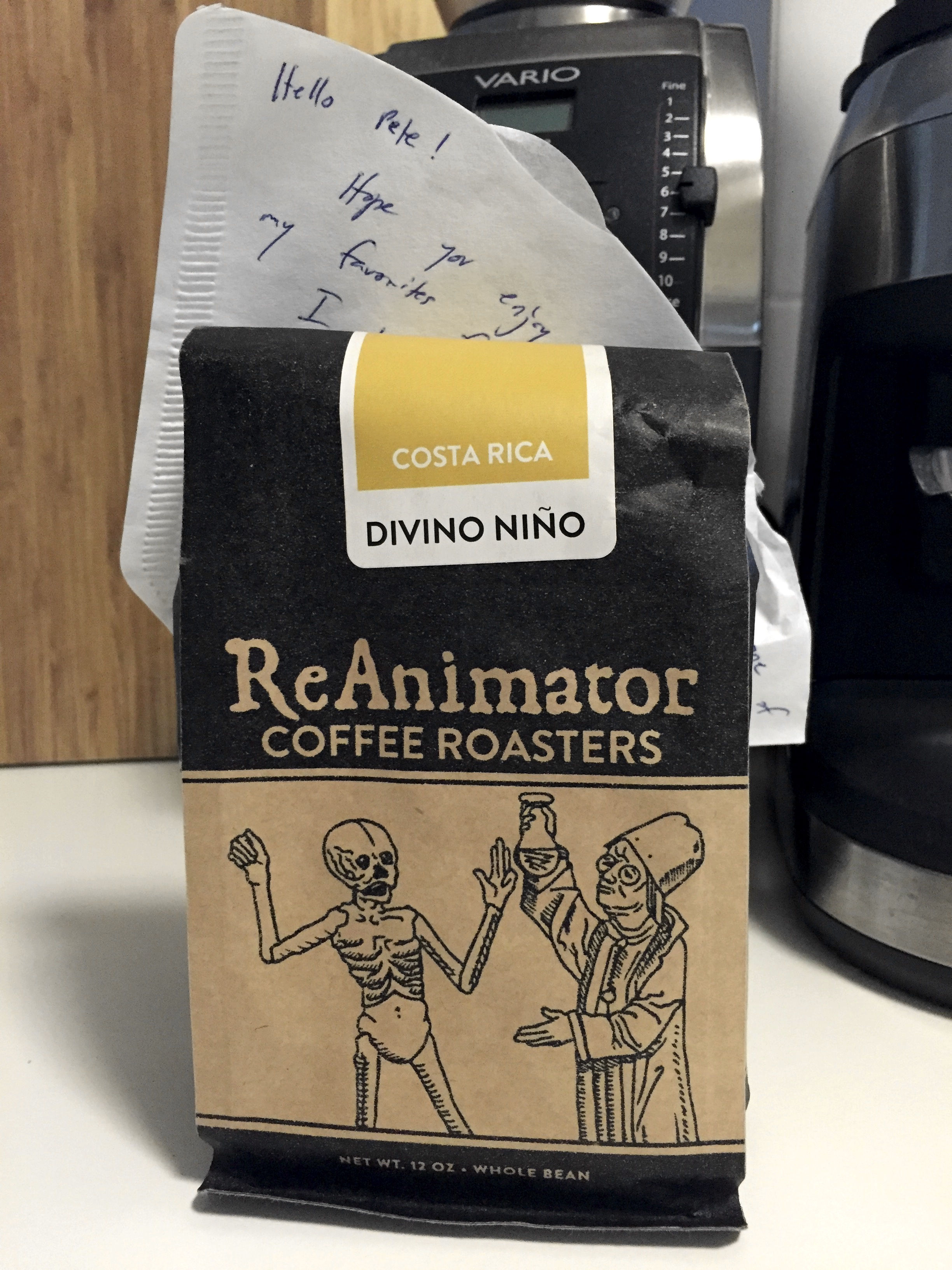
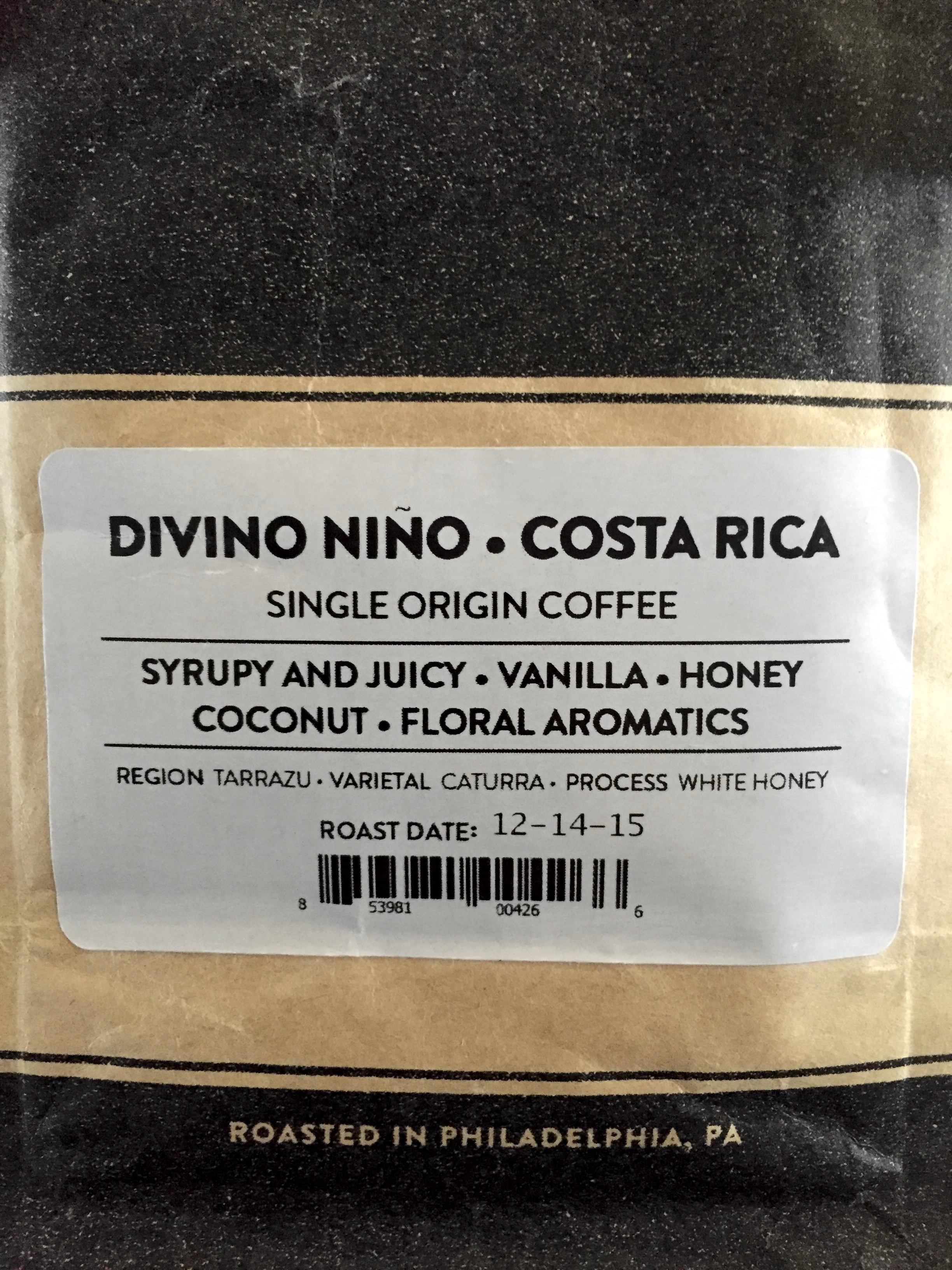
2016-01-18 tww_reanimato frontIn return, I was lucky enough to receive some superb Costa Rican coffee: Divino Niño, from ReAnimator Coffee Roasters in Philadelphia, USA — a little more on this below.

If you have not heard about Third Wave Wichteln, it is a global specialty coffee exchange which occurs each year in December/January, where, at random (after signing up) you are matched with a recipient to send your coffee to, and your name given to another (different) member to receive some in return.

I think most of us know the principle — from Wikipedia:

Secret Santa is a Western Christmas tradition in which members of a group or community are randomly assigned a person to whom they anonymously give a gift … and is known as “Wichteln” in Germany. “Wichteln” is what a “Wichtel”, a wight, does, a good deed.

I wrote a few thoughts down about the nature of the online communities many of us are involved in after last year’s exchange .

Unfortunately for some, the programme does not quite reach a 100% completion rate (now with over 2000 members around the world taking part). Through the vagaries of international postage, customs, and also perhaps a little misunderstanding in some cases about what constitutes an appropriate coffee to send, the Facebook feed is also home to a few criticisms of the programme.

Just a couple of things on this point. There have been some calls within the Facebook group for the organisers to provide the email addresses of the assigned sender to those still waiting, where it appears the coffee is lost or indefinitely held up somewhere.

To their credit, the organisers have repeatedly confirmed they will not take this course of action, citing a priority on members privacy, and reaffirming the programme is based on trust. I applaud them for this stance and strongly agree on both points.

In my view (and yes — easy for me to say having received great coffee each year so far), entering into a programme such as this must be based on giving (isn’t that in keeping with the spirit of the season in the first place?), with an expectation you are more than likely to receive in return.

Whether by global exchange or within your office, we’ve all been the recipient of the random joke. You know, you carefully decide on an appropriate gift for the random pool, and then find yourself on the receiving end of the completely useless novelty shop item meant to give everyone a good laugh. Very unfortunate, but it happens — and bear in mind that was the giver’s intention. In the case of the Wichteln here, I’m sure the coffee was sent with the utmost of good intentions, and for some reason beyond the control of the gift giver, simply never arrives — again unfortunate but hardly the fault of those involved.

I say again — treat the Wichteln as a programme of giving and you really can’t go wrong. Stock up over the holiday season on your favourites, or from roasters you have not tried before and get stuck into enjoying those coffees. If your package from across the world drives? What a bonus, otherwise forget about it and it will be a nice surprise when it does land on your doorstep.

Oh… the coffee itself?

2016-01-18 tww_reanimator_backAn absolute delight, with some handy advice on brewing parameters from the ReAnimator barista and trainer via Twitter who sent me the coffee as well (thanks again Greg!). Yes — it really isn’t hard to connect with those whom you have sent to, or received from, once the exchange is complete.

2016-01-18 tww_iced_filterThe Divino Niño certainly lived up to its promise, a sweet, juicy brew, perfect through the V60, in the Aeropress, and on a particularly hot Brisbane summer day, an iced filter which possibly even outshone the other two. I most definitely consider myself a very fortunate recipient.

If getting involved in something like this is of interest to you, visit the website, where there are some specific, yet straightforward instructions on the type of coffee to send and how to send it.

I’ll certainly be signing up again next December and will be looking forward to sending some coffee to a lucky recipient across the globe — and I’m pretty sure I’ll receive something special in return.