What’s Brewing: Panama Baru Indian High Estate Geisha – Natural

You might notice this coffee originates from the same region which has produced my most enjoyable coffee to date — bar none — about which I wrote in a previous post. The reason is obvious of course — I was looking to capture some of that magic, figuring I would either be very happy once again, or find that perhaps I had been spoiled by the quality of that previous experience. My fingers were tightly crossed for the former.

The Region and Producer

Here, I again refer you back to that previous post, which outlines a little about the Boquete region in Panama.

There is also extensive information available (link below) on the Saurez family history of growing coffee in the region (beginning in 1920), and the Baru Indian High brand. A snippet on their philosophy I reproduce here:

Image courtesy Baru Indian High

Image courtesy Baru Indian High

The growth and success experienced throughout the years is due to the enforcement of basic principles when managing the farms: maintaining the same coffee varieties that our parents started growing since the birth of the business, promoting a high degree of social commitment with our partners and employees, applying a sustainable agriculture that respects the environment and investing in technology to constantly develop the latest trends in farming.

These paired up with the special micro-climate that Boquete brings, makes that at the end we can present you a product that is consistently the same — if not better — quality than the year before. This consistency provides our clients with an interesting volume and also a very attractive cup profile of the highest quality.

Courtesy Baru Indian High – About

The Coffee

Courtesy Ministry Grounds Coffee

  • Panama Baru Indian High Estate Geisha – Natural
  • Price at time of writing $AU26.00 for 500g (green)
  • Region: Jaramillo, Boquete
  • Farm: Anselmito Estate
  • Altitude: 1550 Meters above sea level
  • Variety: Geisha
  • Processing: Natural
  • Producer: Noberto Saurez
  • Tasting notes: Light body, sweet and bright with floral notes and a presence of jasmine, cherries, stone fruits, strawberries, dry banana & plums

The Brew
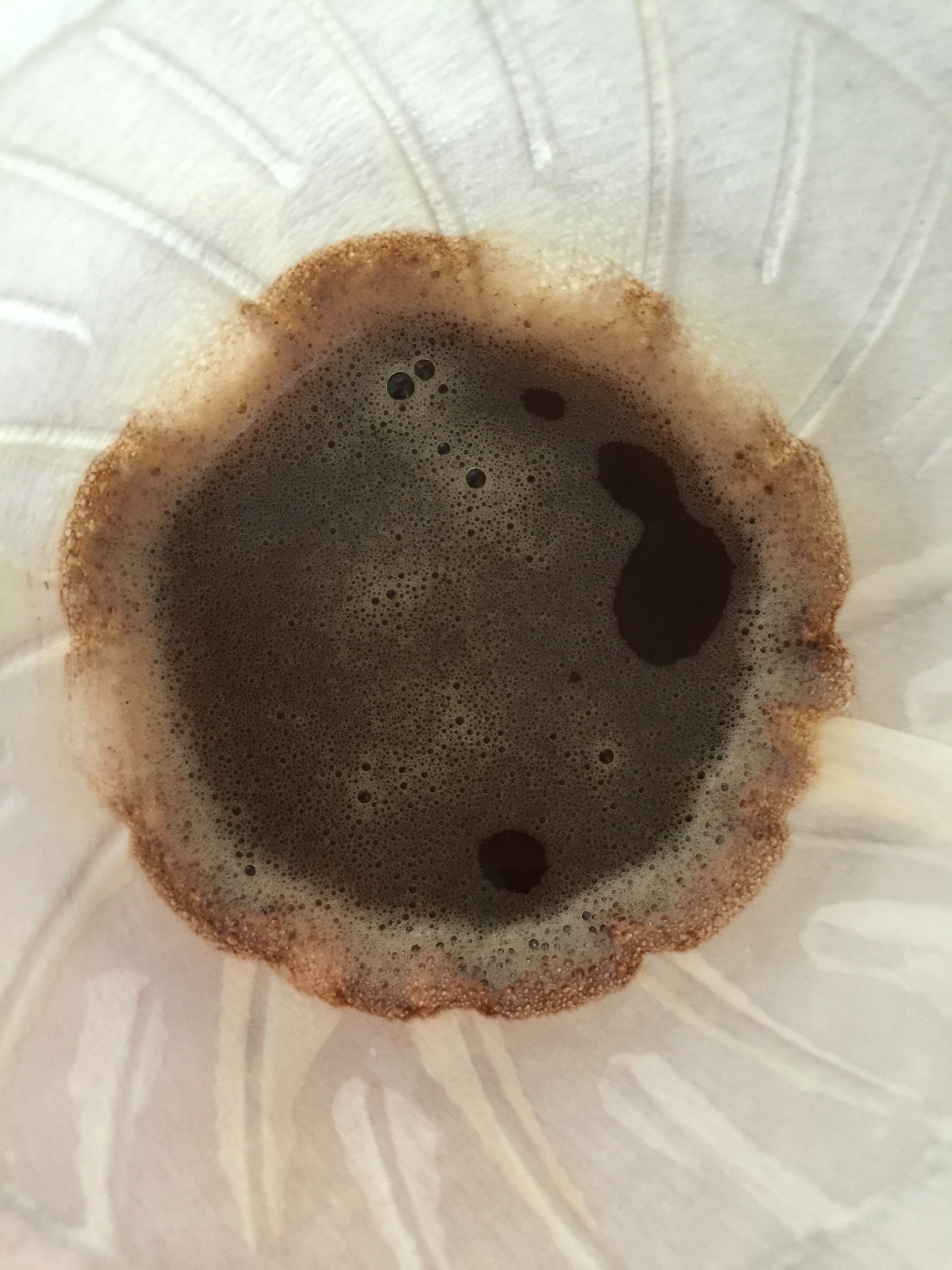
IMG_4114The result? Brewed with the Hario V60, I’d describe it as a very fine coffee indeed, however probably not quite to my initial expectations. It was indeed quite light in body, however not as bright in the cup as I anticipated. As far as the overall flavours were concerned? To me, there was an abundance jasmine, an almost candied-like berry flavour, and yes, a hint of dried banana, as the tasting notes above suggest, though of course I would not have necessarily picked that up myself.

Roasting side note
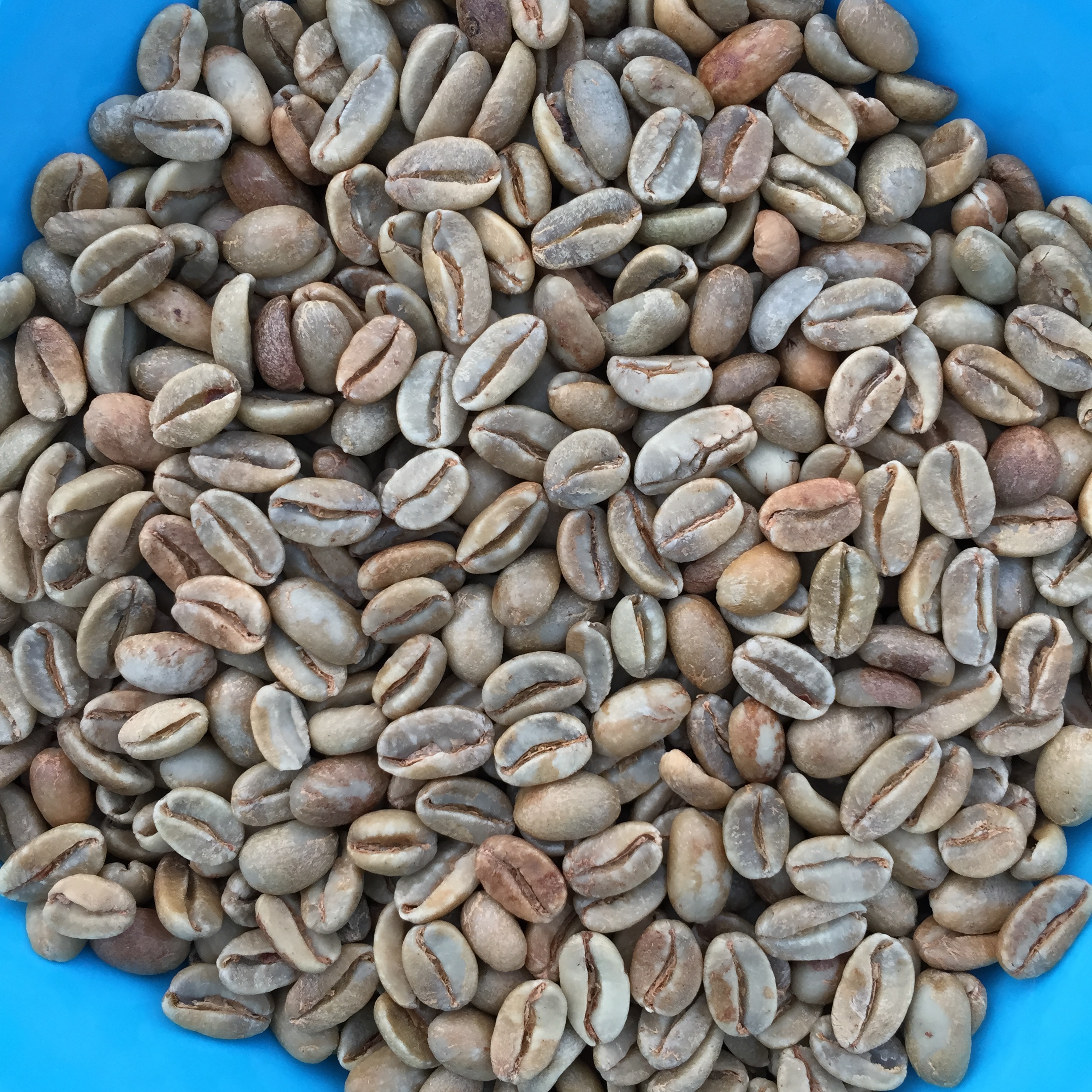
IMG_4319As you can see from the bullet points above, this coffee was double the usual price I pay for my green beans (that is, the usual per kilo price for a 500g lot), clearly reflecting the higher price initially paid at auction and the quality of the product. In an attempt to do justice to any subtle flavours, my initial roast was aimed squarely at light to medium, with an eye to filter brewing. Without a large amount to play with, roasting was done in two 250g batches to allow for some “correction” in a second attempt if need be.

Yes, that second attempt was indeed required, with a slightly longer development time, yielding much the same results1. I must note here I indeed found the roasting a little challenging, perhaps due to the fact this coffee had quite a large bean, with my small-scale set up not behaving with its usual roasting profile.

The Finish

Overall, I would not deny this coffee every bit of its price tag. Sometimes it would be nice to taste the same crop roasted by a professional roaster, to assist me in determining whether the coffee was slightly below my expectations, or whether my roasting skills resulted in me arriving at this point. Were I a betting man I would suggest the latter is most likely at play here.

In any event, the Panama Baru Indian High Estate Geisha (Natural) is a wonderful coffee indeed, and if you enjoy a brew with flavours a little more complex than your standard “mmm that’s fruity”, then this is well worth a try. To get the full value for your money, perhaps don’t have an amateur roast it in his back yard.

I do however — live and learn. On to the next roast… and cup.

  1. For those interested in further detail, the two roasts were (i) total time 11:00 mins; development 18%; and (ii) total time 10:10; development 21%. ↩︎

What’s Brewing: Guatemala El Zapote

I have generally always enjoyed coffees from Guatemala, with most having a solid flavour profile, yet enough subtlety to separate one farm from its neighbours – here I emphasise variety – not my ability to name the various farms by taste of course!

The Region

Information courtesy Wikipedia

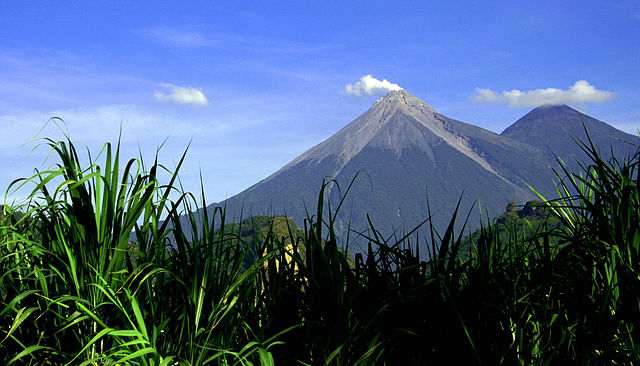
Acatenango is a stratovolcano1 in Guatemala, close to the city of Antigua, in the central highlands of Guatemala. The volcano has two peaks, Pico Mayor (Highest Peak) and Yepocapa (3,880 m) which is also known as Tres Hermanas (Three Sisters). Acatenango is joined with Volcán de Fuego and collectively the volcano complex is known as La Horqueta.

Volcano de Fuego in the Acatenango region in Guatemala. Photo courtesy Javier Ruata.

Volcano de Fuego in the Acatenango region in Guatemala. Photo courtesy Javier Ruata.

Fair enough to call it a volcanic region I’d say!

The Coffee

Information Courtesy Ministry Grounds

  • Guatemala El Zapote
  • Region/Town: Acatenango
  • Altitude: 1200-1950 meters
  • Area: quarter of one hectare
  • Varietal: Yellow Bourbon
  • Processing: Wet processed; 100% sun-dried
  • Harvest time: January/February
  • Producer: Julio Melendez
  • Tasting notes: classic and beautifully balanced; notes of lemon, melon and stone fruits

The Brew

Having roasted for both espresso and filter, I was able to enjoy the El Zapote across a wide range of brew methods.

As espresso, it produced a fresh, bright cup, demonstrating a little citrus tang, along with notes of honey and chocolate. With milk, it kicked off my mornings really well, with similar flavours working well, however I’d say even a little better when blended with a some Brazil Fazenda Aurea – also roasted on the same day. This blend, containing about 30% of the Brazil, added a little more depth, and brought the flavour through the milk just that little bit more.

The filter roast provided a very clean, crisp and bright cup when brewed with the Hario V60. The body and acidity nicely balanced, with refreshing notes of citrus. Also perfect in an iced pour over, with summer not really wanting to let go just yet here in Brisbane.

The Finish

Whenever I am browsing the offerings from Ministry Grounds, rarely do I overlook the Central America section, with Guatemala always high on my list. These coffees always seem to work really well in blends, yet also stand happily on their own – the El Zapote is another to add to the list.

Unfortunately at the time of writing this coffee is now out of stock, however was purchased from Ministry Grounds for $AU19.55 per kilogram (green).


  1. A stratovolcano, also known as a composite volcano, is a conical volcano built up by many layers (strata) of hardened lava, tephra, pumice, and volcanic ash.


What’s Brewing: Indonesia Bunisora Honey Processed

Two of the more common taste characteristics I find with Indonesian coffee are those of floral and spice, and their cousins, earthy and herby. What was I expecting with the Bunisora? Much of the same I guess, which I have to say was pretty much spot on.

Whilst I am not suggesting this as a negative necessarily, at times the overall flavour profile was perhaps just a touch underwhelming in the cup.

The Region

Firstly, a little on coffee in Indonesia (from Wikipedia):

Indonesia is the worlds fourth largest producer of coffee, with the island origins micro climate well suited to growth and production. Just over half the production is consumed domestically.

In general, Indonesia’s arabica coffees have low acidity and strong body, which makes them ideal for blending with higher acidity coffees from Central America and East Africa.

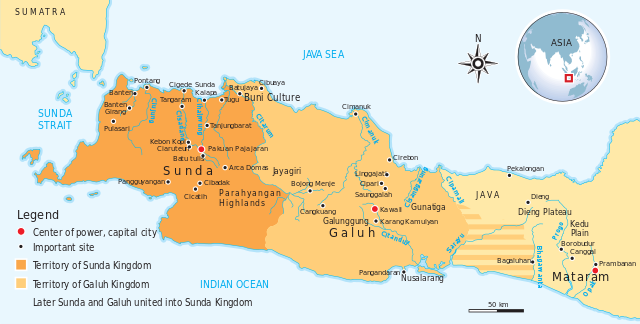
The islands of The Sunda Region are divided up between four countries: Brunei, East Timor, Indonesia, and Malaysia, with much of the territory Indonesian.


Image courtesy Wikipedia

Image courtesy Wikipedia


A great article on Sprudge about Indonesian Coffee would be well worth reading for a little more understanding about the region and its coffee production and processing. From “Always An Exception”: Inside The Rising Tide of Indonesian Coffee:

Since Indonesia consists mostly of smallholder farms, change is bound to be gradual; but this isn’t stopping some producers from stepping up, changing quality, and differentiating themselves. With their continuing effort, we can expect to see more and more exciting coffees coming out of Indonesia.

The Coffee

Information courtesy of Ministry Grounds:

  • Region: Sunda
  • Producer: Small Holding Farmers
  • Varietals: Typica and Bourbon
  • Processing: Honey processed
  • Altitude: 1400m
  • Tasting notes: floral bouquets and sweet spices

This particular coffee from small holding farmers in the region of Sunda is named after an ancient Indonesian ruler Prabu Bunisora.

The Brew

The coffee was roasted as two separate batches, one for filter and one for espresso in my trusty backyard roasting setup.

The espresso roast came out pretty well, a lovely even roast if I do say so myself – I had high hopes for this one. The filter roast? That one got away from me just a little, and therefore ended up somewhat darker than intended. Never mind, it was never likely to go to waste.

With milk in my morning latte, the Bunisora produced a nice full-bodied cup, with notes of spice, cocoa and a hint of honey to the profile. As espresso, again, similar spices, however the floral notes were more pronounced with perhaps a hint of jasmine here? With milk or without, this coffee was big on body, which probably blunted the subtle flavours just a little.

Brewed using the V60 or Aeropress was perhaps a little surprising, as to be honest, some Indonesian coffees I have brewed in the past were more reminiscent of “earthy” as in “forest floor”. Here though, I had written in my notes: black tea (perhaps a little jasmine), floral, and to a lesser extent, earthy with a little chocolate (more so than the espresso roast).

I must admit however, during the couple of weeks I have been sampling this coffee, I began running my filter grind through a fine sieve prior to brewing. To say it transformed the brew is an understatement, however that is a post for another day.

The Finish

As any regular reader of these What’s Brewing posts will know, rarely do I complain about what I have consumed – and I am not about to start now.

The Indonesia Bunisora is a very enjoyable coffee, and what it perhaps lacks in subtlety, makes up for in body, and would also therefore make a solid blending partner with perhaps a fruitier Kenyan or Guatemalan single origin.

Overall, a very enjoyable coffee, and currently available at Ministry Grounds for $AU16.78 per kilogram.


What’s Brewing – Fifty K Christmas Blend

With another year having come and very almost gone, it was time to create the annual Christmas Festive Roast Blend for distribution to family and friends. Mind you, with things getting a little hectic towards the end of the year, the creation of this years blend was completed just a little close to the line.

Although not helped by a last-minute change to the composition of the specific coffees I’ve put together for this year, it was preferable to wait a little longer and produce something, which I feel, is a little more well-rounded and nicer in the cup. So without further ado, the details.

The Name

The finished product heading out the door.

The finished product heading out the door.

“What on earth is the Fifty-K reference in the name?” you would be well within your rights to ask. Although only the third time I have done this, the idea of putting together a festive Christmas blend with a specific name is based on two things.

First and foremost, given my own interest in roasting and brewing coffee, it is nice to give something to family and friends who take that little bit more care in how they brew theirs, whether through a home espresso machine, french press, Aeropress or other manual brewing methods.

Secondly, coming up with a name for the blend which reflects either the year I’ve had, other events of interest, or something which has perhaps captured my thoughts in the previous 12 months.

This year, as regular readers (and without a doubt my immediate, and very understanding family) will be well aware, November was a big month, swallowed up entirely by my participation in National Novel Writing Month, or NaNoWriMo. Managing to meet the 50,000 word deadline by the end of November certainly wasn’t easy, however I was pleased to get there, and finished with a small novel of just over 55,000 words by months end, along with the inspiration to name this years blend in honour of that very challenge.

So, without further ado, what makes up this years festive roast, and how does Fifty-K Blend taste in the cup?

The Coffee

As usual, the green beans were sourced from Ministry Grounds, with the plan to put together a blend worthy of the season, with berry, stone and dried fruits, along with nuts and honey the key components of this year’s tasting notes list.

IMG_3294

Green bean selection

IMG_3300

Roasted bean blend testing

Finalised on December 21 - just made it!

Finalised on December 21 – just made it!

Searching through the many single origin coffees on the Ministry Grounds site, after a false start with the Guatemala Las Illusiones (a fine coffee in its own right, however wasn’t quite right in the blend), the individual coffees below made the final cut, and make up Fifty-K Blend in equal one-third portions.

Ethiopia Sidamo Bulga

  • Region: Oromiya – Southern Bale Mountains
  • Area: Bulga
  • Variety: Various heirloom cultivars
  • Processing: Fully Washed

Rwanda Nyarusiza

  • Region: Nyamagabe district, Southern Province
  • City: Between Butare and Cyangugu
  • Altitude: 1,935 metres above sea level
  • Variety: Red Bourbon
  • Processing: Fully washed, sun-dried on African raised beds

El Salvador San Cayetano

  • Region: Ahuachapán, Apaneca Ilamatepec Mountain Range
  • Altitude: 1,500 metres above sea level
  • Variety: Bourbon
  • Processing: Honey processed and greenhouse dried

The Rwanda Nyarusiza returns, having been part of last year’s Keeper’s Blend, however the above combination is a departure from the red berry dominance of the 2013 blend.

Individual tasting notes and further background can be found on the Ministry Grounds website by clicking on the above links, however as far as the blend itself tastes, below is what I have found.

The Taste

A standout - the AeroPress

A standout – the AeroPress

When combined with milk in a flat white or latte, it is a lovely rich and creamy drink, with the dried fruits and honey at the forefront, and a mild, nutty aftertaste. Overall, the honey really carries through when consumed with milk. Perhaps it may have gained something from a little more “fruitiness”, however overall I think it works well to kick things off in a morning latte.

A little surprising to me was how well the blend suited the AeroPress, and had I not been running dangerously low on filters, would have consumed a lot more through this type of brew method. Whilst remaining rich and creamy with a lovely mouthfeel, the AeroPress really brings out the stone fruit and black tea flavours which hide a little in the milk based drinks. A pleasantly robust blend, which holds up really well in this form of brewing.

Upon brewing through the Hario V60 filter, the taste profile is similar in nature to that described above with the Aeropress, however I would not necessarily say it was any better, which is not what I usually find when comparing the two. As espresso (think green apple, a little honey again), well, you can’t please everyone, and let’s just say when consuming the Fifty-K black, a longer form of brewing is probably the best option, as it is probably a little too bright to be considered a really good espresso.

In Conclusion

With another year and another festive roast blend all but complete, perhaps it is time to reflect on the year gone by, and what might lay ahead for you in 2015. Or, as is the case with me, simply enjoying a few days off with family, the cricket and a some new toys to play with, courtesy of some thoughtful gift givers.

Thankfully, no one gave me a fountain pen for Christmas. As someone who does love a good fountain pen, why would I be thankful for this? Well, there are a few reasons, and tomorrow (29 December), you can read about what those are in a guest post I wrote for one of my favourite pen blogs, On Fountain Pens. The article is one in a series of 12, which began on Christmas Day, and I’d encourage you to head over and read them – it’s a great series of posts (and yes… if I do say so myself!).

I do hope you have had a Merry Christmas, thanks for stopping by, and best wishes for the coming year.

Coffee Roasting: Development-time Ratio

Although not for everyone from either a time or inclination perspective, one of the benefits of roasting coffee at home can also be it’s simplicity. True, there are many variables to consider (and hopefully control), however, if a few core principles are followed, it is certainly a process achievable to many.

In saying this, I mean no disrespect to the many professional specialty roasters out there. My point is simply this: for the home roaster, there are a few key inherent markers which occur when roasting, providing the ability to roast by “sight and sound” (as opposed to computerised tracking), without the necessity for complicated equipment. If you have a suitable means of applying enough heat to green beans, they will crack, you pull them out some time after that, and assuming this is done within a reasonable time, you end up with drinkable brew.

I have previously written about my home roasting set up, which although needs updating in a new post, is beyond the scope of what I wish to talk about here. The remainder of this post will look at one element of roasting which I have recently read about, and decided to apply myself: the development-time ratio.

Development-time ratio

One aspect of my roasting I have always tried hard to achieve is some level of consistency between batches. I was therefore particularly interested to read a guest comment on the Cropster blog by Scott Rao, who is highly regarded in the coffee industry, and has published numerous books on many aspects of coffee preparation, and most recently, roasting.

From the post:

Roasters have traditionally referred to the time from the onset of first crack until the end of a roast as “development time.” Lengthening development time to mute acidity or increase development is a common practice, especially when roasting coffee intended for espresso. However, adjusting development time without considering it in the context of the entire roast profile often destroys sweetness and creates “baked” flavors.

Rao goes on to say:

After collecting roast data of over 25,000 batches over 20 years, I noticed a pattern among the very best batches: in all of them, first crack began at between 75%–80% of total roast time. Alternatively, development time was always between 20%–25% of total roast time.

I recommend reading the original post, which also demonstrates the concept graphically with a typical roast profile.

Upon reading the article, it became clear the development-time ratio might provide a means of achieving the level of consistency I had been aiming for, or at the very least, give some indication my roasting criteria approximate some accepted parameters.

Application to my home roasting

Reading Rao’s post may at first seem to refute my point that home coffee roasting can be a simple process, however I am not suggesting we all need to rush for our calculators either. I would also note the above percentages are saying the same thing, so if you have the inclination to look at your own data, there is no need to calculate both.

In searching for some element of consistency in my roast batches, I have typically been a little uncertain around exactly which variables were the most important. Total roast time, time to first crack, development time, or a combination?

The principle of development-time ratio provides a consistent approach to every roast batch, notwithstanding changes in other variables. It requires no additional equipment, nor recording or measurement beyond the data I currently have in a log of my previous roasts.

My historical roast data

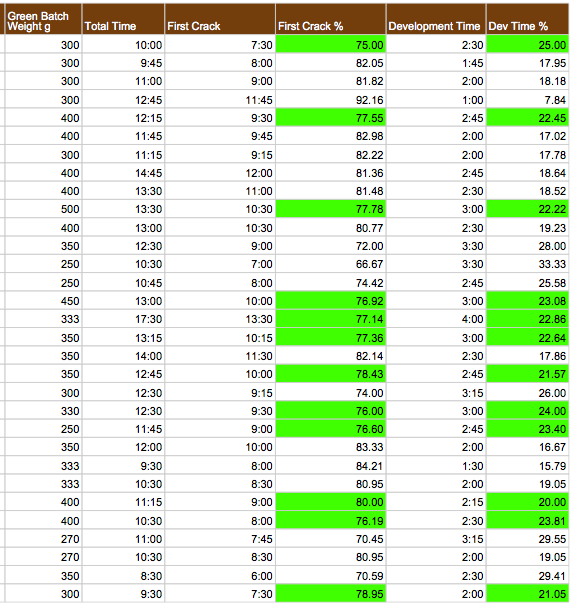
Given I have recorded sufficient data about my past roasts to assess the development-time ratio retrospectively, with the assistance of a spreadsheet, I proceeded to analyse 30 of my most recent roast batches. My initial thinking was along the lines of “these roasts will mostly fall within the 20–25% parameter”.

The result could not have been more different, and highlight the inherent flaw in assumption. Of those 30 roasts, only 11 fit Rao’s recommendation for a development-time ratio of 20–25% of total roast time (range 9.8 – 33.3%). Although the average was 21.6%, this is not particularly relevant when we are considering individual batches. A couple of things to point out here. One, I am an amateur remember! Secondly, further 17 batches were within a band of + or –5% (that is either 15–20% or 25–30%), and a number of these were pretty close to the 20 or 25% cut-off.

You will note from the data these figures are based on varying batch sizes, with considerable variation in overall roast time. As I roast outdoors with an open “drum”, I have found variation exists due to ambient temperature, time of day and the cumulative heat of the drum with successive roasts.

As expected, considerable variability in the cup was evident in relation to differing origin, processing method, roast level and brewing technique. Naturally, some were better than others, and I have not had the opportunity to compare the development-time ratio findings with my tasting notes on the particular coffees in this sample. I do not plan to spend a significant amount of time on this, as any valid results would rely on assessing the same coffee roasted in separate batches, standardising the variables from the previous paragraph. I doubt I have any current data fitting this criteria.

I have included a snapshot of the data below. As you can see, it contains both time of first crack as a percentage of total roast time, and development time as a percentage of total roast time. As I have noted above, there is no need to measure both, however for completeness I have included them here. Roasts falling within the criteria (by either measure) are shaded green.

Table 1: Development-time ratio (historical data).

Table 1: Development-time ratio (historical data).

Where to next?

There are probably a few answers to this question, the first being further reading, with Scott Rao’s The Coffee Roasters Companion high on my list. Although a good deal of the content may relate to far more sophisticated setups than mine, I find the science behind coffee roasting quite a fascinating topic. A review of the book can be found on James Hoffmann’s blog.

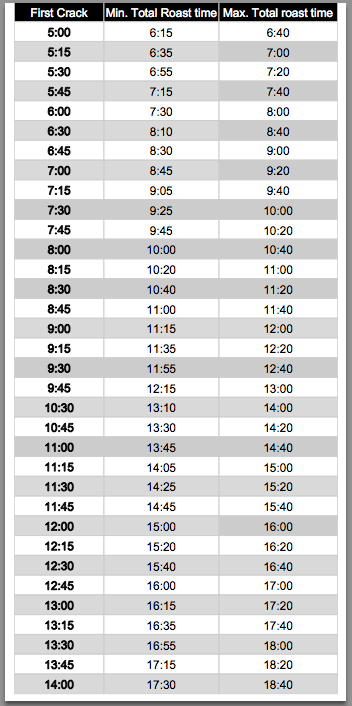
I thought I would also use the development-time ratio to standardise the total roast time in future batches, and determine whether this influences the overall quality of my roasting, and ultimately, drinking. Yet another spreadsheet here, this time to avoid the need for any complicated maths during the critical part of a roast (a printout of which is fixed firmly inside my roast record notebook).

The table below uses time to first crack (column 1), to produce the range of minimum (column 2), and maximum (column 3) roast times required to fall within Rao’s criteria for the ideal development-time ratio.

Screenshot 2014-09-07 21.03.35

Table 2: Total roast time guide based on time to first crack.

Finally, the weekend’s roast data utilising the above prediction chart (Table 2) to cease the roast based on desired development-time ratio:

RoastData_2

Table 3: Roast data from 6 September 2014 using Table 2 prediction chart.

Conclusion

Although this post is a little more lengthy than originally planned, the development-time ratio is a concept well worth exploring. In finding additional ways to assess, influence and standardise my roasting parameters, my skills in this area can only improve.

In the end, the proof will be in the cup, which I am looking forward to testing out.