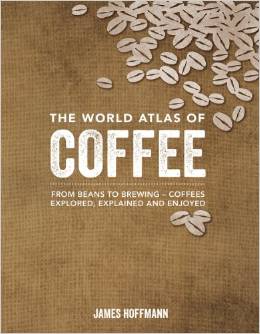
The World Atlas of Coffee – James Hoffmann

Upon first hearing of the upcoming release of this book by renowned barista and coffee mind James Hoffmann (Twitter), I immediately went to Amazon looking for an ‘eBook’ version, which, had one been available, I would most likely have purchased (or at least pre-ordered, as the title is published in October 2014) there and then.

WorldAtlasofCoffeeHowever the more I think about it, the more I realise a collection of electronic pages would not do the subject matter of The World Atlas of Coffee justice. Whilst it is not my intent to dismiss the eBook format, my point is simply this, coffee is such an organic and sensory product, I feel it would be a shame to read about it without holding a physical, hard copy of this book in your hands. I simply believe it would add to the reading (read, my) experience.

The content of the book? From Amazon:

Taking the reader on a global tour of coffee-growing countries, The World Atlas of Coffee presents the bean in full-color photographs and concise, informative text. It shows the origins of coffee – where it is grown, the people who grow it; and the cultures in which coffee is a way of life – and the world of consumption – processing, grades, the consumer and the modern culture of coffee.

I have mentioned on one or two occasions before that James Hoffmann’s blog is one I especially enjoy reading, noting I am the typical end consumer, with a viewpoint decidedly external to the industry itself. For that reason, I was particularly happy to read the following from Hoffmann himself referring to the content of the upcoming book:

More than both of this, I wanted to write something for all our customers – the people who go out and buy, brew, drink and enjoy coffee every day. I believe that understanding something more can make it more enjoyable, and I wanted to make more of coffee accessible rather than make it more mysterious and exclusive. I want to help people to understand what they like, explore what they don’t know yet, and feel more confident in the somewhat intimidating world of specialty coffee.

At the end of the day, is there anything better than a coffee table book about coffee? Why of course, a high quality coffee table book about coffee.

The Bean Brewding Walking Coffee Tour

A brisk August Saturday morning, with many Brisbane locals headed to the Ekka. My wife and I? Something much bigger. The date had finally rolled around for the Bean Brewding Walking Coffee Tour of Brisbane’s Fortitude Valley. Both my legs and palate were ready for a big morning ahead.

Background

Glenn, George and Ben of Bean Brewding describe their website as “the collaboration of three Brisbane coffee drinkers”. In addition to reviewing various independent coffee establishments (league table on the site), they also aim to “to promote the Brisbane coffee scene with quality, quirky and ethical establishments”.

I have been a regular reader of the blog and enthusiastic Twitter follower for some time now, and was keen to get on board with the latest coffee tour, after reading about the tours that had been run in the previous 2 years. I also find I tend to become ‘local’ to one or two establishments, and probably don’t visit and experience as many great coffee destinations around town as I should, and this was a chance to do just that, with a few other like-minded individuals.

What follows is not intended to be an in-depth rundown of the tour, however highlights what you might expect to experience should you decide to join the guys on one in the future.

The Coffee Tour

1. Bear Bones Espresso – Exploring coffee roasting

Tour assembly at Bear Bones Espresso

Tour assembly at Bear Bones Espresso

The first stop for a pre-tour pick me up and breakfast fuel-up was Bear Bones Espresso in McLachlan St Fortitude Valley (whom deserve a special thank you for opening on a Saturday just for the tour). A quick meet and greet from our guides, along with receipt of our tour “passports” and itinerary began the day smoothly. It was the responsibility of owner Trent and the Bear Bones team to educate these ‘tourists’ on the key principles of roasting the humble green bean.

A pre-tour chat and slideshow from their visit to Ethiopia also provided a fantastic background into the growing, harvesting, processing and buying which occurs in a typical coffee country at origin.

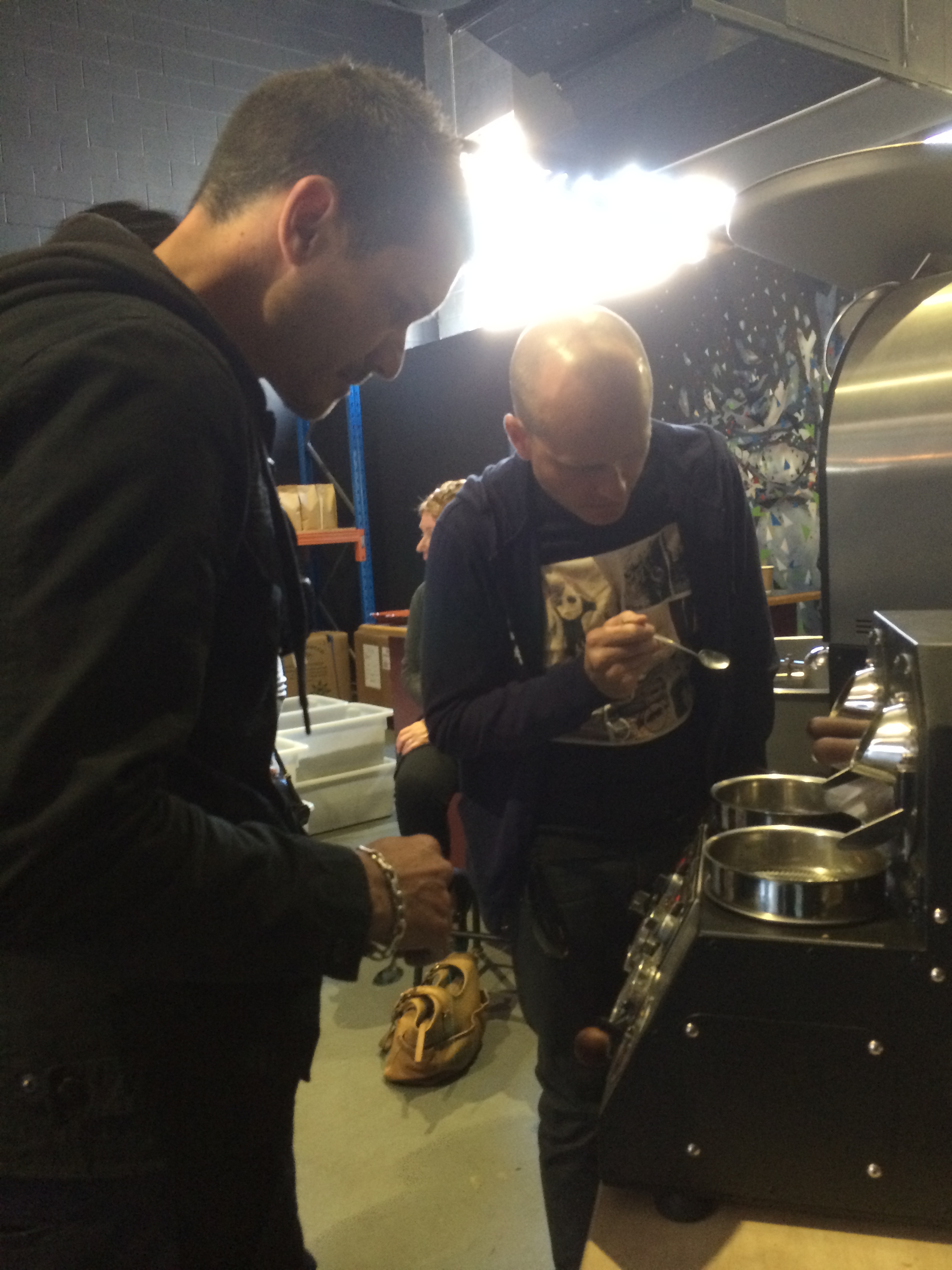
This was followed by a demonstration of a couple of roasts through the sample roaster on the premises, and I was grateful for the opportunity to put some green beans through myself. Somehow the whole process seemed a little more sophisticated than my breadmaker and heat gun roasting set up in the backyard at home.

It was great start to the tour, and also gave me some ideas for improving the roasting profiles I use at home, and introduced some concepts I had been unfamiliar with, for example the “double roast”, where the beans are pulled out early and cooled, before being reintroduced to the roaster to continue the process (the aim being to allow the outer surface of the bean to contract by cooling; locking in more of the flavour producing compounds). Interesting – though perhaps a little sophisticated for my skill level.

Roasting at Bear Bones Espresso

Roasting at Bear Bones Espresso

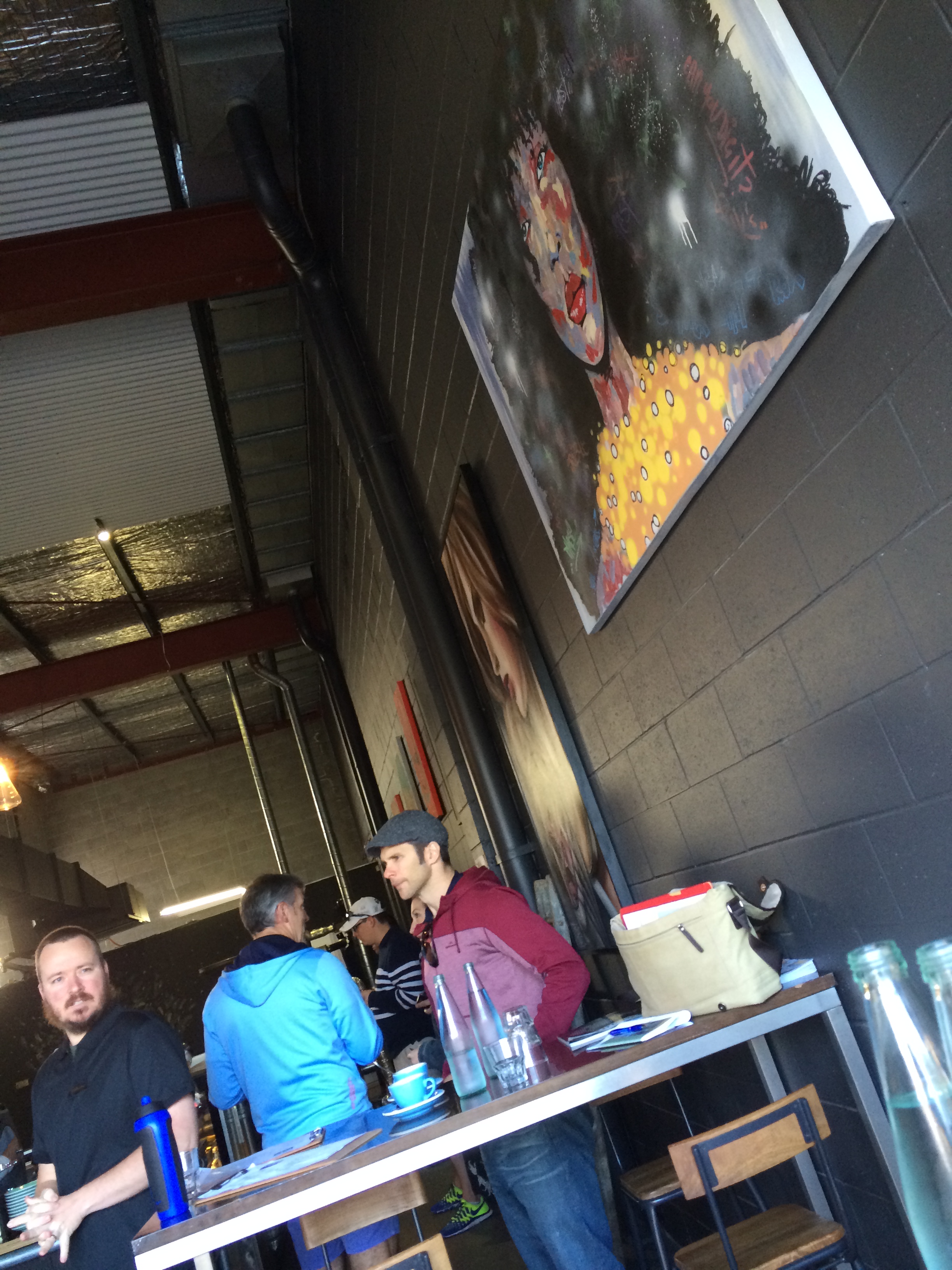
A few final words, bagging of the beans I had roasted to take home, a Bear Bones bag of coffee for each tour member, and we were on our way. A great way to start the tour, and if you are ever in the area, go and have a chat to the guys and have a look at the fantastic art on the walls while you’re there.

Bear Bones Espresso
2/66 McLachlan St
Fortitude Valley
Web: bearbones.com.au
Facebook: bearbonesespresso
Twitter: @bearbonesbris
Instagram: @bearbonesespresso

2. Bellissimo Coffee – The art of espresso based coffee

A leisurely few minutes of walking saw us arrive at the bustling Bellissimo Coffee in Wandoo St. Thankfully a dedicated space was set up to accommodate the tour so we did not disturb the regulars enjoying their Saturday morning cup or two.

Here we were provided with a background on the principles of making great espresso at home, a demonstration, and the chance to step up and give it a go ourselves. As both a manual brew drinker and user of a home based espresso machine for many years now, it was nice to hear most of the principles and techniques I follow are still considered best practice, and I can happily continue to work on improving my consistency at home.

Further discussion ensued around the merits of spending your hard-earned cash on home equipment, and on which specific aspects of a home set-up this should be spent on. Thankfully the conclusions were generally in line with the advice I often give when asked, which is, to save a bit of money on the machine to put towards a decent grinder. I am sure “grind on demand” is firmly etched into a holy tablet somewhere.

To finish we received an information sheet containing a 10% discount voucher for Bellissimo and a round of takeaway orders to keep us on schedule. We then sipped a beautiful creamy Bellissimo blend all the way to our next destination.

Bellissimo Coffee
30 Wandoo St
Fortitude Valley
Web: bellissimocoffee.com.au
Facebook: BellissimoRoast
Twitter: @BellissimoRoast
Instagram: @BellissimoRoast

3. Blue Sky Coffee – Alternate coffee brew methods

Next!

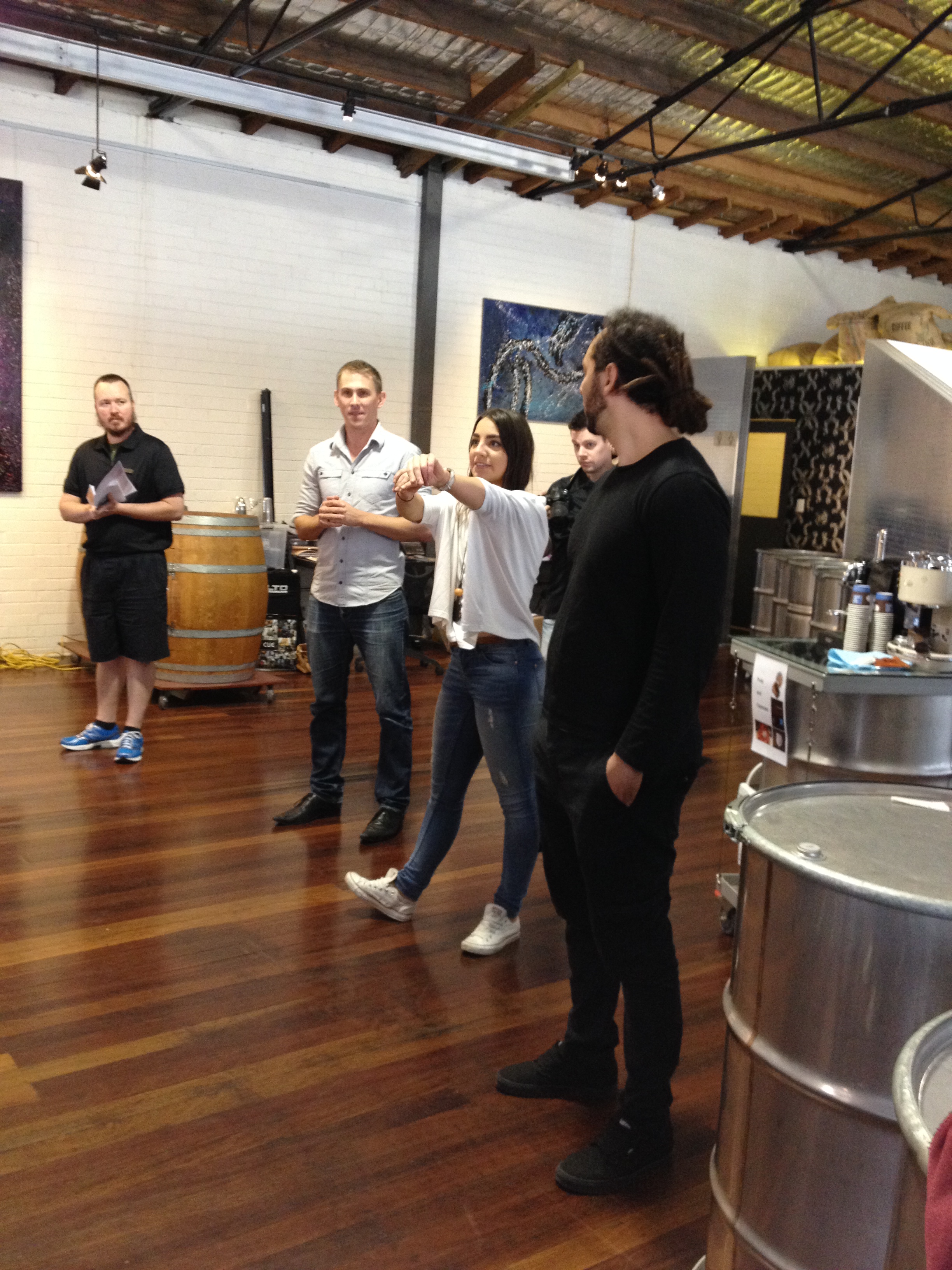
Blue Sky Coffee is certainly an impressive space, with a cafe fronting Commercial Rd, roastery at the rear, and enough space in between to set up some brewing stations for events of high importance such as coffee tours and the like. Danny and the Blue Sky team had three separate stations set up where we learned techniques, and sampled coffee brewed from the V60 Pourover, Espro Press, and Capsule/Pod machines.

As you can imagine, two of those three stations resulted in great brews, however you cannot dismiss the burgeoning capsule market, nor deny the merit in efforts by specialty roasters to provide alternatives to the current mass-produced capsules.

The Blue Sky Team

The Blue Sky Team

A favourite of mine was the V60 lesson, as the majority of my manual brewing at home is done with this device, and I am always keen to see how professionals brew using this technique. I generally never leave without managing to pick up a few hints, and this occasion was no different.

With a view to finishing the tour with a bang, I managed to discuss a few more details on brewing equipment with the staff, and purchased a set of Hario scales to enhance my home brewing endeavours. In addition, I downed an espresso made on a beautiful Ethiopian single origin, and picked up some Kenya Gattina beans to brew at home. All this, along with the $5.00 Blue Sky Credit given to each member of the touring party and some complimentary food, lead me to conclude I had done pretty well for the day.

Blue Sky Coffee
32 Commercial Rd
Newstead
Web: blueskycoffee.com.au
Facebook: BlueSkyCoffee
Twitter: @blueskycoffee
Instagram: @blueskycoffee

In Conclusion

What can I say? My wife and I had fantastic morning out with a bunch of like-minded coffee tragics/nerds/enthusiasts (however you would like to describe us), along with our friends from the Wired Owl Coffee Co. Yes, the tour was primarily about coffee, however to me, events like these are as much about support and appreciation as they are about learning and fun.

The three ‘beans’ of Bean Brewding all hold full-time jobs, and it is no mean feat to get something like this up and running, let alone have the day go so smoothly and run to time as planned. In addition to a great learning opportunity, I derive just as much satisfaction from being able to support small, independent operations, whether they are blogs, tours, writers, or podcasts, and have a mountain of Teespring shipping receipts that will attest to this.

The Bean Brewding guys have shown a great deal of commitment, organisation, effort, and ultimately courage to pull the trigger and say “the tour is on” – and hopefully then sell enough tickets required to make it a success. Believe me, it was the best $35.00 I have spent in some time. Congratulations guys, your effort is much appreciated.

The bonus here? An exploration into something I am just a little obsessed with; a local, easily accessible event; and a fantastic bunch of industry folk happy to get behind the tour, who generously gave up their time to provide something pretty unique, and are not only passionate about their craft, but extremely willing to educate those far less knowledgable than themselves. A big thank-you to all those from Bear Bones, Bellissimo and Blue Sky who made the day such a success.

Keep an eye on the Bean Brewding blog for upcoming events, particularly the Coffee Tour page, or follow Twitter or Instagram for snippets and great photos of their travels around the Brisbane coffee scene. Thankfully there are future tours planned, and should I have the opportunity for another, I hope to see you there.

What’s Brewing: Guatemala Santa Clara

It’s a great time to sample some superb Guatemalan coffee in Brisbane at the moment, and I have also been in on the act by roasting some myself. Cup Coffee have a Santa Clara showcase of sorts, currently offering washed, honey and fully natural processed versions for sale, many of which have also found their way into a cup or two at Strauss Café & Bar in the CBD.

On a recent order of green beans from Ministry Grounds, I picked up some of the fully washed Santa Clara to roast and brew at home.

Coffee

  • Guatemala City (Image courtesy Wikipedia)

    Guatemala City (Image courtesy Wikipedia)

    Guatemala Santa Clara

  • City: Antigua
  • Altitude: 1600–1830m above sea level
  • Variety: Bourbon
  • Processing: Fully Washed and patio dried
  • Owner: Zelaya family

The farm has been managed since 1988 by Ricardo Zelaya, the 4th generation of the Zelaya family to have produced coffee at Santa Clara. The Zelaya family has been growing coffee for over 100 years and four generations. This renowned family owns farms throughout Guatemala and grows one of only a handful of genuine ‘Antigua’ coffees (coffees grown in the Antigua valley area bounded by three volcanoes – Agua, Acatenango and Fuego).

Information courtesy Ministry Grounds

While tracking down some information for this post, I also came across a brief interview with the owner of the Santa Clara Farm, Ricardo Zelaya, conducted when he visited Melbourne in 2013. He talks about managing the farm, plans for the future, and how he drinks his coffee. You can find it on the Market Lane Coffee blog.

Brew Methods

Hario V60 Filter, Aeropress, Espresso (+ Kalita Wave at Strauss Café & Bar)

Impressions

As I mentioned earlier, this shade grown coffee is processed by both wet and dry methods, and if you can, it is a worthwhile endeavour to sample both.

As I have now begun roasting each coffee more specifically for espresso and filter based consumption, this and most future posts will discuss my impressions from this perspective (that is, two separate roast batches with different roast profiles). In the past, I have written on the basis of a single roast profile for all types of drinks.

As a morning latte or flat white, the Santa Clara performed really well in milk. It created a creamy, smooth drink, with a good chocolatey base, and some of the fruity flavours peeking through as well. A very, very enjoyable way to start the day. As espresso, also very enjoyable, a bright cup, with a pleasant level of acidity, medium body and a lovely creamy mouthfeel.

The filter roast performed equally well in the Aeropress and V60 Pourover, the V60 resulting in a more delicate, refined brew as expected. Both demonstrated a fresh, bright cup, again the acidity was pleasant, with enough body to make a great “winter warming” brew consumed sitting in the sun on a cool winter afternoon. This perhaps clouded my judgement of the Aeropress (consumed at my office desk), given sitting in the backyard sunshine carries an obvious environmental advantage! Again, nice fruity flavours with chocolate and citrus in both forms of brewing.

Finally, a brief mention of my thoughts on the variety of processing options on offer at Strauss Café & Bar, which were all sampled through the Kalita Wave. My pick would be the natural process, which seemed to enhance the stone fruit flavours a little more, and at times was reminiscent of a juicy grape. Not the most elegant of descriptions probably, however hopefully you get my drift. That is all I have to say on this point – remember, I do not do café reviews.

Final Thoughts

Loved it.

Probably one of the more enjoyable coffees I have roasted and brewed this year. I must admit, the cool weather of late has made it a little easier to control my roasts (given they are done outside), and with a little experimentation, I feel these have been improving over time as well. I’ll be disappointed when the last of the Santa Clara goes through the grinder, however there may be something even more enjoyable up ahead. After all, isn’t that the basis for the journey?

Rating: 4.5/5

A little coffee and a lot of learning

In thinking a little about independent learning recently, it seemed a good time to put down some thoughts, having myself attended a class on manual coffee brewing at Strauss Cafè & Bar in Brisbane’s CBD a couple of weeks ago. What follows is a brief rundown of the class, along with a few of those thoughts learning.

On Learning

Brew_Class_3Exactly why have I been thinking specifically about learning? Part of my day job involves training new staff in certain areas of the business, and in reviewing and updating these materials, I’ve been considering further improvements to make them more effective. Thinking back, I have also sat in enough university lecture halls, experiencing a wide cross-section of teaching to understand the delivery of information is equally as important as the content itself.

I’m referring to those memorable courses or seminars you attend, regardless of the topic. Where, after attending, you leave with a solid foundation of the topic at hand, yet also a framework for independent experimentation and growth. In cases where you already have a solid foundation, some of the tenets of that foundation are challenged, with alternatives provided that encourage you to seek further information, experiment, or at the very least reassess those facets of the foundation your knowledge is based on.

The great presenters? Those that clearly have knowledge so deep it would be nothing for them to talk all day, entirely unscripted, though remaining somewhat focused on the topic at hand. The best “stuff”? Well, that can often be found in the anecdotes and stories they have to tell, illustrating a point so precisely, it becomes one you won’t forget.

Although occurring in the context of drawing out information from a subject rather than the teachings of a presenter, a similar point made in a recent blog post by author Steven Pressfield, about doing research for his latest book The Lion’s Gate:

They brought out the insights and memories that they had kept in the vault because they deemed them marginal or “not important enough.” It was these stories that turned out to be the most fascinating and revealing.

Time for the coffee, however my point above is simply this, while the brewing ratio’s, numbers and guidelines are important[1], I believe we learn more from the experience (both successes and otherwise) of those more knowledgable than ourselves, who have spent countless hours themselves learning, considering, tweaking and experimenting, so our starting point begins further along the learning curve than it otherwise might. What follows is evidence enough of that.

The Brewing Class

Myself and nine other keen participants were in attendance for the class, run by national level competition barista Adam Metelmann (Twitter, Instagram), of Strauss Cafè & Bar. The contents of the class itself covered the key aspects of brewing (items below in brackets were the focus for the particular topic or the key numbers used on the night), which those interested in coffee would be familiar with:

  • water quality (characteristics, with an emphasis on filtration)
  • brew temperature (standard of 93 degrees)
  • measuring and dosing (28g coffee, 400g water)
  • pouring technique (differences for various brewing methods)
  • coffee (type and roast level; coarse grind/deep coffee bed principle)
  • phases of brewing (Wetting or bloom, Extraction, Hydrolysis)
  • different types of brewing equipment and grinders
  • key components of a home set up (brewer, grinder, temperature probe, scales, timer)
Kalita Wave

Kalita Wave (image courtesy Cup Coffee on-line store)

After gaining some understanding of the level of brewing experience within the group, Adam covered those aspects listed above, and proceeded on to some brewing. To demonstrate the differences in some of the above variables, we sampled coffee brewed using the Kalita Wave filter (which can be purchased from Strauss or through Cup Coffee here in Brisbane). The first round, two brews made from different water sources (both from the Brisbane area); the second, two brews made with water a couple of degrees apart in temperature (93 vs 91 degrees celsius).

The results? Like night and day on both occasions – actually fairly astonishing when tasted side by side. The key here? Knowing. Being aware of the factors that will alter the resulting brew, and being able to measure them, control some and change others, before again assessing the results in the cup.

Other more technical topics came up, including total dissolved solids (TDS), refractometry, agtron levels and the like, however these are for my own further reading and interest, or perhaps a 2nd level brewing class (cc Strauss suggestion box). Great to know about, however the class remained focused on the key fundamentals of brewing as noted above, utilising the tools I have readily available at home or could easily obtain and use should I choose.

Where to Next?

Brew_ClassSimple. For myself, more tweaking, experimentation, a greater willingness to waste a little of the coffee I roast (or buy) in the pursuit of something better in the cup. In addition to more reading, searching, YouTube-ing and pursuit of further background knowledge in these topics.

Since attending the evening a couple of weeks ago, I have monitored my brewing temperatures a little more closely (new temperature probe on the shopping list); ground a little courser and increased my dose a little; brewed sooner after roasting, assessing the changing flavour profiles as the days pass; improved my pour technique; and now tare my scales after the initial bloom pour. Little changes – big difference. My brews (and understanding of them) have improved immensely and I believe this will continue.

The best part of the evening? Over an hour and a half spent with someone who clearly has a passion for all things coffee, has experimented and experienced all aspects of the brewing continuum to present us with a more focused point at which to work from. Sure, what I am looking for might take a little work, however at least I know to head north rather than have to find out east, south and west aren’t where the answer lies.

Finally, I am lucky enough to have my daily filter brew made by that same barista with clinical precision and overarching passion each and every day, for which I am eternally grateful.

Go forth and brew!

(And sign up early for the next class – if you’re not quick I might take your spot).

~ PD.


  1. Were we simply after a recipe, a Google search will provide thousands of these.  ↩

Pucker Up Espresso Lovers

When creating the overall tone in an article, a few key points are generally worth repeating. Put together, these can either weave a fabric of opinion or a shroud of negativity. On occasion I am not really sure which it is – for example this recent piece in The Observer, titled Hot Shot: the story behind the great global coffee revolution, by Jay Rayner, which begins:

Coffee shops have taken over our high streets, supported by a never ending supply of connoisseur addicts. Jay Rayner meets some of the major players taking the revered bean to even greater heights, and asks whether they are ruining his favourite espresso

Early in the piece Rayner describes a beautiful looking espresso, which tastes a little, let’s say, less than perfect:

The taste, however, is wrong. Very wrong. It’s fiercely acidic, a sour hit that makes my lips pucker up like a cat’s bum

That initial impression was London in 2012, with the article published in June this year. It would appear many sour espresso’s have been consumed by the author between then and what is sitting squarely in front of him now. Further, we hear how the burgeoning speciality coffee industry with it’s lighter roasting profiles is (perhaps forever) changing the way our beloved beverages taste across the board.

I don’t believe this is unique to London, given the changes I have seen across Brisbane’s cafés in the past 12–18 months. Although, within a two block radius of my CBD office, there are 3 such cafés, whereas 5–6 times as many (at least) serving “traditionally” roasted espresso. Those serving more traditional style espresso are not going away as far as I can tell (and good for them), and you only need look at the ongoing patronage of the bigger name chains to see that. You may wish to avoid the throngs queueing at these newer cafés, walk right up to the counter at one of the others and order (though possibly a little harsh, message intended in that sentence).

I’m a little curious as to why the author paints a picture of ‘espresso ruined’ across virtually an entire city. I would have thought a city the size of London perhaps may have a few cafés to choose from, many of which would serve espresso with a more “traditional taste”. Perhaps I am wrong on this point.

As far as this ‘new taste’ is concerned? Personally, I enjoy it, along with the variety of espresso now offered not only between different establishments, but also within the same café – often weekly. The more ‘typical’ darker roasted espresso? I enjoy that too – mostly. If espresso can be too acidic, there is just as much (if not more) being served that is more bitter than I care to describe. The continuum works both ways. I can however, see the author’s point of view, as there have been times where I have found the amount of acidity present in some espresso to be perhaps be a little high for my taste. Ironically, the most striking example of this came from one of my own roast batches, which you can read about in my most recent What’s Brewing post.

When it comes down to personal taste, as with anything – food, drink, art, comedy… all a matter of opinion is it not? Why does all scotch not taste the same? I assume it’s because there are those who enjoy flavours of smoke and peat, others sweetness and honey. Or am I missing the point? Are sweetness and honey flavours ruining my favourite scotch? Oh, that’s right, I just buy the one I like. Great to have choices.

Although Rayner makes a valid observation, I question whether the overwhelming negativity and gloom ensure it comes across as too much of a whine to really be of value.

~ PD.