A reviewer — or not?

I have posed the title of this post purely with reference to my own writing about pens — a genuine question as to whether I should be considered a “reviewer”. My immediate answer is no, however I realise that is perhaps incorrect.

The Oxford Dictionary definition (insert “pens” if you will):

a person who writes critical appraisals of books, plays, films, etc. for publication

For publication – I guess writing on a blog satisfies that. Where I originally thought I differed slightly is that I do not set out to “critically appraise” pens — rather, I write about the pens I own and what I like or perhaps dislike about them. The reality is though, that is probably a reasonable definition of what it is to “critically appraise”.

First though — a little background. The stimulus for posing this question (mainly to myself — albeit now aloud through this site), was a post on Fountain Pen Economics (FPE) calling on reviewers to review bad pens. Although I have had some thoughts on this numerous times before — mainly when deciding how I want to write or what my “style” should be when writing about pens — now seems a good time to put them down.

A couple of prominent pen bloggers or reviewers were mentioned in the FPE post, which coincidentally came at a time when there has been a little — shall we say — “unrest” in the pen community regarding negative YouTube/blog commenting or online “trolling” – which is absolutely appalling and should be (and thankfully often is) widely condemned.

That said, I wonder if there is ever really a time where behaviour of such a nature is not occurring to some degree. I do applaud those who push on in the face of it, and add my encouragement for them to continue doing so.

Objectively based opinion and discussion — even of the “robust” variety — I believe, is valuable for the growth and maturity of any industry, community or even small working team. Of course not everyone has to agree, but if we are all working from roughly the same set of rules and respect each other, then theoretically there will be no problems — right. Right?

I simply want to say here that I do not think there is anyone in the pen community who would disagree with the sentiment that reviewers should be honest and transparent, and as a whole, I am comfortable with the current landscape relating to this. To be fair in relation to the FPE post, it is also made clear the author believes this to be the case. Speaking in broad terms, regarding the possibility of false positive reviews for “product”, FPE notes:

Now, I’m not saying that any reviewer in the community does this at the moment, simply that the potential exists.

A reviewer?

Here is where I believe things are a little less clear. Not simply in reviewers neutrality, but in what constitutes a “reviewer” in the first place. Back to what I mentioned above — all working from the same set of rules.

Here I am very much referring to myself, however perhaps there are others who see themselves in the same light. The very site you are reading was not set up to “review” pens — nor anything else for that matter. My About page indicates I started this blog for two reasons:

to share some experiences and ideas, and to continue further down the road of personal development and knowledge acquisition

Although the page probably requires some updating, I believe the above remains accurate today. I must admit though, at times I still don’t know exactly what this blog is for to be honest, but I do enjoy writing here. Therein lies the point. I enjoy writing here, and I enjoy the things I write about — one of which is the subject of pens.

So in relation to pens, does that make me a reviewer?

I say no — but is that simply because I say I’m not? Conversely, what if I do describe myself as a pen reviewer? Back to the Oxford Definition above — do I not critically appraise my own pens in some way?

Further, is there really any meaningful distinction?

To officially be classed as a reviewer, would I need to receive products for free — specifically for the purposes of a review. Would I get to keep them, return them, hold giveaways or on-sell them? Must they be from a manufacturer or a retailer — does it matter? Is my site reliant on page views and ads, and/or affiliate links or sponsors to generate some form of income? Do these relate to the suppliers or products I am also reviewing?

If it is reliant on one or all of these factors, when do I become a fully accredited reviewer — when my monetary return from the blog reaches a certain level? If so, what is that level?

Further, at what point do I then seek out pens to review which I know I am not likely to enjoy writing with, to ensure a balance of good and bad pen reviews appear on my site? That is, at what point do my responsibilities to readers outweigh the responsibility to myself to buy the things I enjoy — and perhaps write about them along the way. Do I have an obligation to review every pen I buy?

Or – more simply, as is often the case — am I one of the large number of people on the internet who buy pens with money from their own pocket, and write about their experiences, joys and excitement associated with their hobby? Simply someone who bought their first fountain pen 18 years ago — then not another for 15 years — only to again become hooked in the past three? Who, due to this renewed interest, stumbled onto a massive online community who write and share information about these things, and felt the urge to do the same.

I’d say this is exactly what I am — however does it really stop there?

What are my responsibilities?

Do I even have a responsibility that is defined by a certain set of parameters when I write about pens? I believe I probably do.

What exactly are those responsibilities?
I probably need to understand that anyone reading what I write might be influenced in some way by my opinion. In re-reading that statement it is hard not to laugh — from the point of view of: who do I think I am that my opinion counts enough to sway someone’s purchasing choices. Therein lies the very point doesn’t it. How is any first time reader of this site to know if I have absolutely any idea what I am talking about?1 Even if I do, how are they to know whether I know enough to warrant them taking heed of any of it.

Should my about page have a pen bio:

  • Year of first fountain pen;
  • Number of pens owned;
  • Number of forums active in;
  • Pen blogs regularly read;
  • Syringe experience;
  • Nib preference;
  • Number of custom nib grinds;
  • Pen shows attended etc

Of course not (well — at least I don’t think so), but you get what I mean. So, at first glance, or perhaps coming in at a random post on my site, none of the above will necessarily be obvious to a first time reader. Nor will it — in actual fact — to long time readers necessarily.

Therefore, I need to make sure each post or opinion is well written enough (hopefully) to get my point across clearly and concisely, with good, objective reasoning — again a difficult proposition in what I find to be such a subjective topic area2. I’m a firm believer in the theory that if you give someone enough information, they can at least make their own mind up from what you have provided.

Facts and opinion — with one the basis for the other, regardless of the pen or where it came from. Beholden to no-one other than myself to write honestly about what sits in front of me.

So what on earth am I trying to say here?

When I sat down to write this post I had several key points in my mind that have somehow blurred, bleeding out like De Atramentis Permanent Blue on the cheapest recycled office notepad.

A few things to finish if I might ask for a fraction more of your time.

I wholeheartedly agree that transparency and honest reviews are a vital part of the pen community. Where I find things a little more difficult, is in suggesting fellow bloggers (particularly those who buy the products they write about) get their hands on some bad pens to review. I say this, mainly because with so many items on my wish list, I’m not about to waste a cent on something I am probably going to dislike. Again, in fairness the FPE post, I think the perspective there was perhaps related more so (I think) to items specifically received “to review” from sellers.

After all, in doing so, I would then be left with something I rated poorly, didn’t like, and would either have to accept the monetary loss or try to sell it. But to whom? “Here, this is a really bad pen — please buy it from me, and then when you hate it — see if you can then flog it to someone else”.

Let’s not even start on how you might review a pen you may not like that was given by a family member as a gift for example. To avoid offending the giver, there is every likelihood the review would either overlook some of the negatives, or perhaps not be done at all. In this particular case we are back where we started aren’t we.

In conclusion

That’s it – I’m done.

I fear that in highlighting some of the difficulties in actually coming to a definitive conclusion about all of this, I may have simply come across as being argumentative or a bit of a contrarian. This is not my intention.

To those who love writing about their pens — be they bloggers or reviewers or both — please continue. We love reading about this great hobby of ours. While you’re at it, make sure you remain transparent and objective — but you already do that, so here I’d also simply say — please continue.


  1. Of course there are the usual criteria of blog longevity, update frequency, number of ads and overall style to go by – but again – how does that make me any more knowledgable about pens?
  2. I highlight the subjectivity of pens thinking of one of my favourites, which I never would have bought if I had read a couple of reviews prior to clicking “checkout”.


My Lamy Safaris: Fountain Pen and Rollerball

Although discussed here together, these two Lamy Safari pens have been in my collection for vastly different lengths of time. Similarly, on the like/dislike spectrum they tend to be placed fairly widely apart.

Top: Lamy Safari Fountain Pen - Blue; Bottom: Lamy Safari Rollerball - Matt Charcoal

Top: Lamy Safari Fountain Pen – Blue; Bottom: Lamy Safari Rollerball – Matt Charcoal

The rollerball was purchased about 2 years ago, with the fountain pen becoming part of the collection last October. Which do I prefer? I could say “read on and find out”, however to cut a long story short – though not one of my favourites, the fountain pen I do enjoy using, whereas the rollerball I have never really taken to.

Over and above the most obvious difference between the two, the reason for the disparity ironically lies in the grip section – a part of the pen which is very similar (though not identical) on both pens. However again if we cut to the chase – the grip section will rule me out of buying another of either type – it’s just not suited to my writing style.

Look and Feel

I’d have to say the Lamy Safari (or AL Star) range would surely have to be one of the most widely recognised pen designs around. The brand has enjoyed pride of place in the pen and stationery section of many Australian department stores for some time. I tend to find if a retailer stocks Moleskine, you will invariably find the Lamy stand not too far away.

Personally, as far as the design of these pens is concerned, I again have mixed feelings. I wouldn’t say I don’t like the design – but I don’t love it either. Although similar in size to many of my other pens – to me – they look bigger, which I expect is mostly to do with the circumference of the cap, and size of the metal clip.

On the official Lamy website, the Safari range is listed in the Young Writer section, and a handy timeline listing all of the Lamy pens indicates the Safari was introduced in 1980. Although the Safari is popular these days in the entry-level market segment across all ages, Lamy were clearly aiming at the younger demographic1:

The new LAMY safari is a school fountain pen like no other. It is in a class of its own. At the beginning of the 1980s this is the message which quickly spreads in the new, young Lamy target group: the ten to fifteen-year-olds.

On reading the above excerpt from Lamy, I now realise this probably best describes my own thoughts.

IMG_4047Overall, I feel the design lacks some of the more classic touches demonstrated in other pens, and is somewhat reminiscent of a learners pen – that is, the size; contoured grip to encourage correct technique; large clip which won’t catch or snag; and a variety of colours to appeal to many different tastes. I honestly do not mean this in a negative sense, as my opinion here probably is more an overall feeling than an objective list of facts. You would also be correct in suggesting my design credentials are a bit thin on the ground!

None of this of course detracts from the overall writing performance, and the Safari is not an ugly pen by any stretch. The design was clearly very well thought out and aimed at a specific market, and continues to be very successful today – it is simply not a favourite of mine.

Specifications

Courtesy of NoteMaker:

Lamy Safari Fountain Pen

  • LENGTH: 13.8cm
  • REFILL: LAMY T 10 giant ink cartridge or a Z 24 LAMY converter and bottled ink.
  • MATERIALS: Stainless steel, sturdy plastic & chrome
  • SOURCE: Made in Germany. Designed by Wolfgang Fabian.
  • PRICE: $AU49.00

Lamy Safari Rollerball

  • LENGTH: 13.8cm
  • TIP: Medium 1mm
  • REFILL: M 63 LAMY rollerball refill
  • MATERIALS: Stainless steel, sturdy plastic & chrome
  • SOURCE: Made in Germany. Designed by Wolfgang Fabian
  • PRICE: $AU35.00

Writing Performance

As I’ve already mentioned, of course any discussion on the Lamy Safari range would be nothing without addressing the triangular contour of the grip section. Widely – it is either loved or loathed – generally with not much in between.

Somewhat surprising to me was the difference in opinion I have about the rollerball and the fountain pen versions of what is almost the same grip section. The rollerball? Loathe it. The fountain pen? Here is where I land somewhere in the middle. Generally I have no real problem picking up the fountain pen and writing – in fact, I do enjoy it.

I say the grip sections are almost the same in the paragraph above, for there is a key difference if we compare the rollerball and fountain pen. True, both have flattened areas in this section of the pen, however the rollerball contains three (thumb, finger and underside); whereas the fountain pen has two only (thumb and finger), which assists in orienting the nib correctly if held at these points. The underside of the fountain pen remains curved, in the natural contour of what would be a round barrel. This ultimately results in a slightly larger overall circumference at the point of your grip when compared with the rollerball.

So, after putting the fountain pen to good use over the past couple of months, I again tried very hard to like the rollerball grip, but alas – not so. On thinking about this, I put it down to a couple of things.

One, and I expect the main difference, is the fairly major variation in the dynamics of my grip and downward pressure when writing with rollerballs (or anything other than fountain pens really). Although I have made efforts to ease up on the pressure I apply, I generally begin to drift into old habits when the pen allows, and it is with this increased pressure I find myself wanting to adjust my grip ever so slightly, and the triangular nature of the Safari prevents this.

Perhaps I am wrong, however the two (fountain) versus three (rollerball) flattened sections did not feel as though it were the difference here.

Round underside of fountain pen grip section (R)

Round underside of fountain pen grip section (R)

To a lesser degree, the subtle differences between the finishes on the two pens is also quite noticeable to me. The gloss finish on the fountain pen seems to provide a crisper edge and a nicer feel. The matt finish of the rollerball is a little softer on the edges – and for want of a better description – seems to encourage me to feel for a different grip constantly. This is obviously dependent on which particular model and finish of the pen you may be using.

I realise these are quirks perhaps unique to me, however is probably the best I can come up with to explain my feelings on the differences in the grip between these two particular models.

To sum up this point though, what I really need to be asking myself is – if, given the grip – I would buy another (of either) in future, particularly with the many enticing Limited Edition colours rolling through the line up periodically. In all honesty, the answer is no. Don’t get me wrong – I am not suggesting these aren’t great pens – they simply aren’t great pens for me.

The fountain pen itself is a very smooth writer, and although the medium stainless steel nib is fairly stiff, it performs well with no skips or false starts – generally. However on the odd occasion it can take a little “warming up” for want of a better term, with the uniformity in ink laid down a little inconsistently.

Rollbahn Writing

Comparisons on Delfonics Rollbahn notebook


This was certainly apparent as the paper absorbency increased (e.g. Baron Fig Confidant), though as expected, was far less evident on Clairefontaine notebooks or Rhodia note pads.

Fountain pen example in Baron Fig Confidant

Example in Baron Fig Confidant

The rollerball, with its 1.0mm M63 refill writes as well as any refill I’ve used (note here I have not used them all of course) – with the only notable exception being the Schmidt Retro 51 (P8127) which I believe is the medium 0.7mm (I have not tried the finer 8126, which many have high praise for).

Retro 51 and Lamy Safari Rollerball comparison

Retro 51 and Lamy Safari Rollerball comparison

On comparing the two in consecutive writing tests, I expect this is due to the Retro 51 laying down a little more ink for the size of the tip – so by extrapolation the M63 should probably serve you a little longer before needing to refill. Head to head – the Retro 51 provided a far smoother writing experience, with much more feedback from the paper felt through the Safari.

Both are quite light and well-balanced in the hand, with my preference to use both unposted. Depending on what you are used to, the rollerball perhaps might feel a little too light for some, however I did not necessarily find this to be the case.

In summary then, I enjoy writing with both of these pens from the perspective of the tip or nib – though as I have already said, my main issues are with what lies above – and write well they might, however this will not overcome the lack of suitability in the grip for my particular style.

Use Case

As you’d expect – the answer here will vary for each of these two pens, however the distinction is perhaps not as wide as I might have expected.

The Safari fountain pen worked well during the time I tested it as a journaling pen when on a beachside holiday in January; as an EDC type pen to jot down notes in a Field Notes pocket notebook or similarly sized Baron Fig Apprentice, and also as a meeting notetaker on a couple of occasions in the office.

The Safari rollerball – well – was much the same, seeing use in all of the above situations, with the added advantage of not having to worry about what paper I might encounter, which might need a signature or markup of notes (mainly with reference to meetings here).

Overall, both pens performed just about equally well in all of the above situations. The construction and stainless steel nib of the fountain pen in particular certainly gives an air of robustness that makes it equally useable as an EDC type pen, providing the paper you use is suitable – and of course I am mindful of the size if you were planning to carry one on a daily basis for this purpose.

Conclusion

If you’ve made it this far, then it is pretty clear I do believe both the Lamy Safari Fountain Pen, and Rollerball, are two fine pens – particularly for the price points at which they are sold.

"What's your point?' | "That's just how I roll"

“What’s your point?’ | “That’s just how I roll”

Did the grip section make or break them for me? Of course it did – as it has for many others. I certainly find the fountain pen more forgiving here, however if given the choice of other pens at similar price points, I would pick up my Retro 51 before the rollerball, and my Kaweco Ice Sport before the fountain pen.

That said, these pens are a great entry point into a more stylish and better quality rollerball or fountain pen for many, and I expect this will stay that way for some time to come. For those more experienced who either love or at the very least have no issue with the grip? They will simply continue to buy a high quality, well performing pen – and the impressive Limited Edition Colour releases continue to sweeten the deal.

Overall, I’d happily recommend either of these pens for beginners or the more experienced fountain pen user (though I probably wouldn’t have to), safe in the knowledge they would perform well with little trouble. My advice – try them first or at least be prepared the grip might not quite be to your liking – though for many – it clearly is.

  1. A reasonable aim, given the fact certain European countries (I believe) use fountain pens in the early stages of students learning to handwrite.


Wiser Web Wednesday

Wiser Web Wednesday – a semi-regular link to posts of interest from around the web by those far wiser than myself:

Dave Rea
During recent months I’ve been thinking about the prospect of indexing my notebooks, as the number of those filled increases. Various spreadsheets and databases came to mind as possibilities, however I think I’ll give Indxd, a new web service created for this very purpose – a try. Yes it is a web service and you might say “but it might disappear at any given moment”.

True enough, though I take some comfort from this:

Once a week, Indxd will send you a backup e-mail containing your index in plain text. If this site ever goes away, your index backups won’t.

For myself, there is no better reason than what Dave has provided here:

But the real reason to build Indxd and put it out into the world is to give something back to the awesome pen and writing community that has welcomed me so warmly. Because this community has brought me a lot of joy.

Certainly no argument from me on that point:
Introducing Indxd: A Digital Tool for Analog Writers

The Gentleman Stationer
Although vintage now, these pens were originally made to be used. That being the case, ink will be required. Certainly some sound advice here, in the third part of this series:
Vintage Pen Primer, Part III: Inks for Vintage Pens

Medium
Originally published in December of 2013, however shared here after Andy Nicolaides sent out the link recently on Twitter, suggesting he feels the relevance of the sentiment in the article remains today.

As someone whose photography is exclusively done on an iPhone – I’d have to agree:
If Only You Had Your Real Camera

Ed Jelley
Another great post by Ed – but surely, though it matters not one iota – I am not the only one who counted the pens in the feature image, expecting eight? I was the only one? Um – ok…moving on then.

Different pens have different filling systems and clear pens (called “demonstrators”) let you see all the inner workings. Tell me that isn’t more interesting than your standard ballpoint?!

Compelling reasons here for those who perhaps have not had much experience with the fountain pen:
8 Reasons Why You Should Write With a Fountain Pen

Top Brew
Top Brew’s weekly look at what coffee means to different people. This time it’s Alex Carpenter – web developer and designer from Grand Rapids. Not an uncommon sentiment for many of us I’d imagine:

Brewing coffee is one of my many hobbies. It is more than just a caffeine fix for me: it’s fun to experiment and explore different coffees and brewing devices. I love coffee.

Alex Carpenter’s Brew Ritual

Fountain Pen Economics
I have only recently signed up to the MassDrop email list and admittedly have not yet made a purchase on any of the attractive pen discounts through the site.

Some interesting thoughts from Dr Jonathon Deans on the MassDrop business model:
Retailer Analysis: MassDrop

The Pen Addict
There have no doubt been some interesting guests featured on The Pen Addict’s Three Questions With series – none more so than fellow Brisbanite (I am proud to say) David Brennan.

With a database of pens like the one featured here, I was not surprised to read “I work in IT…” on one of the answers. This has been one of my favourites so far in the series, on the man behind Nib and Ink (and serious databases):
Three Questions With David Brennan

Steven Pressfield Online
Editor Shawn Coyne of The Story Grid offers some advice on getting that first draft done and dusted, primarily:

I cannot overemphasize how important it is NOT TO RE-WRITE  your first draft. Until you reach its final two words…THE END.

Also listed here are the seven steps Coyne followed in creating the first draft of the his upcoming book The Story Grid: What Good Editors Know, which of course includes at number six:

The next day, I did not look at anything I’d written the day before. I merely scrolled all the way to the bottom of the manuscript, hit INSERT PAGE BREAK, and then wrote that day’s title headline centered on the page and started anew.

Thinking back to my own experience in last years NaNoWriMo, the tight deadline of 30 days practically forces this type of writing, and is probably one of the main reasons so many successfully complete a 50,000 story who otherwise may not ever get there (raises hand)1:
The First Draft

  1. Of course, my own experience totals one – yes one – single attempt at writing a novel, however the title of this blog suggests it is all about me so of course it counts.


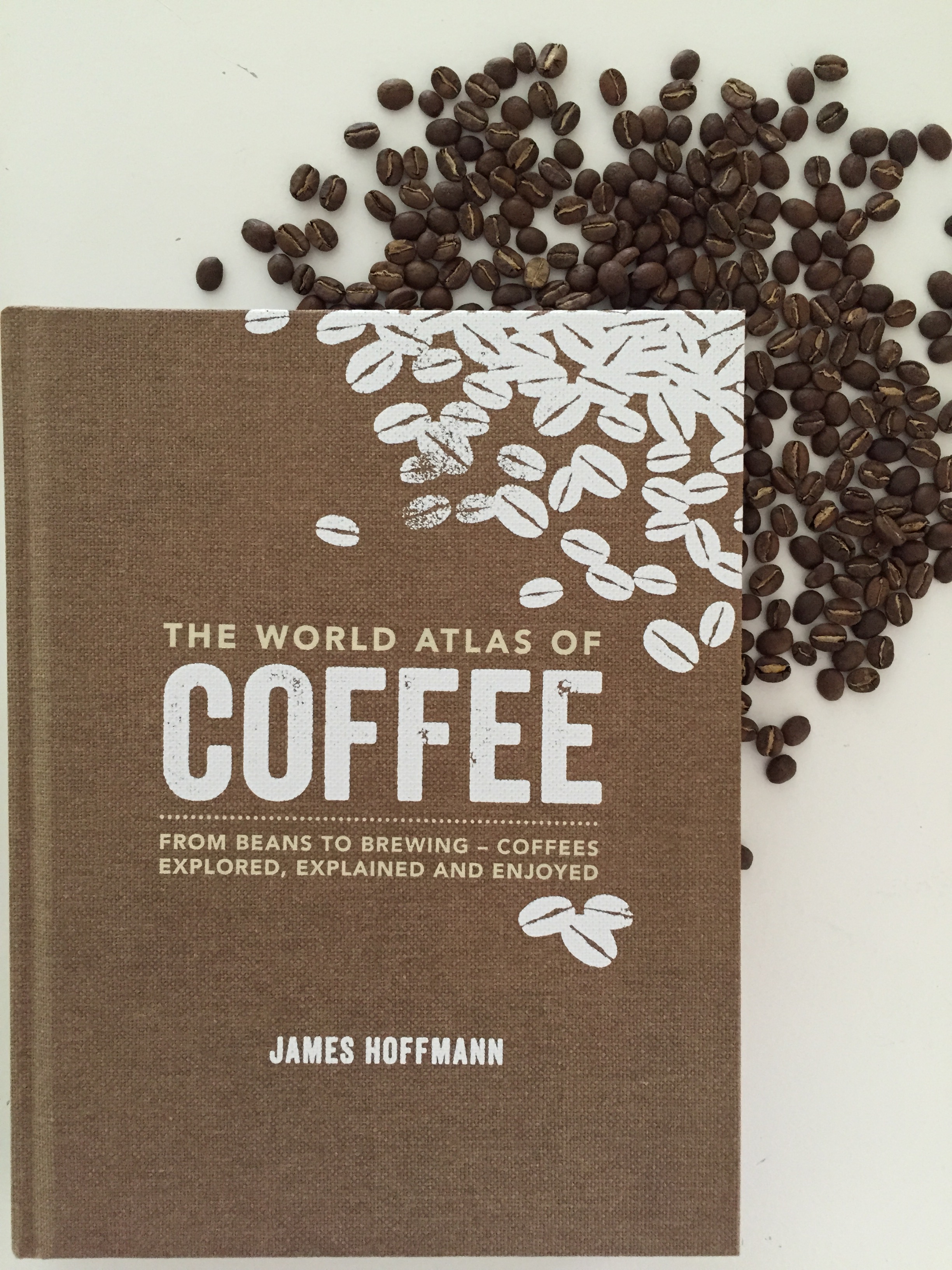
The World Atlas of Coffee – James Hoffmann

IMG_4006

For such a globally loved beverage, the number of high quality books on the subject of coffee remains disproportionately low. The World Atlas of Coffee by 2007 World Barista Champion James Hoffmann aims to assist in changing that.

Published in 2014 and well promoted through many of the coffee websites I follow, I had yet to pick up a copy due to the assumption my purchase would naturally be an online one and involve considerable shipping costs on top.

Having received a gift voucher last Christmas for Australian bookstore Dymocks, I decided to order a copy through them. Ironically, as me of little faith turned up at the counter of the Brisbane CBD store to simply place an order, I was told two copies were actually on the shelves — so alas I had to return the following day with the actual voucher (a copy kindly placed on hold by the Dymocks staff).

I must admit I do have a few other coffee related books on my to-buy list:

In addition, a recent post on FWx reports on 4 Books Every Aspiring Coffee Nerd Should Read, which includes two of the above, and a couple of others.

So why The World Atlas of Coffee first? One of the main reasons being I gain considerable enjoyment from reading Hoffmann’s blog jimseven, one of the first coffee related blogs fed into my RSS reader after I began consuming more online content with the purchase of my first iPad a few years ago.

Although many posts on jimseven are aimed at those working in the industry, I find it to be one of the most objective, yet also thought-provoking blogs I read. For example, from a post by Hoffmann last September about lessons learned while writing the book:

As a species we like to demonstrate a complete failure to learn the lessons of our history. I confess that I had been in coffee a surprisingly long time before I really dug into its history. It was revelatory, saddening and also inspiring. I’d like to do better, for us all to do better — and I am more driven to that end than I have ever been.

The Book

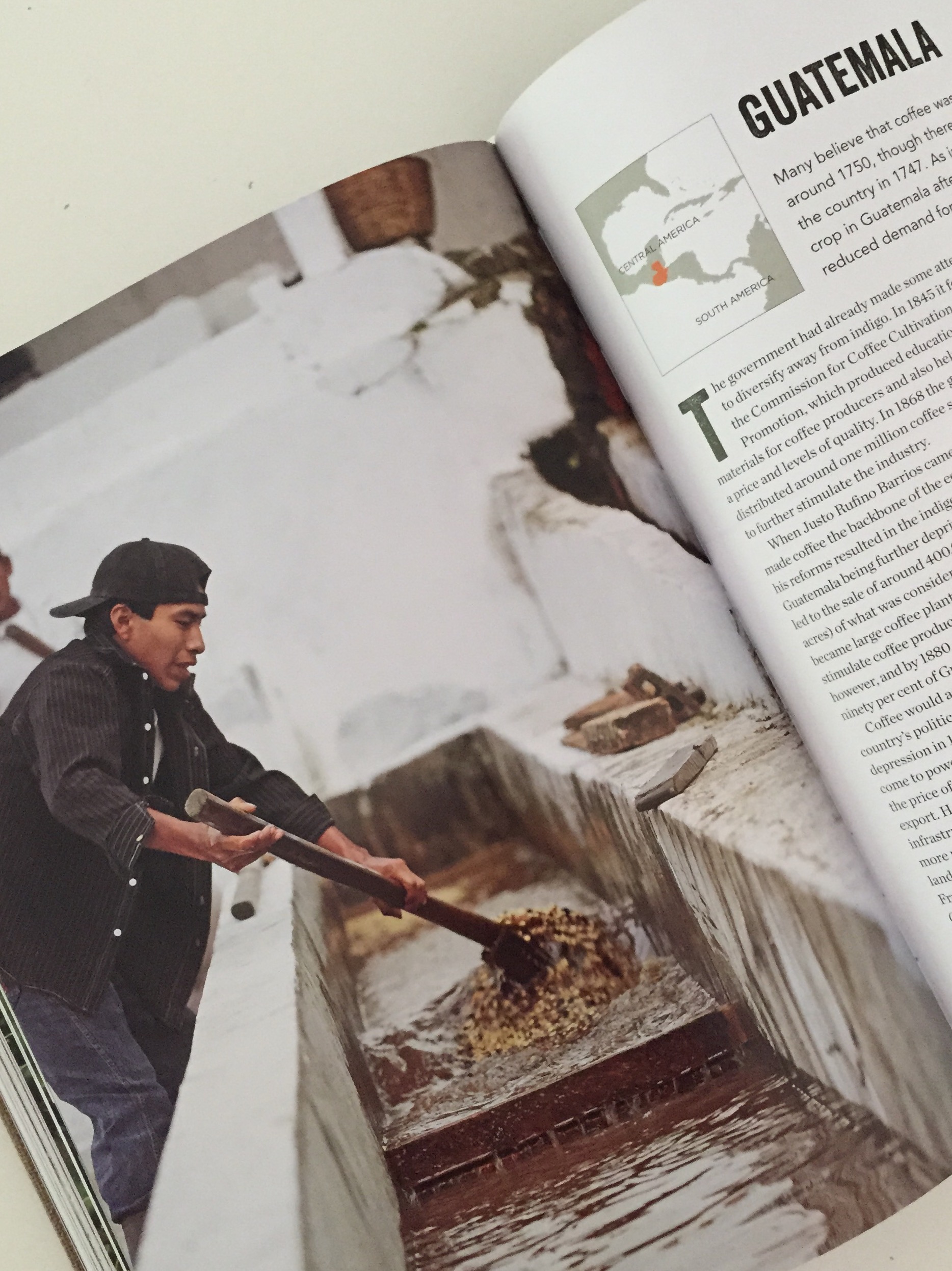
The World Atlas of Coffee is a visually stunning, hardcover publication bound with an external covering identical to a hessian coffee sack, and is a joy to hold. The internal layout and photography are of an equally high standard.

IMG_4001

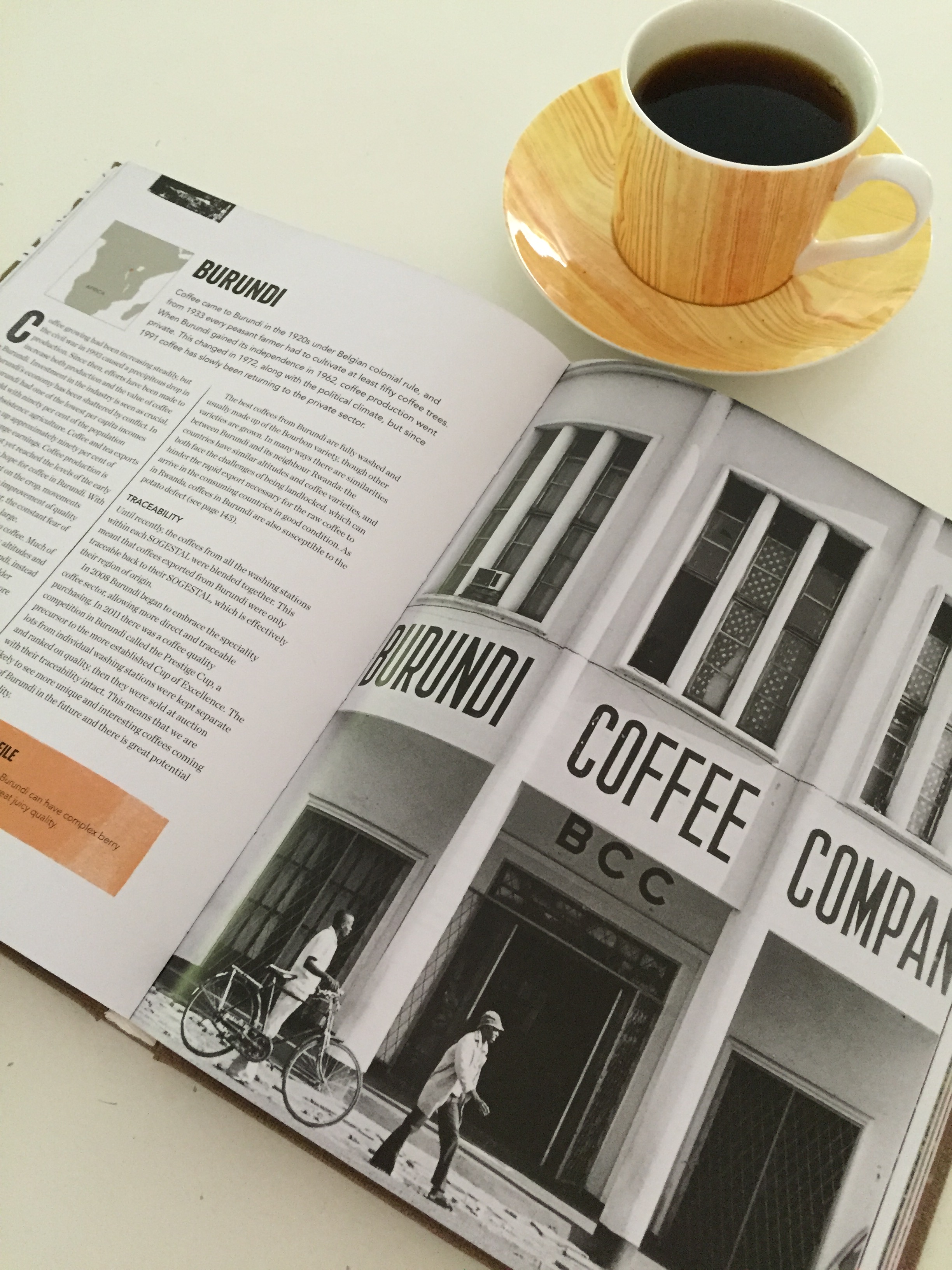
Divided into three sections: Introduction to Coffee; From Bean to Cup; and Coffee Origins, The World Atlas remains readable enough, yet informative enough, to provide a broad background on how coffee is grown, processed and brewed, with a large proportion of the book devoted to the various growing regions around the world.

As I have found with my “What’s Brewing” posts, the more you read about the various coffee producing regions, the more you wish to know, and I will certainly be turning to this book for more on that very topic in future.

Part One: Introduction to Coffee

Where the foundations and background are addressed, such as a description and key differences of the terms many of us commonly hear, Arabica and Robusta. There is also an explanation on the often misused terms “varieties and varietals”.

A little on harvesting methods follows, then it is onto processing, where you will finally understand what it actually means when your bag of coffee reads natural, honey, or semi washed — amongst other terms. Sizing and grading, with a little on trading rounds out this section.

Part Two: From Bean to Cup

IMG_4004Topics as you’d expect here — but no less interesting, from roasting, to grinding, brewing and tasting. Home roasting even gets a mention — which, as regular readers will know, is clearly a passion of mine.

There are some nice touches, including a guide on tasting coffees at home, a little on the history of espresso, and how to both assess the results and modify the quality of your next extraction1.

Finally, an espresso-based drinks menu, including why Italian tradition virtually mandates a one cappuccino a day rule (many more espressos then follow of course), and maintaining neutrality on the topic of whether the Flat White was invented in Australia or New Zealand – describing it as “undeniably from Australasia”.

Everything is covered to either get you started with these processes or techniques at home, or allow you to learn and understand a lot more about what is in your cup when next at your favourite cafe.

Part Three: Coffee Origins

Although one-third by division of sections in The World Atlas, Coffee Origins accounts for 50% of the book — and for good reason. The diversity of methods and ultimately taste profiles of different regions around the world is absolutely astounding at times.

FullSizeRender 11

Although we’ll forgive the author for omitting Australia in this section, it certainly deserves a thorough read if you wish to enrich your knowledge about what is behind the flavours you enjoy so much in your African or Central American single origin.

Conclusion

IMG_3996Obviously I have only scratched the surface here, however The World Atlas of Coffee is a superb publication. It is informative and entertaining, and deserves to be widely read by anyone with a desire to learn more about their favourite daily drink.

Arguably a contender for the best coffee table book out there, and one which I have no hesitation in highly recommending.

There remains a lone copy at the Brisbane Dymocks store, or of course it is also available on Amazon or direct from Square Mile Coffee Roasters – of which the author is a co-owner.

  1. A description of espresso brew ratio is explained here – something I have been experimenting with a little more over the past month or so – I’m sure I will post about this at some point in the future.

What’s Brewing: Indonesia Bunisora Honey Processed

Two of the more common taste characteristics I find with Indonesian coffee are those of floral and spice, and their cousins, earthy and herby. What was I expecting with the Bunisora? Much of the same I guess, which I have to say was pretty much spot on.

Whilst I am not suggesting this as a negative necessarily, at times the overall flavour profile was perhaps just a touch underwhelming in the cup.

The Region

Firstly, a little on coffee in Indonesia (from Wikipedia):

Indonesia is the worlds fourth largest producer of coffee, with the island origins micro climate well suited to growth and production. Just over half the production is consumed domestically.

In general, Indonesia’s arabica coffees have low acidity and strong body, which makes them ideal for blending with higher acidity coffees from Central America and East Africa.

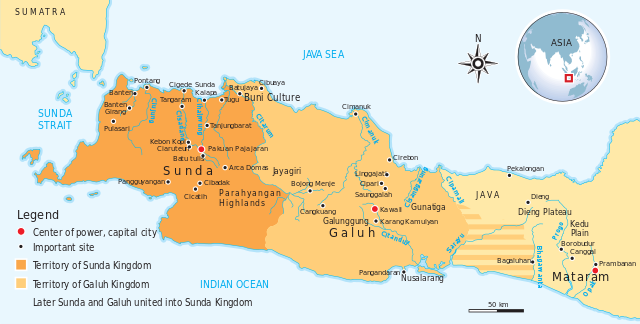
The islands of The Sunda Region are divided up between four countries: Brunei, East Timor, Indonesia, and Malaysia, with much of the territory Indonesian.


Image courtesy Wikipedia

Image courtesy Wikipedia


A great article on Sprudge about Indonesian Coffee would be well worth reading for a little more understanding about the region and its coffee production and processing. From “Always An Exception”: Inside The Rising Tide of Indonesian Coffee:

Since Indonesia consists mostly of smallholder farms, change is bound to be gradual; but this isn’t stopping some producers from stepping up, changing quality, and differentiating themselves. With their continuing effort, we can expect to see more and more exciting coffees coming out of Indonesia.

The Coffee

Information courtesy of Ministry Grounds:

  • Region: Sunda
  • Producer: Small Holding Farmers
  • Varietals: Typica and Bourbon
  • Processing: Honey processed
  • Altitude: 1400m
  • Tasting notes: floral bouquets and sweet spices

This particular coffee from small holding farmers in the region of Sunda is named after an ancient Indonesian ruler Prabu Bunisora.

The Brew

The coffee was roasted as two separate batches, one for filter and one for espresso in my trusty backyard roasting setup.

The espresso roast came out pretty well, a lovely even roast if I do say so myself – I had high hopes for this one. The filter roast? That one got away from me just a little, and therefore ended up somewhat darker than intended. Never mind, it was never likely to go to waste.

With milk in my morning latte, the Bunisora produced a nice full-bodied cup, with notes of spice, cocoa and a hint of honey to the profile. As espresso, again, similar spices, however the floral notes were more pronounced with perhaps a hint of jasmine here? With milk or without, this coffee was big on body, which probably blunted the subtle flavours just a little.

Brewed using the V60 or Aeropress was perhaps a little surprising, as to be honest, some Indonesian coffees I have brewed in the past were more reminiscent of “earthy” as in “forest floor”. Here though, I had written in my notes: black tea (perhaps a little jasmine), floral, and to a lesser extent, earthy with a little chocolate (more so than the espresso roast).

I must admit however, during the couple of weeks I have been sampling this coffee, I began running my filter grind through a fine sieve prior to brewing. To say it transformed the brew is an understatement, however that is a post for another day.

The Finish

As any regular reader of these What’s Brewing posts will know, rarely do I complain about what I have consumed – and I am not about to start now.

The Indonesia Bunisora is a very enjoyable coffee, and what it perhaps lacks in subtlety, makes up for in body, and would also therefore make a solid blending partner with perhaps a fruitier Kenyan or Guatemalan single origin.

Overall, a very enjoyable coffee, and currently available at Ministry Grounds for $AU16.78 per kilogram.