The Montblanc 100 Day Writing Challenge

Thinking back, perhaps I should have written about the Montblanc 100 Day Writing Challenge a little earlier, however having started myself a few days late, this post was always going to be a mid-challenge update.

With day 37 just completed, it is of course a fine time to tell us now… Well dear reader, you are indeed correct; however, this blog certainly isn’t known for its cutting edge hot takes on the stationery and writing communities, releases, or events.

Carrying on that tradition, things are going pretty well at a little over a third of the way through, and it’s been an enjoyable diversion in addition to my usual pen on paper ramblings.

The Challenge

I could say “never one to miss a marketing opportunity” about Montblanc, and while that statement is true enough — why would they? There is nothing inherently wrong with a business promoting itself or its products, and the emphasis on ”any tools will do” in the webinar sessions is certainly welcome (though of course you’ll see an array of Montblancs’ used on screen).

The writing challenge ties in of course with the 100th anniversary celebration of the Meisterstuck pen, which also brought a few new pens, other associated products, a Wes Anderson short film, and quite a few other events if social media is anything to go by.

Image courtesy Montblanc

A quick aside: the 100th anniversary pens? Well, nice enough yes, however never has my excitement peaked more than when I thought a re-release of the original versions may have been coming upon seeing some promo photos earlier in the year (for me, it’s the original green version from halfway down this page). To say my disappointment peaked even higher upon realising the anniversary release was simply a modern take paying homage to the originals, would indeed be accurate. Don’t get me wrong, the pens are indeed impressive, though not a patch on the aesthetic of the originals. Time marches on, I suppose.

Finally, the Wes Anderson designed Schreiberling pen does look intriguing, however at an estimated price tag of $2,500, is certainly not for me either.

Anyway, back to matters at hand. You’ll find details of the Writing Challenge through Montblanc’s Inspire Writing series, under Creative Writing Courses on the Montblanc website via the Discover menu (or more easily from the link above).
Having dabbled in some of these webinars in the past, and looked at others (with calligraphy I have intent, yet to date, no action), the 100 Day Challenge seemed both achievable and worthwhile at the same time. Catching up on the kick-off webinar in the “past sessions”, under presenter Brittany DeSantis, I came in a few days late, however quickly caught up given the writing prompts lead to as much or as little time investment as you like.

The Idea

On the surface, exactly as it says on the tin: to write daily for 100 consecutive days. Now for those of us who are well into the thousands of consecutive days writing (journaling, blogging, note-taking or the like), I generally consider the occasional challenge like this one as simply: 100 days of different writing.

The challenge is divided into a couple of parts, the first being Your handwriting and history, comprising 43 days worth of daily prompts, mostly on writing and stationery habits, though also some general life themed questions as well. Part 2 will apparently be delving into lists to “discover more about ourselves and plan ahead” which I believe will begin at the next webinar taking place on July 10.

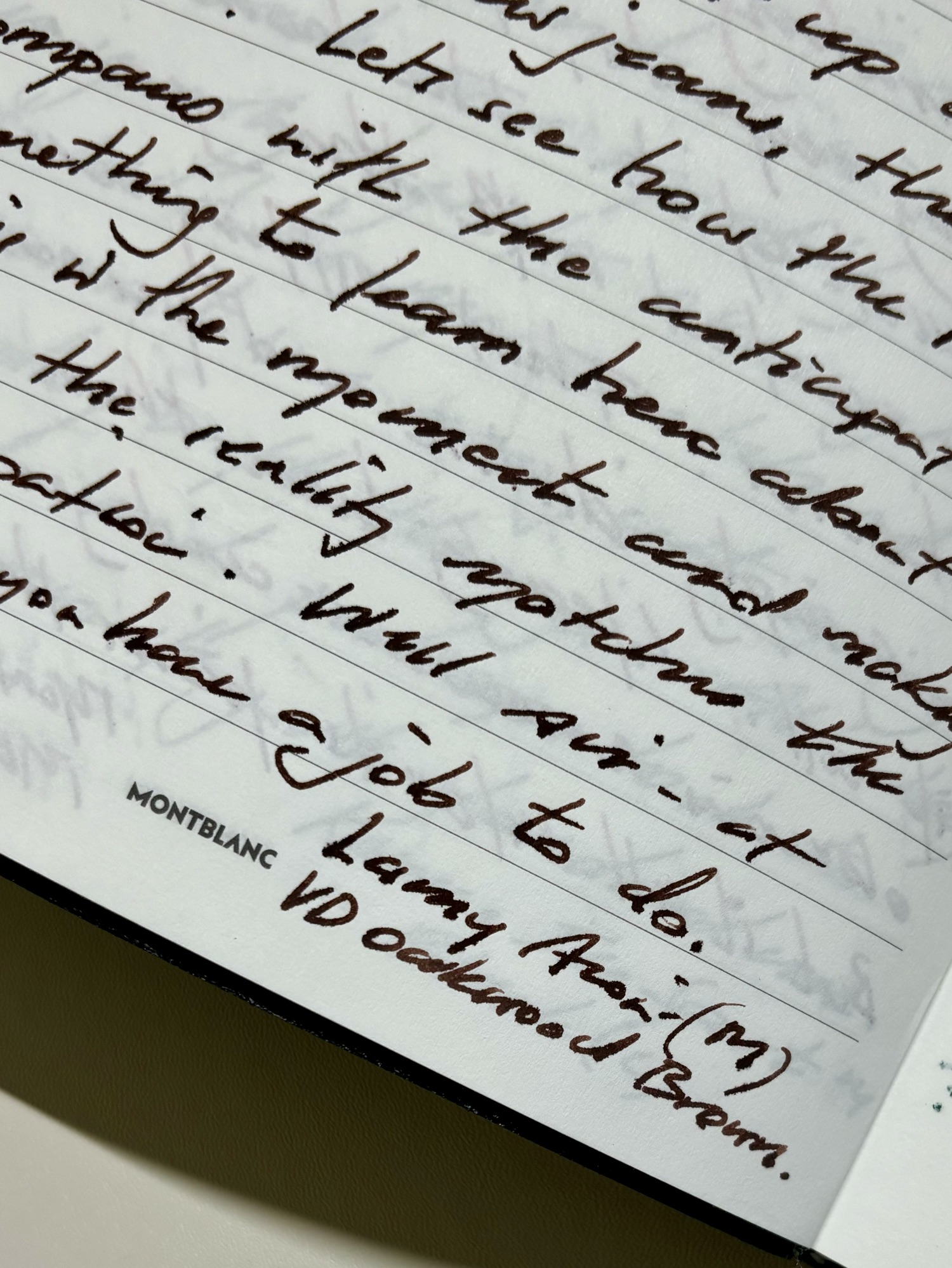
A daily commitment of about 5–10 minutes is the pitch, and I don’t find it overly burdensome, having limited myself to one page of an A5 Journal for each prompt. Accessible and achievable — always the best way to ensure those who start do a fair job of engaging, continuing, and finishing.
The Prompts

I’ve never been one to use journaling prompts, though at times when I sit in front of a blank page I think perhaps I should. Adding an extra A5 page a day as part of the challenge certainly provides no great impost, and given the fairly straightforward prompts, I’ve not found myself staring at a blank page.
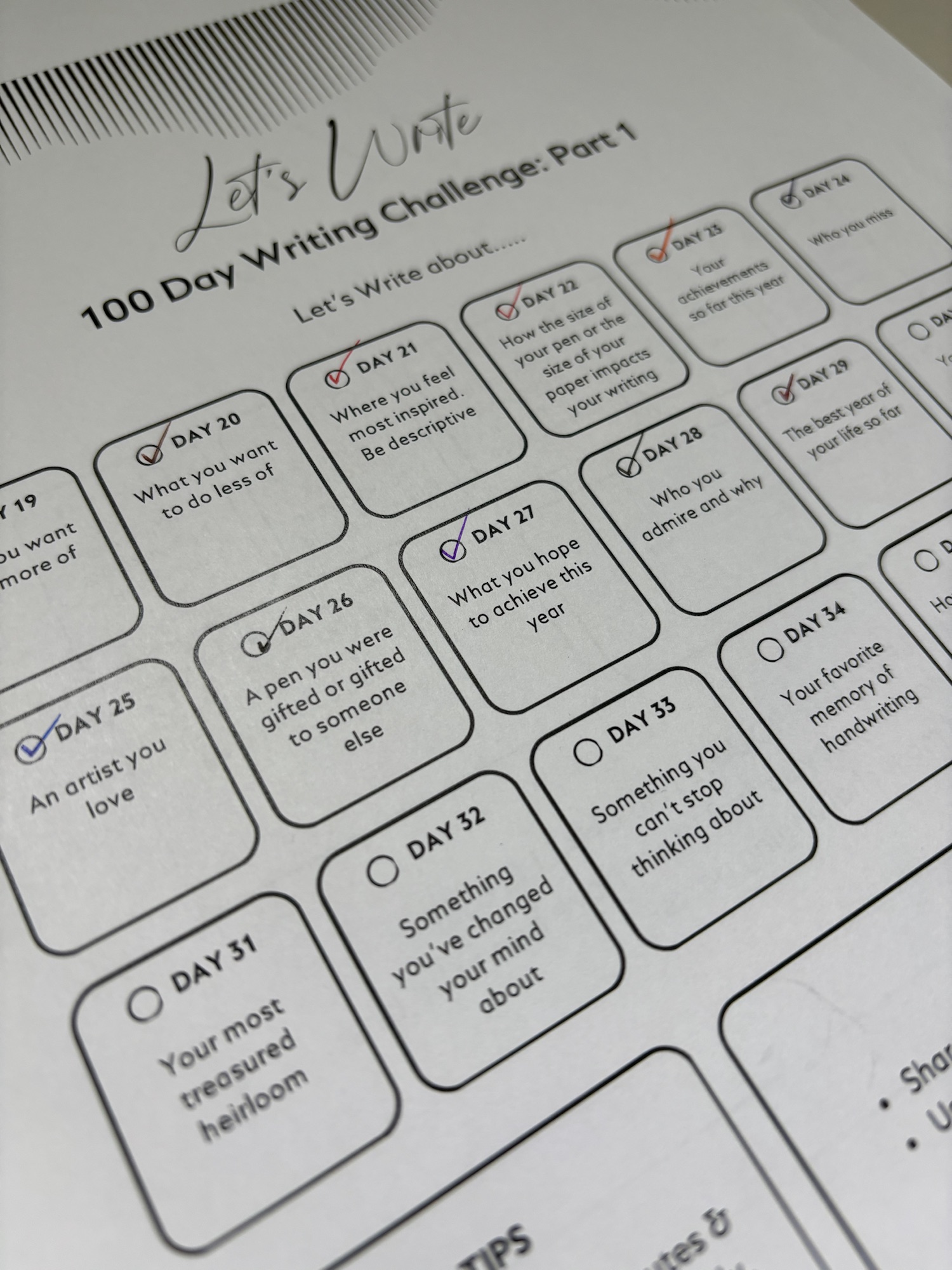
Perhaps the secret is to take the prompts literally if that suits, or simply as a guide if there is a tangent you’d like to work through on a particular day. It really is a choose-your-own adventure. I’m sure if you are a prompt user, then you’ve likely seen them all, however a couple I enjoyed:

  • Your earliest memory of handwriting
  • How your handwriting changes based on what or where you’re writing
  • How your tastes in pen and ink have changed

There are also quite a few around “your favourite…”, along with more inspirational and life-themed questions, however the general Part 1 arc of Your Handwriting & history seems captured well enough through the prompts.

Signing off

Acknowledging I’m a bit late to the party in passing on the message out there about this challenge, there are still two remaining webinars and another two thirds of the writing days still to go. Perhaps it’s something to pick up now or even retrospectively complete at your leisure. I’ve certainly found it an enjoyable and worthwhile endeavour.
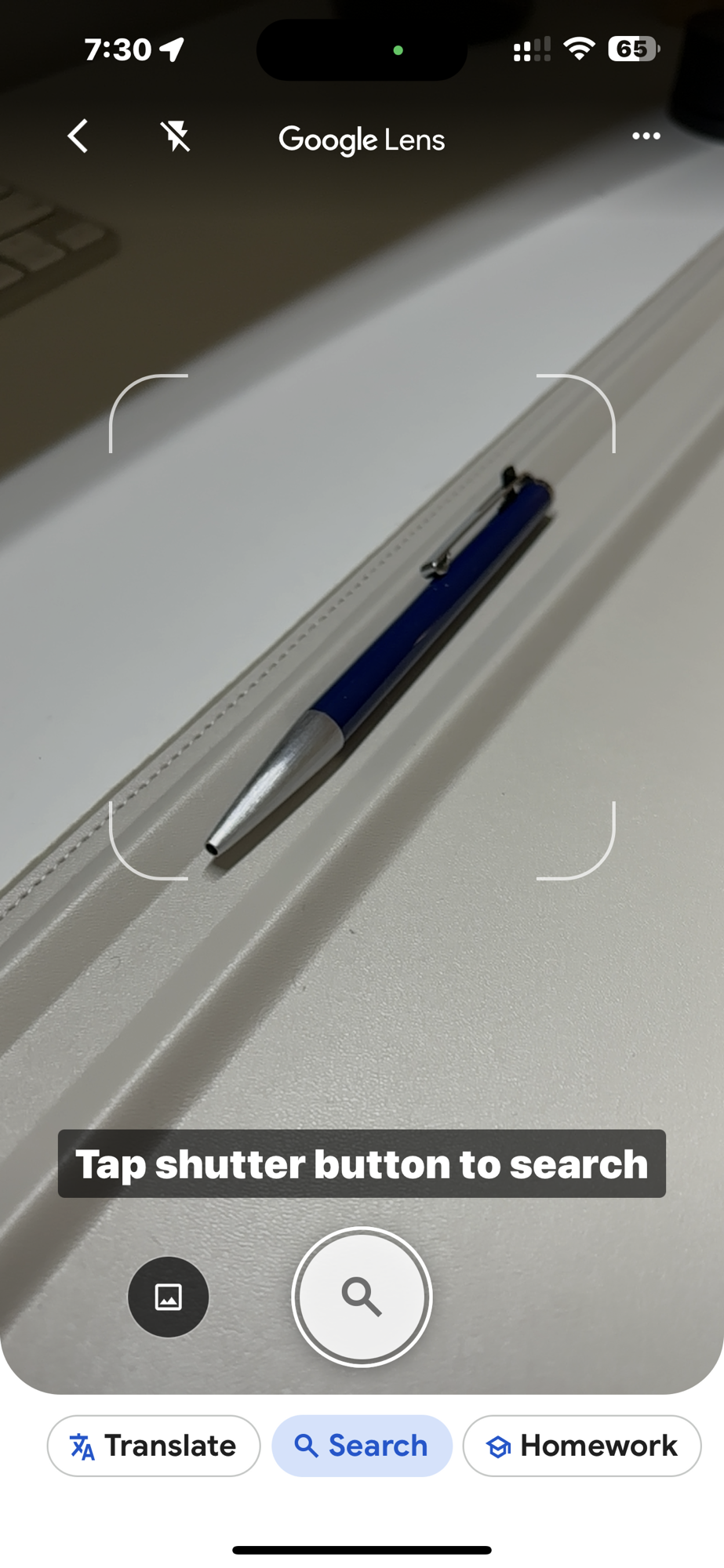
Google App Camera Search — A Handy Pen Identifier

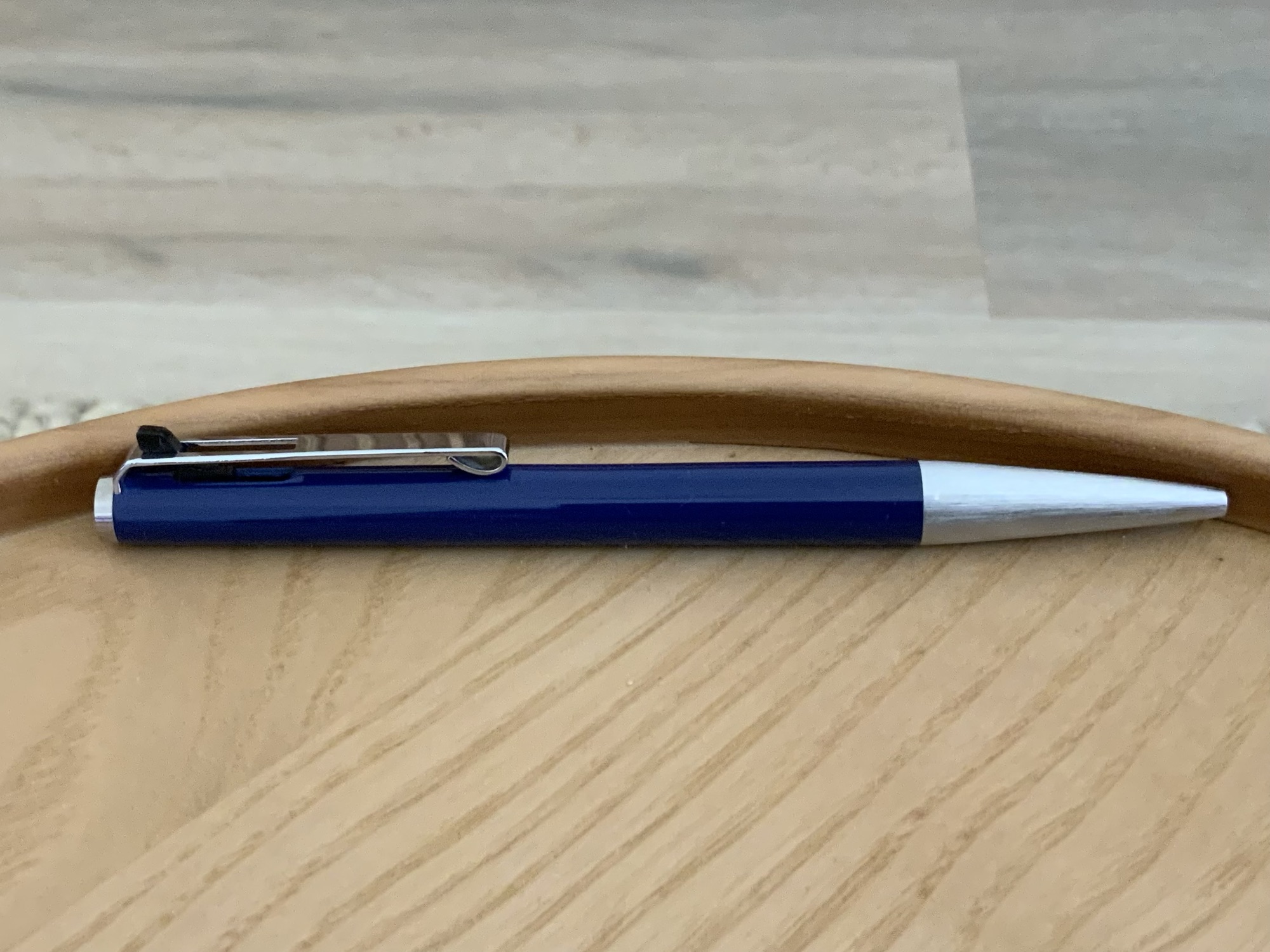
The Montblanc Ballpix – at the centre of all of this searching

I pay attention — honestly, I do. I even take notes, whether at the time or soon after, yet sometimes things come to pass where the elusive (though likely straightforward) name and model of a particular pen simply escapes me. In some cases it would seem, never to return. Of course, this is unlikely to ever happen when ordering pens online or shopping in a store (receipts, order confirmations etc), but for those acquired like this, or perhaps in an antique or second hand store, you might occasionally be in the same predicament.

When recently considering options for an EDC type of pen to carry with a pocket notebook, I had a few specific requirements, as you’d expect:

  • reliable knock mechanism unlikely to accidentally engage
  • related to the above, a standard top clicking pen would be unsuitable (if not a twist, some sort of side mounted knock mechanism)
  • very light and on the thinner side of average
  • probably a ballpoint for maximum utility

Thankfully, I wasted only an hour or so trawling the internet before realising the very pen was in my drawer awaiting its next occasion of use. It was absolutely spot on in terms of that list above, and not only that, is a really enjoyable pen to use.

Of course, I thought — that’s it! I’ll use this Montblanc… err… ummm… yes, this one(!?). What is it again? It was then I realised I had no idea what it was actually called, probably to the horror of the wonderful pen-friend who kindly passed it on to me. Had I written it down? Did I ever know it? Of course I would have — though I’m not sure, and proceeded to open Safari to get to the bottom of this quandary.

It couldn’t be that hard, surely, as I began searching: ”vintage Montblanc ballpoint with click mechanism in the pocket clip” and every version of a similar term to no avail. It might have been buried in the search results somewhere, but I certainly didn’t find it. In any event, it seemed a little more difficult than it should have been.

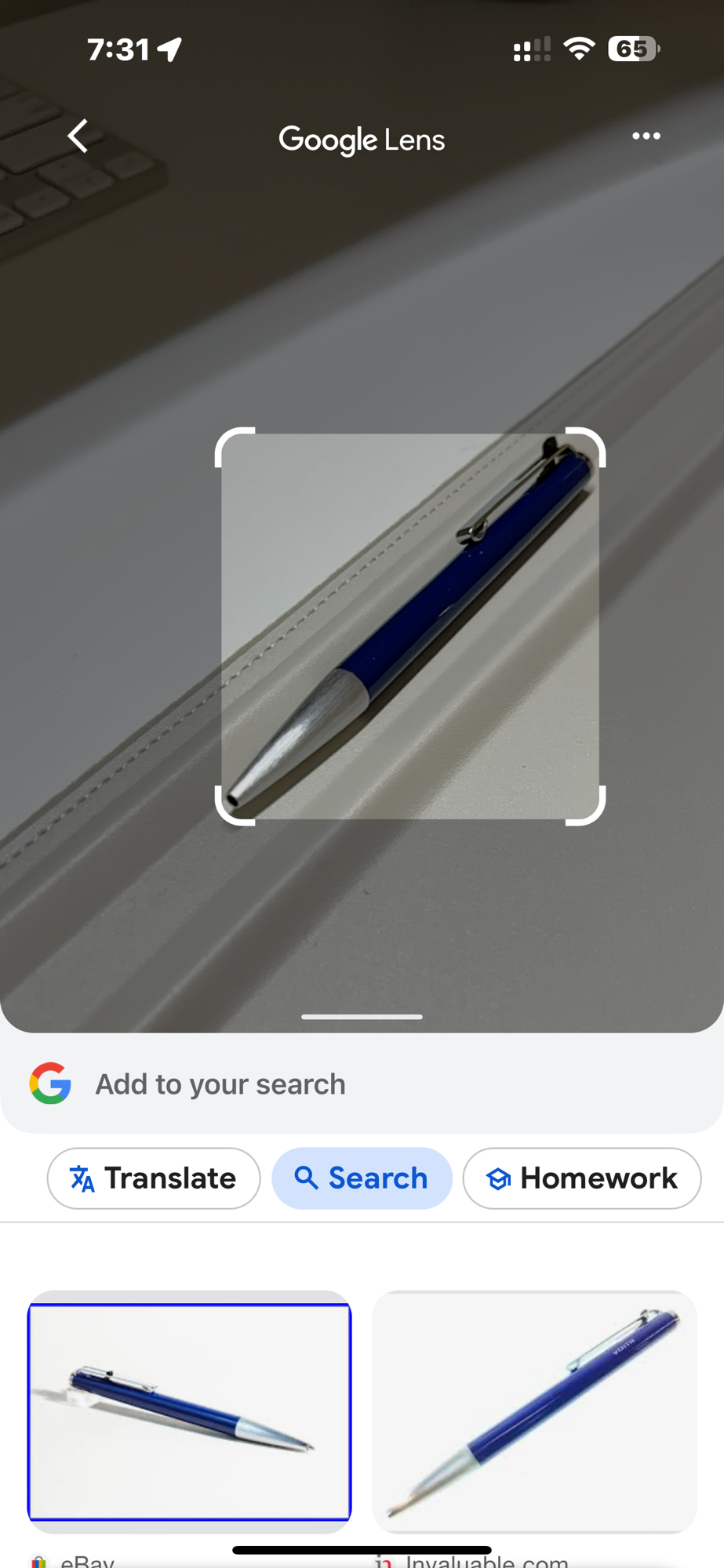
Enter the Camera Search function in the Google App on my iPhone.

Point, shoot, search and bam! Results (see screenshots below). Nothing could be easier. I guess depending on what you are searching for, a certain amount of verification might be needed with the results. That said, I’ve not had it fail me so far on any pen, refill, or whatever stationery product you’d care to be looking up. The worlds of analogue and digital colliding with utmost harmony.

Ready… aim…
Fire…
A good bundle of accurate search results

Oh, and the pen? Yes, well, that is a Montblanc Ballpix, and the search yields a good page or more of accurate results similar to this one. As I’ve mentioned in my requirements list above, this pen is perfect for the task at hand. Slim, light weight, perfectly designed to avoid accidental engagement of the refill from the tip. Topping it off is the rather ingenious clip/knock mechanism, preventing it from being placed in a pocket or clipped anywhere without the knock being disengaged automatically — no pocket leaks here. Love it.

Perhaps given most of the search links provide seller links, someone needs to write a bit of a review just for posterity on the internet… Oh, right you are, I guess that would be me. I’ve just added it to the list.

Meanwhile, I highly recommend the camera search feature in the Google app for those times your search terms don’t quite hit the mark. Maybe even for those times when, like me, you are a bit lazy and can’t quite find the motivation to look back through notes when a pen model name escapes you.

A phone and a tech giant — handy companions to the humble pen and paper.

Stirling Gooseneck Kettle — a middle aisle gem

Every journey has a destination…

An example of Aldi’s middle aisle at its finest. You know, a come for the barbecue sauce and leave with a cordless tyre inflator type of purchase. You’ve got to grab them while you can.

When an Aldi catalogue appears with some coffee items, as you can imagine, I’m likely to take a look when next in store. On this occasion, it was a special trip for one of the Stirling Gooseneck Kettles. Why? Well, first and foremost you can never be sure how popular any particular item might be, yet the remainder of the answer needs a little more explanation.

As an enthusiast (of anything), I’m sure we’d all agree the likelihood of owning (or at least having owned) quite a few iterations of similar products is quite high. Coming along before the subject Aldi kettle were stovetop versions of the Hario Buono Drip Kettle, followed by a Fellow Stagg Pour-Over Kettle. To date though, I had not yet had the pleasure of owning a dedicated electric, temperature controlled model to boil (or near boil as the presets allow…) and hold my water at temperature. Not specifically being in the market for a replacement, this had to be decidedly within the “non-significant purchase” price tag to comfortably be an incidental pickup.

Overall, I find kettles an interesting part of the whole coffee journey, as they of course all do the same thing. They heat water. It’s difficult to find any sort of perceptible way they each do that particular function differently. Sure — faster, quieter, stovetop, or electric — but the result is the same. It therefore becomes very difficult to justify a higher price tag. At $59.95? Justified. A week later, a little further down the aisle in the clearance section at $49.99 — even more so. A bargain indeed. At the time of publishing? Still there…

You’ve still got a shot if you’re quick

What it does well

Boils water. In fact, from a room temperate 24 degrees Celsius to 100 degrees boiling in 3 minutes and 20 seconds. I assume this is not the fastest by any stretch, however gets the job done. It certainly doesn’t feel slow. Though quieter than our larger, more traditional Russell Hobbs kettle, it is however perhaps a tad louder than my Stagg Stovetop. That said, I have no qualms about using it pre-dawn when the rest of the household are fast asleep.

It maintains the set temperature for up to an hour before automatically switching off. For someone who had not owned a kettle where the default setting is to stay “on” once boiled, this took a little getting used to, however now I cannot imagine it any other way.

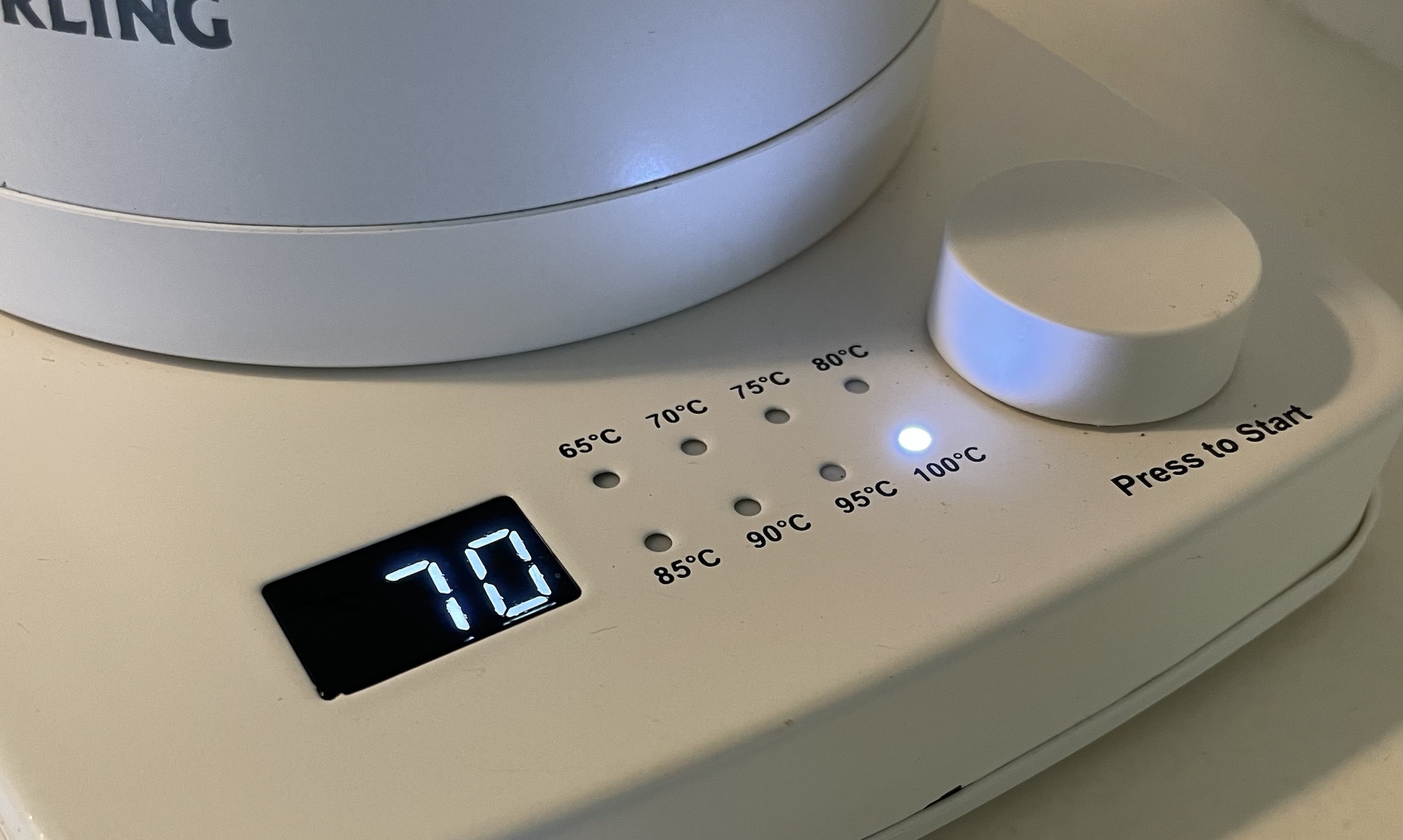
The presets aren’t infinite though certainly more than adequate

It looks similar to many other more expensive kettles. While purchased in my preferred coffee bar colour of matt white, a black version was also available. Once on the kitchen bench top, it has a similar shape and baseplate style as the Fellow EKG to a glancing eye.

So, while the specs are available for viewing in the attached images, I’m simply here to say it looks reasonably good and completes the task at hand perfectly. All for the princely sum of $59.99, compared with 4–5 times that for the Fellow Stagg EKG upon which it would appear to pay homage.

What could be improved

Certainly not the price — that’s the point here. You get what you pay for, and what you get is a great, functionally adept kettle. However in getting what you pay for, there certainly are compromises which I wouldn’t pay $100+ for, but $59.99? Absolutely worth it.

Build quality will always be a factor here, and it is evident. Generally, a cheaper version will feel as though it is just that. While that’s the case here, I’ve no issues with that affecting performance, you can simply feel it. The slight flex in the plastic handle when the kettle is full; the good but not great click of the on/off dial; the lighter weight lid and baseplate.

The only other areas I’d mention here are perhaps aesthetics, which are again pretty good, though not quite up to something like the Fellow Stagg, particularly when viewed side by side. That said, it isn’t far off. A couple of other considerations include the volume and pouring. Whilst no one in our household ever said: ”make a large pot of…” — at 600 ml it’s not the most efficient way to boil a large amount of water at once, whereas both the Hario and Stagg are 0.9–1.0 litre at maximum fill.

I’ve had a couple of instances of a slightly scalded foot from tipping the kettle a little too far and drips escaping the lid, though I’d emphasise this is most certainly in the category of user error. Come to think of it, so is overshooting the far edge of a cup a few times whilst becoming familiar with the angle of water exit when the kettle is particularly full.

Wrapping up

Is it the world’s best built kettle? No, but it’s solid enough. The best looking? Perhaps not, though it’s comparable to most others, and I’d say an improvement on some. Does it boil water and maintain it at temperature for up to an hour? Perfect, and arguably equal to any other kettle at any price point for what it does.

I make a daily V60 into my Fellow Carter mug to take to the office, and had long given up on bothering with my stove top Fellow Stagg Kettle. It was simply easier to boil our standard electric kettle and do my best to control the flow when pouring from a standard spout.

That has all changed now, and while the Aldi Stirling Gooseneck Kettle may not be the star of the bar (though it could be), for boiling water it’s perfect (well it is a kettle, you could rightly say…). Whether looks, build quality, or brand name carry much weight in your purchasing decisions is a matter for you to decide — I certainly wouldn’t disagree if they did. Heck, they do for me, and I’m delighted with this kettle given what I paid for it.

So if you are any way inclined to consider picking up one of these the next time they hit the middle aisle, you won’t be disappointed. Given I’m only a couple of months along, an opinion on long-term durability will have to wait, though for now, it’s perfect.

I will, however, continue to occasionally check in on Fellow’s “smoke green” Stagg EKG. Which incidentally (and perhaps somewhat tantalisingly…) I’ve also found on sale locally here.

Coffee equipment, where purchases quickly turn from the objective and rational, to the emotive and starry-eyed…

Happy brewing.

Bouncing Back to Gel Pens

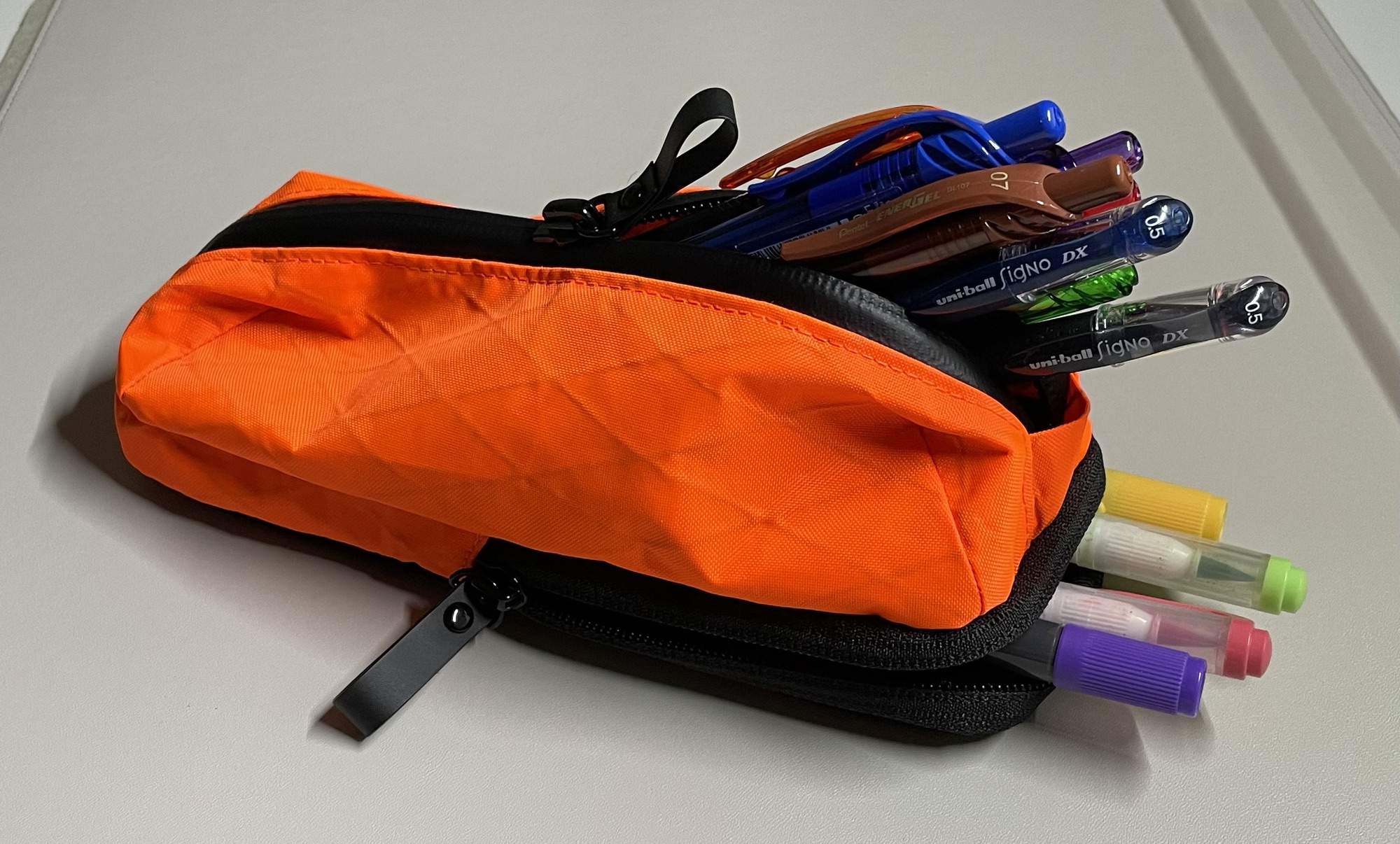
Gel pens! Though one could certainly make the case the Alpaka Pencil Case Pro is the real hero here

Did I ever really leave? Really? Well, no I didn’t — not quite, however the relentless march of everything pen and stationery towards fountain pens is — rightly or wrongly — hard not to fall into. We each have our path (it just seems to be the same one, and boy is it worn…). I’d simply say, progression towards a fountain pen habit doesn’t always need to be at the exclusion of all else.

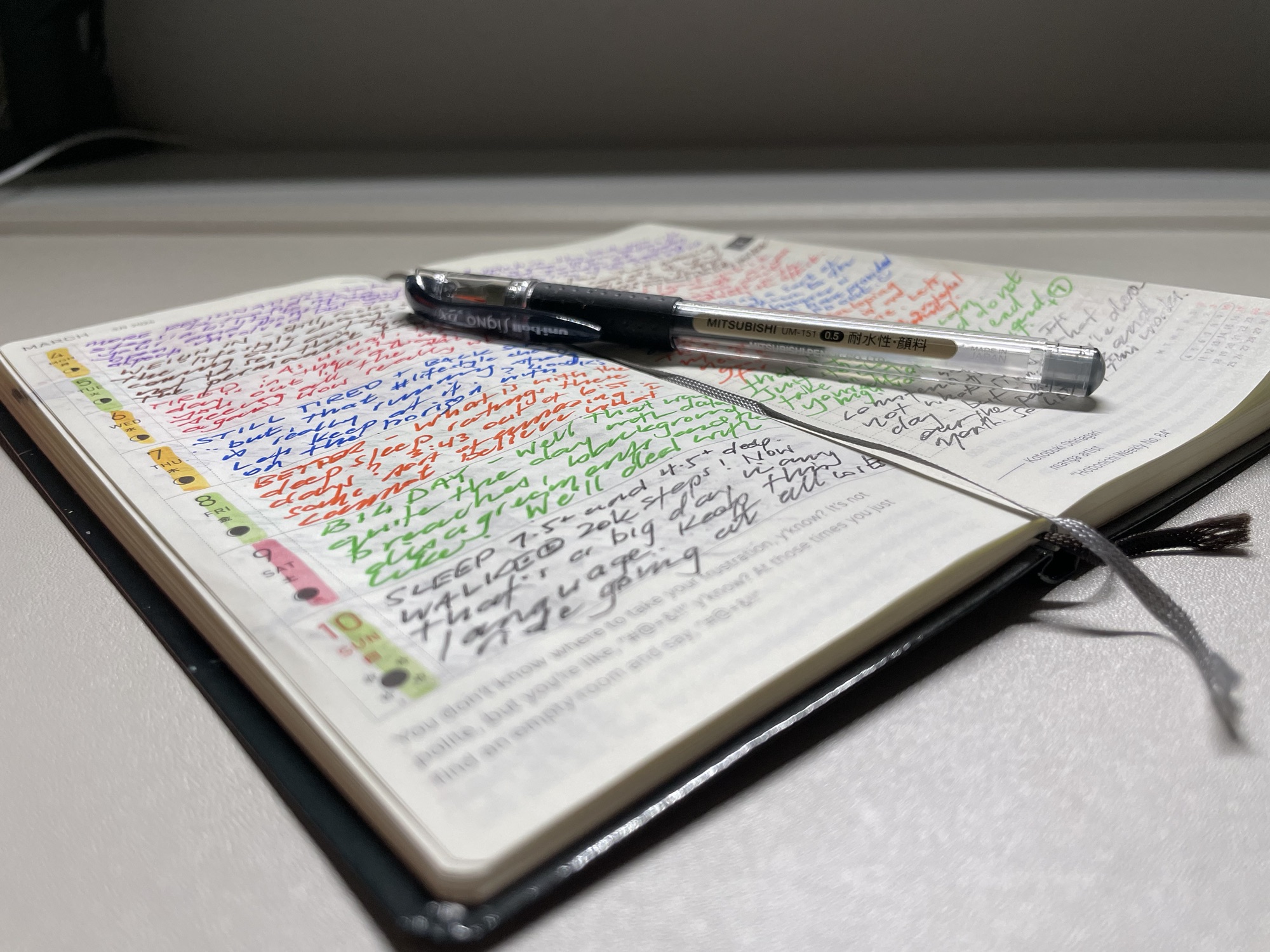
One area gel pens continue to flourish is in the planner community. Those people gel pen hard — and good on them. There is much joy to be had. Speaking of planners, as I mentioned in a recent post, it was a foray into the Traveler’s Notebook and Hobonichi Weeks which triggered my own renewed vigour towards gel pens. Those Hobonichi Weeks daily entries are not overly endowed with page real estate, that’s for sure.

The pens

Having a certain fondness for the Pentel Energel over the years, you’d be right in thinking these feature fairly prominently in the current line up. Incidentally, I’ve also harboured mostly the opposite feeling towards the Jetstream line of ballpoint pens, and part of this process involved throwing out the last one remaining in my pen drawer. I don’t know, I’ve just never really liked the overall feel when I write with them.

It’s here that we should acknowledge the term ”gel pen” is quite a broad one. After all, we have the EnerGel’s “liquid gel pen”, and the pigment archival quality of Uni’s “Super Ink” being just two manufacturers’ riffs on the category. No doubt there are plenty more, however we’ll go with the origins of the family tree and stick with “gel” for simplicity.

As for tip size, well, 0.38 or 0.4 mm are a little too fine for me, and to be perfectly honest, I feel if more existed, 0.6 mm would be my goldilocks size. In the absence of a widespread, spoilt-for-choice line-up in 0.6 mm, I’ve settled on 0.5 mm as my go-to. There are of course some 0.6 mm options further afield (the Schmidt P8126 refill for example, of which I own several), however there is simply not the any-colour, any-type of pen range which exists in the other sizes.

Delineating at a glance through colour

Colour? Go wild. Anything goes really, and I’ve found within the confines of those daily entries in the Hobonichi Weeks (minimal, tight, feintly ruled lines and separators) colour is my best bet to delineate each one. As you’ll see from the associated image, it carries a certain rainbow-like joy.

Writing performance

Comfort in the hand is fairly important, and the diameter of the Energel I find to be most comfortable. To be honest, nothing I write with a gel pen typically runs longer than a couple of hundred words at a time, so I wouldn’t say there are any real limitations here.

Perhaps the Uniball Signo DX is a little thin for longer than a few bullet points, yet there are all manner of ways to obtain these in a thicker package (say the Uniball 207 or 307 series of retractables). This does bring me to one caveat of my “no real limitations” statement above.

I’ve never enjoyed using a pen where the grip section runs thicker in diameter than the rest of the barrel (or at least that portion of the barrel immediately preceding the grip) — a reverse taper, if you will. Many plastic barrel gel, ballpoint, and liquid ink pens seem to have this design. The retractable Energels and Signo DX you see in this post have successfully incorporated that rubber grip in a way that minimises any perceptible change in diameter. Enough said on that, however it is another (subtle though it is) factor in my lack of fondness for the Jetstream.

When available, my preference is probably 0.5 mm

The need for quick drying (those Energels a tad longer than the Signos mind you), fine-ish tipped, comfortable enough, colour varied pens was satisfied with the fistful I picked up from my local Officeworks. I’ll no doubt work my way back around to others I’ve had before from Zebra, Sakura, and the like.

Signing off

With things rolling (gelling?) along fairly well in the current Hobonichi Weeks / Travellers Notebook combo, I intend to continue this personal resurgence into the gel pen universe.

And I’ll say it once more. In turning my mind to these matters, I cannot help but again question the all-roads-must lead-to-fountain-pens journey of just about every blog, podcast, and social media feed across the stationery community (I’m also guilty as charged…). If we’re talking fit for purpose, in the couple of notebooks I’ve mentioned above, for me at least, fountain pens certainly won’t cut it.

But I digress. Gel pens — how good are they!

The Top-tier Coffee Drinker Prefers Decaf

Photo by Chevanon Photography on Pexels.com

James Hoffmann on YouTube:

The decaf drinker to me is the top-tier coffee drinker. They are the purest of all coffee drinkers because they’re just drinking it for the taste. They just like the taste of coffee, and they’re willing to drink decaf — disappointing decaf, often, to get there, and that feels very sad.

I must admit I’ve never really understood why decaf coffee, and by association, decaf coffee drinkers draw so much derision in the coffee community. You know, the whole death before decaf mantra. I’ve never found it amusing, nor understood what you’re trying to tell me.

Is it that you aren’t talented enough to source great decaf, roast it well (it can be challenging), or perhaps don’t really understand the nuances around brewing and serving it? Or, most fundamentally — you don’t understand the customer.

Look it’s ok. We often fear what we don’t understand.

The top-tier coffee drinker in my life? My wife, whom, until we met, was not a coffee drinker at all (what a surprise…). She did, however, push through many of the annoying effects of caffeine for some time before choosing to switch to decaf. Yes, I agree — top-tier wife.

Since that time many years ago, together we have seen most of, if not all of it. The pre-ground supermarket bag of decaf pulled from a cupboard and tipped into the portafilter. Being told in various ways (often politely, though not always) why decaf is not served at a particular establishment, including a bizarre mansplained monologue to my wife and daughter on why the style of roast is the issue — not the caffeine. Standing outside those “destination” cafés I’ve always wanted to visit, with my wife saying, “I don’t think we ask if they have decaf — I don’t want to embarrass you.”

How did it come to this…

Don’t get me wrong. We’re more than happy to be politely told decaf is not served and offered options (as you would for alternative milks, for example). It isn’t necessary, however, to go further and provide a diatribe on why you, as the consumer, are somehow too naive to know what is best for you.

Anyway, enough of that. A salute to all the cafés out there who serve a fantastic decaf. Seeing that measured dose thrown into an EK43? Perfect. A dedicated grinder? Wonderful — thanks for the acknowledgement. Taking up the challenge to serve something truly amazing when it can be a little more challenging? Hats off to you for having belief in your expertise. I’m sure there are more than a couple of us who appreciate you taking the time and making the effort. We’ll certainly be back.

Incidentally — the YouTube video I’ve linked to above provides a great overview of the various methods of producing decaf coffee and is worth a look if you are interested.

Finally, here’s to all the top-tier coffee drinkers out there, my door is always open, where the decaf doses are measured, ready, and ground on demand.

Alternatively, try some of my Brisbane favourites if you want service with a smile, minus the caffeine:

Edward Espresso & Kitchen – CBD

Industry Beans – CBD & Newstead

Anytime Coffee – CBD