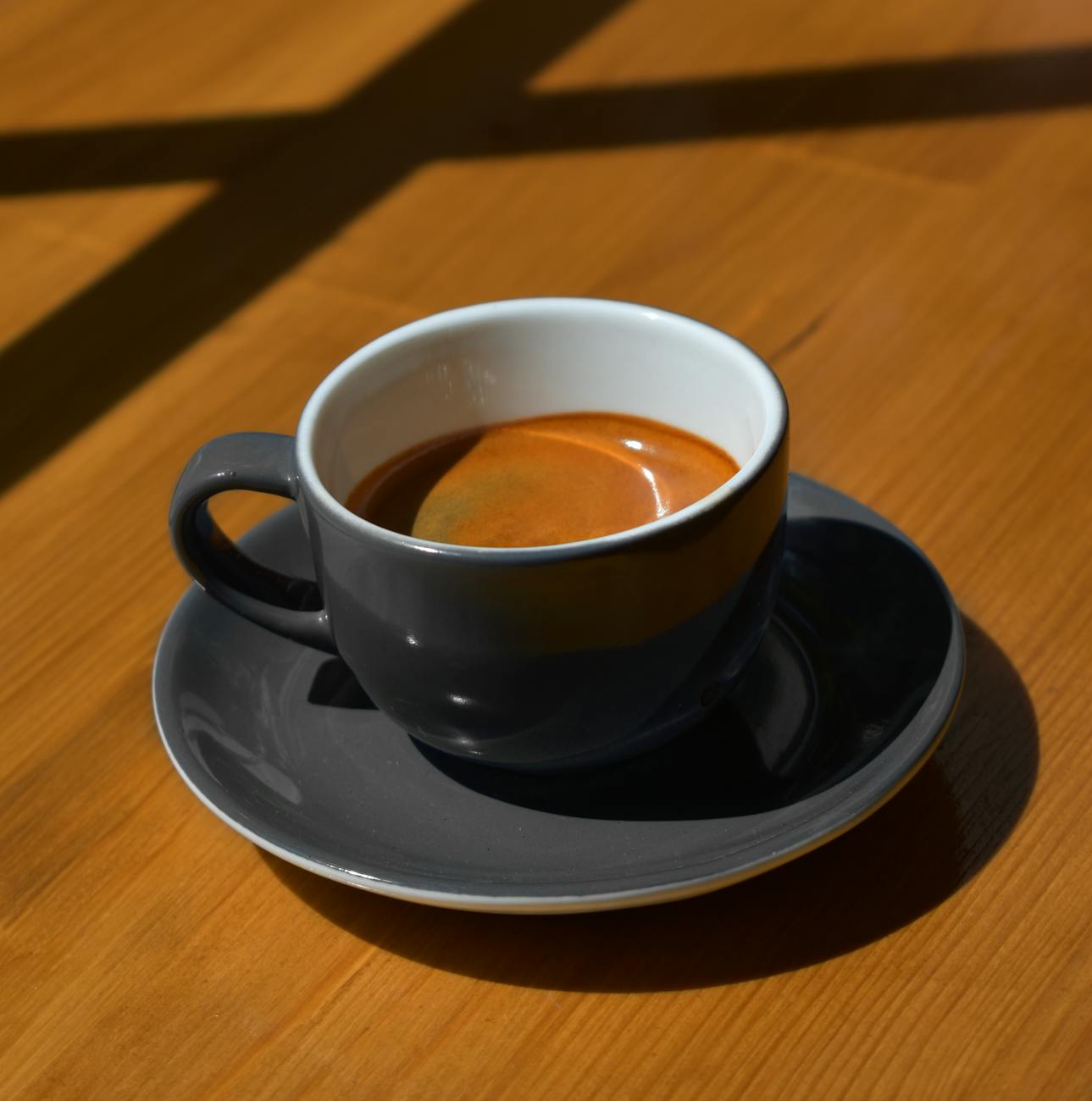
My days run varied, yet frequent when it comes to coffee. Cappuccinos, (perhaps a decaf) long blacks, filter coffee, and by mid-afternoon it’s espresso time. All of which can make nailing the afternoon espresso pour that much harder, having only one shot (literally and figuratively) per day to get the thing right.1
Consequently, over time I have gravitated to brewing my espresso in a way which maximises the likelihood of getting it right first time, whilst aligning with my taste preference. The candidate filling both criteria? The espresso lungo, caffe lungo, or plain and simple lungo — however you prefer to describe it.
What is it?
I was hoping to avoid too much in the way of definitions or technical jargon, however for the sake of clarity, I probably need to include a little.
Most people likely have an idea about what espresso is (a “shot” perhaps), yet I sometimes wonder if there really is a universally accepted definition. In many ways, things simply change over time, through different technology, understanding, and approaches to what was once a fairly well-entrenched standard. There was (and still is, depending on where you are) traditional espresso, and also “modern espresso”.
For simplicity, we’ll take the most common (modern espresso) definitions:
- Ristretto: 1:1 (say, an 18g dose; 18g beverage weight)
- Normale “Espresso”: 1:2 (18g dose; 36g beverage weight)
- Lungo: 1:3+ (18g dose; 54g beverage weight)
The key points from the above list? The increasing amount of liquid weight for the same initial coffee dose. In literal terms, the “lungo” is a “longer” espresso drink. Further, I generally don’t use an 18g dose; however, it is a common one and used here to further explains the ratios listed above.
The list above (even if each is perfectly brewed) will also take you from strong and thick (likely great for your milk-based beverage), to balanced and sweet (great — but may be still a little too intense for straight espresso), and finally thin and bitter. Exactly where you don’t want to end up. Don’t be a pod/capsule machine and just run more water through your standard recipe.
In my experience (and humble opinion) and those of some professionals linked below, a truly great lungo requires a little more nuance.
It’s that… but a little faster
My advice? Go with your taste preference first, however if you’ve never tried a turbo-shot lungo, you owe it yourself to at least give it a try.
If you’d like a deeper dive into the thinking behind this, more experienced and better coffee thinkers than I have some views which you can find on YouTube:
- James Hoffmann: Did Science Just Reinvent Espresso?
- Lance Hedrick: Is This the Future of Espresso?: What is and How to Dial in a Turbo Shot
- Maxwell Colonna-Dashwood: My Lungo Odyssey. Probably the Easiest Way to Make Great Coffee.
What do you achieve with a faster shot? A somewhat less intense, more forgiving, and generally more reliable and consistent extraction. Particularly helpful when you are giving yourself one chance to perfect that elusive straight espresso shot that will be consumed without the addition of anything else.
My current parameters?
- Dose in: 14g (single origin or carefully selected blend)
- Beverage out: 45-50g
- Extraction time: 20-24s (Linea Mini pre brew 2sec on; 3 sec off)
- Water temp: 92-93.5 degrees
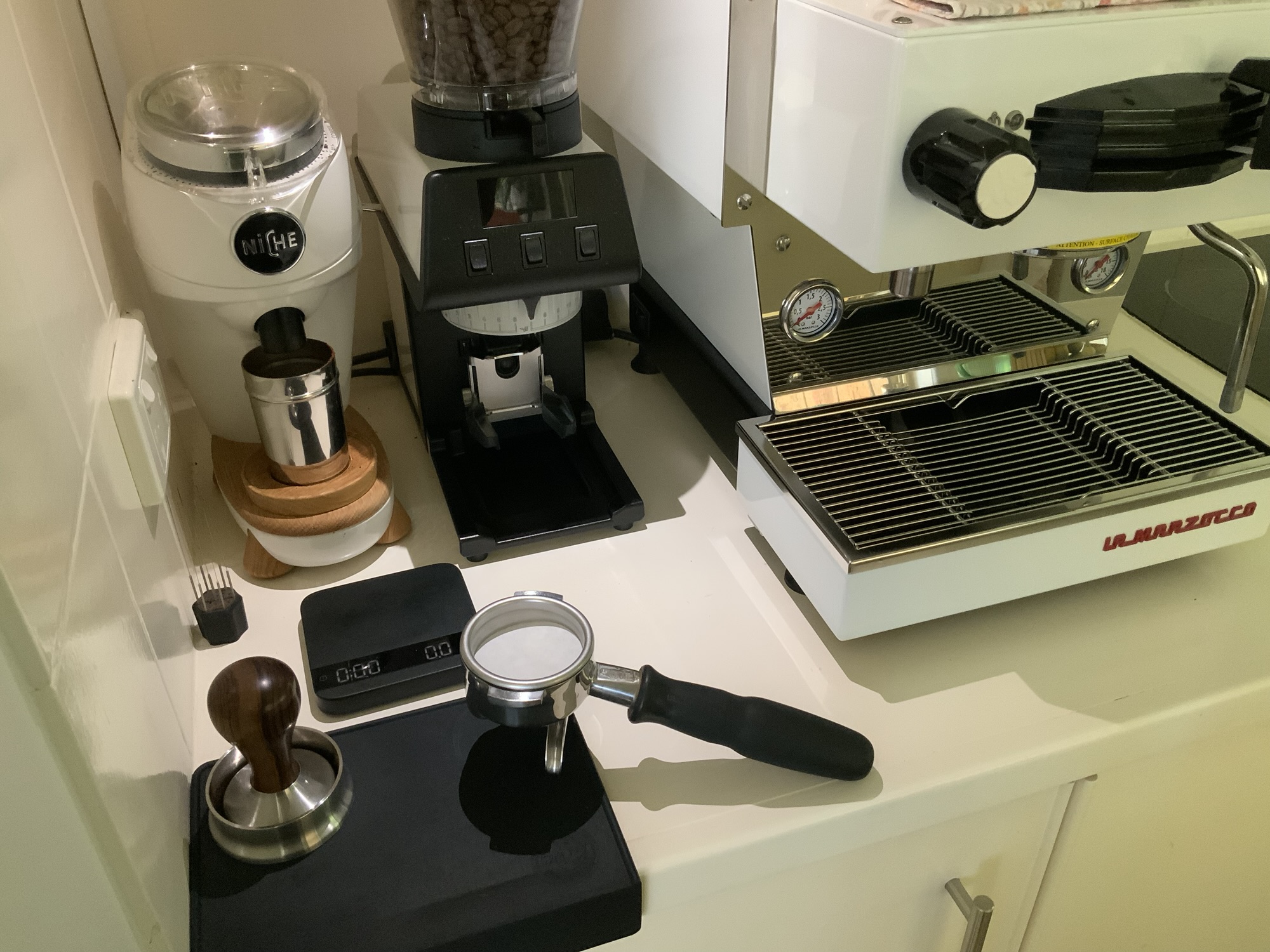
- Hardware: La Marzocco Linea Mini; Niche Zero grinder
A couple of other points on the above:
- I use a 14g La Marzocco basket lined on the bottom with a paper filter paper. After trying high extraction baskets, I felt they never really fit the machine perfectly and the holes clogged more easily, making cleaning a chore. Paper filters work just as well in my experience, though mess greatly with your sense of calm when you watch a shot pour after having forgotten to put one in…
- Given I lose about 5 seconds of shot time with the pre-brew parameters I have set, I am a little further from the 15-second shot time of a true turbo shot. That said, I have found 18–20 seconds a little better when not using the pre-brew function.
- This whole process is definitely something to play around with until you find your niche, and I’d say definitely don’t be strict about any preconceived rules when you do.
The result? An espresso served exactly the way I like it. A more nuanced, lighter bodied brew at the height of its sweetness. I’m also not a big fan of bright acidity, although coffee selection plays a large part here. As someone who doesn’t favour bold, thick and intense espresso (at least when consumed in its pure form), I’ve simply found the above to be a good match in taste and consistency.
The finish
If I’ve learned anything from trying to make better coffee at home for the best part of 30 years, it is every coffee drinker has their preferences, and a stock standard approach isn’t going to please everyone. Nor should it.
It is with that same philosophy we need to turn the lens on ourselves. Maybe there is something out there, or a method at home you’ve not tried yet, and it just might elevate your experience a little (or a lot). Without giving it a (turbo?) shot, I guess you’ll never know.
- Yes, the afternoon espresso is a different coffee to those morning cappuccinos, so it is very much a one shot wonder… ↩
 Pete Denison